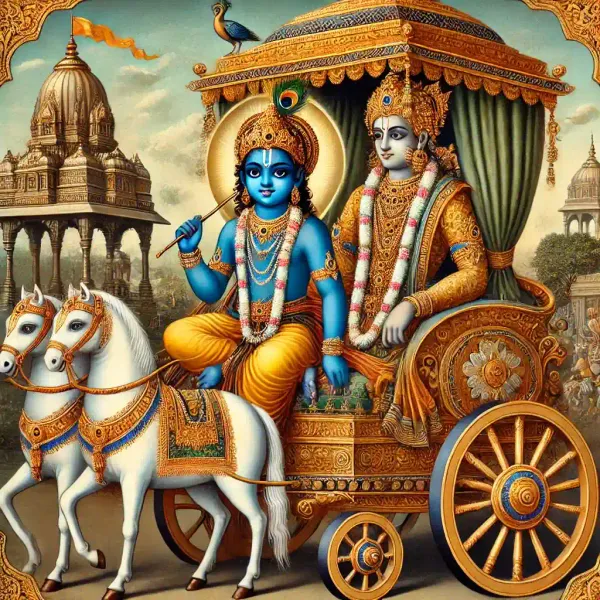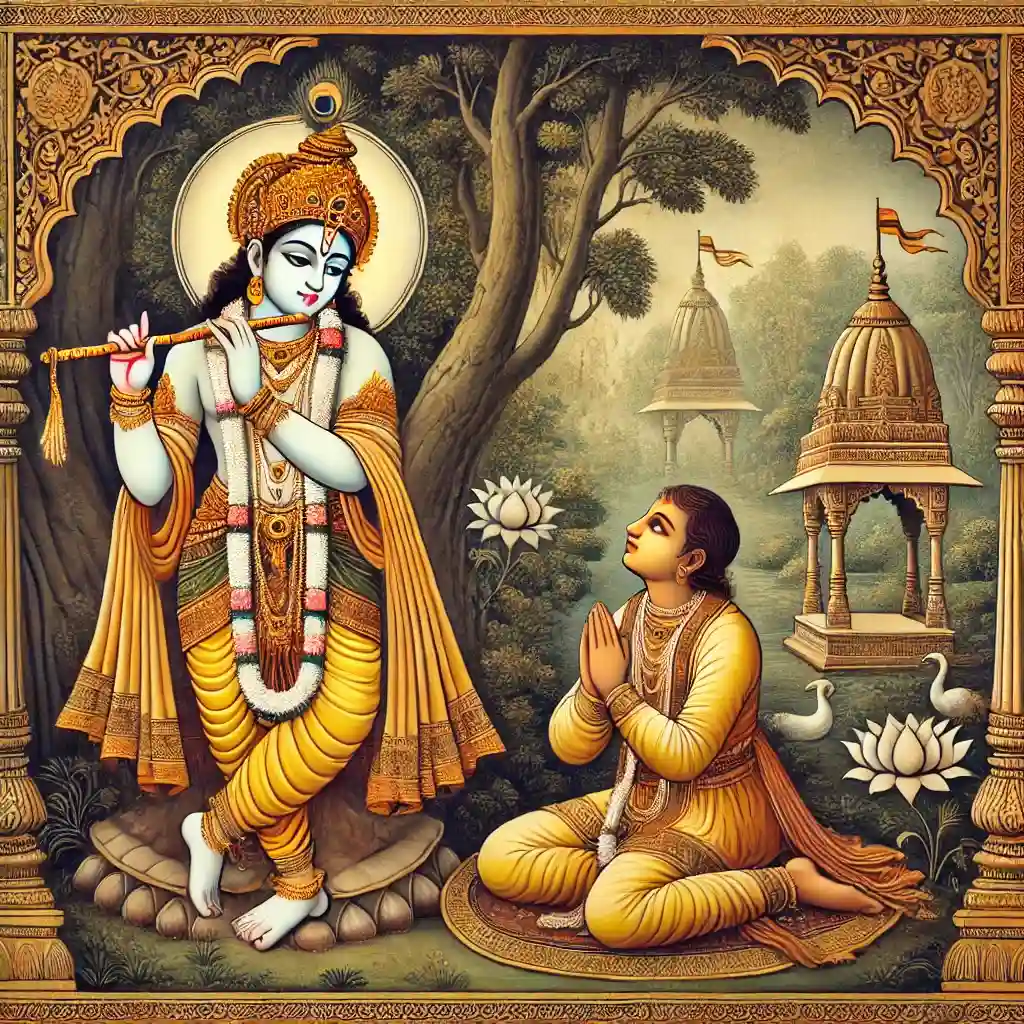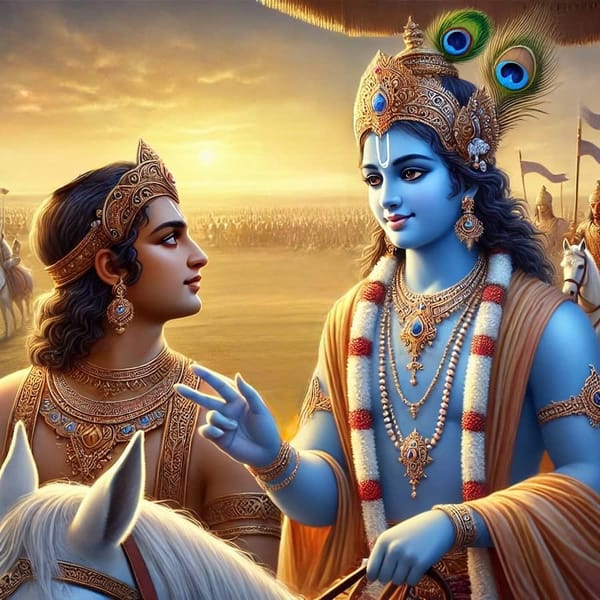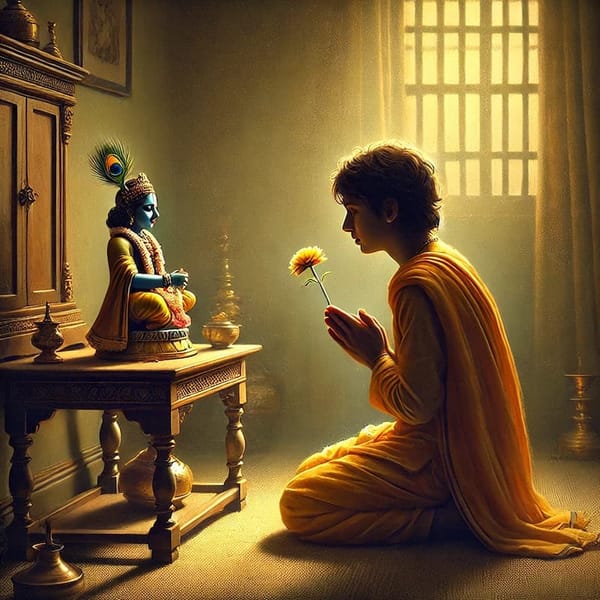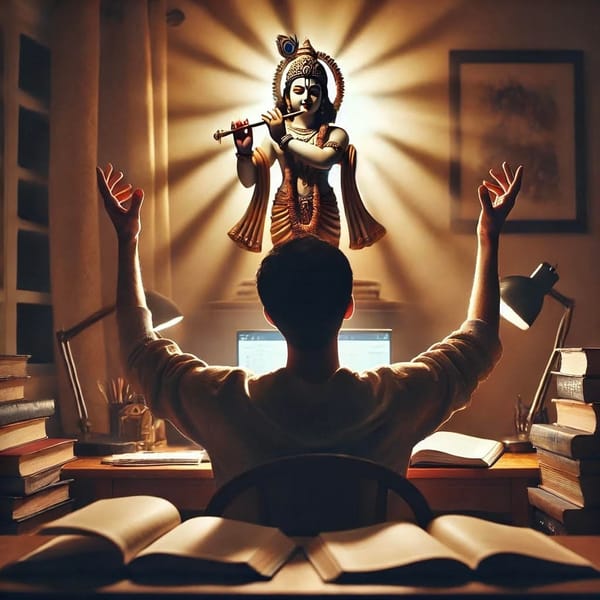

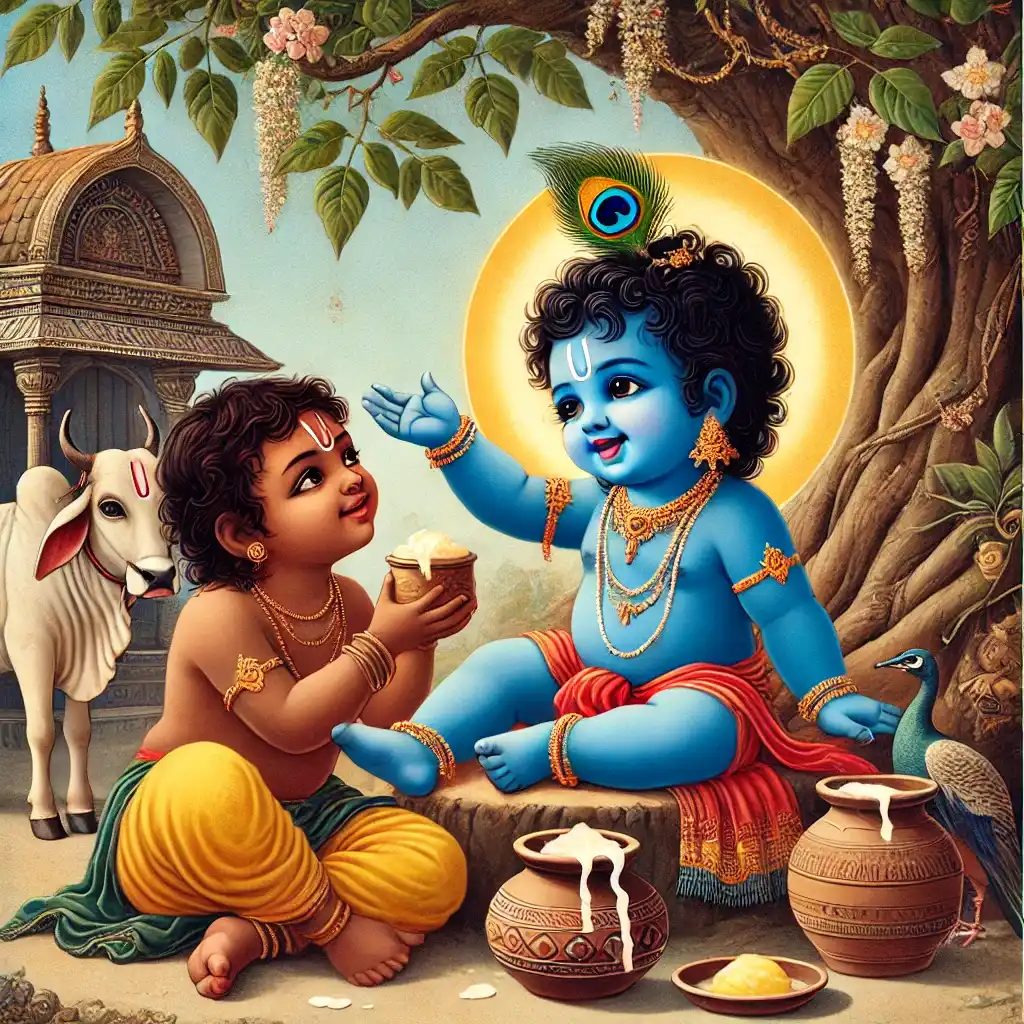
The Srimad Bhagavatam, one of the most revered Hindu scriptures, offers a treasury of divine pastimes (leelas) that illustrate the multifaceted relationships between God and His devotees. Among these, the Sakhya Bhav — the mood of friendship with God — stands out as a rare and intimate connection where the devotee perceives God not as an all-powerful deity, but as a close, loving friend.
This divine relationship finds its most beautiful expression in the pastimes of Shree Krishna in Vrindavan, particularly after the Brijwasis relocated from Gokul to escape the constant threat of demons sent by Kansa. The Vrindavan leelas, rich in emotional sweetness and spiritual significance, portray the Sakhya Bhav in its purest form. In these leelas, the God becomes the playful companion of young cowherd boys, laughing, eating, and even getting scolded and kicked in divine play.
This blog explores the Sakhya Bhav leelas of Shree Krishna as narrated in the Srimad Bhagavatam. It dives into the divine friendship that transcends formality, reveals God's boundless love, and offers a path to spiritual intimacy that is both heartwarming and transformative.
From Gokul to Vrindavan
As the threats from demonic forces intensified in Gokul, Nanda Baba, the father of Shree Krishna, took a bold step for the safety of the Brijwasis. Recognizing the danger posed by Kansa’s relentless attacks, he convened a meeting of the villagers and proposed relocating to a safer and more serene place: Vrindavan.
The community agreed, and thus began a new chapter in the divine leelas of Shree Krishna. In Vrindavan, Nanda Baba settled in what is now called Nandgaon, establishing a large residence. Other Brijwasis arranged their homes in a semi-circular layout around it, forming a close-knit village deeply connected by love and devotion.
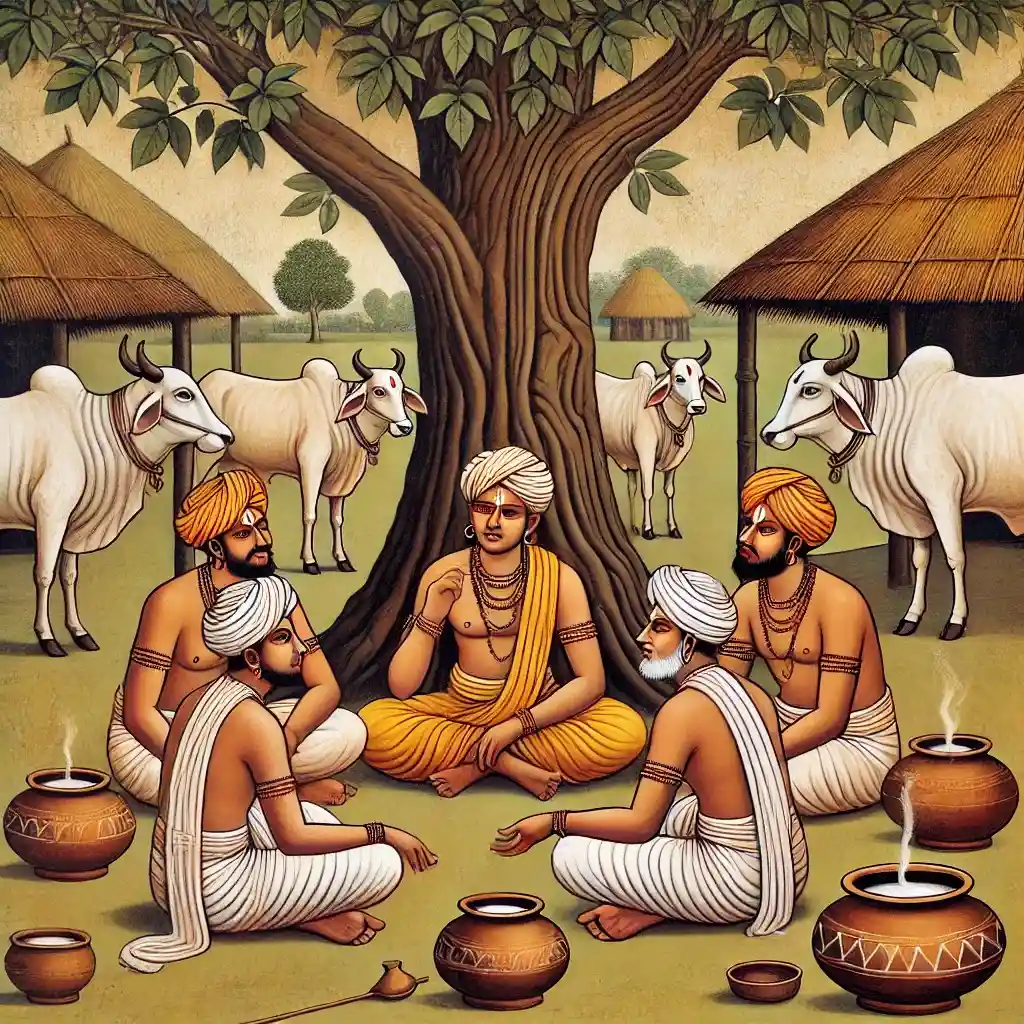
It was here, in the peaceful forests and fields of Vrindavan, that Shree Krishna's boyhood pastimes began to unfold with new vibrancy. These leelas were tailored to the spiritual maturity of different devotees — from Dasya Bhav (servitude) to Vatsalya Bhav (parental love), and most sweetly, Sakhya Bhav — friendship.
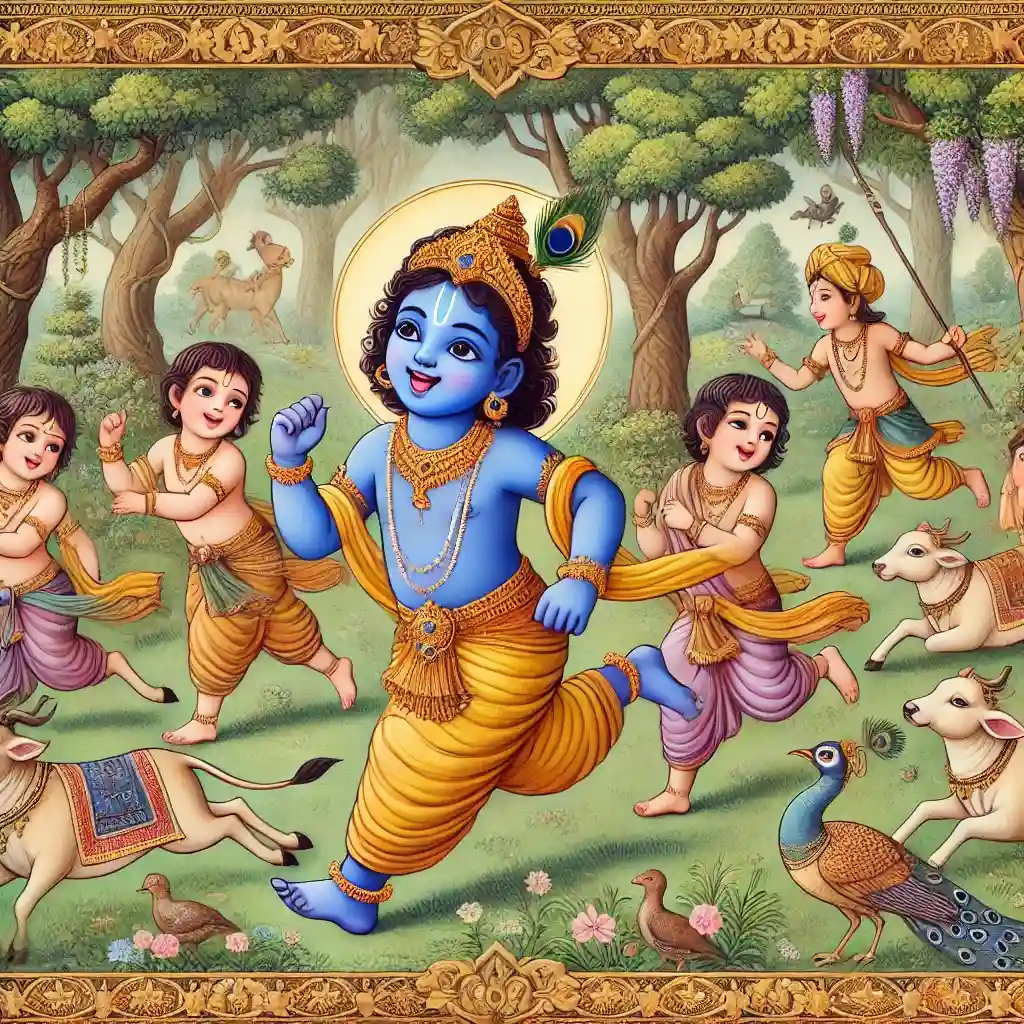
At the age of about four and a half, Shree Krishna was not yet old enough to graze the cows, so He was permitted to take care of the calves instead. This seemingly simple responsibility became the backdrop for divine interactions with His childhood friends — Shreedama, Madhumangal, Dhansukh, Mansukh, Stokakrishna, and others. These friends were not ordinary children but exalted souls whose devotion from past lives had ripened to the extent that they now participated in Shree Krishna’s earthly leelas.
Sakhya Bhav Unveiled
The Sakhya Bhav is a unique devotional sentiment where God is not feared or revered from a distance, but embraced as a peer — a companion with whom one can share food, play games, and even argue. In Vrindavan, this sacred friendship unfolded in its purest form, unclouded by any awareness of Shree Krishna's divinity. Through the veil of yogamaya (divine energy), both Shree Krishna and His friends forgot His godhood and immersed themselves fully in loving play.
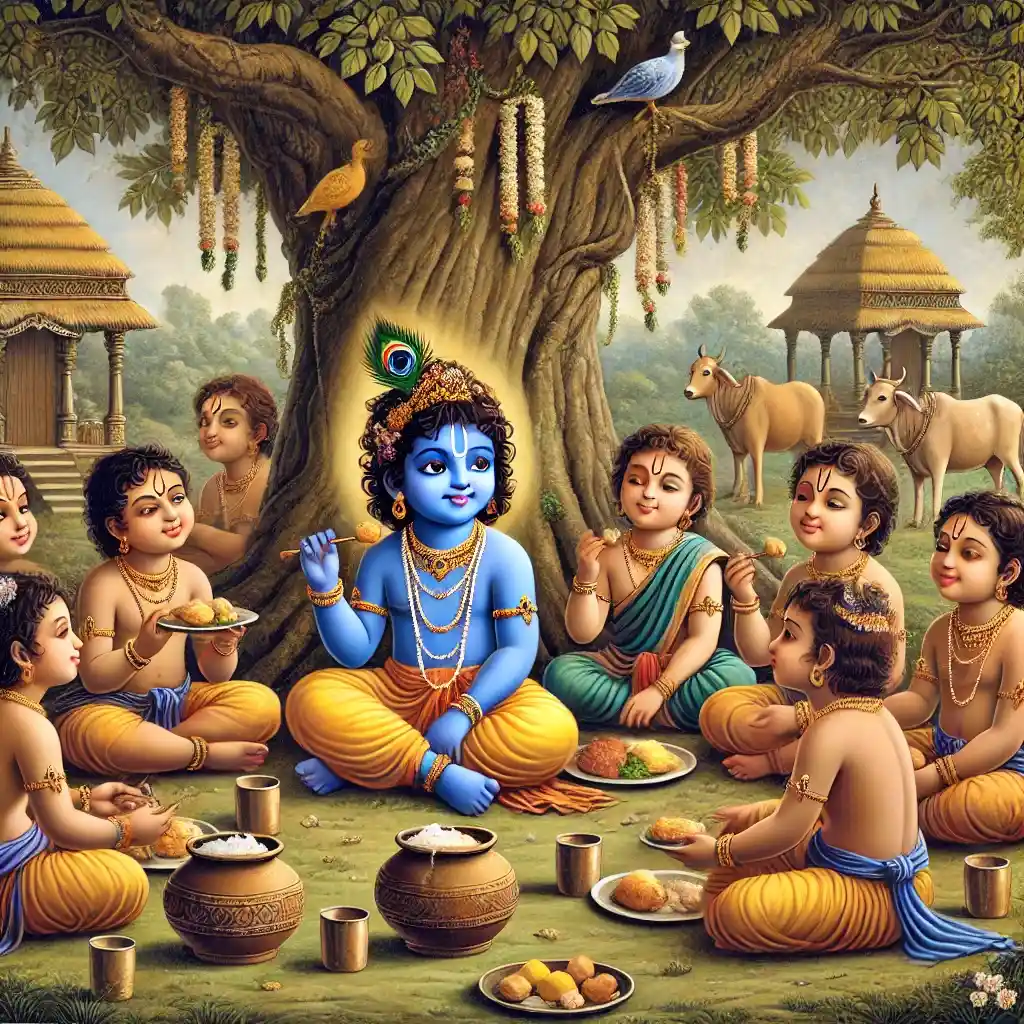
Their daily life was simple yet filled with divine bliss. Each morning, Mother Yashoda would lovingly pack Shree Krishna’s tiffin, urging Him to take it to the fields. The other cowherd boys would also bring their meals, lovingly prepared by their mothers. At lunchtime, they would gather under the shade of trees, open their bundles, and share a meal.
But Shree Krishna, ever playful and loving, rarely ate His own food. Instead, He would peer into the tiffins of His friends, asking mischievously, “What did your mother cook today? Let me have a bite.”
The friends would retort, “Eat your own food, greedy fellow! Why do you always eye mine?” They would mock Him, call Him hungry, and refuse to share. This was not disrespect but the uninhibited banter of deep friendship. Shree Krishna delighted in these exchanges, not because of the food, but because of the love with which His friends treated Him as one of their own — not as God, but as their beloved Shree Krishna.
He would even take half-eaten food from their mouths and eat it joyfully, praising their mothers’ cooking. This act, unthinkable in conventional religious rituals, reveals a profound truth: God does not hunger for offerings; He hungers for love.
Divine Play: Shree Krishna, the Horse, and the Kick of Love
One of the most remarkable and spiritually profound leelas of Sakhya Bhav occurred during a game played by Shree Krishna and His friends. The rule was simple: the loser would become the horse and the winner would ride. On one occasion, Shree Krishna lost and became the horse for His friends. His friends, unaware of His supreme divinity, mounted Him playfully and told Him to move like a horse.
Here was God, the One worshipped with sacred hymns and offerings, trotting around with a friend on His back. But the leela took an even deeper turn when one of the friends, eager for more excitement, kicked Shree Krishna with his heel, just as real riders spur horses for speed.
To an outsider, this act might seem irreverent or offensive. But in the divine context of Sakhya Bhav, it was a pure expression of love uninhibited by fear or formality. Shree Krishna, instead of being offended, was overjoyed. He paused and expressed that the kick was so sweet, He wanted another one. The friend happily complied, and Shree Krishna galloped forward with tears of bliss streaming from His eyes.
This leela shows that in divine friendship, even actions that would typically be considered offensive become expressions of intense, intimate love. Such intimacy is possible only when the devotee has completely forgotten the Godhood of Shree Krishna, a state achieved through lifetimes of pure devotion.
Swami Mukundananda emphasizes that one cannot artificially imitate this mood. Until one’s intellect is completely immersed in love for God, external gestures like treating a deity as a friend or playfully teasing God can become offensive. Thus, while the external behavior may seem ordinary or even disrespectful, the internal sentiment, the love-filled consciousness, is what sanctifies the leela.
Conclusion
The Vrindavan leelas of Shree Krishna offer a rare window into the depths of divine intimacy. In the Sakhya Bhav, God allows Himself to be known not through grandeur or awe but through the simple, sincere affection of friendship. He eats with His friends, plays with them, laughs with them, and even accepts their playful kicks as sweet blessings.
The leelas of Sakhya Bhav are a reminder that God does not seek grand offerings or elaborate rituals. He seeks our heart. When the devotee approaches Him with pure, childlike love and the sincerity of friendship, even God becomes a humble playmate, eager for our affection. In this divine relationship, all boundaries dissolve and what remains is love.
For present-day devotees, the path begins internally. Though we must outwardly follow proper decorum and reverence in our worship, we can internally begin cultivating the feeling that God is our best friend and our closest confidant. Over time, this sentiment deepens and matures into Sakhya Bhav, unlocking a relationship with God that is both sacred and sweet beyond measure.
Call to Action
- Immerse yourself in the divine pastimes of Shree Krishna and transform your spiritual journey by listening to Swami Mukundananda's Srimad Bhagavatam sessions on YouTube.
- Attend the Michigan Life Transformation Program with Swami Mukundananda, August 9–13, 2025 at the Bharatiya Temple in Troy, Michigan, for free. Immerse yourself in transformative discourses on the Power of Thoughts, guided meditation, morning walks, and personal interaction with Swamiji to elevate mental well‑being
FAQs
- What is Sakhya Bhav in devotional practice?
Sakhya Bhav is a devotional mood where the devotee sees God as a friend. Unlike reverential worship, it involves intimate, loving interactions that are free of formality or fear. It is one of the five primary devotional rasas described in Bhakti Yoga. - Who were the friends of Shree Krishna in Vrindavan?
Shree Krishna's friends included Shreedama, Madhumangal, Dhansukh, Mansukh, and Stokakrishna, along with many other beloved companions who shared in His divine pastimes. - Why did Shree Krishna enjoy being kicked by His friends?
Shree Krishna rejoiced in the uninhibited love of His friends. The kick symbolized their complete forgetfulness of His divinity — a sign of true Sakhya Bhav. Rather than offense, Shree Krishna saw it as the pinnacle of intimacy and was filled with divine bliss. - Can ordinary devotees adopt the Sakhya Bhav today?
While Sakhya Bhav is a lofty state, modern devotees can begin cultivating it internally by seeing God as their closest friend and companion. However, until the mind is fully immersed in love, traditional forms of respectful worship must be maintained externally. - Why did the Brijwasis move from Gokul to Vrindavan?
Nanda Baba, concerned about the frequent attacks by demons sent by Kansa, convened a meeting of the villagers. For their safety, the Brijwasis relocated to Vrindavan, where Shree Krishna’s most intimate leelas began.
Resources
Specific Video
Specific Blog
How a Simple Rope Bound Shree Krishna