

Introduction: Remembering Krishna Through His Divine Names
Every year, Janmashtami fills homes and temples with joyous celebrations as devotees across the world commemorate the divine appearance of Shree Krishna. The sound of conch shells echoes through temples, devotional songs fill the air, children reenact the enchanting pastimes of the young cowherd of Vrindavan, and countless hearts rejoice in remembering the Lord whose life continues to inspire humanity thousands of years after His earthly advent.
Yet Janmashtami is much more than a celebration of Krishna's birth. It is an invitation to draw closer to Him.
The Srimad Bhagavatam reveals Krishna as the Supreme Personality of Godhead, who descends to the material world not only to establish dharma and protect the righteous, but also to shower His boundless grace upon His devotees. Through His childhood pastimes in Gokul, His divine flute in Vrindavan, His profound teachings in the Bhagavad Gita, and His infinite compassion for every soul, Krishna lovingly calls us back to our eternal relationship with Him.
Among the many ways of responding to that divine invitation, one of the simplest and most powerful is to remember Him through His sacred names.
The saints explain that God's names are not ordinary words. They are imbued with His divine presence and carry the same spiritual potency as the Lord Himself. When uttered with faith, humility, and love, they gradually purify the mind, soften the heart, and awaken devotion. The purpose is not merely to repeat sacred syllables but to lovingly remember the all-attractive Lord whose beauty, compassion, and wisdom captivate every soul.
Swami Mukundananda often explains that the mind constantly dwells upon whatever it loves most. If left unchecked, it becomes absorbed in worldly anxieties, desires, and distractions. However, when we repeatedly direct the mind towards God through prayer, meditation, and the remembrance of His divine names, its natural tendency begins to change. The restless mind gradually becomes peaceful, the heart becomes purified, and devotion begins to blossom.
This is why chanting Krishna's names has been cherished by saints for thousands of years. It is not reserved for scholars, ascetics, or advanced yogis. It is a spiritual practice open to everyone, regardless of age, background, or experience. Whether sung collectively in a temple, softly repeated during quiet moments of reflection, or lovingly remembered throughout the day, Krishna's names become a bridge between the finite soul and the infinite Lord.
Janmashtami provides the perfect opportunity to begin or deepen this sacred practice. As we celebrate Krishna's appearance on Earth, we also invite Him to appear within our own hearts.
In this article, we will explore five of the most cherished Krishna mantras, discover their scriptural significance, understand the deeper meanings hidden within them, and learn how they can inspire a richer, more loving relationship with Shree Krishna.
Why Are Krishna's Names So Powerful?
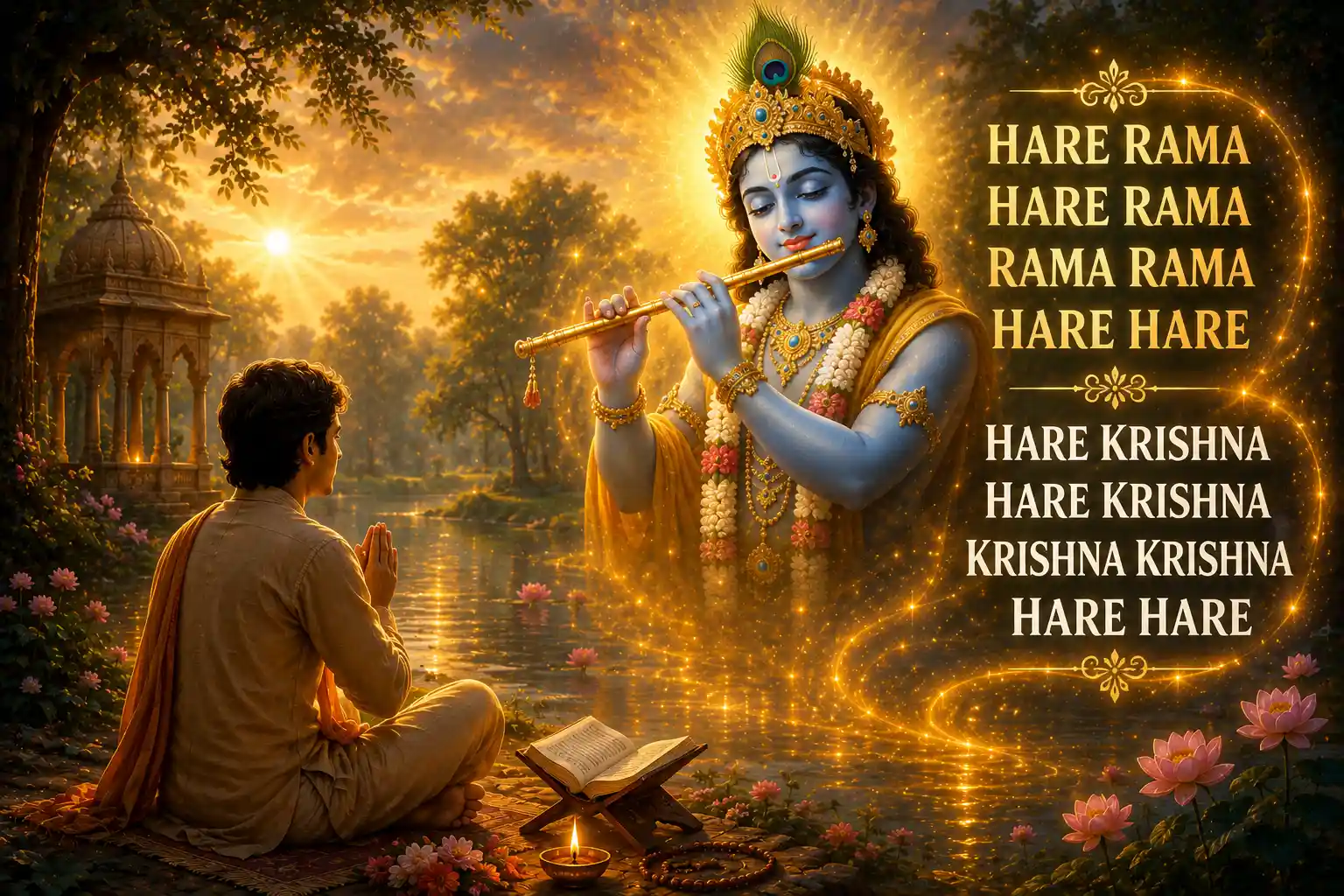
Throughout the Vedic scriptures, the Divine is described as unlimited. His beauty is unlimited, His compassion is unlimited, His wisdom is unlimited, and so too is the power contained within His holy names. Unlike ordinary words, which merely describe an object, Krishna's names are considered spiritually non-different from Krishna Himself. When we remember His names with devotion, we are not simply recalling Him, we are entering into His divine association.
The Bhagavad Gita repeatedly emphasises the importance of remembering God amidst the activities of daily life. Krishna assures Arjun that those who constantly think of Him with exclusive devotion are lovingly protected and guided by His grace. This remembrance is not intended to be mechanical or forced. Rather, it is an expression of love, much like remembering someone dear to our heart.
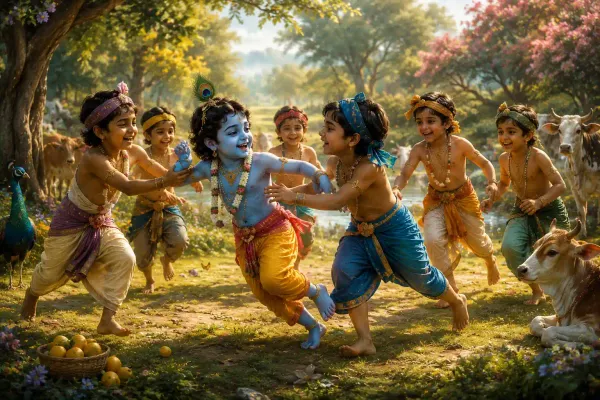
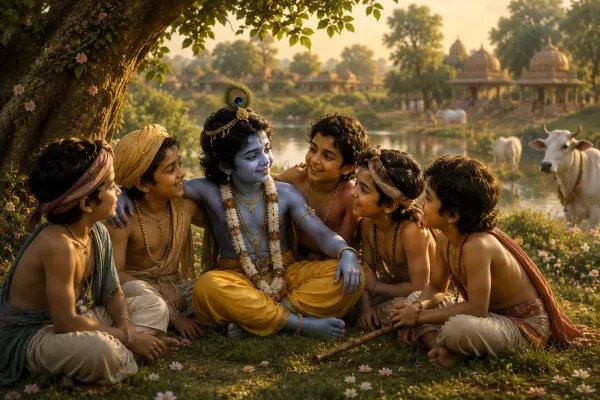
The Srimad Bhagavatam beautifully demonstrates this principle through the lives of Krishna's devotees. Mother Yashoda constantly called out to her beloved son. The gopis sang His names while performing their daily household duties. The cowherd boys laughed, played, and wandered through the forests with Krishna, their minds naturally absorbed in Him. Their remembrance did not arise from obligation but from affection.
Jagadguru Shri Kripalu Ji Maharaj explains that divine love reaches its perfection when remembrance of God becomes spontaneous.
Just as a loving mother naturally thinks about her child throughout the day, the perfected devotee naturally remembers Krishna because the heart has become completely attached to Him. This loving absorption is the goal of bhakti.
Swami Mukundananda similarly teaches that the purpose of repeating God's names is not merely to seek relief from difficulties or to fulfil worldly desires. While spiritual practice certainly brings peace, clarity, and strength, its highest purpose is to awaken Nishkam Bhakti: pure, selfless devotion that seeks nothing except the joy of serving and loving God.
This understanding transforms the way we approach Krishna's names. We are no longer asking, "What can this mantra do for me?" Instead, we begin asking, "How can this mantra help me remember Krishna more deeply?"
When approached with this attitude, every repetition becomes an offering of the heart. Every divine name becomes another step towards the loving relationship for which the soul has always longed.
1. The Mahamantra – A Loving Call to Shree Radha and Krishna
Sanskrit
हरे राम हरे राम
राम राम हरे हरे ।
हरे कृष्ण हरे कृष्ण
कृष्ण कृष्ण हरे हरे ॥
Transliteration
Hare Rama Hare Rama
Rama Rama Hare Hare
Hare Krishna Hare Krishna
Krishna Krishna Hare Hare
Among all the sacred names of the Lord, the Mahamantra is perhaps the best known and most widely sung by devotees around the world. Its simplicity is one of its greatest strengths. There are no complicated philosophical concepts to master before beginning. Anyone can lovingly sing these divine names and experience the joy they bring.
The mantra lovingly invokes Shree Radha and Shree Krishna. "Hare" addresses the Lord's divine internal energy, personified as Shree Radha, the embodiment of pure love. "Krishna" means "the all-attractive One," drawing every soul through His infinite beauty, compassion, and sweetness. "Rama" refers to the reservoir of divine bliss, reminding us that lasting happiness is found not in temporary pleasures but in loving communion with God.
The saints explain that this mantra is not a demand for material blessings but a heartfelt prayer: "O Lord, O Divine Energy of the Lord, please engage my mind and heart in Your loving service." It is a prayer for remembrance, surrender, and divine love.
Swami Mukundananda explains that the greatest obstacle in spiritual life is the restless mind. It constantly wanders towards worldly attractions, forgetting the soul's eternal relationship with God. By lovingly repeating the Mahamantra with attention and devotion, the mind gradually becomes purified and begins to delight in Krishna Himself. Over time, what initially feels like a spiritual discipline transforms into a natural expression of love.
Janmashtami offers a beautiful opportunity to begin this practice. Whether sung during devotional gatherings, remembered during quiet moments of reflection, or incorporated into your daily worship, the Mahamantra gently redirects the heart towards the all-attractive Lord whose birth we celebrate with such joy.
Rather than rushing through the words, pause to reflect on their meaning. Picture the enchanting form of Shree Krishna standing beneath the kadamba trees of Vrindavan, His flute resting upon His lips, lovingly calling every soul back to Him. When the heart responds to that call with sincerity, the mantra becomes much more than sacred sound, it becomes the beginning of a lifelong relationship with God.
2. Om Namo Bhagavate Vasudevaya – The Mantra of Complete Surrender
Sanskrit
ॐ नमो भगवते वासुदेवाय ॥
Transliteration
Om Namo Bhagavate Vasudevaya
Among the many sacred mantras found in the Vedic scriptures, Om Namo Bhagavate Vasudevaya occupies a place of special reverence. Often called the Dvadasakshara Mantra, or the twelve-syllable mantra, it has been lovingly repeated by saints and devotees for centuries as a heartfelt expression of surrender to the Supreme Lord.
Unlike prayers that ask God for specific blessings, this mantra begins with an attitude of humility.
"Om" invokes the Supreme Absolute Truth.
"Namo" means "I offer my respectful obeisance."
"Bhagavate" refers to the Supreme Personality of Godhead, who possesses all divine opulences in their fullness.
"Vasudevaya" addresses Lord Krishna as the son of Vasudeva while simultaneously acknowledging Him as the indwelling Lord who resides within the heart of every living being.
Taken together, the mantra becomes a simple yet profound prayer:
"O Supreme Lord, I bow before You with love and reverence."
Its beauty lies in its simplicity. There is no request for wealth, success, protection, or even liberation. The devotee merely turns towards God in loving surrender.
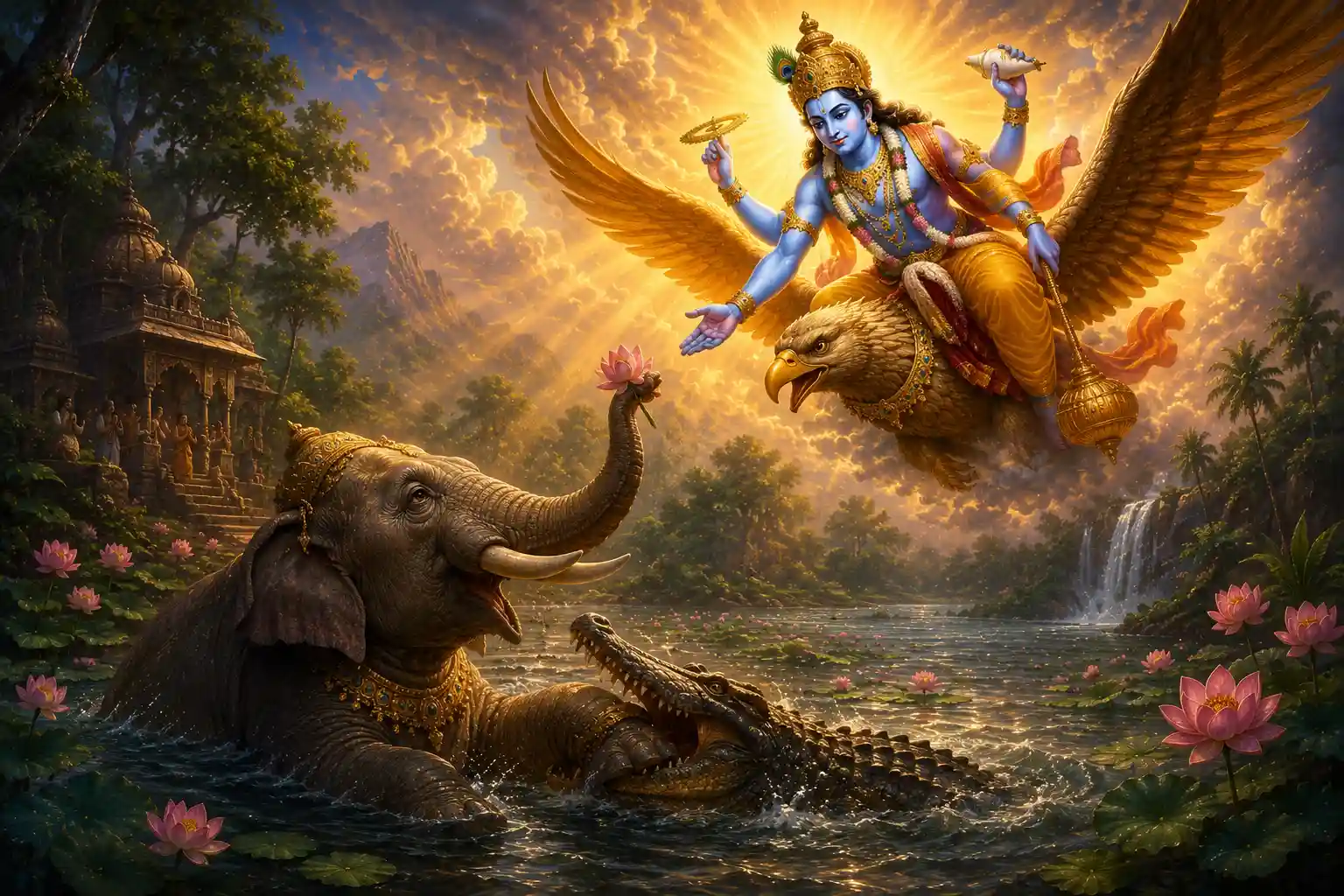
The Srimad Bhagavatam repeatedly demonstrates that this attitude of surrender is what attracts Krishna's grace. Whether it was Gajendra calling to the Lord from the jaws of a crocodile, Prahlad remaining steadfast amidst persecution, or the residents of Vrindavan placing their complete faith in Krishna during the Govardhan pastime, divine protection came not because of external qualifications but because their hearts rested entirely in Him.
Janmashtami offers countless examples of this same surrender. When Vasudeva carried the newborn Krishna across the flooded Yamuna on the night of His birth, he possessed neither weapons nor worldly power. The prison doors had miraculously opened, the guards had fallen asleep, and the river itself parted to allow the divine child to pass safely. Every step of that remarkable journey teaches that when the devotee places complete trust in God, the impossible becomes possible through His grace.
Swami Mukundananda often explains that surrender does not mean becoming passive or neglecting our responsibilities. Rather, it means performing our duties wholeheartedly while recognising that the ultimate outcome rests in God's hands. Anxiety diminishes when we realise that the same Lord who sustains the universe is lovingly guiding our lives.
In today's fast-paced world, many people carry invisible burdens: uncertainty about the future, concern for loved ones, professional pressures, and the constant demands of daily life. Repeating Om Namo Bhagavate Vasudevaya with sincerity gently reminds the heart that we are never alone. Krishna accompanies us in every circumstance, not merely as the Supreme Lord of the universe but as our eternal well-wisher dwelling within.
As you lovingly repeat this mantra, reflect upon the beautiful image of baby Krishna resting peacefully in the prison cell of Mathura before His miraculous journey to Gokul. Though appearing as a helpless infant, He was already orchestrating events for the protection of His devotees. That same compassionate Lord continues to guide every sincere soul today.
3. Krishna Gayatri Mantra – Praying for Divine Wisdom
Sanskrit
ॐ देवकीनन्दनाय विद्महे
वासुदेवाय धीमहि ।
तन्नः कृष्णः प्रचोदयात् ॥
Transliteration
Om Devakinandanaya Vidmahe
Vasudevaya Dhimahi
Tanno Krishnah Prachodayat
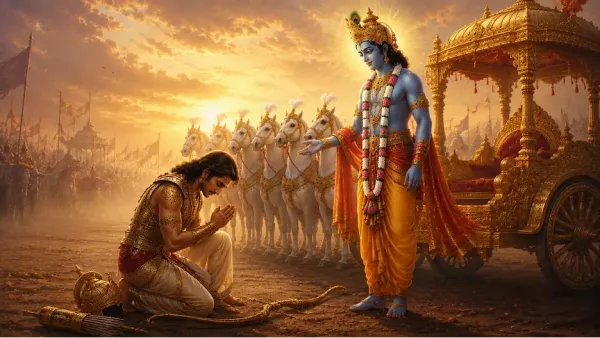
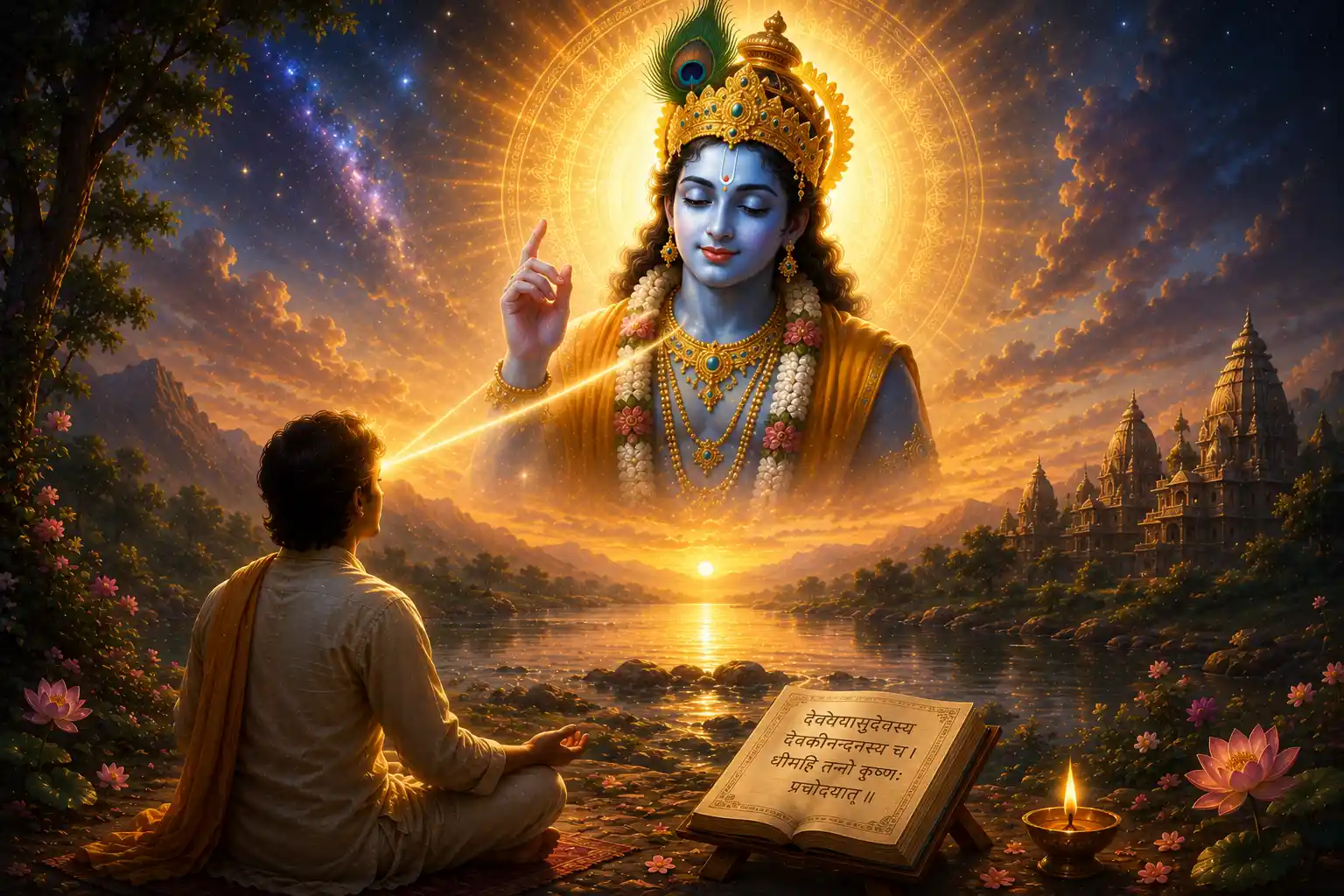
The life of Shree Krishna is often remembered through His enchanting childhood pastimes, yet Janmashtami also reminds us that the playful child of Gokul later became the divine charioteer who delivered the timeless wisdom of the Bhagavad Gita. His flute enchanted the hearts of the gopis, while His words enlightened Arjun on the battlefield of Kurukshetra. These two dimensions of Krishna, His sweetness and His wisdom, are beautifully united in the Krishna Gayatri Mantra.
This sacred prayer means:
"We meditate upon the divine son of Devaki. We contemplate Lord Vasudeva. May that Lord Krishna inspire and illumine our intellect."
Unlike prayers that seek material prosperity or worldly achievement, the Krishna Gayatri Mantra asks for something infinitely more valuable: divine guidance.
Every day, we make countless decisions that shape our lives. Some are small and seemingly insignificant, while others determine the direction of our careers, relationships, and spiritual journey. Yet the greatest challenge is not choosing between success and failure, but between what is merely pleasant and what is truly beneficial.
Arjun faced precisely this dilemma on the battlefield. Overwhelmed by attachment, confusion, and grief, he could no longer distinguish his duty. It was then that Krishna illuminated his understanding, revealing the eternal nature of the soul and the path of selfless action performed with devotion.
The Krishna Gayatri Mantra is therefore much more than an invocation of knowledge. It is a heartfelt prayer asking Krishna to become our inner guide, just as He guided Arjun.
Swami Mukundananda frequently explains that spiritual knowledge is transformative only when it changes the way we think and live. Merely accumulating information cannot remove ignorance. Real wisdom enables us to see every circumstance through the lens of the soul rather than the temporary body and mind.
When devotees lovingly repeat this mantra, they are asking Krishna to help them think with greater clarity, act with compassion, remain steadfast during adversity, and remember Him amidst the changing circumstances of life.
This prayer becomes especially meaningful during Janmashtami. As we celebrate Krishna's appearance on Earth, we remember that He did not descend merely to perform miraculous deeds. He also came to illuminate humanity with eternal wisdom. Every verse of the Bhagavad Gita is an expression of His boundless compassion, inviting us to rise above fear, attachment, and ignorance.
Jagadguru Shri Kripalu Ji Maharaj beautifully explained that true knowledge culminates in love. Intellectual understanding alone cannot satisfy the soul. Knowledge finds its fulfilment when it inspires devotion, and devotion matures when guided by genuine knowledge. The Krishna Gayatri Mantra harmoniously unites these two paths, asking the Lord not only to enlighten the intellect but also to awaken the heart.
As you meditate upon these sacred words, picture Krishna standing beside Arjun's chariot, His serene face radiating compassion as He reveals the eternal truths of the Bhagavad Gita. Pray that the same divine wisdom may guide your own thoughts, decisions, and spiritual journey.
4. Om Shri Gopalaya Namah – Meditating on Krishna's Sweetness
Sanskrit
ॐ श्री गोपालाय नमः ॥
Transliteration
Om Shri Gopalaya Namah
Among Krishna's countless names, Gopala is one of the most tender and affectionate. It immediately brings to mind the charming young cowherd of Vrindavan, whose laughter echoed through the forests, whose flute enchanted every living being, and whose loving smile transformed ordinary village life into an eternal celebration of divine bliss.
The word Gopala literally means "the protector of cows." Yet its spiritual significance extends much deeper.
In Vedic culture, cows symbolise gentleness, nourishment, abundance, and selfless giving. By caring for the cows of Vrindavan, Krishna demonstrated His boundless compassion for all living beings. His relationship with the cows was not one of ownership but of love. The scriptures describe how they eagerly gathered around Him whenever they heard the sound of His flute, responding not to command but to affection.
This beautiful relationship reflects Krishna's love for every soul.
Just as a caring shepherd knows each member of his flock, Krishna knows every living being individually. He understands our struggles, patiently waits for us to turn towards Him, and lovingly guides us throughout our spiritual journey. Even when we forget Him, He never forgets us.
Swami Mukundananda often reminds devotees that Krishna's sweetness is one of His greatest attractions. While God's infinite power inspires reverence, His loving nature awakens intimacy. It is this sweetness, known in the scriptures as madhurya, that distinguishes Krishna's Vrindavan pastimes from all other divine manifestations.
Jagadguru Shri Kripalu Ji Maharaj described Vrindavan as the highest revelation of God's loving personality. There, Krishna hides His supreme majesty beneath the simplicity of village life. He becomes a playful child, a loyal friend, and the beloved of His devotees. This concealment of divine grandeur allows love to flourish naturally, free from fear or formality.
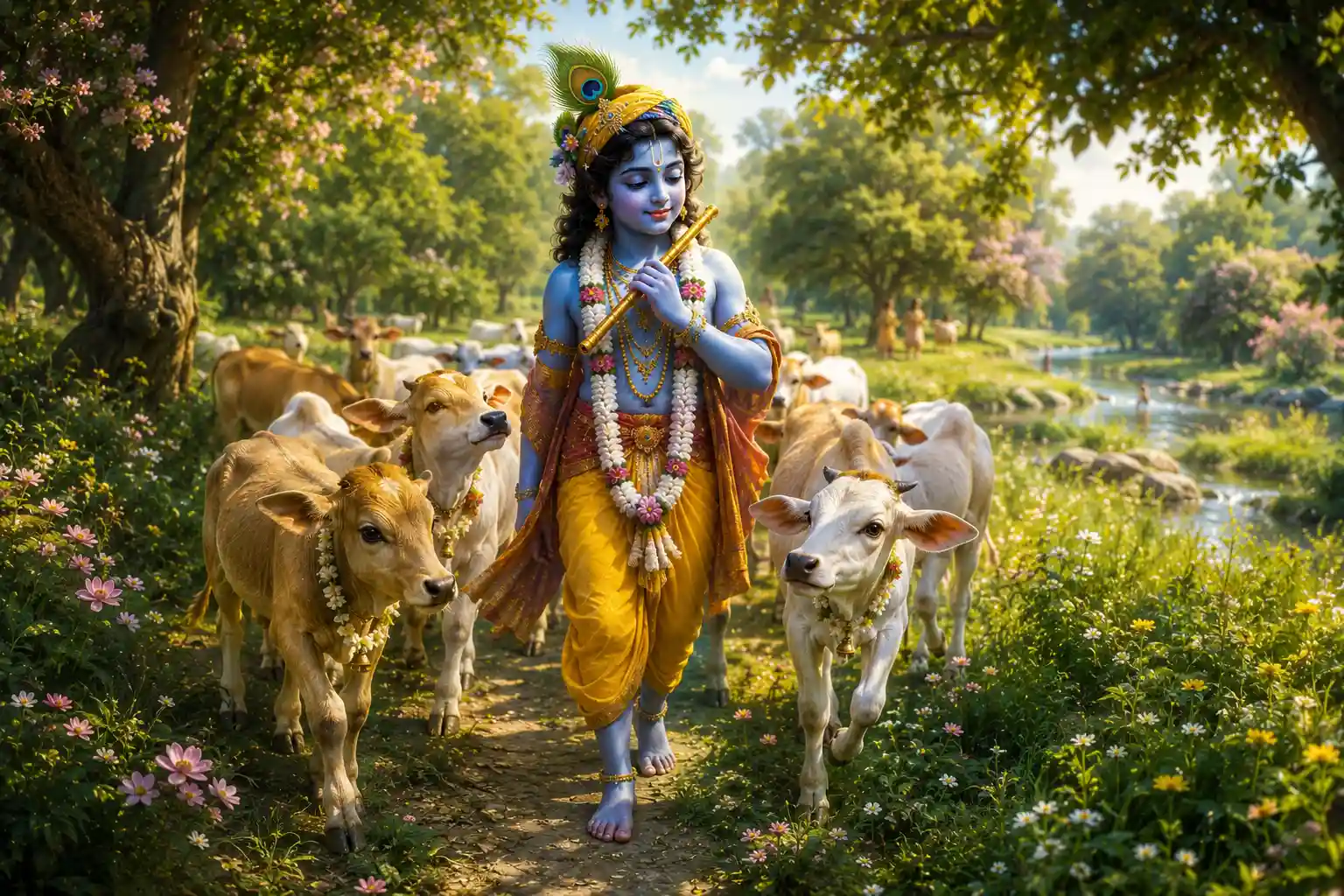
When devotees repeat Om Shri Gopalaya Namah, they lovingly remember this enchanting form of Krishna. They meditate upon the young cowherd carrying His flute, surrounded by calves, walking barefoot through the green meadows of Braj with a smile that fills every heart with joy.
Janmashtami is the ideal time to contemplate this form of the Lord. While the festival celebrates Krishna's birth in Mathura, it is in Gokul and Vrindavan that His childhood sweetness unfolds most fully. Every playful pastime, from stealing butter to dancing with His friends, reveals a God who delights in loving relationships with His devotees.
As you repeat this mantra, allow your mind to wander through the forests of Vrindavan. Hear the gentle sound of Krishna's flute, watch the cows gather around Him, and imagine yourself among the fortunate residents of Braj whose greatest happiness was simply being in His presence.
That longing to remain near Krishna is itself the beginning of devotion.
5. Om Krishnaya Vasudevaya… Govindaya Namo Namah – A Prayer for Refuge and Grace
Sanskrit
ॐ कृष्णाय वासुदेवाय
हरये परमात्मने ।
प्रणतः क्लेशनाशाय
गोविन्दाय नमो नमः ॥
Transliteration
Om Krishnaya Vasudevaya
Haraye Paramatmane
Pranatah Klesha Nashaya
Govindaya Namo Namah
Among the many prayers dedicated to Shree Krishna, few capture His divine personality as beautifully as this sacred mantra. Rather than praising only one aspect of the Lord, it lovingly glorifies several of His eternal names, each revealing a different facet of His limitless compassion.
The prayer addresses Him as Krishna, the all-attractive Lord who draws every soul towards Himself through His beauty and divine love. He is Vasudeva, the son of Vasudeva who descended upon Earth for the welfare of humanity, yet He is also the indwelling Lord present within every heart. He is Hari, the remover of ignorance, sorrow, and the countless obstacles that keep the soul bound to material existence. He is Paramatma, the Supreme Soul who accompanies every living being through every birth, patiently waiting for the moment we turn back towards Him. Finally, He is Govinda, the protector of cows, the giver of joy, and the beloved Lord of Vrindavan whose flute continues to call every soul home.
The prayer culminates in the words "Pranatah Klesha Nashaya": "I bow to the Lord who destroys the sufferings of those who surrender unto Him."
These words deserve careful reflection.
Life inevitably brings challenges. Success and failure alternate, relationships change, the body ages, and circumstances beyond our control often test our faith. The scriptures never promise that devotion will remove every external difficulty. Instead, they reveal something far greater: Krishna transforms the heart that faces those difficulties.
The Bhagavad Gita teaches that while the world is temporary and filled with inevitable change, the soul is eternal. When we begin to identify ourselves with the eternal rather than the temporary, suffering gradually loses its power over us. The external situation may remain the same, but our inner response becomes profoundly different because it is strengthened by divine remembrance.
This is why devotees throughout history have found immense comfort in Krishna's names during moments of uncertainty. Queen Kunti remembered Him amidst adversity. Draupadi called to Him when every worldly support had failed. The Pandavas repeatedly experienced that true security comes not from favourable circumstances but from unwavering faith in the Lord.
Swami Mukundananda often reminds seekers that God's grace does not always remove the storm immediately. More often, it gives us the wisdom, courage, and devotion to walk through it without losing our inner peace. When the heart remains connected to Krishna, even life's greatest trials become opportunities for spiritual growth.
As you lovingly repeat this prayer, think not only of Krishna as the mighty speaker of the Bhagavad Gita, but also as the compassionate friend who stood beside Arjun when confusion clouded his mind. He remains that same divine companion today, ready to guide every sincere seeker who turns towards Him with faith.
How to Remember Krishna Through His Divine Names
The saints repeatedly emphasise that the transformative power of a mantra does not lie merely in its pronunciation but in the devotion that accompanies it. Sacred words become spiritually vibrant when they arise from a heart longing to draw closer to God.
For this reason, cultivating the right attitude is far more important than counting repetitions or striving for perfection. Before lovingly chanting Krishna's names, take a few quiet moments to settle the mind. Offer a simple prayer asking Him to accept your remembrance and purify your heart. Even this humble beginning creates a beautiful foundation for devotion.
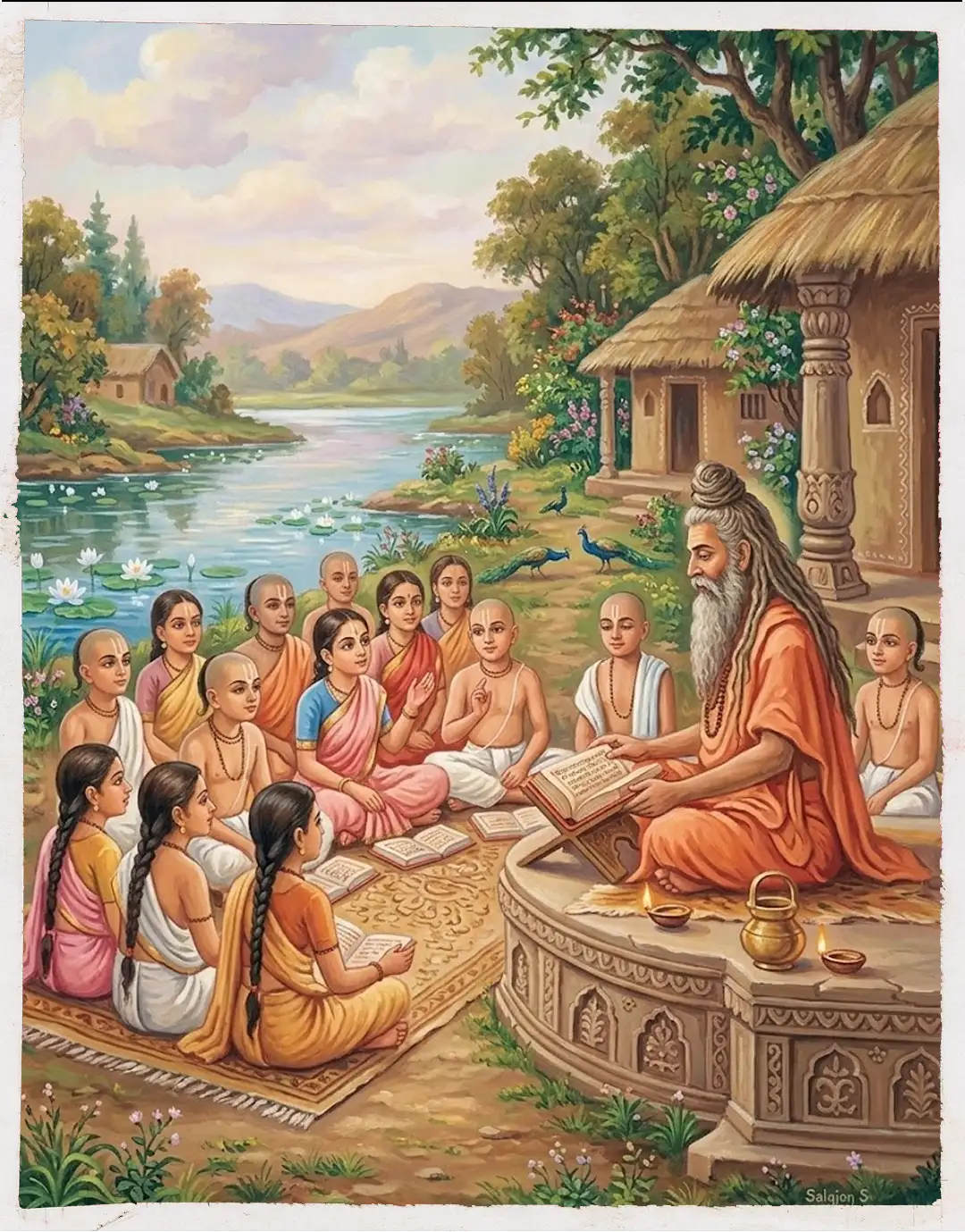
As you repeat each mantra, reflect upon its meaning. When you say Om Shri Gopalaya Namah, picture the young cowherd of Vrindavan joyfully tending His calves beneath the shade of flowering trees. When you lovingly recite the Mahamantra, remember Shree Radha and Shree Krishna, whose divine love represents the highest expression of bhakti. When you pray Om Namo Bhagavate Vasudevaya, consciously place your worries at the Lord's feet and remember that He lovingly resides within your own heart.
The scriptures also encourage us to engage more than just the tongue. The mind should dwell upon Krishna's beautiful form, His enchanting pastimes, and His limitless compassion. The heart should gradually become filled with gratitude for His presence in our lives. In this way, remembrance becomes a complete offering of thought, feeling, and intention.
Consistency is equally important. A few minutes each day, offered with sincerity, often prove more transformative than occasional bursts of enthusiasm. Spiritual growth resembles the steady flow of a river rather than the sudden rush of a storm. Each day of loving remembrance gently purifies the mind, strengthens faith, and deepens one's relationship with the Lord.
Most importantly, approach Krishna without pretence. The Lord who accepted a handful of flattened rice from Sudama, who delighted in butter lovingly prepared by Mother Yashoda, and who accepted the simple offerings of His devotees throughout the scriptures does not seek perfection. He seeks sincerity.
The Bhagavad Gita's Teaching on Loving Remembrance
The message of these sacred mantras finds beautiful confirmation in the Bhagavad Gita. Throughout the dialogue with Arjun, Krishna repeatedly encourages His devotee to remember Him with love amidst the responsibilities of daily life.
In Bhagavad Gita 9.14, He describes the great souls who constantly glorify Him with unwavering determination and devotion. Their remembrance is not mechanical but joyful because their hearts have become absorbed in God:
सततं कीर्तयन्तो मां यतन्तश्च दृढव्रता: ।
नमस्यन्तश्च मां भक्त्या नित्ययुक्ता उपासते ॥ 14॥
satataṁ kīrtayanto māṁ yatantaśh cha dṛiḍha-vratāḥ
namasyantaśh cha māṁ bhaktyā nitya-yuktā upāsate
BG 9.14: Always singing My divine glories, striving with great determination, and humbly bowing down before Me, they constantly worship Me in loving devotion.
Later, in Bhagavad Gita 9.22, Krishna offers one of His most reassuring promises:
अनन्याश्चिन्तयन्तो मां ये जना: पर्युपासते ।
तेषां नित्याभियुक्तानां योगक्षेमं वहाम्यहम् ॥ 22॥
ananyāśh chintayanto māṁ ye janāḥ paryupāsate
teṣhāṁ nityābhiyuktānāṁ yoga-kṣhemaṁ vahāmyaham
BG 9.22: There are those who always think of Me and engage in exclusive devotion to Me. To them, whose minds are always absorbed in Me, I provide what they lack and preserve what they already possess.
This verse reveals the extraordinary relationship between God and His devotee. Krishna is not a distant observer waiting for perfection before offering His grace. He actively cares for those who lovingly turn towards Him, guiding their spiritual progress and supporting them according to what is ultimately best for their welfare.
Perhaps the most beautiful expression of this truth appears in Bhagavad Gita 9.26:
पत्रं पुष्पं फलं तोयं यो मे भक्त्या प्रयच्छति ।
तदहं भक्त्युपहृतमश्नामि प्रयतात्मन: ॥ 26॥
patraṁ puṣhpaṁ phalaṁ toyaṁ yo me bhaktyā prayachchhati
tadahaṁ bhaktyupahṛitam aśhnāmi prayatātmanaḥ
BG 9.26: If one offers to Me with devotion a leaf, a flower, a fruit, or even water, I delightfully partake of that item offered with love by My devotee in pure consciousness.
Notice that Krishna places no emphasis on the material value of the offering. A simple leaf offered with genuine love is more pleasing to Him than elaborate worship performed without devotion.
The same principle applies to remembering His divine names.
It is not the length of the practice that matters most, it is the love behind it.
Even a few moments of heartfelt remembrance can become spiritually transformative when offered with humility and sincerity.
Swami Mukundananda beautifully explains that this is the essence of Bhakti. God is won not by intellectual brilliance or external display, but by the purity of the devotee's heart. Every sincere repetition of Krishna's names becomes another expression of that love and another step towards the eternal relationship the soul has always sought.
The Goal of Every Mantra: Loving Surrender to Shree Krishna
As we reflect upon these sacred mantras, a beautiful truth gradually emerges. Although each prayer highlights a different aspect of Shree Krishna's divine personality, they all lead the devotee towards the same destination—a heart filled with selfless love for God.
Some prayers glorify Krishna as the enchanting cowherd of Vrindavan. Others meditate upon Him as the Supreme Lord residing within every heart. Some seek His guidance, while others express complete surrender. Yet none of these mantras exists merely to provide temporary peace or worldly success. Their deepest purpose is to awaken the soul's forgotten relationship with its eternal Beloved.
This is the message that echoes throughout the Bhagavad Gita. After revealing profound truths about karma, jnana, meditation, the nature of the soul, and the workings of the material world, Shree Krishna concludes His teachings with one of the most compassionate invitations ever spoken:
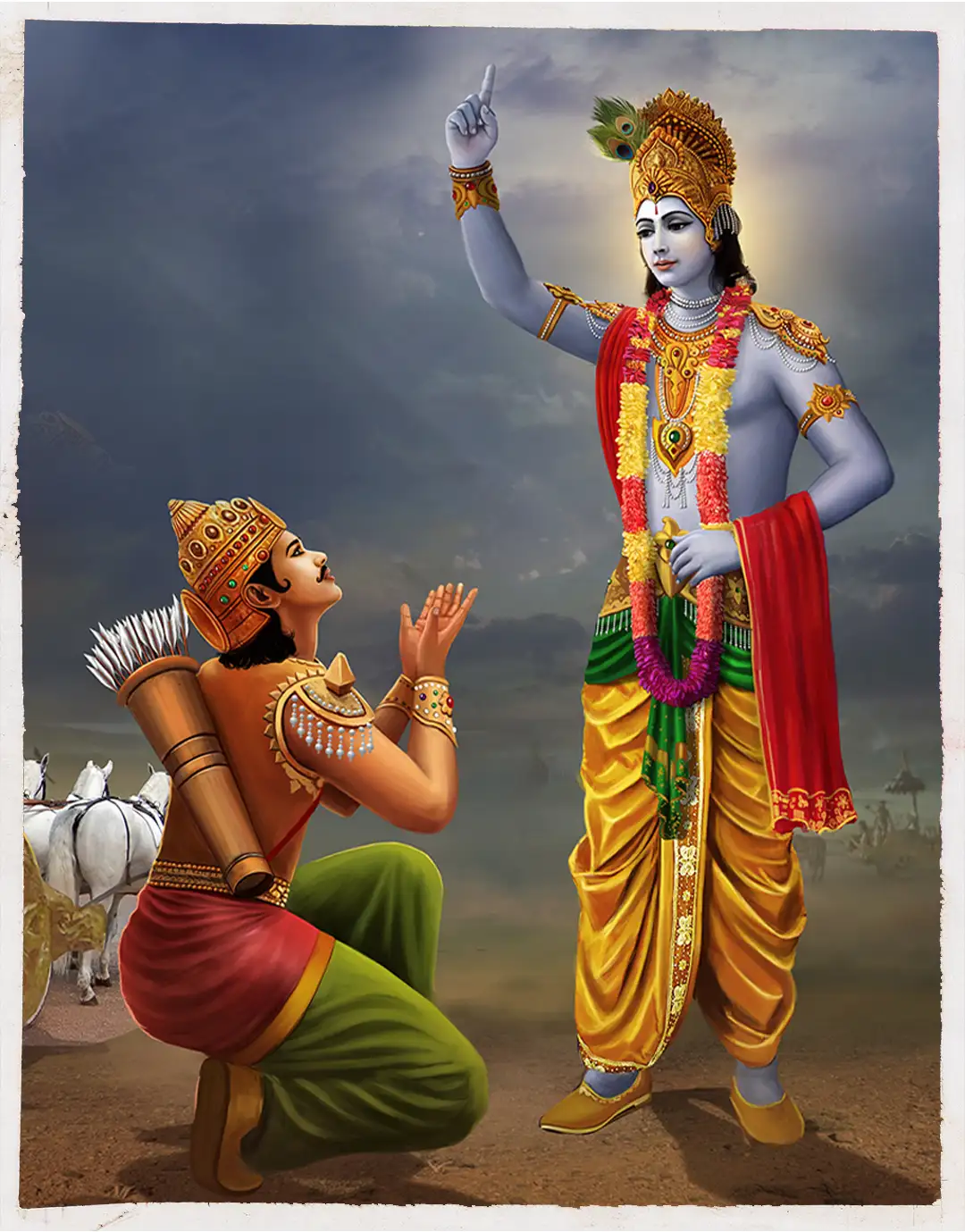
सर्वधर्मान्परित्यज्य मामेकं शरणं व्रज ।
अहं त्वां सर्वपापेभ्यो मोक्षयिष्यामि मा शुच: ॥ 66॥
sarva-dharmān parityajya mām ekaṁ śharaṇaṁ vraja
ahaṁ tvāṁ sarva-pāpebhyo mokṣhayiṣhyāmi mā śhuchaḥ
BG 18.66: Abandon all varieties of dharmas and simply surrender unto Me alone. I shall liberate you from all sinful reactions; do not fear.
Far from encouraging the neglect of responsibility, this verse reveals the culmination of spiritual life. Every discipline, every scripture, every act of worship, and every sacred mantra ultimately prepares the heart for complete trust in God. Surrender means recognising Krishna not merely as the Creator of the universe, but as our eternal refuge, guide, and most intimate well-wisher.
The residents of Braj embodied this spirit effortlessly. Their confidence rested not in their own strength but in Krishna's loving care. When storms threatened, they looked towards Him. When joy overflowed, they shared it with Him. When ordinary tasks filled their day, those tasks naturally became acts of devotion because Krishna remained the centre of their thoughts. Their lives demonstrate that surrender is not a single event but a way of living; one in which every thought, word, and action gradually becomes an offering to the Lord.
Jagadguru Shri Kripalu Ji Maharaj often explained that Shree Krishna's Vrindavan pastimes reveal the unparalleled sweetness of madhurya bhava. In many manifestations of God, devotees naturally experience reverence and awe. In Vrindavan, however, Krishna lovingly conceals His supreme majesty so that relationships based on intimacy can flourish. Mother Yashoda sees her beloved son, the cowherd boys see their closest friend, and the gopis see the very life of their hearts. Their love flows without calculation because it is untouched by awareness of His overwhelming grandeur.
This sweetness is not sentimental; it is the highest revelation of divine love. Krishna delights when the devotee approaches Him not out of fear or obligation, but with spontaneous affection. The enchanting names Gopala, Govinda, Murlidhar, and Shyamsundar remind us that the Supreme Lord is infinitely approachable. He is not distant from those who seek Him with sincerity. He lovingly responds to every heart that longs for His company.
Swami Mukundananda beautifully expands upon this teaching through the principle of Nishkam Bhakti: devotion free from selfish desire. It is natural to turn towards God during times of difficulty, and the scriptures assure us that Krishna compassionately hears every sincere prayer. Yet as devotion matures, the devotee's motivation also changes. Rather than asking, "Lord, what can You give me?" the heart gradually begins asking, "How may I serve You? How may I remember You more constantly? How may I bring You joy?"
That subtle transformation marks the beginning of pure bhakti.
The five mantras explored in this article become powerful companions on that journey. Each time we lovingly repeat Krishna's names, we gently redirect the mind away from temporary concerns and towards the eternal source of peace and happiness. Over time, remembrance becomes more natural, devotion grows deeper, and the heart discovers a joy that no worldly achievement can equal.
Janmashtami therefore invites us to celebrate far more than a historical event. It invites us to renew our relationship with Shree Krishna. The child who appeared in the prison cell of Mathura, played joyfully through the forests of Vrindavan, lovingly guided Arjun on the battlefield, and revealed the timeless wisdom of the Bhagavad Gita continues to call every soul today through His divine names.
Whether you begin with the Mahamantra, meditate upon Om Namo Bhagavate Vasudevaya, reflect on the Krishna Gayatri, remember Gopala, or seek refuge through Om Krishnaya Vasudevaya… Govindaya Namo Namah, approach each prayer with love rather than haste. Allow every repetition to become an offering of gratitude. Let every name remind you that Krishna is never far away.
As you celebrate Janmashtami 2026, may your home be filled with devotional songs, your mind with remembrance of Krishna's beautiful pastimes, and your heart with the selfless love that delighted the residents of Braj.
Call To Action: Continue Your Spiritual Journey with JKYog
If this exploration of Shree Krishna's divine avatar has inspired you to deepen your relationship with God, continue your journey through the authentic teachings of Swami Mukundananda and JKYog.
Study the Bhagavad Gita verse by verse through Swamiji's practical commentaries:

Immerse yourself in his illuminating discourses on the Srimad Bhagavatam, and experience guided Roop Dhyan meditations, bhajans, daily inspiration, and spiritual challenges through the Bhagavad Gita & Krishna Bhakti App:

 JKYog
JKYog
Frequently Asked Questions
1. Why is Janmashtami an ideal time to chant Krishna's names?
Janmashtami celebrates the divine appearance of Shree Krishna on Earth. It is an especially auspicious time to remember His names, reflect on His pastimes, study His teachings, and deepen one's personal relationship with Him through loving devotion.
2. Which Krishna mantra is best for beginners?
The Mahamantra is one of the most widely practised and accessible prayers for devotees of all backgrounds. Its simple yet profound invocation of Shree Radha and Shree Krishna makes it an excellent place to begin.
3. Do I need to understand Sanskrit before reciting these mantras?
No. While learning the meanings enriches the experience, sincerity and devotion are more important than linguistic knowledge. As your understanding grows, the prayers naturally become even more meaningful.
4. How can I make chanting more meaningful?
Reflect on the meaning of each mantra, visualise Shree Krishna's form and pastimes, minimise distractions, and approach the practice with humility, gratitude, and consistency. The goal is loving remembrance rather than mechanical repetition.
5. How do Swami Mukundananda's teachings help deepen Krishna devotion?
Swami Mukundananda explains the timeless wisdom of the Bhagavad Gita, Srimad Bhagavatam, and the path of bhakti in a practical and accessible way. His teachings help seekers cultivate selfless devotion, strengthen their relationship with Shree Krishna, and integrate spirituality into everyday life.