
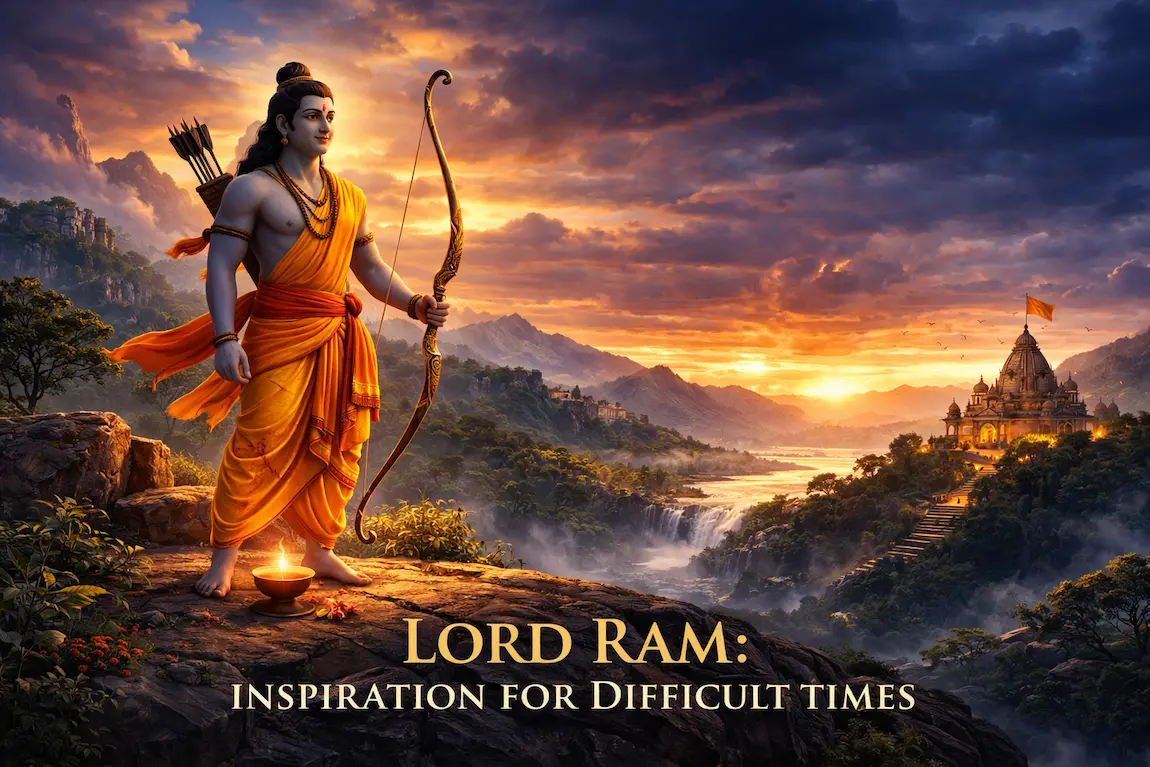
How the Prince of Ayodhya Teaches Us to Stand Steady When Life Falls Apart
There are moments in every human life when the ground seems to move.
A diagnosis arrives. Relationship breaks. A betrayal comes from where love was expected. A dream built over years collapses in a single afternoon. In such moments, we discover something uncomfortable and unavoidable: most of us are far less prepared for difficulty than we imagined.
We are trained to pursue success, not steadiness. We learn how to acquire, but not always how to endure. We master performance, but not peace. We are taught to strengthen our résumé, yet neglect the architecture of our inner life.
And this is why difficult times feel so devastating. They do not merely injure our circumstances; they expose the fragility of our interpretation.
Swami Mukundananda ji often explains that joy and sorrow do not truly come from the event itself. They arise from the meaning we assign to the event. The outer situation may be painful, but the inner commentary determines whether that pain becomes poison or purification. Two people may pass through the same storm, yet one emerges bitter while the other emerges luminous. What made the difference? Not the storm. The disposition.
The Vedic tradition gives a name to this inner disposition: vritti.
If the vritti is narrow, even a small problem appears unbearable. If the vritti is expansive, even a great crisis becomes manageable. The challenge, then, is not merely to remove difficulty from life, but to cultivate the kind of consciousness that is larger than difficulty.
This is where Lord Ram enters—not merely as a revered deity or epic hero, but as one of humanity’s greatest models of resilience.
When life became unfair, He did not become bitter.
When destiny turned sharply, He did not collapse.
When injustice arrived wearing the face of family, He did not let love turn into hatred.
When comfort vanished, His dignity did not.
In times like ours—anxious, reactive, overstimulated, exhausted—the life of Lord Ram feels less like ancient scripture and more like urgent medicine.
Because the true question of the Ramayan is not, “What happened to Lord Ram?”
It is: What happened within Lord Ram when everything around Him changed?
And in that question lies the answer for all of us.
The Night Before the Crown
Imagine Ayodhya on the eve of coronation.
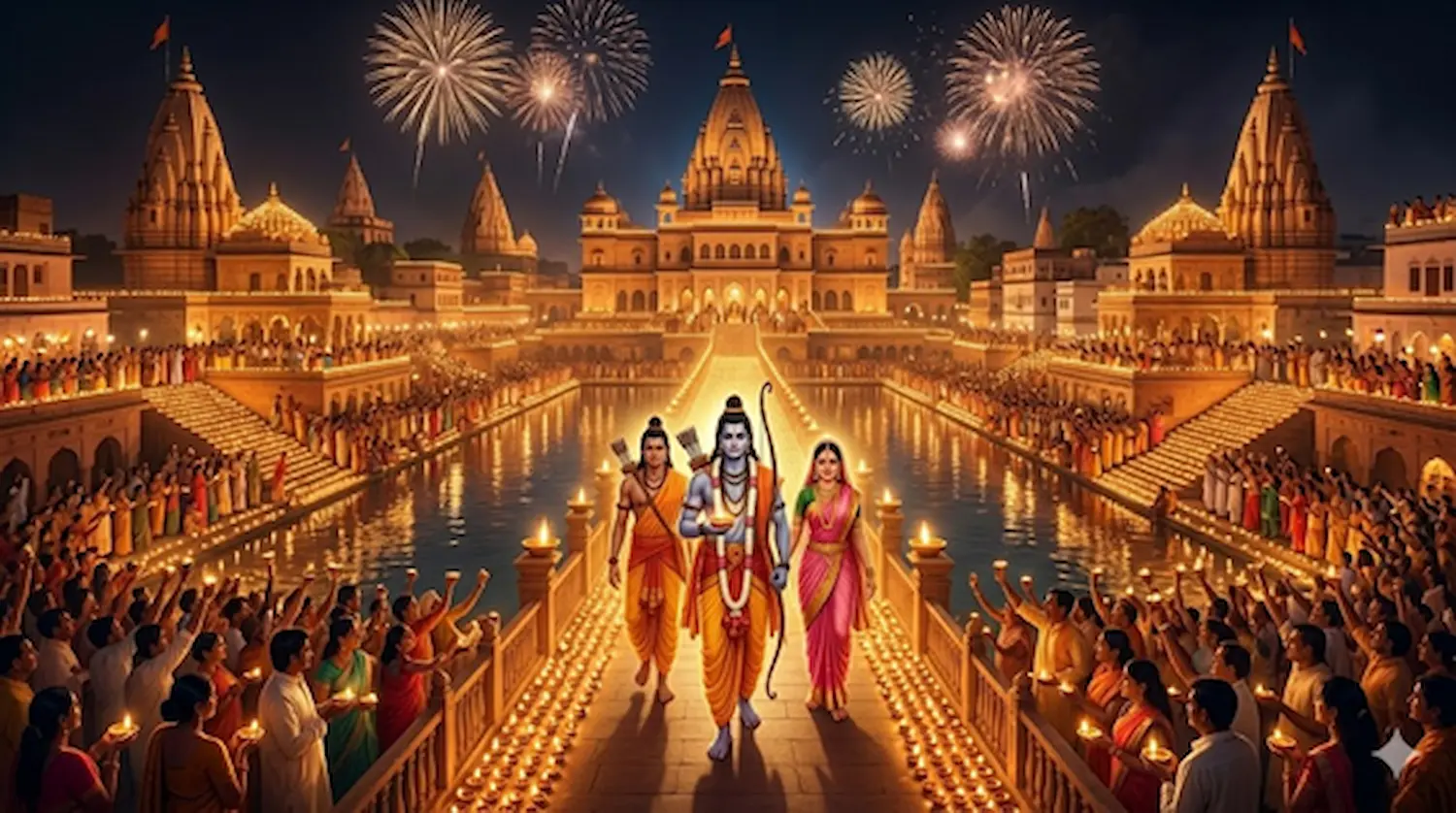
The city is glowing. Lamps are being prepared. The streets are restless with anticipation. Servants hurry through marble corridors. Mothers offer prayers with tears of joy. The kingdom is breathing in celebration, for the beloved prince—gentle, capable, righteous, radiant—will be crowned king at dawn.
Everything appears settled. History seems to be moving in the right direction.
Then, in a single turn, it all collapses.
Queen Kaikeyi invokes two boons granted long ago by King Dasharath. She asks that her own son Bharat be crowned instead, and that Lord Ram be exiled to the forest for fourteen years - Immediately.
It is hard to overstate the emotional violence of this moment.
Lord Ram is not losing a minor convenience. He is losing everything that the world considers security: power, position, comfort, home, status, inheritance, and the visible shape of His future. More than that, the blow is not delivered by an enemy on a battlefield, but by someone within the inner circle of the family – His own mother.
This is the kind of suffering that breaks people—not only because of what is lost, but because of how suddenly and personally it is lost.
Ayodhya weeps. Dasharath shatters. Lakshman burns with rage. The city cannot bear the thought of Lord Ram walking away from the throne to wander the forest dressed in bark.
And yet, at the center of this emotional earthquake, Lord Ram stands smiling.
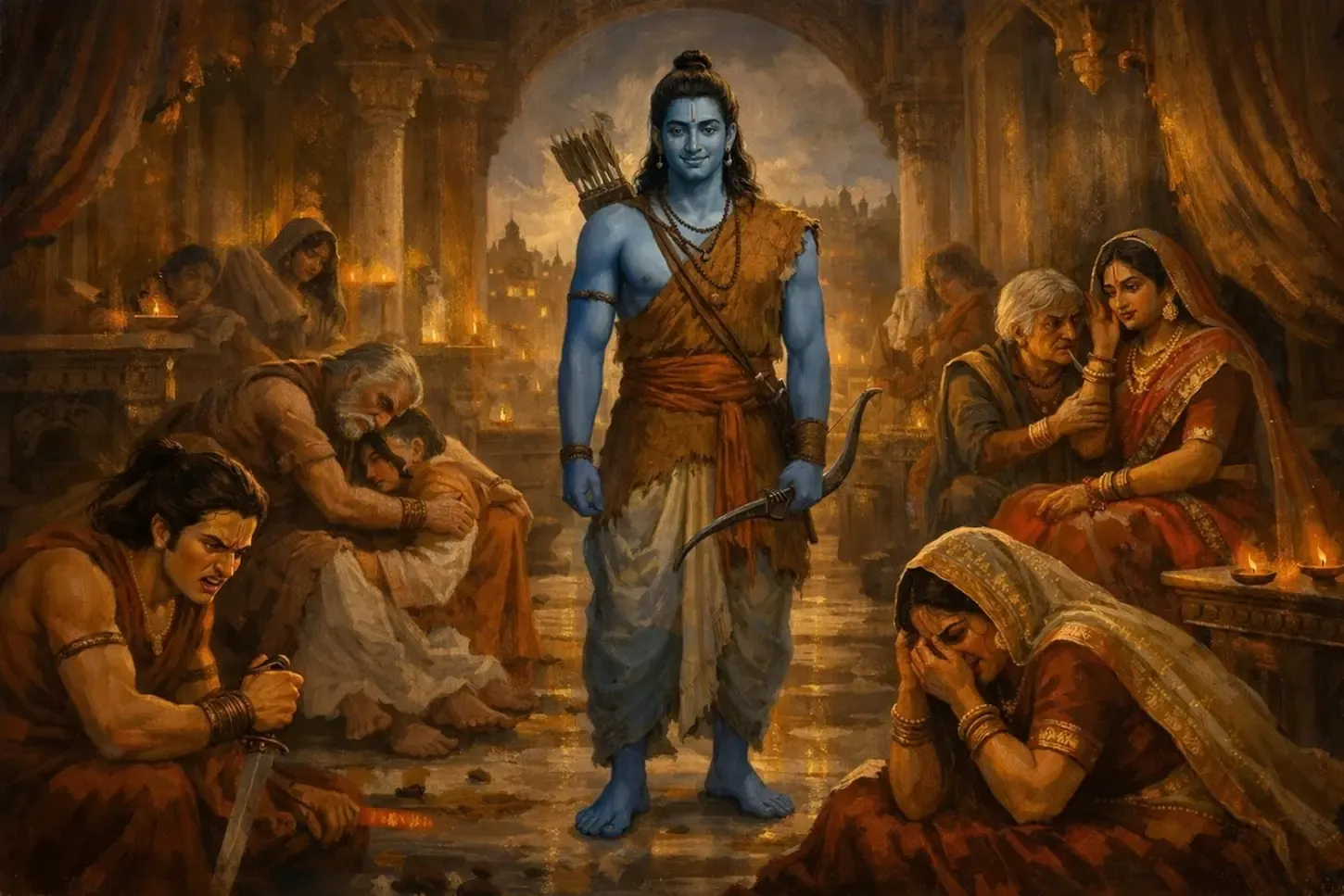
Swami Mukundananda ji highlights this astonishing truth: according to the tradition, Lord Ram’s joy increased four fold. He did not receive exile as humiliation; He received it as an opportunity.
Who thinks like this?
Only one whose mind is governed by dharma rather than ego.
Where others saw defeat, Lord Ram saw several forms of gain. His father’s word would remain true. His stepmother’s desire would be fulfilled. Bharat’s greatness would have a stage upon which to shine. And the forest—far from being only a place of loss—would become a field for sacrifice, spiritual growth, and noble action.
This is not denial. It is mastery.
Lord Ram did not pretend exile was pleasant. He simply refused to let the bitterness of circumstance define the meaning of circumstance.
This is the first great lesson He gives to anyone passing through difficult times:
You may not control the event, but you still control the interpretation.
The world often tells us that maturity means getting what we want. Lord Ram shows that maturity is the ability to remain anchored even when life gives us what we never wanted.
Why Lakshman Burned and Lord Ram Did Not
Lakshman’s reaction is deeply human.
He is outraged. Furious. Protective. He sees injustice and wants to destroy it. His impulse is immediate: retaliate, overthrow, resist, correct the wrong by force if necessary.
Many of us secretly admire this. It feels strong. It feels righteous. It feels like self-respect.
But Lord Ram reveals a deeper strength.
He is not weak because He remains calm. He is powerful because He is not ruled by reaction.
He does not allow another person’s lack of dharma to determine His own conduct. He does not become smaller because someone else acted small. He does not turn one wrong into five more.
There is a profound teaching here from Swami Mukundananda ji: the perfection of a person is known by how well they can live with imperfect people.
That is a hard truth.
Anyone can be graceful with the kind. Anyone can be patient with the reasonable. Anyone can be loving when love is returned. But the true test of character comes when the environment becomes unfair, when the people around us become difficult, when the script we expected is torn apart in front of us.
Lord Ram passed that test completely.
He continued to treat Mother Kaikeyi with reverence. He did not weaponize memory. He did not rehearse her past affection only to compare it against her present cruelty. He refused to let one painful action erase a lifetime of relationship.
How different the modern mind is.
We often let one insult eclipse a thousand kindnesses. We let one disappointment poison an entire history. We reduce complex people to a single wound they gave us. Lord Ram does the opposite. He keeps his consciousness elevated enough to remember the whole, not merely the hurt.
That is not passivity. That is spiritual intelligence.
And in difficult times, that intelligence becomes life-saving.
The Eight Pillars of Resilience in Lord Ram’s Character
When Sage Valmiki sought the ideal human being, Sage Narad pointed him toward Lord Ram. The qualities he describes are not ornamental virtues for admiration from afar; they are structural support for the human soul.
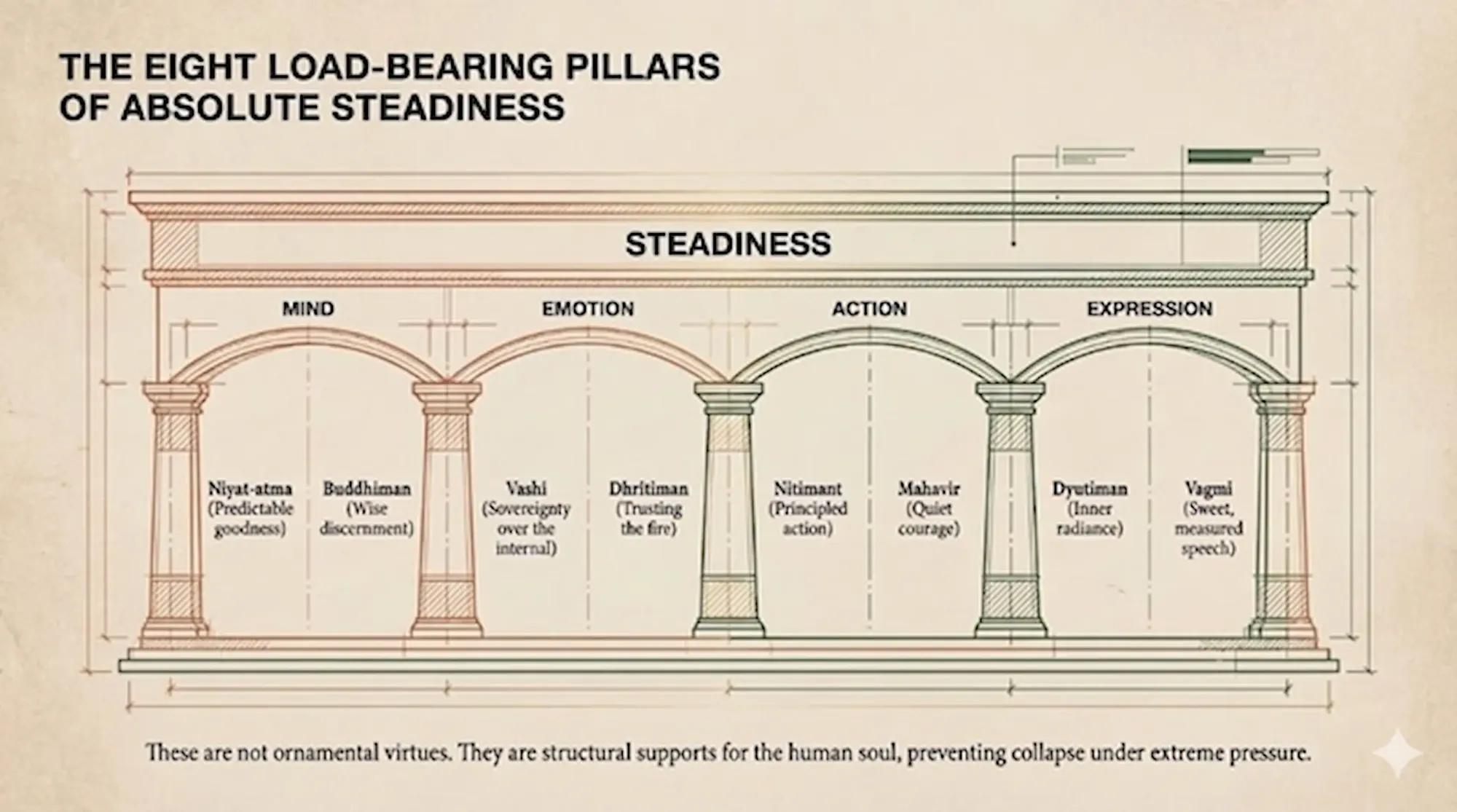
Swami Mukundananda ji draws out these qualities in a way that makes them deeply relevant even now. Each one is a pillar of resilience.
1. Niyat-atma — The Controlled Mind
A controlled mind is not a repressed mind. It is a trained mind.
Lord Ram’s goodness was predictable. He was not loving on one day and volatile on the next. He did not become unsafe under pressure. He did not force others to manage the weather of His moods.
This is a forgotten virtue.
In today’s culture, inconsistency is often excused as authenticity. But in reality, a moody person creates fear. Others walk carefully around them, not knowing what version of them will appear. Lord Ram was the opposite. His inner discipline made Him trustworthy.
In difficult times, the greatest gift you can give your family, your colleagues, your children, or your community is this: predictable goodness.
2. Mahavir — Supreme Courage
Courage is often imagined as battlefield heroism. But the deeper heroism is inward.
It is one thing to fight an external enemy. It is another to face the collapse of your plans without collapsing yourself.
Lord Ram’s courage was not only in defeating Ravana. It was in accepting exile without resentment, in walking away from entitlement without inner fracture, in continuing forward without self-pity.
That is Mahavir.
Not loud bravery. Quiet strength.
3. Dyutiman — Inner Radiance
Some people lose their light the moment circumstances turn dark. Their face becomes the mirror of their problem.
But Lord Ram remained radiant.
His glow did not come from the palace; it came from His consciousness. When the throne disappeared, the radiance stayed. When royal garments were replaced with bark, the dignity remained untouched.
This is one of the most beautiful teachings for difficult times:
Do not let the situation steal your face.
When you preserve your inner light, you have already prevented suffering from conquering you completely.
4. Dhritiman — Fortitude Rooted in Faith
Patience without meaning becomes torture. But patience supported by faith becomes fortitude.
Dhriti is the strength to remain steady because one trusts that this moment, however painful, is not empty. Something is being formed. Something is being refined. Something is being cooked in the fire.
Swami Mukundananda ji gives this insight so powerfully: the crisis may be the very heat required to prepare your character.
Lord Ram embodied this. He did not merely endure difficulty; He held it with meaning.
5. Vashi — Mastery Over the Self
To be vashi is to be sovereign over one’s internal world.
Most suffering intensifies because we become dependent on specific outcomes. “I can only be happy if this works.” “I can only be peaceful if this person changes.” “I can only feel secure if life goes according to plan.”
This is emotional bondage.
Lord Ram was free from that bondage. The forest and the palace did not define His peace. Comfort and discomfort did not own Him.
This is why He remained unshaken.
6. Buddhiman — Wise Discernment
Wisdom is not the ability to gather information. It is the capacity to choose rightly.
Lord Ram constantly chose shreyas—the truly beneficial—over preyas, the immediately pleasant. He did not ask, “What feels good now?” He asked, “What is right? What preserves dharma? What serves the deeper good?”
In difficult times, this discernment matters immensely. Crisis tempts us toward shortcuts, retaliation, rash decisions, or emotional indulgence. Wisdom keeps us from solving pain with future regret.
7. Nitimant — Principled Action
Lord Ram did not live by impulse. He lived by principle.
This is why His life still speaks across centuries. Impulse is unstable. Principle creates legacy.
A nitimant person brings harmony where others bring friction. They become a bridge instead of an explosion. They think beyond the present emotion into the larger order of life.
Lord Ram never sacrificed dharma for convenience. And this is what made Him great, not merely impressive.
8. Vagmi — Sweet and Controlled Speech
One of the surest signs of inner mastery is speech.
Anyone can speak sweetly when praised. The test is whether sweetness remains when one is wounded. Lord Ram’s speech did.
He did not lash out at Mother Kaikeyi. He did not poison the atmosphere with bitterness. Even in painful moments, His words remained dignified, measured, and respectful.
In modern life, where one careless sentence can destroy a relationship, a family atmosphere, or years of trust, this quality is not minor. It is transformative.
The person who controls the tongue controls the direction of conflict.
The Inner Dam: Dharma and Vritti
Swami Mukundananda ji explains that dharma functions like an inner dam.
A river is beautiful when contained, destructive when uncontained. So too with the mind. Without dharma, every insult floods us, every loss drowns us, every disappointment invades the inner world like water breaching a city.
Dharma does not remove the river. It regulates it.
This is why Lord Ram is called Vigrahavan Dharma—dharma in embodied form. He shows us what it means to build an interior structure strong enough to handle the floods of life.
If hunger comes, the untrained mind becomes irritable.
If insult comes, the ego retaliates.
If loss comes, despair rushes in.
But when dharma has been cultivated, the responses change.
Hunger becomes an occasion for self-control.
Insult becomes a test of poise.
Loss becomes a training ground for maturity.
The outer event may remain the same. The inner civilization changes.
And this is the essential teaching for difficult times:
Your greatest work is not always to change the circumstance first. It is to prevent the circumstance from flooding your consciousness.
Lord Ram and Ravan: Two Models of Life
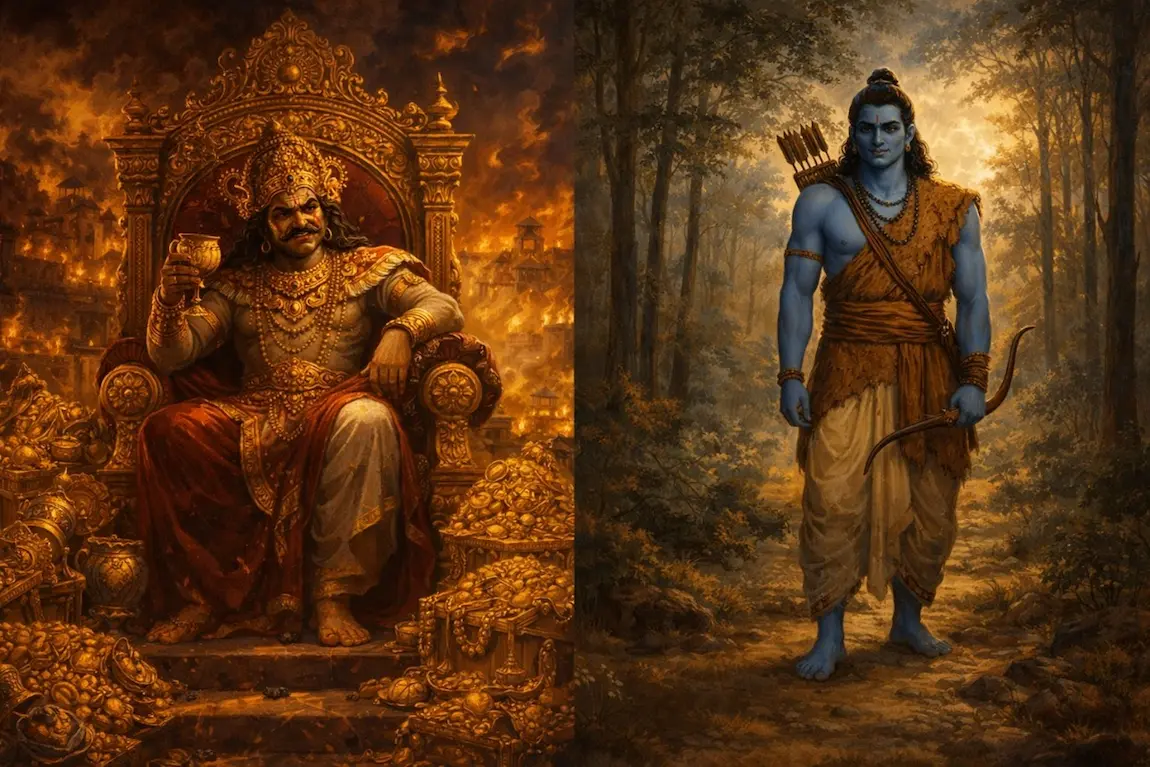
The Ramayan offers not only a hero to follow, but a contrast to study.
Ravan had everything the world admires. Wealth. Power. Luxury. A golden kingdom. Influence. Skills. Prestige. By the standards of material living, he was successful beyond imagination.
But his inner life was diseased.
He was restless, consumed by ego, enslaved by desire, unable to govern himself though he governed an empire. His “living” was grand, but his “life” was miserable.
Lord Ram, by contrast, often had difficult living. He walked on forest floors. Faced exile. Endured battle. Lost comfort. Encountered separation and sorrow. Yet His inner life remained noble, clear, and purposeful.
This distinction is crucial.
Many modern people are trying to improve their living while neglecting their life. They want better furniture for a disturbed mind. But no palace can shelter an agitated consciousness.
Lord Ram teaches us that a difficult outer life can still contain profound joy. Ravan warns us that an impressive outer life can still conceal collapse within.
So, the real question is not only, “How successful am I?”
It is: What kind of inner world am I carrying through my success or struggle?
When Effort Ends: The Refuge of Ashraya
There comes a point in every difficulty when effort is no longer enough.
You have done what you can. Thought what you can. Planned what you can. Tried what you can. And yet the uncertainty remains.
At that point, the heart requires more than strategy. It requires refuge.
Swami Mukundananda ji teaches the importance of ashraya—taking shelter. Human beings suffer not only because of worldly attachment, but because they try to carry existence alone. The myth of the self-made person is spiritually exhausting. It breeds pride in success and panic in uncertainty.
But grace is always more involved in our lives than we realize.
How many unseen factors allowed us to reach where we are? How many doors opened that we did not create? How many people helped, protected, taught, encouraged, corrected, or sustained us? How many invisible arrangements preceded what we proudly call “my achievement”?
Difficulty strips away illusion and reminds us: we are supported far more than we know.
This recognition is not weakness. It is relief.
Lord Ram walked with effort, courage, wisdom, and discipline but never in isolation from the Divine order.
And so must we.
Difficult times become unbearable when we believe everything depends entirely on us. But when we remember the presence of the Dhata, the Supporter, the Giver, the unseen Sustainer, panic begins to loosen.
Ashraya does not mean passivity. It means doing one’s duty while resting one’s heart in a higher shelter.
What Lord Ram Means for Us Today
We may not be exiled to a forest. But we know exile in other forms.
Exile from certainty.
Exile from former versions of ourselves.
Exile from the life we thought we would have.
Exile from health, security, recognition, or emotional ease.
In these moments, Lord Ram becomes deeply relevant.
He teaches us that crisis is not the end of dignity.
He teaches us that unfairness need not poison our conduct.
He teaches us that sorrow need not define consciousness.
He teaches us that losing position is not the same as losing greatness.
He also teaches us something even more radical: some of the most painful turns in life may become the very places where our highest self is revealed.
If Lord Ram had never been exiled, the world would have known a prince. Because He was exiled, the world came to know the full majesty of His character.
Sometimes difficulty does not interrupt destiny. It unveils it.
Conclusion: Becoming Lord Ram-like in Difficult Times
The world does not merely need successful people. It needs steady people.
It needs human beings whose inner state is not for sale, whose ethics are not mood-dependent, whose speech remains dignified under pressure, whose courage is calm, and whose faith can bear the weight of uncertainty.
Lord Ram is not merely an object of reverence. He is an invitation.
An invitation to enlarge our vritti.
To choose dharma over reaction.
To release rights when righteousness calls for sacrifice.
To remain radiant when conditions darken.
To treat difficult people without becoming difficult ourselves.
To master the self before trying to master the world.
This is how inspiration becomes practice.
The next time life turns unexpectedly—when a door closes, when injustice stings, when the future trembles—pause before asking, “Why is this happening to me?”
Ask instead:
What would Lord Ram see here that I am not yet seeing?
What interpretation would preserve my dignity?
What response would honor dharma?
How can this fire cook my character instead of burning my peace?
That is where the transformation begins.
Because difficult times do not merely test us.
They reveal us.
And if we walk with the wisdom of Lord Ram, they can also refine us into something unshakeable.
CALL TO ACTION
If this reflection on Lord Ram stirred something within you, do not let it remain just a passing inspiration.
Make it a turning point.
👉 Deepen your understanding of dharma, resilience, and devotion by learning directly from the wisdom of Swami Mukundananda ji. His teachings bring ancient truths into modern life with clarity and depth.
🎥 Subscribe to his YouTube channel
📖 And if Lord Ram’s life resonated with you, continue your journey:
Explore more blogs on Lord Ram, resilience, and inner strength—because one reading inspires, but repeated reflection transforms.
CALL TO ACTION
If this reflection on Lord Ram stirred something within you, do not let it remain just a passing inspiration.
Make it a turning point.
👉 Deepen your understanding of dharma, resilience, and devotion by learning directly from the wisdom of Swami Mukundananda ji. His teachings bring ancient truths into modern life with clarity and depth.
👉 Subscribe to Swami Mukundananda’s YouTube Channel
📖 And if Lord Ram’s life resonated with you, continue your journey:
Explore more blogs on Lord Ram, resilience, and inner strength—because one reading inspires, but repeated reflection transforms.
Explore more teachings on Lord Ram and the Ramayana:
https://www.jkyog.org/blog/tag/ramayana/
✨ Do not just admire Lord Ram.
Begin to live like Him—one thought, one response, one moment at a time.
FAQ
1. Why is Lord Ram considered an inspiration during difficult times?
Because Lord Ram demonstrated perfect emotional balance, dignity, and dharma even when facing exile, loss, and injustice. His life teaches how to remain steady when circumstances collapse.
2. What does Swami Mukundananda ji teach about handling suffering?
Swami Mukundananda ji explains that pain comes from events, but suffering comes from interpretation. By changing our inner perspective, we can transform difficulty into growth.
3. What is vritti and why is it important?
Vritti refers to the inner state or mental disposition. A strong vritti allows a person to remain calm and resilient even in major crises.
4. How can I apply Lord Ram’s teachings in daily life?
By practicing:
- Emotional control
- Dharma-based decisions
- Calm responses instead of reactions
- Faith during uncertainty
5. Was Lord Ram affected by suffering or completely detached?
Lord Ram felt emotions but was not controlled by them. His mastery lay in responding with wisdom rather than reacting impulsively.