
Day 9 of Navratri is dedicated to Maa Siddhidatri, the ninth and final form of Maa Durga, who represents fulfillment, perfection, and the granting of siddhis—spiritual powers or accomplishments. Her name is derived from two Sanskrit words: Siddhi meaning perfection, spiritual power, or attainment, and Datri meaning giver. Thus, Maa Siddhidatri is revered as the bestower of siddhis and the ultimate source of divine grace.
Worshiping Maa Siddhidatri on the ninth day of Navratri symbolizes the completion of the spiritual journey. After grounding, discipline, courage, compassion, fearlessness, and purification, the soul is finally ready to receive divine blessings and experience union with the Supreme. This day is also celebrated as Maha Navami, one of the most auspicious days of the festival.
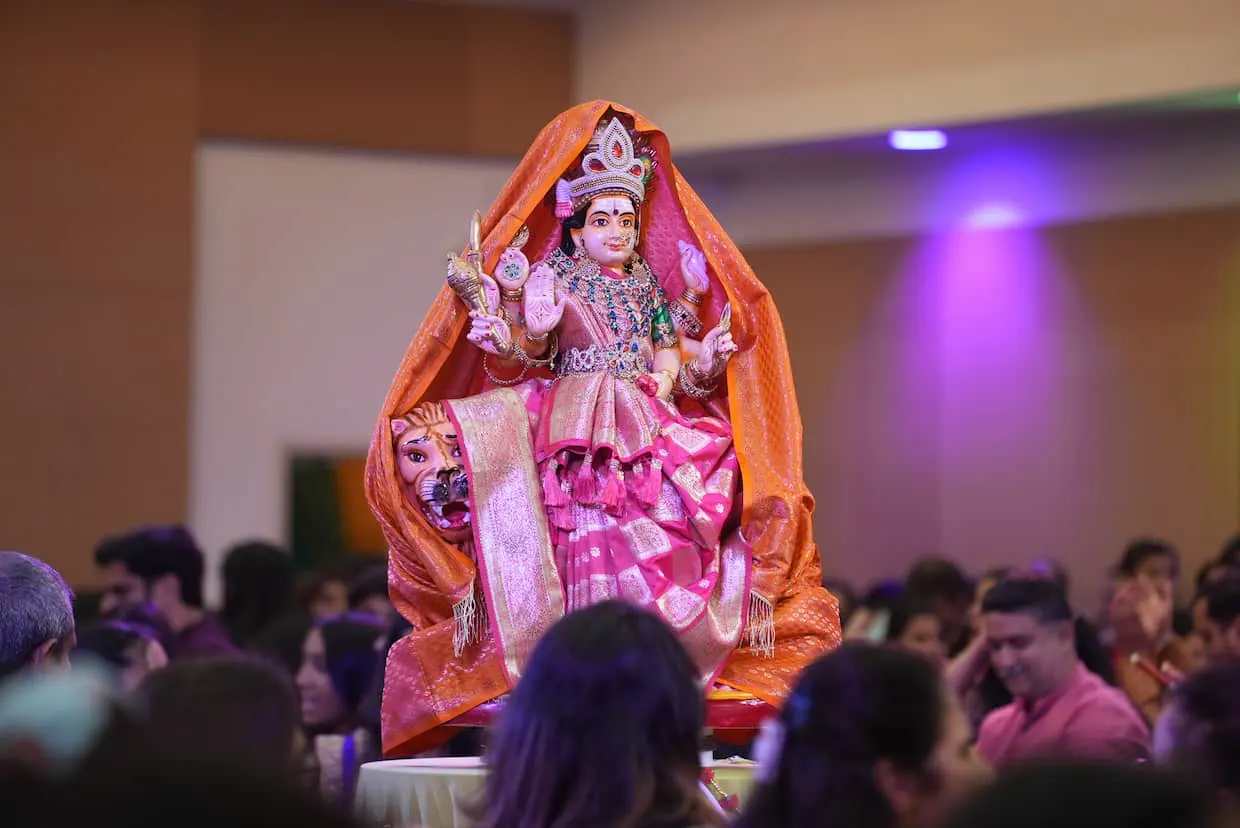
🌺 Navratri Mahotsav 2025 Dallas – Durga Puja, Garba & Dandiya Nights 🌺
Celebrate Navratri 2025 at Radha Krishna Temple of Dallas from Sept 21–Oct 1! Click here to sign up for 9 Days of Durga Pujas and Durgashtami Havan.
Introduction
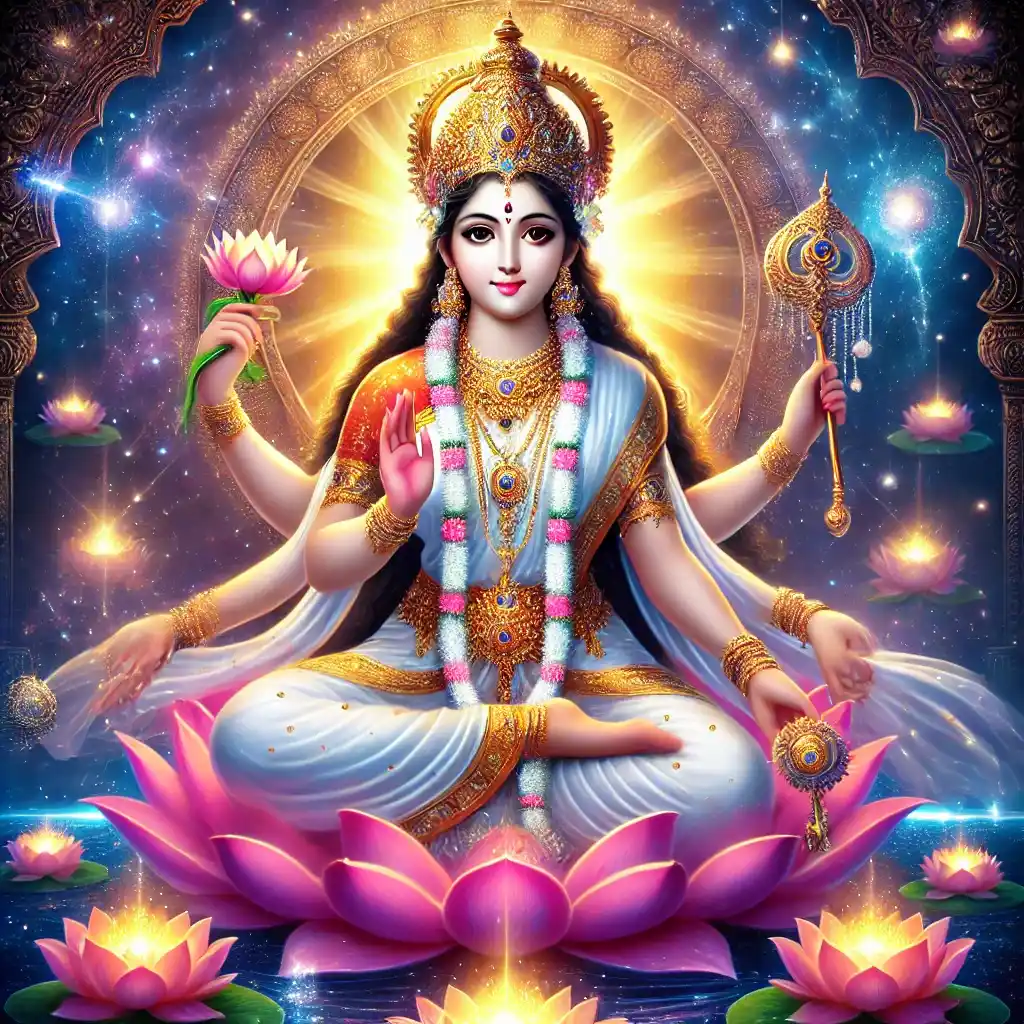
Navratri is a sacred inward journey, and Day 9 represents its culmination. Worship of Maa Siddhidatri marks the completion of the soul’s ascent through all stages of spiritual evolution. She is often depicted seated on a lotus, radiating divine bliss, and surrounded by devas, rishis, and yogis who revere her as the source of all siddhis.
Maa Siddhidatri grants eight primary siddhis—Anima, Mahima, Garima, Laghima, Prapti, Prakamya, Ishitva, and Vashitva—and various other divine blessings. But more than these mystical powers, she bestows the ultimate siddhi: liberation (moksha), the perfection of the soul.
The Story of Maa Siddhidatri
The Source of Siddhis
The Devi Purana describes that when the universe was created, the Trimurti (Brahma, Vishnu, Shiva) worshiped Adi-Parashakti for strength and guidance. Pleased with their devotion, the Goddess manifested as Maa Siddhidatri and blessed them with divine siddhis to carry out their cosmic duties—Brahma for creation, Vishnu for preservation, and Shiva for destruction and regeneration.
Ardhanarishvara Form
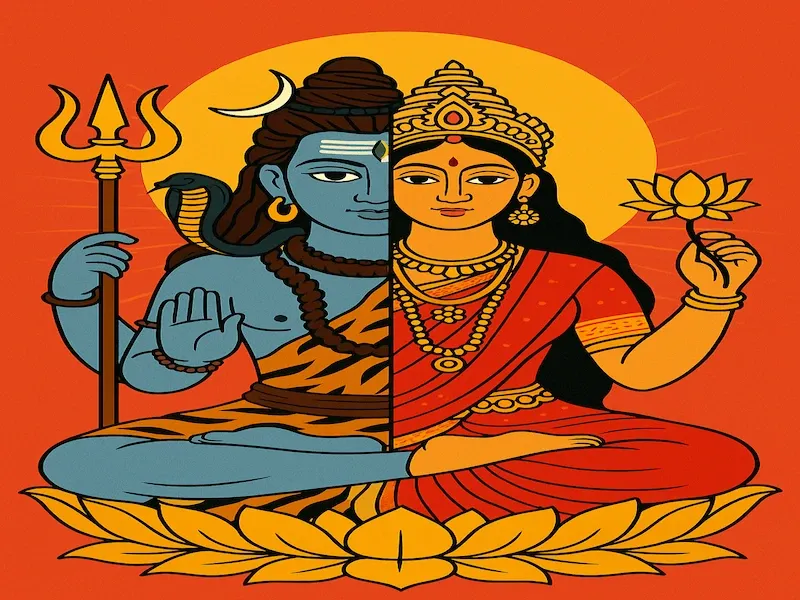
According to Shiva Purana, Maa Siddhidatri bestowed such grace on Lord Shiva that he became Ardhanarishvara—the half-male, half-female form symbolizing the union of Purusha (consciousness) and Prakriti (nature). This union signifies the ultimate balance of creation and the perfect harmony of masculine and feminine energies in the cosmos.
This story highlights that Siddhidatri represents the final step of spiritual evolution—where the individual soul (jiva) merges with the Supreme (Paramatma) and attains completeness.
Iconography of Maa Siddhidatri
Maa Siddhidatri’s appearance radiates serenity, compassion, and supreme fulfillment:
- Seated on a Lotus or Lion: The lotus symbolizes spiritual blossoming and detachment, while the lion represents courage and dharma.
- Four Arms:
- Chakra (Discus): Represents time and the cyclical nature of creation.
- Shankha (Conch): Symbolizes the primordial sound of creation (Om).
- Gada (Mace): Represents strength and authority over lower tendencies.
- Lotus: Symbol of purity and divine awakening.
- Calm Countenance: Her gentle smile reflects bliss, contentment, and divine compassion.
Day 9 of Navratri: Spiritual Significance
Attainment of Perfection
Day 9 represents the fulfillment of the spiritual quest. The seeker, having purified mind, body, and heart through the previous eight days, is now ready to experience union with the Divine.
Bestower of Eight Siddhis
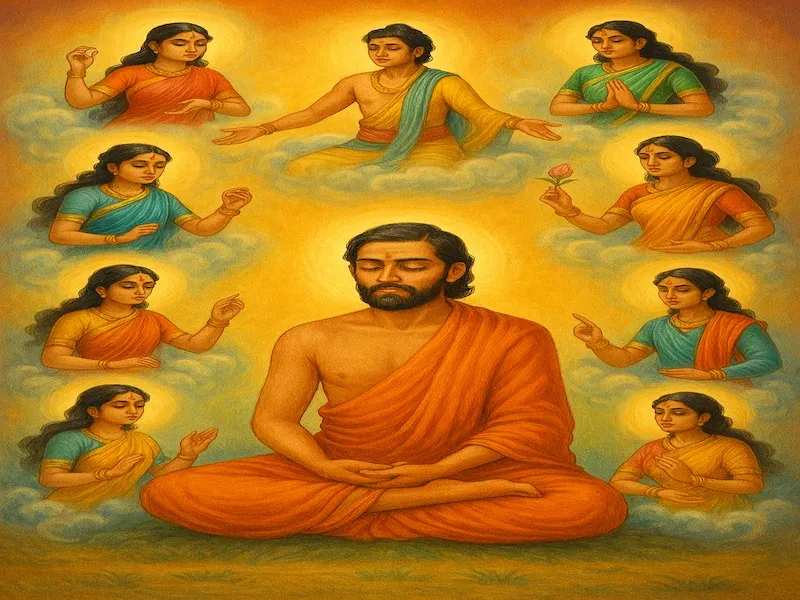
Maa Siddhidatri is believed to grant the eight major siddhis described in yogic tradition:
- Anima: Ability to become minute like an atom.
- Mahima: Ability to expand infinitely.
- Garima: Ability to become extremely heavy.
- Laghima: Ability to become weightless.
- Prapti: Ability to obtain anything desired.
- Prakamya: Ability to fulfill any desire.
- Ishitva: Ability to have lordship and control over creation.
- Vashitva: Ability to subjugate or attract everything.
While these powers are fascinating, spiritual masters remind devotees that their true purpose is not for ego gratification but for service and surrender to God.
Union with the Divine
Worship of Siddhidatri is said to awaken the Sahasrara Chakra completely, leading to self-realization. At this stage, the soul becomes free from the bondage of Maya and experiences blissful union with the Divine.
Rituals and Practices on Day 9
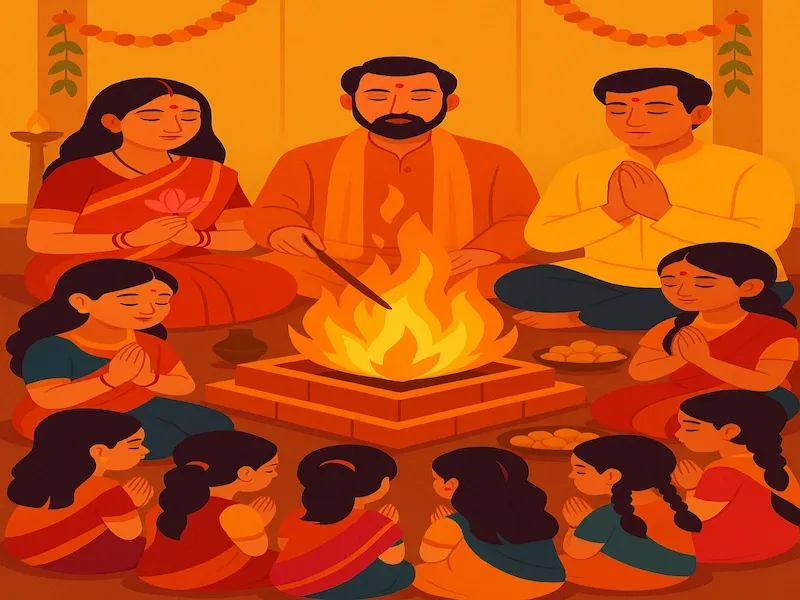
Maha Navami Puja
Day 9 is celebrated with great devotion. Devotees perform elaborate puja, offer flowers, incense, fruits, and sweets, and chant hymns in praise of the Goddess.
Homa and Yajna
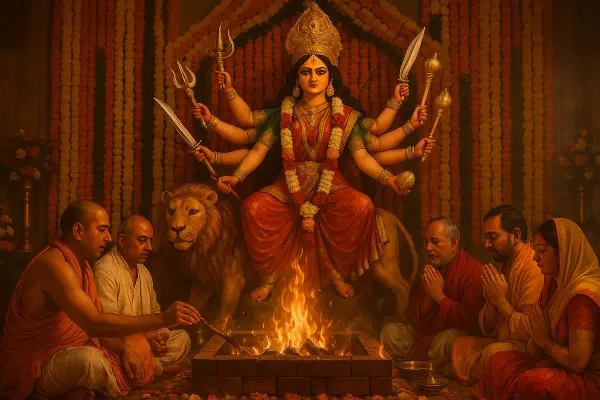
Many temples and households perform havan (sacred fire ritual) to invoke divine blessings and purify the environment.
Kumari Puja
Like Day 8, Kumari Puja is also common on Day 9, where nine young girls representing the nine forms of Durga are worshiped, fed, and given gifts.
Beej Mantra
Maa Siddhidatri’s beej mantra is:
“ॐ देवी सिद्धिदात्र्यै नमः॥”
(Om Devi Siddhidatryai Namah)
Chanting this mantra with focus brings inner fulfillment and divine grace.
Fasting and Meditation
Many devotees observe a full or partial fast on this day, dedicating their prayers to the Goddess. Meditation on the Sahasrara Chakra and chanting of mantras deepen the spiritual experience.
Symbolic Lessons from Maa Siddhidatri
- Completion of the Journey: She teaches that every spiritual effort culminates in divine grace and perfection.
- Balance of Energies: As the one who created Ardhanarishvara, she symbolizes the balance of masculine and feminine forces within us.
- Grace Beyond Effort: The ninth day reminds us that while effort is necessary, the final step is taken by divine grace.
- Liberation from Bondage: Siddhidatri liberates the soul from the cycle of birth and death, leading to ultimate freedom.
Siddhidatri in Modern Life
Maa Siddhidatri’s message is especially relevant in today’s restless world:
- Inner Fulfillment: She teaches that true success is not in external achievements but in the peace and contentment of the soul.
- Purposeful Living: By blessing devotees with wisdom, she inspires them to use their talents for the welfare of society.
- Completion of Goals: Her blessings help devotees bring their endeavors—spiritual or worldly—to fruition.
- Spiritual Balance: In a world that often pulls people in multiple directions, she reminds us of the importance of balancing material duties with spiritual growth.
Navratri as a Spiritual Journey
Day 9 completes the symbolic map of spiritual ascent:
- Day 1 – Shailaputri: Grounding and stability.
- Day 2 – Brahmacharini: Discipline and penance.
- Day 3 – Chandraghanta: Courage and balance.
- Day 4 – Kushmanda: Creative energy.
- Day 5 – Skandamata: Nurturing devotion.
- Day 6 – Katyayani: Courage to overcome negativity.
- Day 7 – Kalaratri: Fearlessness and destruction of ignorance.
- Day 8 – Mahagauri: Purification and grace.
- Day 9 – Siddhidatri: Fulfillment, perfection, and union with the Divine.
This nine-step journey transforms the seeker from being bound by material desires to becoming a liberated, blissful soul in communion with God.
Final Thoughts: Siddhidatri and Raganuga Bhakti
Swami Mukundananda emphasizes that Raganuga Bhakti, the highest form of devotion, is characterized by spontaneous, love-filled surrender to God. Maa Siddhidatri’s worship represents the flowering of this stage.
When the heart is fully purified (Mahagauri) and the ego dissolved (Kalaratri), love for God flows without effort or condition. Siddhidatri bestows the ultimate siddhi—divine love—which is greater than all yogic powers.
In this state, the devotee no longer seeks boons or powers but simply longs to serve and love God, just as the Gopis of Vrindavan lived only for Shri Krishna. This is the perfection of devotion—where the soul becomes a channel of divine love and bliss.
🌸 Call to Action
On this final day of Navratri, offer your gratitude to Maa Siddhidatri for guiding you through this nine-day journey. Meditate on the blossoming of divine love in your heart and resolve to carry this purity and devotion into every aspect of your life.
Let her blessings grant you the ultimate siddhi—unwavering, blissful union with God—where life itself becomes a celebration of divine love.
Durga Pujas
Participate in 9 Sacred Durga Pujas
Durgashtami Havan
Reserve your Spot
Food Festival
Celebrate with Every Bite
Ravan Dahan
Celebrate Dussehra with Devotion
⏳ Countdown to Navratri
Navratri begins on Sunday, Sept 21, 2025. Evening Garba starts at 7:00 PM.
Sacred Offerings for Durga Maa
Offer your devotion through seva.
Garba Workshops
Get ready for Navratri! 💃🕺 Join our Garba Workshop at Radha Krishna Temple, Dallas and learn traditional steps, Dandiya moves, and rhythm with ease.
Dates
Sept 13, 6pm - 7pm
Sept 20, 6pm - 7pm
Price
Garba Workshop: $7
Dandiya Sticks : $5
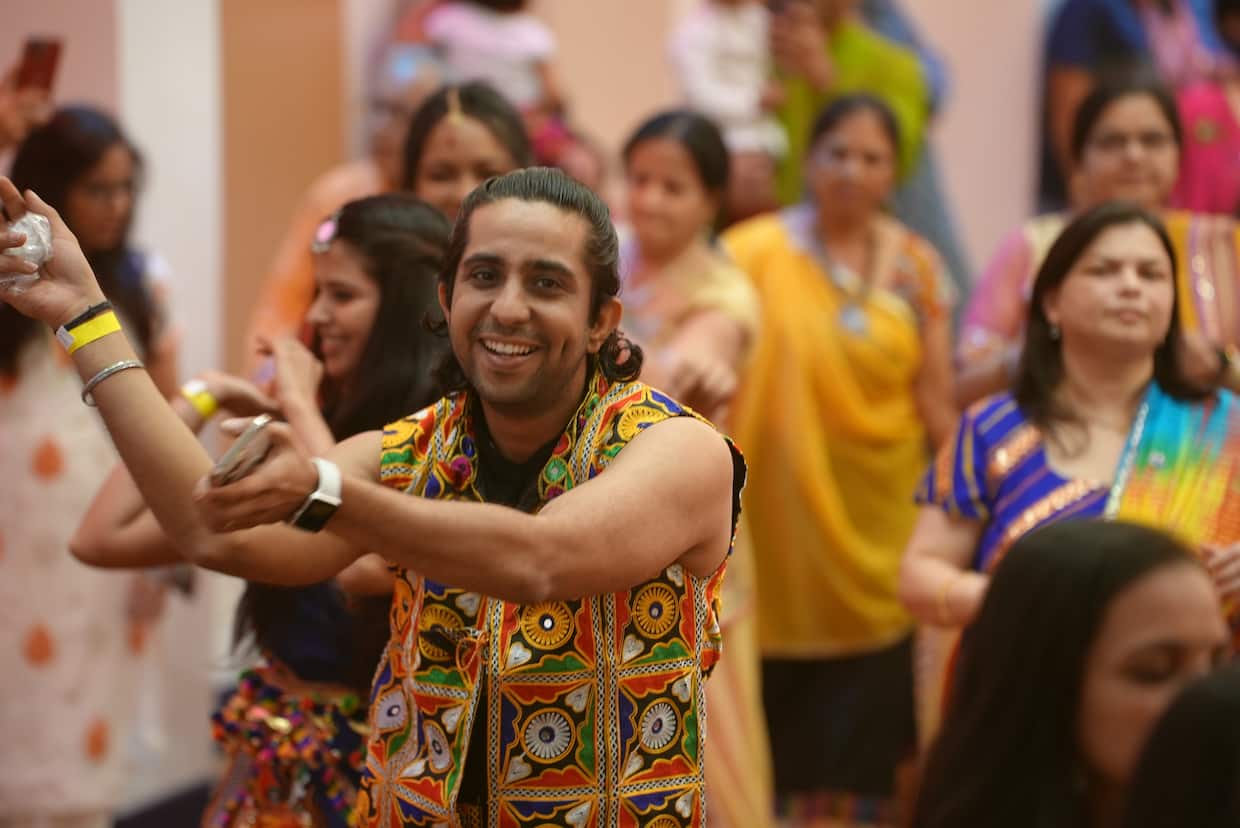
Cherished Moments of Past Navratri Celebrations
Relive the inspiring moments from past Navratri celebrations! Experience the joy, devotion, and vibrant festivities that make this event so special.


Serve, Grow, Inspire! — Volunteer for Navratri Mahotsav
Join us as a volunteer for the Navratri & Dussehra Celebrations! Experience the joy of devotion, build lifelong friendships, and serve the community while being part of these grand festivities. Sign up today to make this celebration truly special
📚 References
- Durga Saptashati (Devi Mahatmya) – Markandeya Purana
- Shiva Purana – Ardhanarishvara Story
- Swami Mukundananda. Bhagavad Gita: The Song of God
- Swami Mukundananda. 7 Mindsets for Success, Happiness and Fulfilment
- Swami Mukundananda. The Science of Mind Management
❓ FAQs
Q1: Who is Maa Siddhidatri?
Maa Siddhidatri is the ninth form of Maa Durga, known as the giver of siddhis (spiritual powers) and perfection.
Q2: What is the significance of Day 9 of Navratri?
Day 9 symbolizes the completion of the spiritual journey and the attainment of union with the Divine.
Q3: What are the siddhis granted by Maa Siddhidatri?
She bestows eight major siddhis—Anima, Mahima, Garima, Laghima, Prapti, Prakamya, Ishitva, and Vashitva—along with other spiritual blessings.
Q4: What is Maa Siddhidatri’s beej mantra?
“ॐ देवी सिद्धिदात्र्यै नमः॥” (Om Devi Siddhidatryai Namah). Chanting this mantra grants fulfillment and spiritual success.
Q5: How does her worship connect to Raganuga Bhakti?
Siddhidatri blesses the devotee with the ultimate siddhi—pure, spontaneous love for God—marking the highest stage of devotional life.
🌸🪔 Happy Navratri! 🪔🌸
May Maa Siddhidatri bless you with fulfillment, perfection, and eternal devotion. Jai Mata Di!