
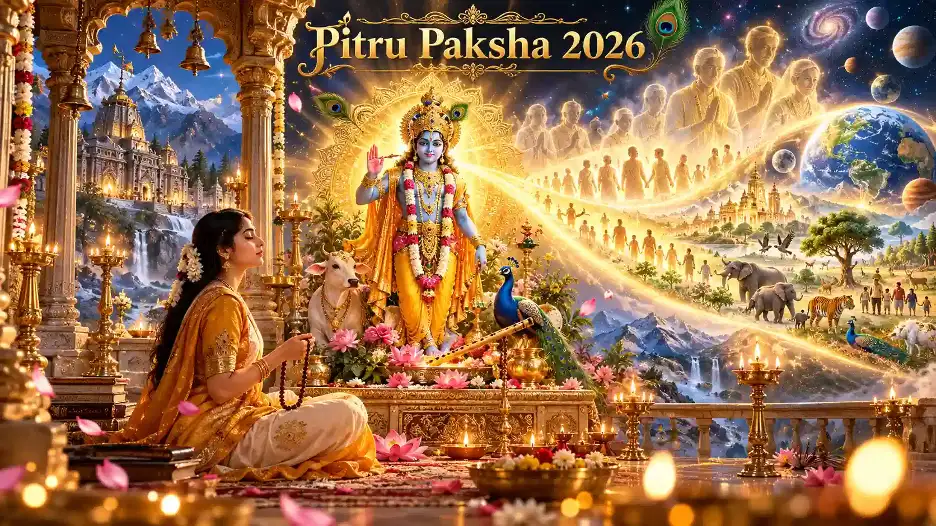
Pitru Paksha is one of the most sacred periods in the Hindu spiritual calendar: a time dedicated to remembering, honouring, and offering prayers for our ancestors. In 2026, Pitru Paksha begins on September 26 and culminates with Sarva Pitru Amavasya on October 10. During these sixteen lunar days, families traditionally perform Shraddha, Tarpan, Pind Daan, charity, and other sacred observances in remembrance of those who came before them.
Yet behind these rituals lies a deeper spiritual question: Can our devotion to God actually benefit our ancestors?
According to the Vedic understanding and the teachings associated with Swami Mukundananda, the answer is profoundly meaningful. Pitru Paksha is not simply a period for performing prescribed rituals. It can become an opportunity to cultivate gratitude, deepen our devotion to God, and pray for the spiritual welfare of our ancestors. When rituals are infused with sincere faith and bhakti, remembrance becomes worship, gratitude becomes a spiritual practice, and our connection with our ancestors takes on a deeper meaning.
The true essence of Pitru Paksha, therefore, lies not merely in what we offer, but in the devotion, faith, gratitude, and intention with which we offer it.
What Is Pitru Paksha and Why Is It Important?
Pitru Paksha, also known as Shraddha Paksha, is traditionally observed during the dark fortnight associated with the lunar month of Bhadrapada. It is regarded as a sacred period for remembering departed ancestors and performing acts of Shraddha and Tarpan for their spiritual welfare.
In the traditional Vedic understanding, our relationship with our ancestors does not end with physical death. The family is viewed as part of a larger spiritual continuum in which the actions and spiritual progress of one generation can have significance for others.
The Garuda Purana and other traditional sources describe Pitru Paksha as a special period associated with offerings made for departed ancestors. These observances are performed with the belief that sincere offerings made with Shraddha can reach the ancestors and provide them spiritual benefit.
However, the deeper meaning of Pitru Paksha goes beyond ritual.
It reminds us that none of us exists independently. The life we have received, the values passed down to us, the sacrifices made by previous generations, and even the circumstances that shaped our families form part of our personal spiritual journey. Remembering our ancestors is therefore also an expression of gratitude for the gift of life itself.
The Story of Karna and the Origin of Pitru Paksha
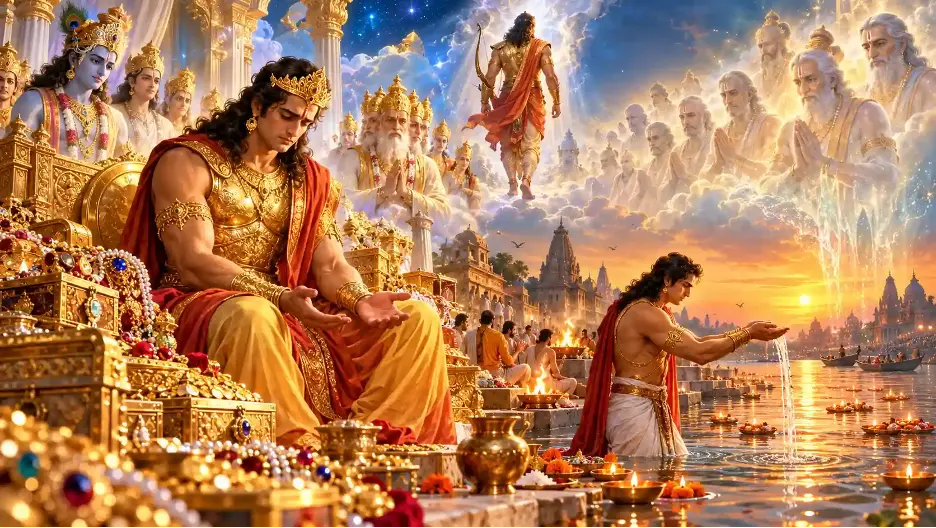
One of the well-known traditional stories associated with Pitru Paksha is the story of Karna from the Mahabharata.
Karna was renowned for his extraordinary generosity. Throughout his life, he gave abundantly to others. After his death, the traditional account describes him reaching heaven and finding that he was being offered gold and jewels instead of food.
Karna was surprised and asked why he was not receiving food. He was told that although he had generously donated material wealth during his lifetime, he had not performed offerings for his ancestors.
According to the story, Karna was granted an opportunity to return to Earth for a period of sixteen days. During this time, he performed Shraddha and Tarpan for his forefathers. This tradition is associated with the observance of Pitru Paksha.
The story conveys an important spiritual message. Material generosity is valuable, but spiritual traditions also emphasise our responsibility to remember those to whom we owe our very existence. Gratitude toward our ancestors is therefore not merely a social custom. It is regarded as a sacred responsibility.
Is Performing Rituals Enough During Pitru Paksha?
Why Shraddha Means More Than a Ritual
The Sanskrit word Shraddha is closely associated with faith, reverence, and heartfelt sincerity. Interestingly, the same word is used for the ancestral observances performed during Pitru Paksha.
This reveals something fundamental about the spirit of the tradition.
A ritual may involve water, sesame seeds, food, mantras, pindas, and other prescribed elements. But the deeper spiritual significance lies in the consciousness behind those actions. If the mind is distracted and the heart is disconnected, the ritual can become merely mechanical.
The purpose of Pitru Paksha is therefore not simply to complete a ceremony. It is to remember with reverence.
The Difference Between Ritual and Devotion
Swami Mukundananda's teachings emphasise the importance of sincere devotion to God. The value of an offering is not determined simply by its size or material worth. What matters is the love and consciousness with which it is offered.
This principle is beautifully reflected in the Bhagavad Gita, where Lord Krishna teaches that even a leaf, flower, fruit, or water offered with devotion is accepted by Him.
The same spiritual principle can transform our approach to Pitru Paksha. A simple offering made with genuine gratitude and remembrance of God can become deeply meaningful. Conversely, an elaborate ceremony performed merely because it is socially expected may lack the inner transformation that gives spiritual practice its power.
How Can Devotion to God Benefit Our Ancestors?
Bhakti and the Spiritual Welfare of the Family
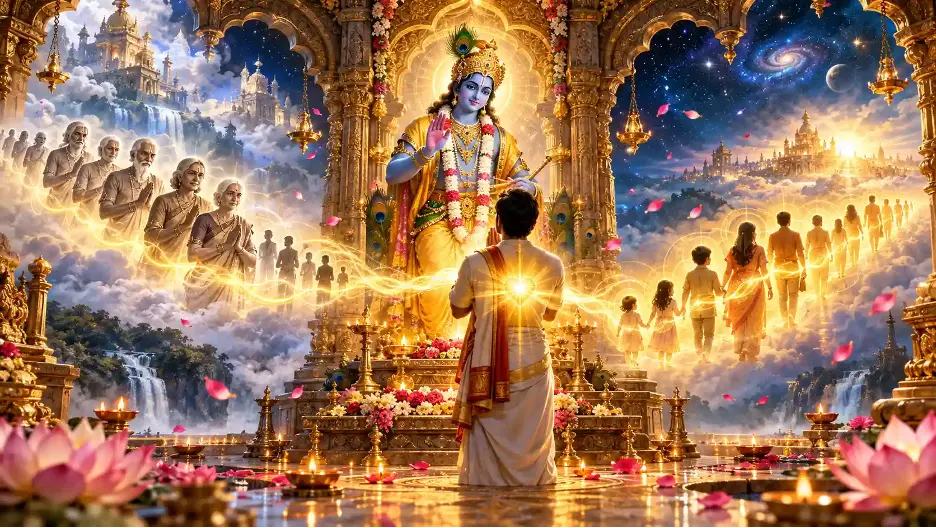
The central teaching presented in the source material is that bhakti can have an uplifting influence on one's lineage.
The Narada Bhakti Sutras contain the well-known expression Paavayanti kulaani, traditionally understood as indicating that devotees purify or uplift their families. The idea extends our understanding of spiritual practice beyond individual liberation.
When a person sincerely develops devotion to God, that spiritual progress is not viewed as an isolated achievement. The devotee's transformation can have an influence on the family and lineage.
This gives Pitru Paksha a deeper dimension. While we remember our ancestors through traditional observances, we can also cultivate our own relationship with God and pray for their spiritual welfare.
The Family as a Spiritual Continuum
Modern life often encourages us to think of ourselves as independent individuals. Vedic thought presents a broader vision. We are connected to those who came before us and to those who will come after us.
Our ancestors gave us our physical existence. Our parents and grandparents transmitted values, traditions, experiences, and lessons. In turn, our own spiritual choices can influence the legacy we leave for future generations.
Seen in this light, devotion is not simply a private activity. The spiritual progress of one individual can become a source of inspiration, purification, and upliftment for the wider family.
This is why the observance of Pitru Paksha can be transformed from a duty into an opportunity for spiritual service.
Swami Mukundananda on Gratitude, Bhakti and Grace
Swami Mukundananda has consistently presented Vedic wisdom as something that can be applied practically in everyday life. One of the most important themes relevant to Pitru Paksha is gratitude.
Gratitude changes the way we look at our lives.
Instead of seeing our achievements as entirely self-created, gratitude reminds us that countless people contributed to the life we have today. Our parents, grandparents, teachers, society, nature, and ultimately the Divine all play a role in our journey.
Pitru Paksha gives us a dedicated opportunity to consciously express this gratitude toward our ancestors.
When we remember them with love rather than merely performing a ceremony out of obligation, the entire experience changes. We begin to appreciate the sacrifices made by earlier generations and recognise our place within a much larger story.
In this sense, gratitude itself becomes a form of spiritual practice.
The Power of Bhakti During Pitru Paksha
Offering Every Action to God
The Bhagavad Gita provides a powerful principle for spiritualising everyday life: whatever we do, whatever we eat, whatever we offer or give away, we can dedicate it to God:
यत्करोषि यदश्नासि यज्जुहोषि ददासि यत् ।
यत्तपस्यसि कौन्तेय तत्कुरुष्व मदर्पणम् ॥ 27॥
yat karoṣhi yad aśhnāsi yaj juhoṣhi dadāsi yat
yat tapasyasi kaunteya tat kuruṣhva mad-arpaṇam
BG 9.27: Whatever you do, whatever you eat, whatever you offer as oblation to the sacred fire, whatever you bestow as a gift, and whatever austerities you perform, O son of Kunti, do them as an offering to Me.
This teaching can transform the way we observe Pitru Paksha.
When preparing food for an ancestral offering, we can prepare it with remembrance of God. When offering water, we can offer it with prayer. When giving charity in memory of our ancestors, we can dedicate the act to the Divine. When chanting the Holy Name, we can pray for peace and spiritual upliftment for those who have departed.
In this way, the observance becomes more than a collection of rituals. It becomes an extended act of devotion.
From Obligation to Love
There is a significant difference between performing an action because we fear that something bad may happen and performing it because we genuinely wish to express gratitude.
The first may create anxiety. The second creates love.
Pitru Paksha provides an opportunity to move from fear-based observance to devotion-based remembrance. Instead of thinking, “I have to perform this ritual,” we can cultivate the attitude, “I have received so much from those who came before me, and I wish to remember them with gratitude and offer my prayers to God for their welfare.”
This shift in consciousness can make the entire period spiritually enriching.
How to Observe Pitru Paksha with Devotion
Begin with Prayer
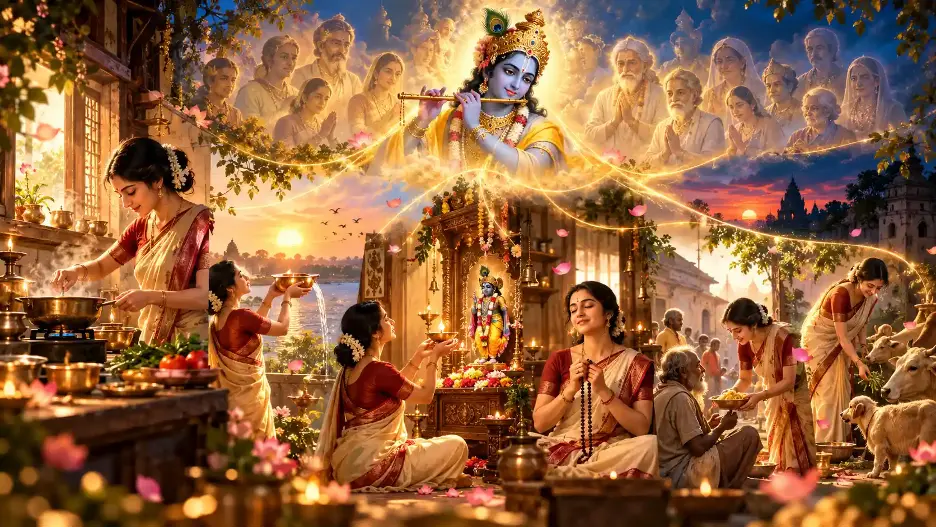
Before beginning any Shraddha or Tarpan observance, take a few moments to pray sincerely to God. Ask for divine grace and for the opportunity to perform the observance with humility, faith, and love.
The prayer does not need to be complicated. What matters is sincerity.
A simple prayer from the heart can transform the attitude with which the rest of the observance is performed.
Chant the Holy Names
The chanting of God's Names is an important expression of bhakti. During Pitru Paksha, one may spend time chanting the Divine Name according to one's spiritual tradition.
Names such as “Ram Ram” or “Radhe Radhe,” or devotional chanting of the Names of Radha and Krishna, can help bring the mind into remembrance of God.
The purpose is not merely repetition of words. The purpose is to turn the mind toward the Divine.
Offer Food with Love and Reverence
Food offered during ancestral observances should be prepared with a peaceful and devotional mindset. Instead of treating preparation as a routine household task, one can consciously regard it as an offering.
The attitude matters.
When food is prepared with remembrance of God and offered with gratitude toward the ancestors, the act becomes spiritually meaningful.
Perform Charity in Honour of Your Ancestors
Charity is another meaningful way to remember ancestors during Pitru Paksha. Feeding those in need, helping others, supporting spiritual causes, or caring for animals can become expressions of gratitude when performed sincerely.
The important principle is that charity should not become a transaction in which we expect a particular reward. Instead, it can be performed as an offering to God and in loving remembrance of our ancestors.
Cultivate Gratitude Throughout the Day
Pitru Paksha does not have to be limited to the duration of a particular ceremony.
Take time to remember your ancestors. Think about the life you received from them, the values they passed down, and the lessons associated with their lives.
Even if memories are difficult or complicated, one can still recognise the gift of life and offer the entire family lineage to God.
Gratitude can thus become a continuous form of remembrance.
End the Day with Spiritual Reflection
At the end of the day, spend a few moments reflecting on your spiritual practices. Offer the merits of whatever good you have done to God and pray that the Divine bless your ancestors with peace and spiritual progress.
This practice shifts the focus away from personal accomplishment and toward surrender.
What Is the Deeper Meaning of Shraddha and Tarpan?
Shraddha and Tarpan are not merely external ceremonies. They represent remembrance, gratitude, reverence, and responsibility.
Tarpan, traditionally associated with offerings of water, symbolises our remembrance and respect for the departed. Pindas and food offerings represent another form of sacred remembrance within the ancestral tradition.
But the external action is only one part of the practice.
The inner offering is equally important.
When we offer water, we can offer our gratitude. When we offer food, we can offer our love. When we chant God's Name, we can offer our devotion. When we perform charity, we can offer our service.
This is how a ritual becomes a spiritual practice.
Can One Person's Devotion Uplift an Entire Family?
The Vedic devotional tradition contains powerful statements about the influence of a devotee upon their lineage. The Narada Bhakti Sutras describe the spiritual influence of devotees upon their families, while other traditional sources speak of ancestors rejoicing when a devotee appears in a lineage.
These teachings point toward an expansive understanding of bhakti.
Spirituality is not merely about “me” becoming peaceful or liberated. The devotee's transformation can become a source of spiritual benefit for others as well.
When one member of a family becomes sincerely devoted to God, cultivates virtues, reduces selfishness, and dedicates their actions to the Divine, the influence can extend into the family environment.
Pitru Paksha gives us a special opportunity to consciously dedicate that spiritual practice to the welfare of our ancestors.
Pitru Paksha 2026: A Time to Remember, Serve and Surrender
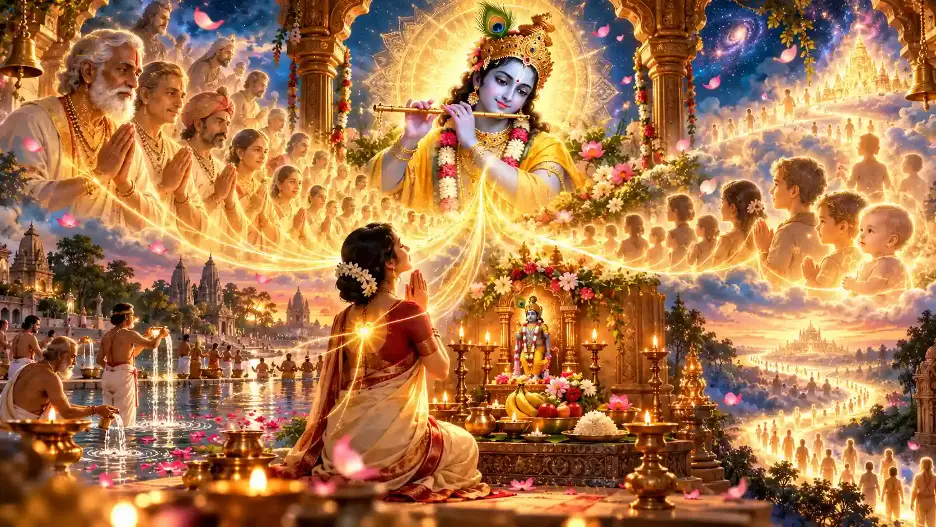
Pitru Paksha 2026 begins on September 26 and concludes with Sarva Pitru Amavasya on October 10. These sixteen days can be approached as a sacred opportunity to combine remembrance of our ancestors with deeper devotion to God.
The most meaningful observance is not necessarily the most elaborate one. Rather, it is the one performed with sincerity.
Perform the traditional observances according to your family and spiritual tradition. But alongside them, cultivate devotion. Chant God's Name. Pray. Express gratitude. Perform charity. Remember your ancestors with love. And surrender the results of your spiritual activities to God.
In this way, Pitru Paksha becomes a journey inward.
It reminds us where we came from, encourages us to recognise the blessings we have received, and inspires us to think about the spiritual legacy we will leave for those who come after us.
The Spiritual Legacy We Leave Behind
Pitru Paksha is often understood as a time to look backward to remember those who have passed away. But its message also points toward the future.
One day, we too will become part of the ancestral lineage remembered by future generations.
What spiritual legacy will we leave behind?
Material possessions may pass from one generation to another, but values, devotion, compassion, wisdom, and spiritual discipline can have an even deeper influence.
When we cultivate bhakti today, we are not only praying for our ancestors. We are also creating a spiritual foundation for our descendants.
This makes Pitru Paksha a bridge between generations.
The past receives our gratitude. The present receives our awareness. And the future receives our spiritual legacy.
The Greatest Offering Is a Devoted Heart
Ultimately, the deepest message of Pitru Paksha is not about the quantity of food, water, charity, or ritual materials we offer. It is about the quality of our consciousness.
A devoted heart transforms an ordinary action into worship.
When remembrance is joined with gratitude, gratitude is joined with bhakti, and bhakti is surrendered to God, Pitru Paksha takes on a profound spiritual meaning.
We may not physically see our ancestors, but remembering them reminds us that our lives are connected to something larger than ourselves. Their lives contributed to ours, and our lives will contribute to generations yet unborn.
This continuity can inspire humility.
We did not begin the journey, and we will not be its final destination. We are one link in a vast chain of life and spiritual evolution.
FAQs
1. What is Pitru Paksha 2026?
Pitru Paksha 2026 is a sacred period for remembering and honouring ancestors through Shraddha, Tarpan, prayer, charity, and devotion. It begins on September 26 and concludes with Sarva Pitru Amavasya on October 10.
2. Can devotion to God benefit ancestors?
According to the Vedic devotional understanding presented in the article, sincere bhakti can have an uplifting influence on one's lineage. Devotion is therefore seen as a meaningful complement to ancestral observances.
3. Why is Shraddha important during Pitru Paksha?
Shraddha represents faith, reverence, and sincerity. The deeper significance of ancestral rituals lies not only in performing them correctly but also in the devotion and gratitude with which they are performed.
4. How can I observe Pitru Paksha with bhakti?
You can pray, chant God's Names, perform traditional observances, offer food with reverence, practise charity, remember your ancestors with gratitude, and surrender the fruits of your actions to God.
5. What is the deeper message of Pitru Paksha?
Pitru Paksha reminds us of our connection with previous and future generations and encourages us to transform remembrance into gratitude, devotion, service, and spiritual growth.