

Introduction
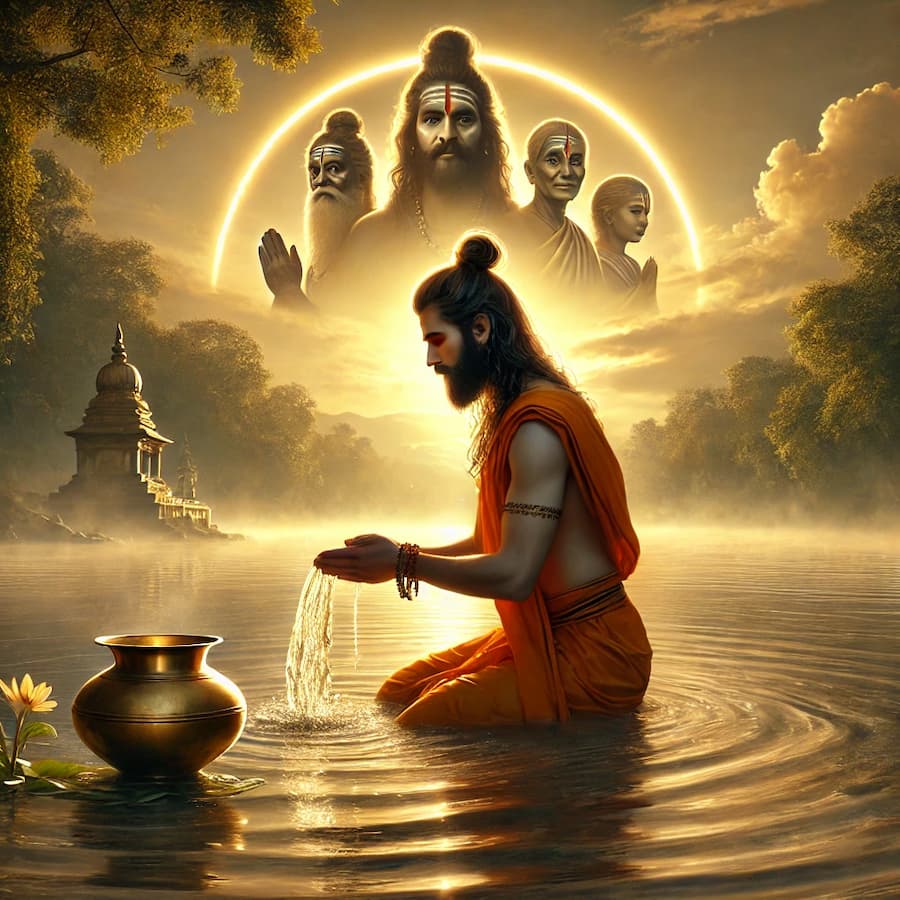
In the rich spiritual fabric of Sanātan Dharma, the cycle of life, death, and rebirth is woven with threads of karma, dharma, and devotion. Hindu philosophy emphasizes that every individual is not only a product of their own actions but also a continuation of the legacy of their ancestors. Our forefathers—known as pitrus—have handed down to us not only genetic traits but also cultural traditions, spiritual impressions (samskāras), and blessings that continue to shape our lives. To honor their role in our existence, Hindu tradition observes a sacred period called Pitru Paksha—a fortnight dedicated to paying homage to departed souls with gratitude, offerings, and bhakti.
Pitru Paksha, literally meaning "fortnight of the ancestors," is a time when the living connect with the departed through acts of remembrance and ritual. Rooted in the Vedic tradition, it highlights one of the deepest truths of existence: life is a continuum. Just as we inherit from those before us, we, too, will leave legacies for those who come after. This blog explores the significance of Pitru Paksha, its rituals, philosophical underpinnings, and the spirit of gratitude and devotion that elevates it beyond mere ceremony. Finally, we will tie these reflections to the teachings of Swami Mukundananda, who emphasizes the importance of living with gratitude, devotion, and an awareness of the soul’s eternal journey.
The Significance of Pitru Paksha
A Time of Connection Between Worlds
According to Hindu tradition, Pitru Paksha occurs in the lunar month of Bhadrapada (September–October), beginning on the full moon (Purnima) and ending on the new moon (Amavasya). Scriptures such as the Garuda Purana, Mahabharata, and Shraddha Kaanda of the Brahma Purana describe this fortnight as a time when the veil between the living and ancestral realms thins, enabling the departed souls to receive offerings from their descendants.
The significance is not merely ritualistic—it reflects a deeper metaphysical understanding. Hinduism sees the human being as comprising not only body and mind but also subtle impressions that persist beyond physical death. These impressions reside in the ancestral plane, and through offerings known as shraddha and tarpana, descendants symbolically nourish and honor their forebears.
Dharma of Gratitude
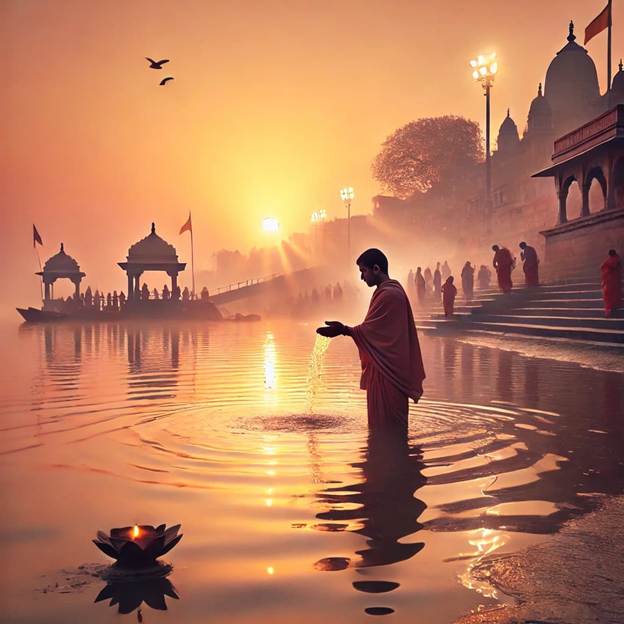
Pitru Paksha reinforces one of the five debts (pancha rinas) described in the Taittiriya Samhita: pitru rin—the debt toward one’s ancestors. Just as a river continues to flow because of its source, human beings thrive because of the foundation laid by those before them. By performing rituals, feeding the poor, and living with humility, we acknowledge this sacred debt. Gratitude, when expressed as action, transforms into dharma—the righteous duty of every human being.
Rituals of Pitru Paksha
The Core Ceremony: Shraddha
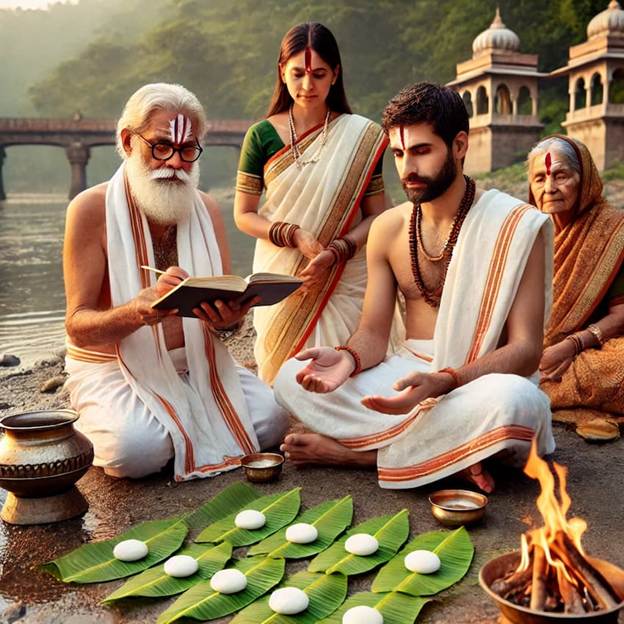
The central observance of Pitru Paksha is shraddha—a ritual offering performed for the peace of departed souls. The word itself comes from shraddhā, meaning faith or devotion. Performed with sincerity and bhakti, shraddha embodies the essence of honoring ancestors.
During shraddha, cooked food, water, sesame seeds, and rice balls (pindas) are offered with mantras that invite the blessings of the pitrus. The food is often placed on leaves or offered to Brahmins and the needy, symbolizing that service to humanity is service to the divine.
Tarpana: Offering of Water
Alongside shraddha, tarpana is performed—libations of water mixed with sesame seeds are offered while chanting the names of ancestors. Water symbolizes purity, nourishment, and continuity, reminding us that the stream of life flows from the past into the present.
Acts of Charity and Compassion
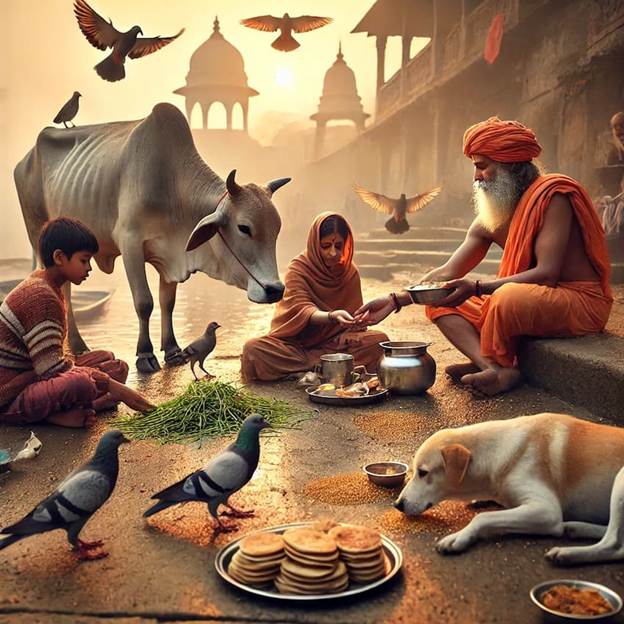
Hindu scriptures emphasize that beyond ritual, Pitru Paksha is a time for acts of compassion. Feeding cows, birds, and the poor, donating to temples, or helping those in need are all considered meritorious. These acts generate positive karma not only for the ancestors but also for the descendants, creating a cycle of mutual upliftment.
Philosophical Foundations of Pitru Paksha
Continuity of the Soul
Pitru Paksha is rooted in the Vedantic understanding that the soul (ātman) is eternal. The Bhagavad Gita (2.20) declares:
"The soul is neither born, nor does it ever die; nor having once existed, does it ever cease to be. The soul is without birth, eternal, immortal, and ageless. It is not destroyed when the body is destroyed."
👉 Read Verse 2.20 with commentary
While the body perishes, the soul journeys onward. Ancestors are not gone forever but continue to exist in subtler planes. Pitru Paksha acknowledges this reality and nurtures the relationship between visible and invisible realms.
Karma and the Lineage
Hindu thought emphasizes that karma is not only individual but also collective. Families share karmic bonds that extend across generations. The wellbeing of descendants is often intertwined with the blessings of ancestors. By honoring the pitrus, we express our readiness to purify collective karma, seek forgiveness for past wrongs, and invoke auspiciousness for future generations.
The Spirit of Gratitude
Gratitude (kritajnatā) is a central theme of Hindu spirituality. Pitru Paksha is not about appeasing restless spirits but about cultivating a heart filled with thankfulness. When we remember those who nurtured us—even indirectly—we acknowledge the countless hands that shape our existence. Gratitude dissolves ego, reminding us that we are never truly self-made but beneficiaries of grace.
Pitru Paksha in Epics and Puranas
Bhishma and the Mahabharata
The Mahabharata describes the importance of shraddha through stories. One such narrative is about Bhishma, who emphasized that by offering food and water with devotion, descendants provide satisfaction to their ancestors. The great epic frames Pitru Paksha not as an empty ritual but as a sacred responsibility that sustains both the living and the departed.
Karna’s Story
Another powerful example comes from Karna in the Mahabharata. After his death, Karna ascended to heaven, where he was offered immense wealth but no food. When he asked why, the celestial beings told him he had donated gold and riches generously in his life but had never offered food or water to his ancestors. Realizing this shortcoming, Karna prayed to Lord Yama for a chance to rectify it. Yama granted him 15 days on earth—the origin of Pitru Paksha—so Karna could perform shraddha.
This story reminds us that charity without gratitude toward our roots leaves an essential duty unfulfilled.
The Deeper Dimensions of Pitru Paksha
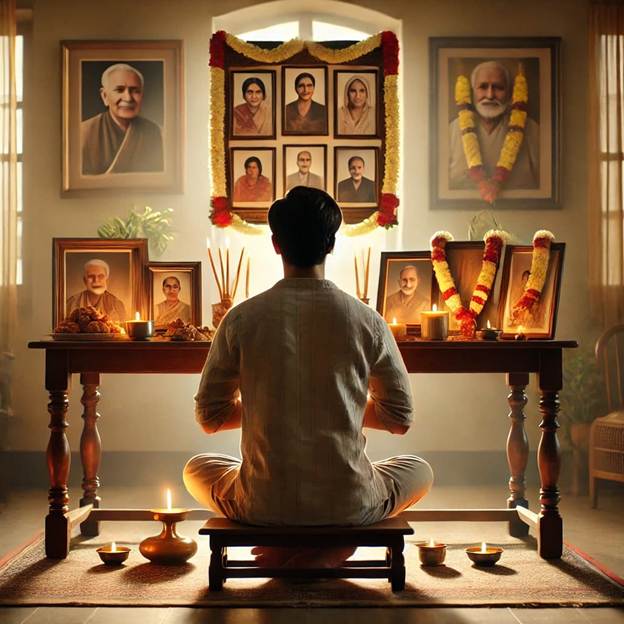
Beyond Rituals: Internal Shraddha
While outward rituals are important, Hindu sages emphasize the inner spirit of shraddha. To perform shraddha without faith is mechanical; to cultivate gratitude and remembrance in the heart is transformative. True shraddha involves reflecting on the virtues of ancestors, imbibing their values, and aligning one’s actions with dharma.
Healing Across Generations
Modern psychology acknowledges that unhealed wounds can pass through family lines as emotional patterns. Hinduism, through Pitru Paksha, offers a spiritual counterpart: by offering prayers, performing rituals, and living dharmically, one can heal ancestral karma and bring peace across generations. It is an act of love that bridges the seen and unseen.
Bhakti: The Bridge to Eternity
Bhakti—devotion to God—is the highest form of offering. When rituals are performed with bhakti, they transcend mechanical action. Pitru Paksha, infused with devotion, becomes not just about honoring ancestors but about dedicating one’s lineage to God. This lifts the ceremony from personal duty to divine worship.
Pitru Paksha in Daily Life
Though Pitru Paksha is observed once a year, its spirit can extend into daily living. We honor ancestors not only through rituals but also by:
- Preserving family traditions and values.
- Living ethically, bringing pride to their memory.
- Helping the needy, continuing the spirit of charity.
- Teaching the next generation about their roots.
In this way, Pitru Paksha becomes a way of life—a reminder that gratitude is the seed of spiritual growth.
Final Thoughts: Gratitude, Bhakti, and Swami Mukundananda’s Teachings
Pitru Paksha teaches us that life is not isolated; it is part of an eternal continuum. Our ancestors lived, struggled, prayed, and sacrificed so that we may exist today. By honoring them, we acknowledge the divine order that binds generations together.
Swami Mukundananda beautifully explains that gratitude is not just an occasional feeling but a spiritual discipline. In his teachings, he emphasizes that when we live with gratitude, our heart opens to divine grace. He often reminds seekers that “the more grateful you are, the more you attract grace.” Pitru Paksha embodies this principle—it is gratitude in action, offered not only to our ancestors but ultimately to God, the source of all life.
Moreover, Swami Mukundananda teaches that bhakti is the highest purifier. When we remember our ancestors with devotion, offering not only rituals but also heartfelt prayers, we elevate their souls and purify our own. Bhakti transforms duty into joy, remembrance into worship, and gratitude into divine love.
Thus, Pitru Paksha is not just a ritual fortnight—it is an invitation to cultivate lifelong gratitude, to live with humility, and to sanctify our lives with bhakti. By aligning our remembrance of ancestors with devotion to God, we honor both the human and the divine heritage we have inherited.
In the end, Pitru Paksha reminds us of Swami Mukundananda’s wisdom: every act performed with sincerity, gratitude, and bhakti becomes a step closer to the eternal. To honor our ancestors is to honor God, for they are the channels through which His grace has flowed into our lives.
Call to Action
As Pitru Paksha arrives, let us not limit ourselves to rituals alone. True remembrance lies in cultivating gratitude in our daily lives—toward our parents, elders, teachers, and all those who have shaped us. By aligning our shraddha with bhakti, we honor our ancestors while uplifting our own soul. Reflect on your roots, express thankfulness, and embrace Swami Mukundananda’s wisdom: when gratitude flows from the heart, divine grace flows into life.
References
- Bhagavad Gita: The Song of God Translation and Commentary by Swami Mukundannanda. Chapter 2, Verse 20 – Eternal nature of the soul.
🔗Read Online - Garuda Purana – Descriptions of afterlife and ancestral offerings.
- Mahabharata, Karna’s story – Origin of Pitru Paksha.
- Taittiriya Samhita – The concept of pancha rina (five debts).
- Teachings of Swami Mukundananda – On gratitude, bhakti, and aligning life with devotion.
FAQs
Q1. What is Pitru Paksha?
Pitru Paksha is a 15-day lunar period in Hindu tradition dedicated to honoring ancestors through rituals, prayers, and acts of charity.
Q2. When is Pitru Paksha celebrated in 2025?
In 2025, Pitru Paksha will be observed from September 7 to September 21.
Q3. What are the main rituals of Pitru Paksha?
The primary rituals include shraddha (food offerings), tarpana (water libations), feeding the poor, and acts of charity performed with devotion and faith.
Q4. Why is food offered to ancestors during Pitru Paksha?
Food represents nourishment and gratitude. Offering food through shraddha symbolizes sustaining ancestors’ souls while expressing thankfulness for their contributions.
Q5. Is it mandatory to perform Pitru Paksha rituals at home?
While rituals can be performed at home with devotion, many also choose to perform them at sacred places like Gaya, Haridwar, or on the banks of holy rivers. What matters most is sincerity and bhakti.
Q6. What is the spiritual significance of Pitru Paksha?
Pitru Paksha cultivates gratitude, helps heal generational karma, and reminds us of the eternal journey of the soul. It bridges the living with ancestors and aligns us with dharma.
Q7. How do Swami Mukundananda’s teachings connect with Pitru Paksha?
Swami Mukundananda emphasizes that gratitude and bhakti are the highest forms of worship. Pitru Paksha embodies both—expressing gratitude to ancestors and dedicating the act to God through devotion.