
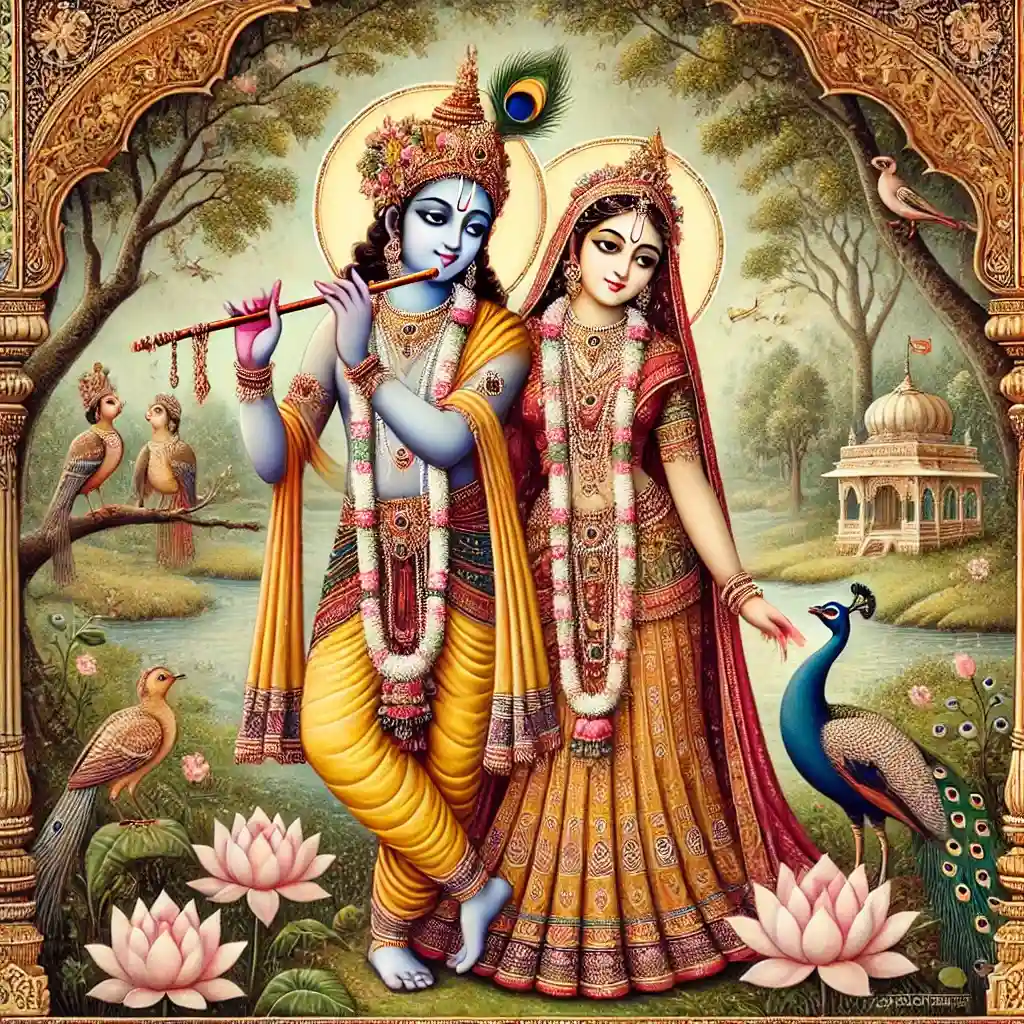
Radha Ashtami marks the sacred appearance of Radha Rani, the eternal consort of Shree Krishna and the highest embodiment of pure devotion. This festival invites us to reflect on the nature of selfless love and the soul’s deep longing for the Divine.
While Shree Krishna is the Supreme Lord, it is Radha Rani who shows how to love Him completely—without desire, without condition, and without expectation. Her devotion is silent yet powerful, simple yet profound. Among the many stories that echo this theme, one moment that stands out is during Shree Krishna’s departure from Vrindavan to Mathura. Through this departure, the depth of Radha Rani’s love and the loving pain of all Braj residents come alive. This blog revisits that poignant moment, drawing insights that illuminate the eternal bond between Radha Rani and Shree Krishna—a love that is the very heart of bhakti.
Akroor’s Journey and the Sacred Land of Braj
Akroor, a minister of Kansa, had received a special command from him to bring Shree Krishna and Balaram to Mathura. To the outside world, it may have seemed like a royal duty, but in Akroor’s heart, it was a divine blessing. As he journeyed from Mathura in a golden chariot, he rejoiced inwardly, believing that Kansa had unknowingly done him a great favor. The opportunity to see Shree Krishna was, for him, the fulfillment of a lifelong yearning.
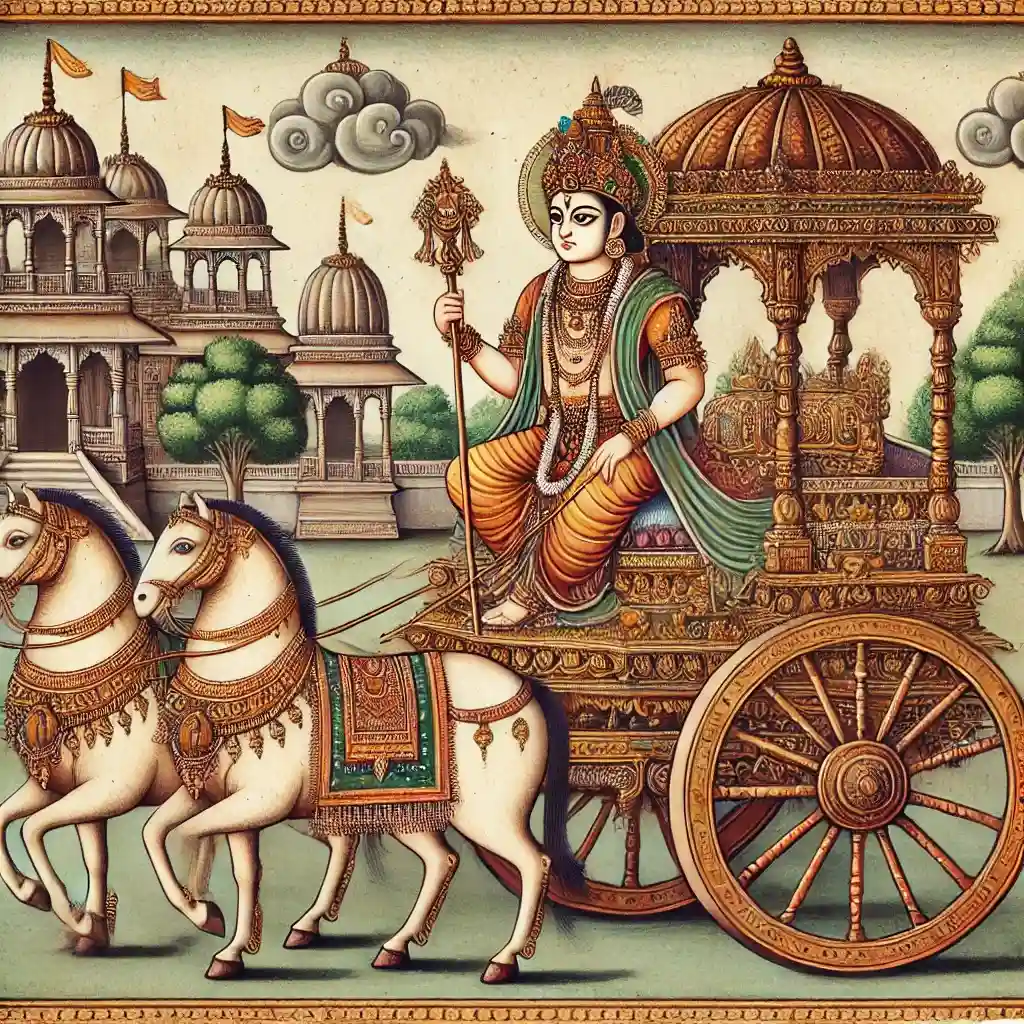
As Akroor crossed into Vrindavan, a wave of spiritual realization swept over him. He recognized the sacredness of Braj—the very soil that bore witness to Shree Krishna’s divine pastimes. When he noticed tiny footprints etched in the dust, a profound reverence overtook him, thinking they were Shree Krishna's. He got down from the chariot and performed Dandavat Pranam (prostrated greeting) to the Braj Raj (the dust of Vrindavan), revered as much as the waters of the Ganga or the Mahaprasad (sacred food offering) of Jagannath Puri. In his heart, he knew that it was no ordinary place. This was the realm of Radha Rani and Shree Krishna's divine love.
Lesson: Spiritual realization is not always found in temples or scriptures alone—it often arises in sacred moments of heartfelt surrender. Akroor’s reverence for the dust of Braj shows that the highest wisdom lies in recognizing the divine presence in the smallest, most unassuming places.
The News of Departure and Mother Yashoda’s Agony
Upon reaching the home of Nanda Baba and Mother Yashoda, Akroor delivered Kansa’s message. Shree Krishna was to leave for Mathura the next day. The moment Mother Yashoda heard this, her heart trembled. A mother’s intuition rose within her, telling her that this journey might not be temporary. Though she tried to convince herself that her son would return soon, doubt crept in. She attempted to suppress her fear by reminding herself that Shree Krishna deserved to see the big city, to explore the world beyond Braj. But deep within, her soul already grieved an impending loss.
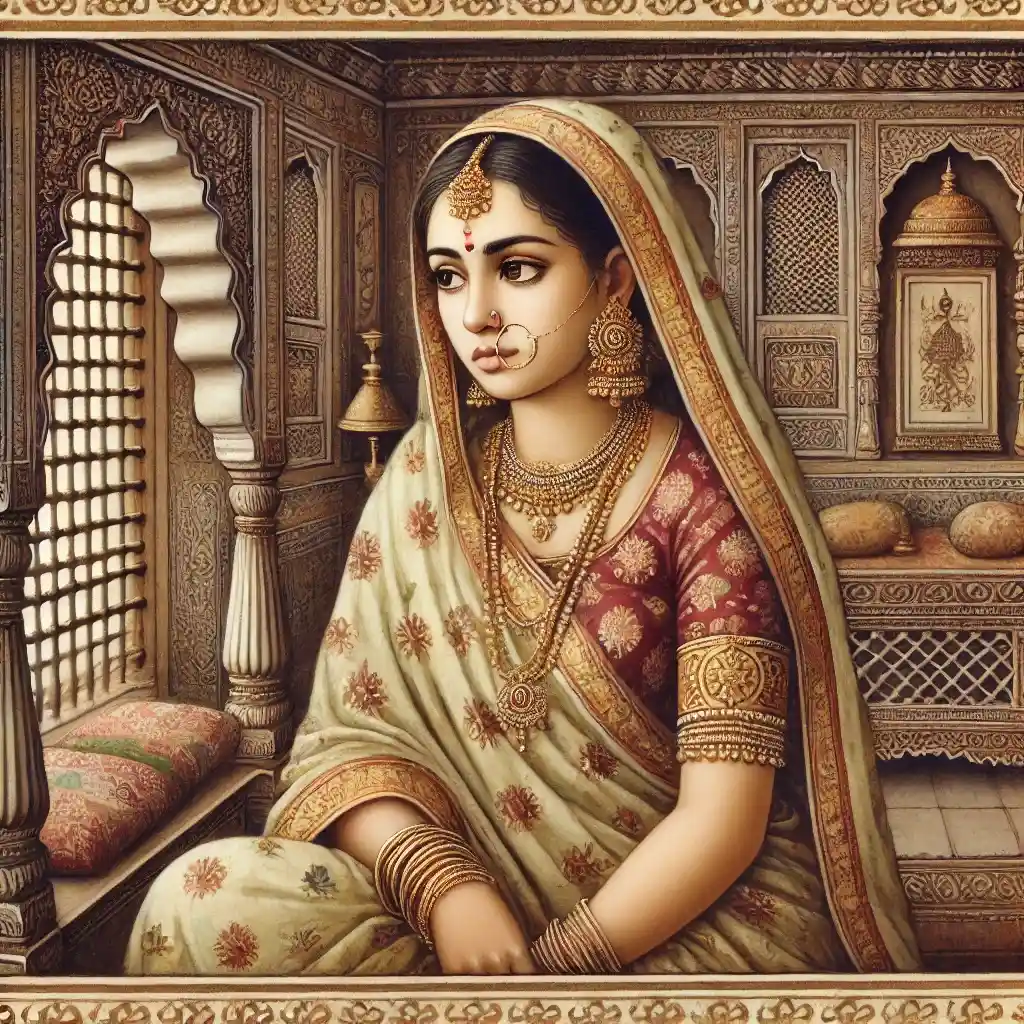
As the news spread across Braj, a blanket of sorrow descended. No fires were lit in the kitchens that night. Songs ceased. Laughter faded. The Gopis and the villagers were plunged into an ocean of despair. Shree Krishna, their life’s very essence, was leaving. The idea of living without him felt unbearable.
Shree Krishna tried to comfort his mother, assuring her that he would return in four days. But divine love is not bound by logic. His words were meant only to offer solace, not promises. For God, the highest truth is what brings peace to the devotee's heart.
Lesson: The pain of divine separation is real and transformative. Through Mother Yashoda’s motherly anguish, we understand that even God submits to the love of a devotee. The divine responds not to power or position but to pure, selfless affection.
Radha Rani’s Silent Sorrow
The morning of the departure was heavy with grief. Mother Yashoda dressed Shree Krishna with trembling hands, while Rohini adorned Balaram. As they stepped outside, they were surrounded by hundreds of weeping Gopis. Each one pleaded with Shree Krishna to stay. He gently reassured them, speaking sweet words of comfort, though his heart too was weighed down by the inevitable farewell.
Nanda Baba and others had arranged chariots, loaded with milk, yogurt, and offerings. Yet, Shree Krishna and Balaram’s chariot was the last to move. Before boarding, Shree Krishna noticed Radha Rani sitting silently under a tree. Unlike the other Gopis, she did not come forward. Her sorrow was too profound, too sacred to be expressed through words or tears. She was the very embodiment of divine love—silent, deep, and unconditional.
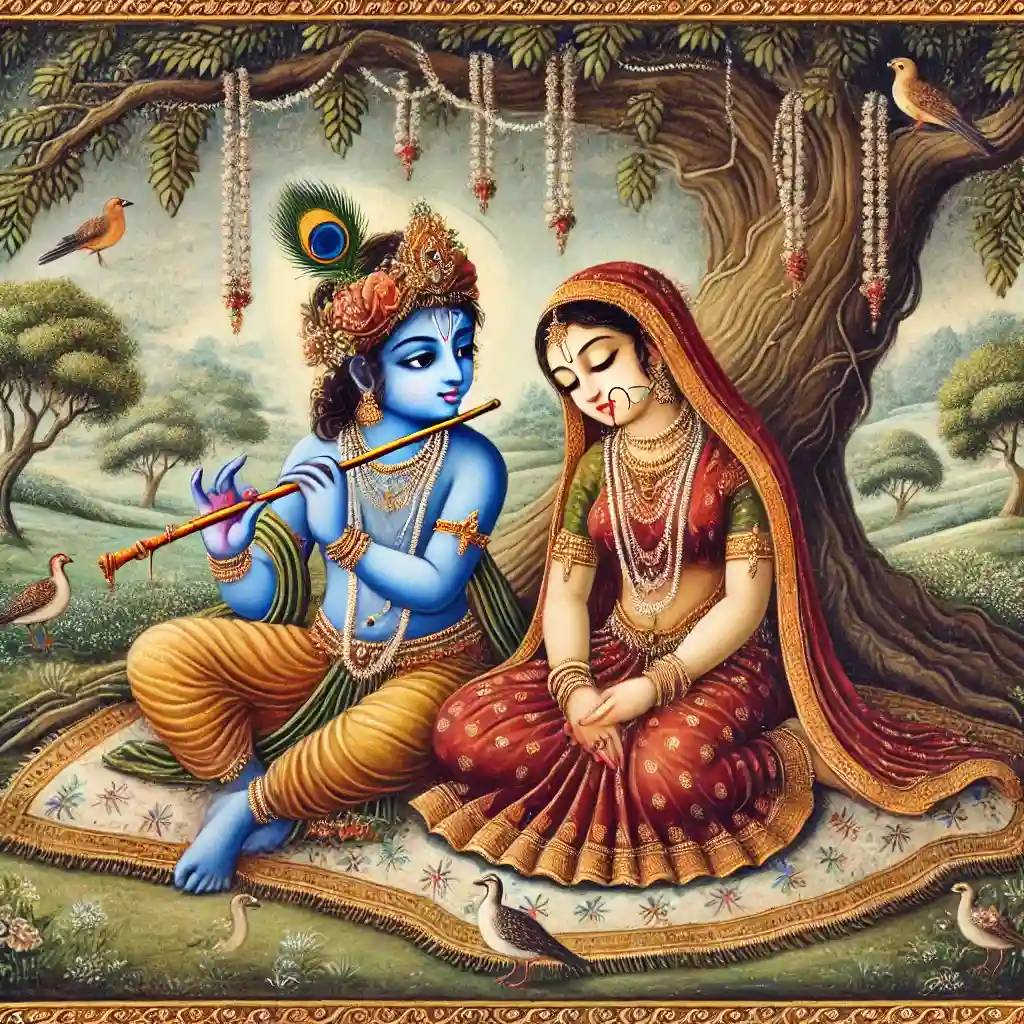
Shree Krishna walked over to her and placed two of his most cherished possessions in her hands: his flute and the black blanket he wore. These were not mere objects. They symbolized his love, his time in Braj, and the divine play they had shared. To Shree Krishna, they no longer held meaning outside of that sacred land. By offering them to Radha Rani, He entrusted her with the essence of his identity in Vrindavan.
Just then, Mother Yashoda came running, trembling with emotion. She had just been told that Shree Krishna might not be her biological son. With folded hands and a broken voice, she begged for forgiveness. She recalled the day she had tied Shree Krishna to the mortar, treating him as an ordinary child, and wept. Shree Krishna too broke into tears and reminded her that her love had bound him more than any divine power. He could forget everything, but never the depth of her affection.
Eventually, the chariot began to move. The Gopis tried to stop it by lying down in its path. But then a realization dawned upon them. The longer they delayed Shree Krishna’s departure, the more intense the midday sun would grow. He would feel the heat. Their love, always selfless, made them step back. Let Him go in comfort, they thought. This was the true Gopi Bhav—where their happiness was only in His joy.
Lesson: Radha Rani’s silence spoke more than a thousand words. True love is not about holding on but about offering oneself fully and letting go when needed. This is the essence of Radha Ashtami: a celebration of selfless, unconditional devotion.
Conclusion
Radha Ashtami is more than a celebration of a divine birth; it is a reminder of the highest form of love the soul can aspire to. In an age defined by distraction, instant gratification, and conditional relationships, Radha Rani’s love stands in stark contrast. Her devotion was quiet, consistent, and completely selfless. She did not need Shree Krishna’s presence to remain connected to him. Even in separation, her love only deepened.
The story of Shree Krishna’s departure from Vrindavan teaches us several timeless lessons. Mother Yashoda’s affection reveals that love is not weakened by correction or misunderstanding—it is strengthened by humility and forgiveness. The Gopis show us that true love does not resist change for personal comfort, but embraces sacrifice for the beloved’s well-being. And Radha Rani shows us that the most powerful expressions of devotion often happen in silence, without demands, and without recognition.
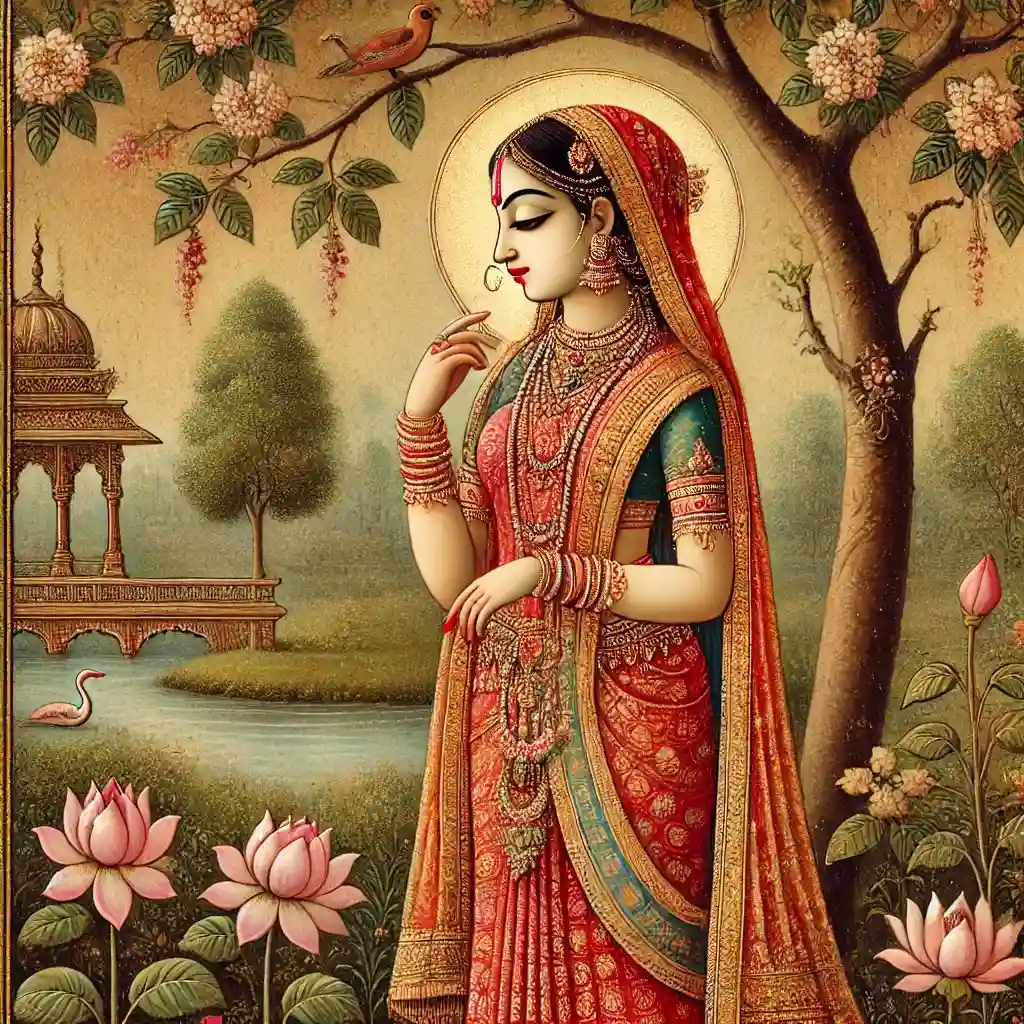
In today’s world, we are constantly seeking connection—through technology, relationships, and achievements. Yet, a deep connection begins within. Radha Rani’s example teaches us that spiritual love does not depend on physical proximity. It is a matter of inner presence, of remembrance, and of living each moment in surrender to something higher.
On this Radha Ashtami, may we take a step closer to the kind of devotion Radha Rani lived. Whether in relationships, work, or personal growth, may we act with sincerity, put others before ourselves, and find the divine even in moments of silence and separation. Radha Rani’s love was not loud—but it was eternal. And that is a message we need now more than ever.
Call to Action
- Join the Radha Krishna Temple of Dallas community for a sacred celebration of Radha Ashtami on Sunday, August 31, 2025. Experience the bliss of Charan Darshan, sacred Abhishek, a joyous birthday celebration, Jhoolan Seva, and cake cutting in her divine presence.
- Immerse yourself in the divine pastimes of Radha and Shree Krishna and transform your spiritual journey by listening to Swami Mukundananda's Srimad Bhagavatam sessions on YouTube.
Frequently Asked Questions (FAQs)
1. What is Radha Ashtami and why is it celebrated?
Radha Ashtami marks the appearance of Srimati Radha Rani, the eternal consort of Shree Krishna. It is celebrated as a day of devotion, focusing on Radha Rani’s unconditional love and her deep spiritual connection with Shree Krishna.
2. What was the significance of Shree Krishna giving his flute and blanket to Radha Rani?
These items symbolized Shree Krishna’s divine presence in Braj. By giving them to Radha Rani, Shree Krishna was entrusting her with the memory and essence of his pastimes, acknowledging that his time in Vrindavan could never be separated from her love.
3. Why did Mother Yashoda feel guilty before Shree Krishna’s departure?
Mother Yashoda was told Shree Krishna might not be her biological son. Remembering how she had once punished him as a child, she begged for forgiveness. Her love, however, had always been pure, and Shree Krishna assured her that her affection meant everything to him.
4. What lesson can we learn from the Gopis’ behavior during the departure?
The Gopis showed that their ultimate happiness was in Shree Krishna’s happiness. Their devotion teaches us the essence of selfless love that places the beloved’s comfort above one’s own sorrow.
5. How does this event reflect the essence of Radha Ashtami?
The story of Shree Krishna’s departure highlights Radha Rani’s silent, unwavering love. Her sacrifice and deep emotion represent the very heart of Radha Ashtami—a festival that honors the beauty of selfless devotion and the power of divine love.