

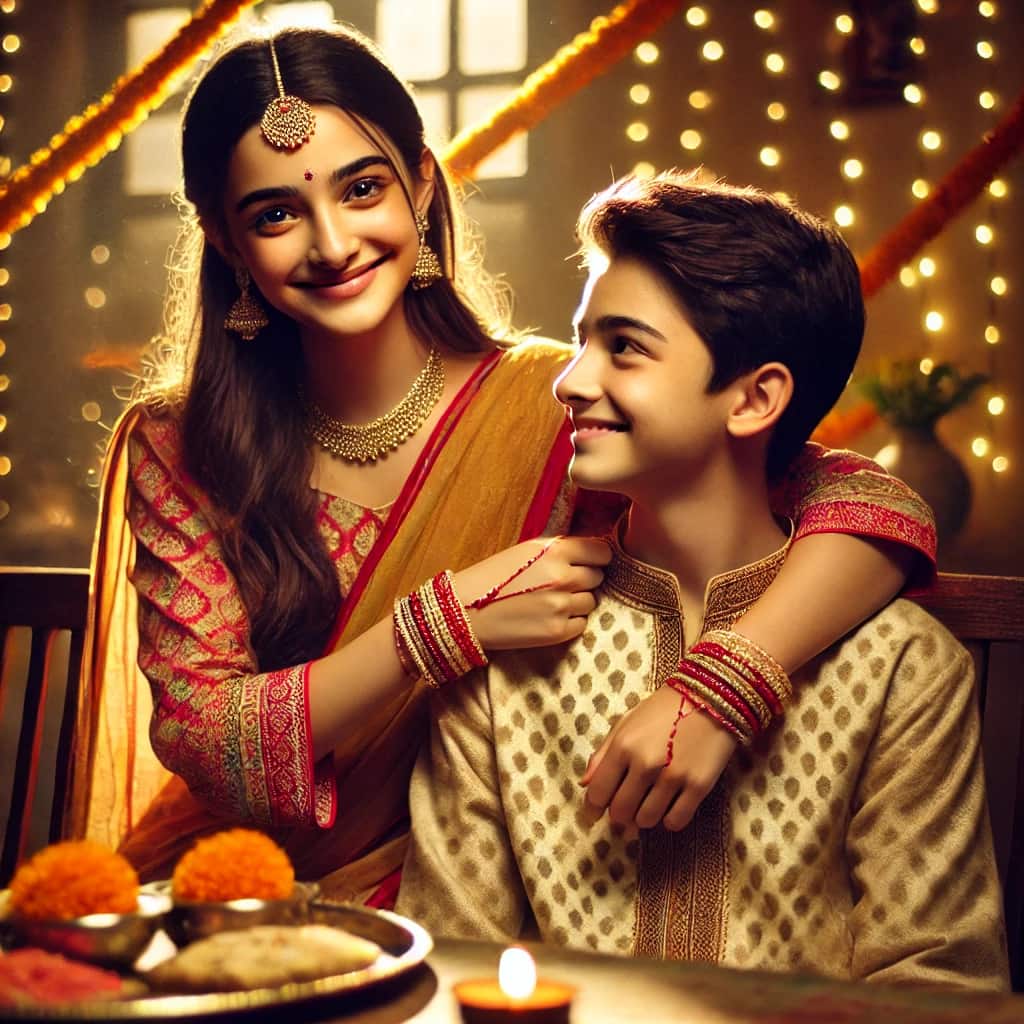
Introduction: More Than a Festival of Siblings
Raksha Bandhan, often celebrated with vibrant joy and emotional exchanges between brothers and sisters, is widely known as a festival that celebrates the bond of protection, love, and duty. But beneath its colorful rituals lies a deep-rooted spiritual and scriptural foundation. The phrase “Raksha Bandhan” literally translates to “a bond of protection,” and its origins are richly interwoven into the fabric of Hindu mythology and epic literature.
This festival is not merely a cultural event but a divine tradition with references in the Mahabharat, the Bhagavatam (Srimad Bhagavatam), and the Puranas, where the symbolism of protection, honor, and duty plays a central role.
In this blog, we’ll explore the spiritual and scriptural dimensions of Raksha Bandhan, uncovering its deeper meaning through stories and insights from ancient texts. We’ll also reflect on how this sacred day can inspire spiritual growth and foster values of selfless love and responsibility.
The Scriptural Essence of Raksha Bandhan
The Meaning of “Raksha” in the Spiritual Context
In Sanskrit, raksha means protection, and bandhan means a bond or tie. While the festival has evolved into a celebration of the bond between siblings, the deeper spiritual connotation reflects the universal principle of dharma—where the strong protect the vulnerable, and relationships are governed by selfless duty rather than personal gain.
The act of tying the thread is not merely a ritual; it symbolizes a vow—a sankalp—of mutual respect, protection, and moral commitment. And in the stories from the scriptures, we find this vow expressed in divine and transcendent ways.
Raksha Bandhan in the Mahabharat
Draupadi and Lord Krishna: A Divine Bond of Raksha
Perhaps the most well-known reference to Raksha Bandhan in scripture is the story of Draupadi and Lord Krishna. After Shree Krishna injured his finger while using the Sudarshan Chakra, Draupadi, seeing Him bleeding, tore a strip from her sari and lovingly tied it around His finger. It was a spontaneous act of care—not a formal rakhi—but Shree Krishna took it as a sacred bond.
Shree Krishna, moved by her devotion, declared that He would protect her in every moment of need.
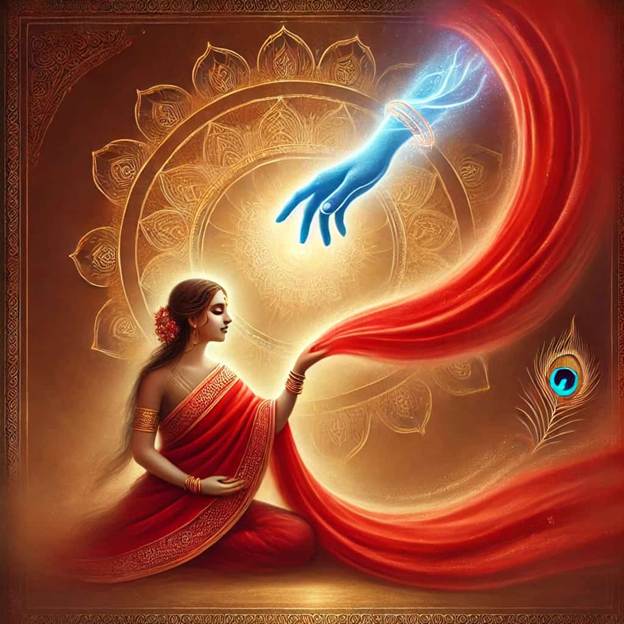
And indeed, during the infamous episode of the disrobing of Draupadi in the Kaurava court, Shree Krishna fulfilled that vow. When all others failed her, she remembered Him in total surrender, and He miraculously provided an unending stream of cloth, saving her dignity.
“yatra yogeshvarah krishno yatra partho dhanur-dharah
tatra shrir vijayo bhutir dhruva nitir matir mama”
—Bhagavad Gita 18.78
“Wherever there is Shree Krishna, the Lord of all Yog, and wherever there is Arjun, the supreme archer, there will also certainly be unending opulence, victory, prosperity, and righteousness. Of this, I am certain.”
👉 Read Verse 18.78 with commentary
Though this verse is from the Gita and not directly linked to the Raksha Bandhan episode, it reflects the same spiritual truth: Shree Krishna’s presence brings protection and dharma.
Lesson: Raksha Bandhan is not limited to biological siblings; it reflects a divine principle. When love and surrender are pure, the Divine takes responsibility for our protection.
Raksha Bandhan in the Puranas
King Bali and Goddess Lakshmi: A Story of Devotion and Dharma
The Bhavishya Purana and Vishnu Purana describe an ancient story that is often cited as a Raksha Bandhan origin tale. After Lord Vishnu defeated the demon king Bali, the latter requested the Lord to live with him in his palace.
Lakshmi, Vishnu’s consort, grew concerned as her husband left Vaikuntha to fulfill this promise. To bring Him back, Lakshmi devised a plan. She visited Bali in disguise and tied a thread on his wrist, invoking the bond of rakhi.
Touched by the gesture, Bali asked what she desired in return. Lakshmi then revealed her identity and requested her husband’s release. Bali, true to his word, granted the wish and let Vishnu return.
This story highlights raksha not just as physical protection but as honoring dharma and divine relationships.
Lesson: Raksha Bandhan isn’t just about protection from harm—it is about honoring sacred relationships, fulfilling vows, and upholding righteousness, even at personal cost.
Indra and Shachi: Divine Raksha in Times of War
In the Bhavishya Purana, another story speaks of Raksha Bandhan as a powerful protective talisman. During a fierce battle between the devas (gods) and asuras (demons), Indra was losing. His wife, Shachi (also called Indrani), prepared a sacred thread imbued with mantras and tied it on Indra’s wrist.
Empowered by this bond and the strength of her prayer, Indra gained renewed vigor and defeated the demons.
This tale elevates the rakhi beyond a ritual—it becomes a spiritual armor, a symbol of blessings and the power of pure intentions.
Lesson: A rakhi is not just a thread—it is a prayer, a promise, and a divine shield powered by love and righteousness.
Raksha Bandhan in Srimad Bhagavatam
Protection and Surrender: The Deeper Spiritual Principle
While the Srimad Bhagavatam does not explicitly mention Raksha Bandhan, its entire narrative is suffused with the principle of divine protection through surrender. This is the spiritual core of Raksha Bandhan.
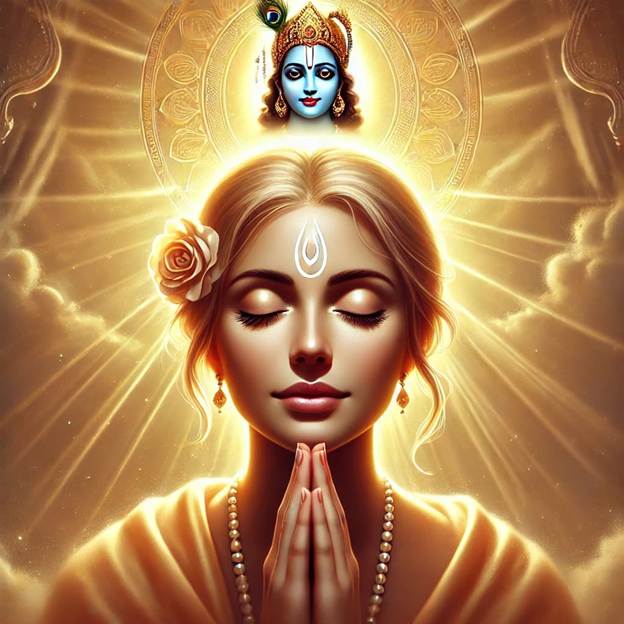
The Bhagavatam repeatedly emphasizes the idea that those who take shelter in God are always protected—even if the world fails them.
Take Prahlad, for instance—a child devoted to Lord Vishnu, tormented by his demon father Hiranyakashipu. Despite being thrown into fire, poisoned, and crushed, Prahlad remained untouched.
“kshipram bhavati dharmatma shashvach-chhantim nigachchhati
kaunteya pratijanihi na me bhaktah pranashyati”
—Bhagavad Gita 9.31
“Quickly they become virtuous, and attain lasting peace. O son of Kunti, declare it boldly that no devotee of Mine is ever lost.”
👉 Read Verse 9.31 with commentary
Though this is a Gita verse, the Bhagavatam presents the same theme. God is the ultimate rakshak (protector), and surrender is the most sacred bandhan (bond).
Lesson: Raksha Bandhan, at its deepest level, teaches us to tie our hearts to God in loving surrender, and in return, He assures our protection.
Modern-Day Relevance of Raksha Bandhan
From Ritual to Realization
In today’s world, Raksha Bandhan can go beyond being a once-a-year event. Its values—duty, loyalty, sacrifice, protection, and spiritual surrender—are timeless.
A brother protecting his sister is beautiful. But what if men vowed to protect all women with respect, not just their siblings? What if women tied rakhi to the soldiers protecting our nation? What if the sacred thread became a reminder to protect the environment, truth, and justice?
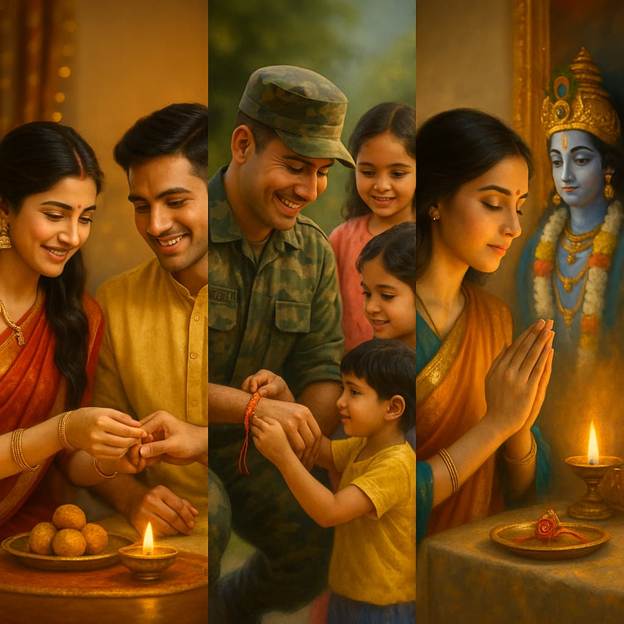
Shree Krishna protected Draupadi not because she performed a ritual—but because she offered love and surrender. Similarly, Raksha Bandhan can be a day of:
- Renewing our spiritual bond with God.
- Protecting the vulnerable in society.
- Strengthening relationships with commitment, not expectation.
- Offering prayers for others' well-being.
Swami Mukundananda on Divine Protection and Surrender
Swami Mukundananda, a contemporary spiritual teacher and founder of JKYog, often emphasizes that true protection comes from surrendering our ego and trusting divine grace.
“When we offer our love and faith to God, He takes full responsibility for our life. That is the greatest raksha.”
—Swami Mukundananda
He also explains that just as a rakhi is tied once a year, our inner rakhi of devotion must be tied every day—through prayer, humility, and selfless action.
This brings us back to the timeless lesson of Raksha Bandhan: Love rooted in selflessness and dharma is the most powerful protection.
Conclusion
Raksha Bandhan is not just a cultural celebration; it is a profound spiritual occasion rooted in scriptural truths. From Draupadi’s surrender to Shree Krishna to Lakshmi’s wise intervention with King Bali, and from Indra’s victory through his wife’s prayer to Prahlad’s unwavering faith—each story teaches us that true protection lies in love, devotion, and dharma.
Let this Raksha Bandhan be more than a ritual. Let it be a reminder of the divine thread that binds us all—to each other and to the Supreme.
Happy Raksha Bandhan! May the thread of love, faith, and divine protection be tied around your soul.
Call to Action: Celebrate Raksha Bandhan with Purpose
This Raksha Bandhan, go beyond the sweets and gifts. Deepen your celebration by:
- Reading the stories of Draupadi, Lakshmi, or Indra from the scriptures.
- Tying a rakhi with a prayer—not just a thread.
- Making a vow to protect truth, dharma, and the dignity of others.
- Reflecting on your relationship with God and surrendering your worries at His feet.
You can also donate to organizations that protect and uplift the vulnerable in society—women, children, or the environment.
✨ Join the Raksha Bandhan Celebration at Radha Krishna Temple of Dallas!
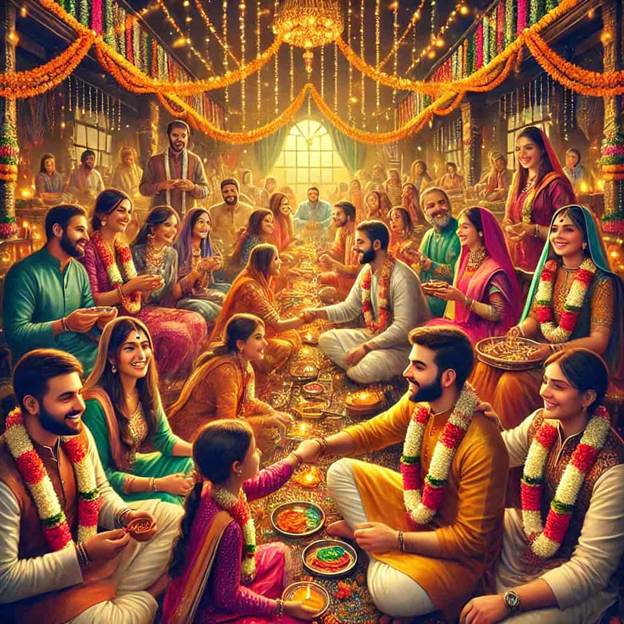
Experience the joy of devotional kirtans, traditional rakhi tying ceremonies, spiritual discourse by Swami Mukundananda, and festive activities for the whole family. Strengthen your bond with loved ones and with Shree Krishna in a sacred atmosphere filled with divine vibrations.
Visit www.radhakrishnatemple.net for event details and registration.
🔗Register Online
Tie a thread of protection not just on wrists—but around your heart, to divine values.
References
1. Mahabharat, Sabha Parva – Draupadi’s disrobing and Shree Krishna’s intervention.
2. Bhavishya Purana – Stories of King Bali and Indra-Shachi.
3. Vishnu Purana – Lord Vishnu and King Bali narrative.
4. Srimad Bhagavatam – Protection of Prahlad, and narratives emphasizing surrender.
5. Swami Mukundananda. Bhagavad Gita: The Song of God (Commentary).
🔗 Read Online
6. Swami Mukundananda. Spiritual Secrets from Hinduism: Essence of the Vedic Scriptures
🔗 Buy on Amazon
❓Frequently Asked Questions (FAQs)
Q1: When is Raksha Bandhan in 2025?
Raksha Bandhan in 2025 will be celebrated on Friday, August 8th. The festival falls on the full moon day (Purnima) of the Hindu month of Shravan, which typically occurs in July or August each year. It's a day to honor bonds of love, protection, and spiritual commitment.
Q2: Is Raksha Bandhan only for brothers and sisters?
Traditionally, Raksha Bandhan celebrates the bond between brothers and sisters. However, scriptural stories show that rakhi symbolizes broader values of protection and love. It can be tied between friends, spiritual guides and disciples, or anyone committed to supporting each other.
Q3: What is the significance of the thread in Raksha Bandhan?
The thread, or rakhi, is a symbolic reminder of the vow of protection and responsibility. In scriptures, it has been used as a talisman of divine protection and dharmic bonding, as seen in the stories of Lakshmi and Indra.
Q4: Is there a specific mantra to chant while tying rakhi?
Yes, traditionally the following mantra is recited:
“Yena baddho balee raajaa daanavendro mahaabalah
Tenatvaamabhibadhnaami rakshe maa chala maa chala”
Translation: "I tie you with the same thread that was tied to the powerful demon king Bali. May this bond protect you always."
Q5: Does the Bhagavad Gita mention Raksha Bandhan?
The Gita does not mention Raksha Bandhan directly, but it strongly emphasizes the principle of divine protection for those who surrender with love and devotion, which is the spiritual core of Raksha Bandhan.
Q6: Can Raksha Bandhan be celebrated spiritually, without siblings
Absolutely. You can use Raksha Bandhan as a personal spiritual day to strengthen your bond with the Divine. Offer a rakhi to your deity, reflect on your vows to live by dharma, and pray for the well-being of your loved ones.
