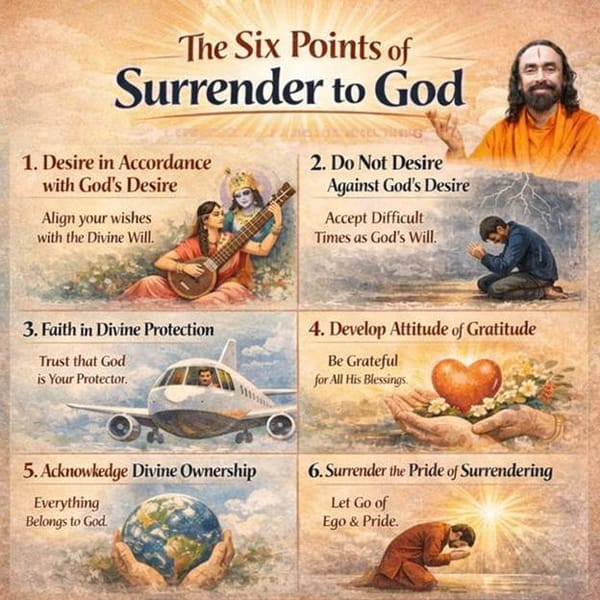


How often have you faced moments in life when something you took for granted was suddenly stripped away? And in that instant, you awoke to the priceless value of what you already possess? One such moment occurred on 15th January 2009, high above New York City, when a US Airways flight faced an unthinkable crisis. The story of that emergency landing on the icy waters of the Hudson River is undoubtedly a tale of aviation heroism—but it goes beyond that. It is a profound spiritual lesson on gratitude, awareness, and reverence for life itself. Let us delve into it.
A Flight That Changed Lives Forever
Just minutes after taking off from LaGuardia Airport, the aircraft collided head-on with a flock of migratory Canadian geese. The passengers heard terrifying thuds. Then came an explosion. Both engines failed. The smell of fuel filled the cabin, and panic gripped every heart.
At that critical moment, Captain Chesley “Sully” Sullenberger made a split-second decision that would later be etched into history. Realizing that returning to the airport was impossible, he chose to land the plane on the freezing waters of the Hudson River, between New York and New Jersey. Calmly instructing the crew to brace for impact, he executed a flawless water landing.
What followed felt nothing short of a miracle. The aircraft floated. Passengers evacuated onto the wings. Rescue boats and helicopters arrived swiftly. All 156 people on board survived.
Later, a middle-aged passenger was interviewed. His words were deeply moving:
“I was alive earlier, but now I am fully and truly alive.”

Inspiration
When we come face to face with death, we suddenly recognize the immeasurable value of life. Gratitude dawns not because something new is gained, but because awareness is awakened.
Why Don’t We Feel Gratitude All the Time?
This question lies at the heart of human discontent. Why is it that we fail to feel awe, reverence, and appreciation for what we already have? Swami Mukundananda illustrates this beautifully through a simple yet powerful chain of observations.
A wealthy man looked at a poor man and said, “Thank God, I am not poor.”
The poor man looked at a mentally disturbed person and said, “Thank God, I am not mad.”
The mentally disturbed man saw a patient being rushed to the hospital and said, “Thank God, I am not sick.”
The patient, upon reaching the hospital, saw a dead body being carried away on a stretcher and said, “Thank God, I am not dead.”
And then comes the most piercing truth:
It was only the dead man who could not thank God.

Inspiration
As long as we are alive, we have infinite reasons to be grateful. Gratitude is not about having the best—it is about recognizing that what we have is already a blessing.
Gratitude: A Mindset, Not a Circumstance
The word gratitude derives from the Latin term gratia, meaning thankfulness. At its core, gratitude is the conscious acknowledgment of life’s gifts. It is the gentle shift of attention from what troubles us to what blesses us. It is the ability to notice and cherish the small miracles woven into our daily existence, and to live with a deep sense of awe toward life itself.
Gratitude is not dependent on external perfection. It is an inner orientation of the heart. With a grateful mindset, even the most difficult challenges lose their power to crush us. Instead, they refine us.
When we cultivate gratitude, our focus shifts—from what is missing to what is present, from complaints to blessings, from despair to hope. This inner shift is the key to positivity, resilience, and joy.
Ingratitude and the Pitfall of Entitlement
The Birthday Child Who Wanted More
Imagine a little child on his birthday, surrounded by beautifully wrapped gifts—colorful paper, shining ribbons, surprises galore. He eagerly opens one gift after another, delight sparkling in his eyes. Then his mother gently asks, “My child, what do you have to say?”
Instead of saying “thank you,” the child looks around and asks,
“Where are all my other presents?”
Would we not immediately label this child as ungrateful?
Inspiration
This is exactly what happens when we focus excessively on what we don’t have. We become blind to the abundance already placed in our lives.
The Curious Case of the Missing Goat
To further drive home this point, Swamiji narrates a humorous yet profound incident from a school in Oklahoma.
On a lazy Sunday afternoon, two senior students decided to play a prank. They released three goats into the school courtyard, but here was the twist—they labeled them Goat No. 1, Goat No. 2, and Goat No. 4.
The next morning, chaos erupted. Goat droppings were everywhere. A frantic search began. Goat No. 1 was found. Goat No. 2 was found. Goat No. 4 was found.
But panic set in—Goat No. 3 was missing!
Teachers, students, and administrators searched relentlessly. The principal even declared a school holiday. Yet Goat No. 3 was never found.
Why?
Because Goat No. 3 never existed.
Inspiration
When we develop a sense of entitlement, we start feeling cheated by life, lamenting over what we think we deserve but never had. Like the missing goat, many of our complaints are about things that were never meant for us.

The High Cost of Ingratitude
When gratitude disappears, negativity rushes in. We replay hurts instead of kindnesses. We magnify insults and minimize favors. We dwell on adverse circumstances and forget the countless lucky breaks that brought us this far.
The result is that our hearts become heavy, our minds turn cynical, and we begin gossiping, backbiting, and spreading negativity—often unconsciously.
But there is a sovereign antidote—The Attitude of Gratitude
The Transformative Power of Gratitude
Gratitude is not just a spiritual virtue; it is a neurological healer. This sublime sentiment occupies a central place in spirituality and the science of positive thinking. Research in positive psychology has consistently shown that a heightened sense of gratitude is closely linked with enduring joy and inner well-being. Those who practice gratitude develop greater emotional resilience, for they learn to interpret challenges not as punishments, but as opportunities for growth.
When gratitude arises from the depths of the heart, it infuses life with vibrancy. One feels more alive, hopeful about the future, and optimistic in one’s professional and personal pursuits. Stress becomes easier to manage, and a natural urge awakens within—to give back to society through selfless service.
Gratitude: The Antidote to Taking Life for Granted
Gratitude safeguards us from the subtle habit of taking blessings for granted. Recall the excitement you felt when you received a cherished gift, purchased a new vehicle, or entered a new phase of life, such as marriage. Over time, that sense of novelty fades, and what once thrilled us becomes ordinary.
Gratitude restores that lost freshness. When we consciously appreciate what we possess, we begin to celebrate goodness once again. Therefore, do not overlook the divine gifts already bestowed upon you—the earth beneath your feet, the air that sustains your breath, the food that nourishes you, and the body that serves as your vehicle through life. When you acknowledge these blessings with thankfulness, your heart naturally fills with purity, joy, and goodness.
The Science Behind Gratitude
When the brain focuses on grateful thoughts, it naturally suppresses negativity. More importantly, it stimulates the secretion of serotonin, the neurotransmitter responsible for feelings of happiness, contentment, and inner fulfillment.
Martin Seligman, the father of positive psychology, conducted a remarkable experiment on 47 clinically depressed patients. They were taken off medication and instead asked to do one simple practice—every day, remember three things that were going right in their lives and feel grateful for them. Support communities helped reinforce this habit.
After one month, 94 percent of patients showed greater improvement than could be achieved with medication alone.
Hence, gratitude is not just a prayer—it is a powerful therapy.

Practical Ways to Cultivate Gratitude
1. Maintain a Gratitude Journal
Every night, write down the events of the day for which you feel grateful. Revisit them the next morning. This simple habit rewires the mind toward positivity and joy.
2. Cultivate Awe for Nature
Look at the crimson hues of the early morning sky. Gaze at the vast blueness above you. Feel the gentle touch of air on your cheeks. Observe dew drops resting like pearls on the grass. Let your heart dance when you see a rainbow.
The miracle of God is manifest in every atom of creation. All we need is awareness and the humbleness to acknowledge that the source of goodness lies outside of ourselves. Gratitude is a consequence of such humility.
Gratitude as a Prayer
As Swami Mukundananda beautifully writes in Golden Rules for Living Your Best Life:
“Humble yourself before your Creator, for He has provided you with everything, including your body. Acknowledge His greatness, because He is the source of all divinity and goodness. Thanking God is one of the most powerful of all prayers.”
Every faith, every spiritual tradition, emphasizes gratitude because it aligns the soul with divine abundance.
Make Gratitude Your Attitude
Let us return to where we began—with that simple yet profound truth.
We are alive. And because we are alive, we can appreciate the Creator’s love manifest in the abundance of Creation. Because we can appreciate, we can rise above our ego and transform our lives.
Make gratitude your attitude—today, tomorrow, and forever. When you do, life will not necessarily give you more, but it will feel infinitely richer. And that, truly, is the miracle.
Call To Action
1. Find more about Gratitude and Positive Mindsets. Order your copy of Golden Rules for Living Your Best Life at: https://a.co/d/5RGERmB.
2. Follow this Meditation by Swami Mukundananda: on the shining attitude of gratitude: https://youtu.be/PTGpNSKMjK8?si=q8tinGgWJvaegIhi
3. Subscribe to the Swami Mukundananda YouTube channel and find Practical Tips to Develop Gratitude: Is Your Situation Making You Miserable? Watch This | Attitude Of Gratitude | 4th Point Of Surrender
Resources
● Mukundananda, S. (2022). Golden Rules for Living Your Best Life. Rupa. New Delhi, India