
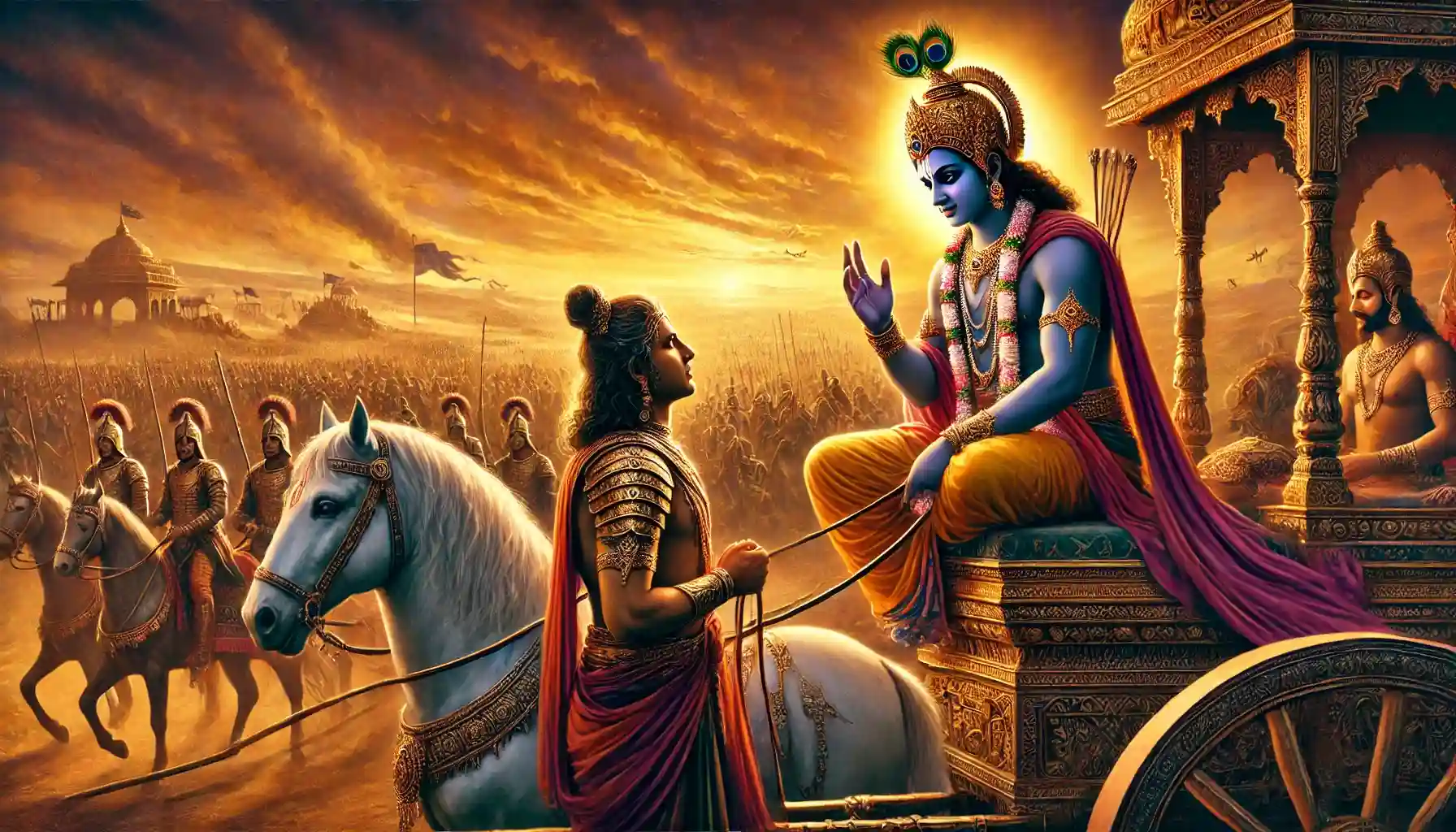
Have you ever faced a crossroads where no path seemed entirely right and you didn't know what your duty was? The Holy Bhagavad Gita offers profound insights for precisely these moments of doubt. When confronted with difficult choices, this ancient wisdom provides a framework that transcends simple right versus wrong thinking.
Throughout history, individuals have turned to timeless philosophical concepts for guidance. The Bhagavad Gita shows us that personal dharma: our unique duty or purpose, can illuminate the most complex decisions we face today. Unlike rigid rules, dharma adapts to circumstances while remaining anchored in ethical principles.
In this article, we explore how understanding dharma can transform your approach to life's challenges. Despite being thousands of years old, this concept offers surprising clarity for modern dilemmas, whether in career choices, relationship decisions, or ethical quandaries. By examining dharma through both historical and contemporary lenses, you'll discover a decision-making compass that aligns action with purpose.
What is Dharma? A Timeless Concept Explained
Dharma is a word commonly used in Hinduism and Buddhism. But it is the most elusive word to translate into the English language. Terms like righteousness, good conduct, duty, noble quality, etc. only describe an aspect of its meaning. Dharma comes from the root word dhṛi, which means ḍhāraṇ karane yogya, or “responsibilities, duties, thoughts, and actions that are appropriate for us.” For example, the dharma of the soul is to love God. It is like the central law of our being.
The prefix swa means “the self.” Thus, swa-dharma is our personal dharma, which is the dharma applicable to our context, situation, maturity, and profession in life. This swa-dharma can change as our context in life changes, and as we grow spiritually. Shree Krishna repeatedly tells Arjun to follow his swa-dharma, his profession, and not change it because someone else may be doing something else.
It is more enjoyable to be ourselves than to pretend to be someone else. The duties born of our nature can be easily performed with stability of mind. The duties of others may seem attractive from a distance and we may think of switching, but that is a risky thing to do. If they conflict with our nature, they will create disharmony in our senses, mind, and intellect. This will be detrimental for our consciousness and will hinder our progress on the spiritual path.
How to Follow Your Swa-Dharma
The Bhagavad Gita is rich in answers to all our questions about our duty. Let us explore a few verses.
Ancient Indian philosophy views dharma as the bedrock of a meaningful life, a principle that governs not just individual behavior but cosmic order itself. The Holy Bhagavad Gita, arguably the most influential text on dharma, presents it as both universal truth and personal duty. In its teachings, Shree Krishna instructs Arjun about the importance of fulfilling one's dharma even in difficult circumstances: BG 2.38: Fight for the sake of duty, treating alike happiness and distress, loss and gain, victory and defeat. Fulfilling your responsibility in this way, you will never incur sin.
This sacred text further emphasizes that it is our responsibility to perfrom our duty without feeling entitled to the result: BG 2.47: You have a right to perform your prescribed duties, but you are not entitled to the fruits of your actions. Never consider yourself to be the cause of the results of your activities, nor be attached to inaction.
Moreover, Shree Krishna instructs: BG 3.19: Therefore, giving up attachment, perform actions as a matter of duty because by working without being attached to the fruits, one attains the Supreme. Through these principles, dharma emerges as action aligned with cosmic order rather than personal desire.
Additionally, the Shree Krishna declares: BG 3.35: It is far better to perform one’s natural prescribed duty, though tinged with faults, than to perform another’s prescribed duty, though perfectly. In fact, it is preferable to die in the discharge of one’s duty, than to follow the path of another, which is fraught with danger. This highlights an essential aspect of dharma: that it is unique to each individual based on their nature and position in life.
BG 5.10: Those who dedicate their actions to God, abandoning all attachment, remain untouched by sin, just as a lotus leaf is untouched by water. This is the soul's Dharma: to love and serve God.
How Dharma differs from religion or law
At first glance, dharma might appear similar to religious doctrine or legal code, yet its scope extends far beyond both. Instead of rigid rules applied universally, dharma adapts according to an individual's stage of life, capabilities, and circumstances. Furthermore, rather than imposing external authority, dharma functions as an internal compass guiding right action.
Why understanding Dharma matters today
In our complex modern world filled with ethical gray areas and competing priorities, dharma offers a nuanced framework for decision-making. Rather than relying on absolute rules, it encourages discernment based on one's authentic nature and higher purpose.
The Gita advises that prescribed duties should never be renounced and that actions should be performed without attachment and expectation for rewards. This wisdom proves especially relevant in professional contexts where we often face pressure to compromise our values for immediate gain.
For instance, dharma might guide a business leader to consider not just profit margins but the well-being of employees, environmental impact, and societal contribution. Similarly, in personal relationships, it might mean choosing difficult conversations over comfortable silence when truth needs expression.
Above all, dharma encourages self-awareness: recognizing our unique abilities, responsibilities, and purpose. By aligning our actions with our authentic nature rather than external expectations, we create harmony within ourselves and contribute positively to the world around us.
The Inner Conflict: When Dharma Feels Unclear

Everyone faces moments when the correct path becomes clouded in uncertainty. In the realm of spiritual growth, these inner conflicts represent not failures but crucial turning points in our development.
Arjuna's dilemma as a metaphor for modern confusion
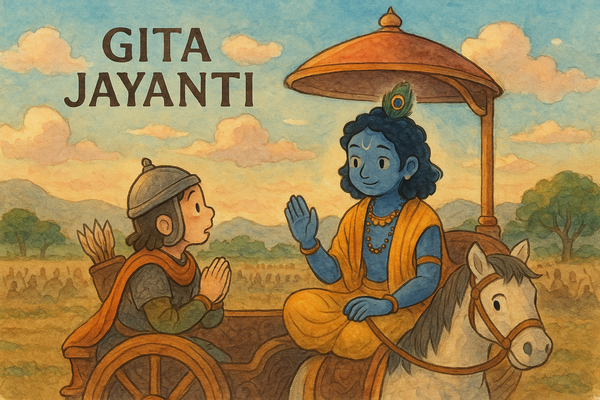
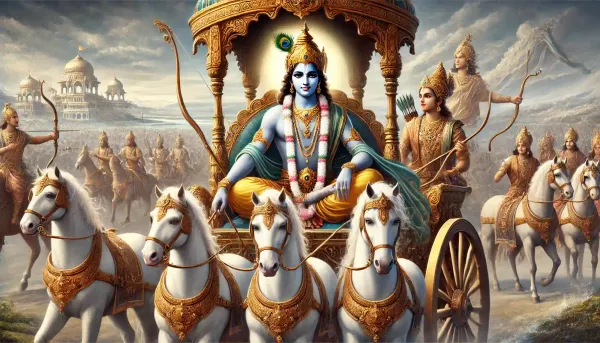
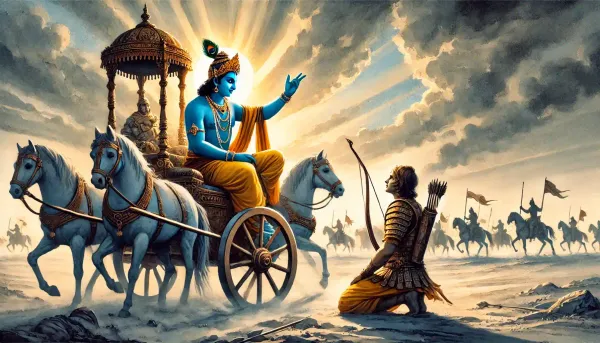
The Bhagavad Gita opens with a profound scene of inner conflict. Standing on the battlefield of Kurukshetra, the warrior Arjuna faces an impossible choice: fulfill his duty as a warrior by fighting against his own family members, or refuse to participate in what he perceives as a terrible sin. His lament captures the essence of dharmic confusion, and it is at this point that he surrenders his intellect to Shree Krishna: BG 2.7: I am confused about my duty, and am besieged with anxiety and faintheartedness. I am Your disciple, and am surrendered to You. Please instruct me for certain what is best for me.
This ancient dilemma mirrors countless modern scenarios. Just as Arjuna was torn between his warrior dharma and his love for family, we often find ourselves caught between competing values: career advancement versus ethical integrity, family obligations versus personal growth, or traditional expectations versus authentic self-expression.
Essentially, Arjuna's crisis represents our universal struggle when personal attachments clash with higher duties. His declaration reveals how emotional turmoil can make us question even our most established life paths.
Common situations where Dharma feels conflicted
Dharmic conflicts typically arise in several common scenarios. First, professional dilemmas occur when career advancement requires compromising personal values; perhaps requiring dishonesty, participating in harmful practices, or sacrificing family time.
Second, relationship conflicts emerge when loyalty to one person requires disappointing another, or when maintaining harmony requires withholding uncomfortable truths. As Shree Krishna teaches: BG 2.62: While contemplating on the objects of the senses, one develops attachment to them. Attachment leads to desire, and from desire arises anger.
Consequently, many find themselves asking: Should I prioritize duty over desire? Personal growth over family expectations? Truth over harmony? These questions have no universal answers: they must be resolved through discernment of one's personal dharma.
How emotions cloud decisions
Emotional attachments often obscure clear decision-making. This emotional turbulence, whether fear, attachment, anger, or grief, creates several obstacles to dharmic clarity. Initially, attachment to outcomes leads to anxiety about results rather than focus on right action.
Subsequently, fear of criticism or failure can paralyze decision-making. We might know the right path yet hesitate due to potential disapproval from others. Meanwhile, anger clouds judgment by triggering reactive decisions rather than thoughtful responses.
Indeed, Shree Krishna specifically warns: BG 2.63: Anger leads to clouding of judgment, which results in bewilderment of memory. When memory is bewildered, the intellect gets destroyed; and when the intellect is destroyed, one is ruined.
Nevertheless, these emotional challenges aren't simply obstacles to overcome but opportunities for growth. Through facing our conflicted feelings around dharma, we develop discernment, courage, and wisdom that transcend rigid rules and lead to authentic ethical insight.
Dharma in Action: Choosing Duty Over Comfort

Turning philosophical understanding into practical action lies at the heart of living according to dharma meaning. Once we grasp the concept intellectually, the real challenge begins: applying these principles in daily life, often when doing so requires personal sacrifice.
The Bhagavad Gita's view on selfless action
The Bhagavad Gita presents a revolutionary approach to action through the concept of karma yoga: performing one's duties without attachment to results, as has been discussed above. Shree Krishna infact takes this concept one step further and declares: BG 3.9: Work must be done as a yajna to the Supreme Lord; otherwise, work causes bondage in this material world. Therefore, O son of Kunti, for the satisfaction of God, perform your prescribed duties, without being attached to the results. This principle transforms every action from a self-centered pursuit into a sacred offering.
Why action without attachment is liberating
Perhaps counterintuitively, detachment from outcomes actually creates freedom. Shree Krishna explains: BG 5.11: The yogis, while giving up attachment, perform actions with their body, senses, mind, and intellect, only for the purpose of self-purification. Through this approach, actions no longer burden us with anxiety about results.
Shree Krishna also clarifies: BG 2.71: That person, who gives up all material desires and lives free from a sense of greed, proprietorship, and egoism, attains perfect peace. Hence, by releasing our grip on specific outcomes and relinquishing the sense of control and ownership, we find mental clarity and emotional stability even during challenging situations.
Shree Krishna removes all doubt from our minds when he instructs Arjun thus: BG 3.30: Performing all works as an offering unto Me, constantly meditate on Me as the Supreme. Become free from desire and selfishness, and with your mental grief departed, fight! In place of self-interest, we find purpose in contributing our unique talents in serving God's plan for us.
Renunciation vs. Responsibility: A Modern Balance
The tension between renunciation and responsibility creates one of the most profound paradoxes in understanding dharma meaning. Many seekers find themselves wondering: must I abandon my ambitions to live spiritually, or can these seemingly opposite paths coexist?
What renunciation really means in the Gita
The Bhagavad Gita presents a surprisingly practical view of renunciation (sanyas) that differs from popular misconceptions. True renunciation isn't about physically abandoning responsibilities but transforming one's relationship to action. As the text clearly states: BG 6.1: The Supreme Lord said: Those who perform prescribed duties without desiring the results of their actions are actual sanyāsīs (renunciates) and yogis, not those who have merely ceased performing sacrifices such as Agnihotra yajna or abandoned bodily activities.
Furthermore, the Gita distinguishes between three types of renunciation based on their qualities:
- Renunciation in goodness: BG 18.9: When actions are undertaken in response to duty, and one relinquishes attachment to any reward, O Arjun, it is considered renunciation in the nature of goodness.
- Renunciation in passion: BG 18.8: To give up prescribed duties because they are troublesome or cause bodily discomfort is renunciation in the mode of passion. Such renunciation is never beneficial or elevating.
- Renunciation in ignorance: BG 18.7: Prescribed duties should never be renounced. Such deluded renunciation is said to be in the mode of ignorance.
Living Your Dharma: A Framework for Daily Decisions
1.How to identify your personal Dharma
Discovering your personal dharma begins with honest self-assessment. The Gita suggests examining your natural inclinations rather than forcing yourself into unsuitable roles. Your authentic strengths, values, and temperament offer clues to your unique path.
The Gita also advises seeking guidance from those with wisdom: BG 4.34: Learn the Truth by approaching a spiritual master. Inquire from him with reverence and render service unto him. Such an enlightened Saint can impart knowledge unto you because he has seen the Truth.
2.Using the scriptures as a decision-making compass
Practically, this means evaluating choices against scriptural injunctions rather than merely convenience or social approval. It also means surrendering to your spiritual master and their knowledge of the scriptures. As Shree Krishna teaches: BG 16.24: Therefore, let the scriptures be your authority in determining what should be done and what should not be done. Understand the scriptural injunctions and teachings, and then perform your actions in this world accordingly.
3.Dharma and long-term fulfillment
Following your dharma creates profound fulfillment beyond fleeting happiness. True fulfillment comes from acting with integrity toward your purpose regardless of immediate outcomes, and dedicating your actions to the pleasure of God . Shree Krishna affirms this truth: BG 18.54: One situated in the transcendental Brahman realization becomes mentally serene, neither grieving nor desiring. Being equitably disposed toward all living beings, such a yogi attains supreme devotion unto Me.
Conclusion
The Bhagavad Gita's wisdom stands as a profound framework for navigating life's complex decisions, transcending simple notions of right and wrong. Throughout history, this ancient wisdom has offered clarity where conventional thinking falls short. Certainly, we face different challenges than Arjun on his battlefield, yet his dilemma mirrors our modern struggles between competing values and responsibilities.
The beauty of dharma lies in its adaptability: unique to each person while remaining anchored in timeless principles. Unlike rigid doctrines, dharma acknowledges your individual nature, capabilities, and life stage. Therefore, what constitutes right action for one person may differ completely for another.
Action without attachment represents perhaps the most liberating aspect of performing our duties. This principle frees you from anxiety about outcomes while maintaining commitment to excellent work. Actually, this paradoxical approach transforms every task from self-centered pursuit into meaningful contribution.
The path of dharma never demands choosing between spirituality and ambition. Instead, it invites transformation of how you approach both, not abandoning responsibilities but changing your relationship to them. Your personal and professional goals align naturally with collective good when pursued as expressions of your authentic purpose.
Finding your personal dharma requires honest self-reflection and the guidance of a spiritual master. Once discovered, this knowledge becomes your compass for daily decisions, guiding choices that lead beyond momentary happiness toward profound peace.
FAQs
1. What is the core message of the Bhagavad Gita on Dharma?
The core message is that one must fulfill their duty without attachment to the results. By performing righteous action, individuals contribute to cosmic order and spiritual growth, regardless of personal gain. Beyond this, we are urged to perform our work as a sacrifice to God, for the dharma of the soul is to love God.
2. How does the Bhagavad Gita define right action?
The Bhagavad Gita teaches that right action is performed without attachment to outcomes. We only have a right to perform our prescribed duties, not to the fruits of our actions.
3. What is the difference between Dharma and law or religion?
Dharma goes beyond religious doctrines or laws; it is an internal compass guiding ethical behavior based on personal nature, responsibilities, and circumstances, not imposed externally like law or religion.
4. Why is performing one’s Dharma important, even in difficult circumstances?
Performing one’s Dharma, even when challenging, is vital for maintaining personal integrity, spiritual growth, and harmony with the universe. The Bhagavad Gita teaches that fulfilling one's duty is far better than avoiding it for personal comfort.
Further Study of the Bhagavad Gita
- The Holy Bhagavad Gita with Swami Mukundananda's Commentary
- Swami Mukundananda's YouTube channel on the Holy Bhagavad Gita