

Introduction
In a world that constantly pulls us outward, the Sattvic way of life brings us inward, toward peace, clarity, and self-realization. Rooted in the ancient wisdom of the Bhagavad Gita and brought alive through the teachings of Swami Mukundananda, the Sattvic lifestyle is not merely a diet or a routine—it is a spiritual orientation. The word Sattva comes from the root "sat," which means truth, purity, and harmony. It is one of the three Gunas (qualities of nature), alongside Rajas (passion and activity) and Tamas (inertia and ignorance). A Sattvic life aligns us with our higher self and the Divine.
This blog explores three essential domains of human experience—eating, speaking, and sleeping—through the Sattvic lens. When purified, these daily acts become offerings to God, vehicles of inner growth, and steps on the path of Yog.
Part 1: Eating the Sattvic Way
Food as Sacrament
In the Bhagavad Gita, Shree Krishna states:
BG 17.7
“aharas tv api sarvasya tri-vidho bhavati priyah
yajnas tapas tatha danam tesham bhedam imam shrinu”
“The food that people prefer is according to their dispositions. The same is true for the sacrifice, austerity, and charity they are inclined (or predisposed) toward. Now hear of the distinctions from me.”
👉 Read Verse 17.7 with commentary
Food is not just for survival—it is an offering to the Divine. The quality of what we eat influences our thoughts, emotions, and ultimately, our consciousness.
Characteristics of Sattvic Food
Shree Krishna elaborates:
BG 17.8
“ayuh-sattva-balarogya-sukha-priti-vivardhanah
rasyah snigdhah sthira hridya aharah sattvika-priyah”
“Persons in the mode of goodness prefer foods that promote life span, and increase virtue, strength, health, happiness, and satisfaction. Such foods are juicy, succulent, nourishing, and naturally tasteful.”
👉 Read Verse 17.8 with commentary
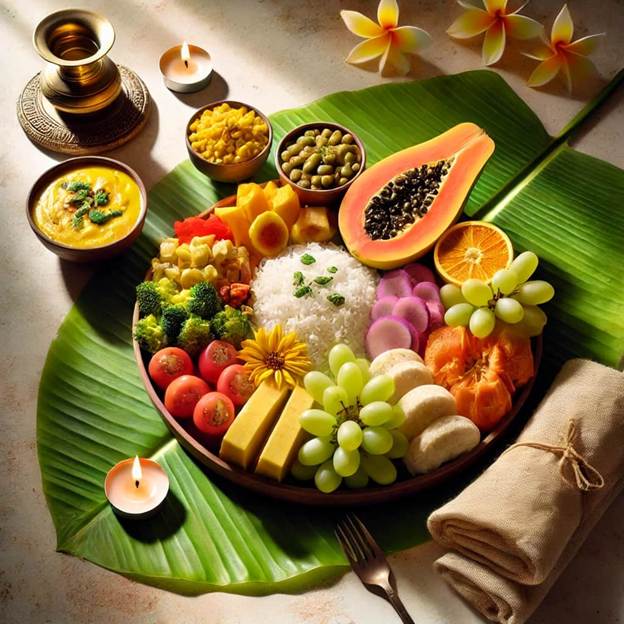
According to Swami Mukundananda, Sattvic foods are fresh, light, and nourishing. These include fruits, vegetables, grains, legumes, nuts, seeds, and dairy when taken in moderation. The food should be cooked with love, offered to God before consumption, and eaten in gratitude.
Conscious Consumption
The Sattvic eater does not indulge in overeating, nor does one eat out of emotional compulsion. Mindful eating is a key component—being present with the meal, chewing slowly, and cultivating gratitude. The mindset during cooking and eating also matters. Food cooked in anger or greed carries those vibrations into our system.
Swami Mukundananda often reminds us:
“You are not what you eat, but what you digest. And digestion includes not just physical assimilation but mental absorption of sanskars.”
The Role of Prasadam
Offering food to God transforms it into prasadam, sanctified nourishment. This act detaches the ego and aligns the mind with divinity. Swamiji emphasizes that by offering our food to Shree Krishna, we purify not only the body but the mind and soul.
Part 2: Speaking the Sattvic Way
The Power of Speech
Words are vibrations that carry immense power. As Shree Krishna states:
BG 17.15
“anudvega-karam vakyam satyam priya-hitam cha yat
svadhyayabhyasanam chaiva van-mayam tapa uchyate”
“Words that do not cause distress, are truthful, inoffensive, and beneficial, as well as regular recitation of the Vedic scriptures—these are declared as austerity of speech.”
👉 Read Verse 17.15 with commentary
This verse becomes a guiding light for cultivating Sattvic speech—truthful, kind, beneficial, and harmonious.
The Four Filters of Sattvic Speech
Swami Mukundananda advises that before speaking, we should filter our words through four gates:
1. Is it True?
Lies and exaggerations pollute the mind and relationships.
2. Is it Necessary?
Idle chatter and gossip distract from inner stillness.
3. Is it Beneficial?
Even truth can hurt if not spoken constructively.
4. Is it Kind?
Harsh truth, even if correct, is better left unspoken if it wounds unnecessarily.

A Sattvic speaker uses words like mantras—healing, uplifting, and connecting souls with the Divine.
Silence as Strength
In contrast to constant verbal expression, silence is highly revered in the Sattvic way. Mauna (sacred silence) deepens awareness. When we refrain from reactive speech, we give ourselves space to respond wisely.
Swami Mukundananda beautifully says,
“Learn to listen more than you speak—silence is not empty; it is full of answers.”
Part 3: Sleeping the Sattvic Way
Sleep as Restoration
Shree Krishna categorizes the modes of sleep as follows:
BG 18.35
“yaya svapnam bhayam shokam vishadam madam eva cha
na vimunchati durmedha dhritih sa partha tamasi”
“That unintelligent resolve is said to be determination in the mode of ignorance, in which one does not give up dreaming, fearing, grieving, despair, and conceit.”
👉 Read Verse 18.35 with commentary
Tamas leads to laziness and inertia. Overindulgence in sleep is detrimental to both physical vitality and spiritual growth.
Characteristics of Sattvic Sleep
Sattvic sleep is:
- Regular: Following a consistent sleep-wake routine
- Moderate: Neither excessive nor deficient
- Restorative: Waking up refreshed and joyful
- Peaceful: Free from disturbing dreams and mental agitation

Swamiji teaches that Sattvic sleep begins with a Sattvic mind. What we absorb during the day influences our sleep. Ending the day with spiritual reflection, prayer, or scripture reading leads to a calm and pure state of rest.
Preparing for Sattvic Sleep
- Unplug from digital distractions an hour before bed.
- Reflect on your actions and offer them to God.
- Practice gratitude to release anxieties.
- Chant a divine name or read a few verses from the Gita.
Swami Mukundananda shares: “If the last thought before sleep is divine, the mind will carry that impression through the night.” This not only blesses your rest but also subtly transforms your subconscious.
Integrating the Sattvic Lifestyle
The Interconnection
Our eating, speaking, and sleeping habits are intertwined. Impure food affects the mind, harsh speech stirs emotions, and restless sleep disrupts our spiritual rhythm. Conversely, Sattvic food lightens the body, Sattvic speech brings harmony, and Sattvic sleep renews our inner strength.
Swami Mukundananda often says,
“When our daily actions become aligned with purity, the mind becomes a fit instrument for divine realization.”
A Day in the Life of a Sattvic Seeker
- Morning: Rise early, cleanse body and mind, meditate, and offer gratitude.
- Meal Times: Eat mindfully, offer food to God, and avoid tamasic indulgences like stale or spicy foods.
- Speech: Speak less, speak with love, and listen more.
- Evening: Reflect, refrain from agitation, and embrace silence.
- Before Bed: Read a verse, chant, or simply commune with the Divine in gratitude.
Why Choose Sattva?
The Sattvic path is not about suppression or asceticism. It is about refinement—living with inner awareness and divine alignment. It transforms mundane acts into spiritual practice. Eating becomes offering, speech becomes prayer, sleep becomes surrender.
Shree Krishna declares:
BG 14.9
“sattvam sukhe sanjayati rajah karmani Bharata
jnanam avritya tu tamah pramade sanjayaty uta”
“Sattva binds one to material happiness; rajas conditions the soul toward actions; and tamas clouds wisdom and binds one to delusion.”
👉 Read Verse 14.9 with commentary
Though even Sattva is a binding force, it is a golden chain that uplifts the soul until it is ready to transcend all Gunas.
As Swami Mukundananda explains, “The Sattvic path purifies the mind and prepares it for higher devotion. It is the stepping stone to transcendence.”
Conclusion
Living the Sattvic way is like tuning an instrument—adjusting daily habits until the music of divinity flows through us. In every bite of food, every word spoken, and every restful sleep lies the potential for spiritual growth.
The Bhagavad Gita does not advocate a monastic life for all—it calls for conscious living. Whether in a bustling city or a quiet forest, a Sattvic life is possible. It begins not in grand gestures, but in humble daily choices.
So the next time you eat, speak, or sleep, pause and ask:
Is this in alignment with purity, harmony, and divinity?
When we choose Sattva, we choose clarity over confusion, peace over agitation, and love over fear. In doing so, we inch closer to our true self, pure, eternal, and divine.
Call to Action
Want to begin your Sattvic journey?
Start with one habit—perhaps a Sattvic meal, a kind word, or a bedtime prayer. Progress gradually and reflect deeply. Swami Mukundananda’s guided programs and resources on holistic living offer a supportive path.
Resources
Watch: What is the Best Diet for the Human Body? | Science of Healthy Eating by Swami Mukundananda
- Bhagavad Gita: The Song of God – Commentary by Swami Mukundananda
- Daily Sadhana program – JKYog.org
Register Online - Science of Healthy Diet – Book by Swami Mukundananda
Buy on Amazon
FAQs
Q: Can Sattvic food include onions and garlic?
A: Traditionally, onions and garlic are considered Rajasic or Tamasic. Swamiji recommends avoiding them if possible for deeper spiritual benefits.
Q: Is it okay to speak harsh truths if it helps someone?
A: Even truth should be conveyed with love and compassion. Shree Krishna advises speaking truthfully but without causing agitation (anudvega-karam vākyam).
Q: I have irregular sleep due to work shifts. Can I still live Sattvically?
A: Yes. Focus on the quality of rest, your evening routine, and maintaining mental calmness. Offer your sleep to God as an act of surrender.
Q: What if I slip into Tamasic habits occasionally?
A: The path is gradual. Awareness is the first step. Be kind to yourself and return to Sattvic practices with renewed intention.
Q: Can children and working adults live the Sattvic way?
A: Absolutely. Sattva is not about rules, but about choices. It adapts to your lifestyle and enhances it from within.