
A Spark in the Darkness
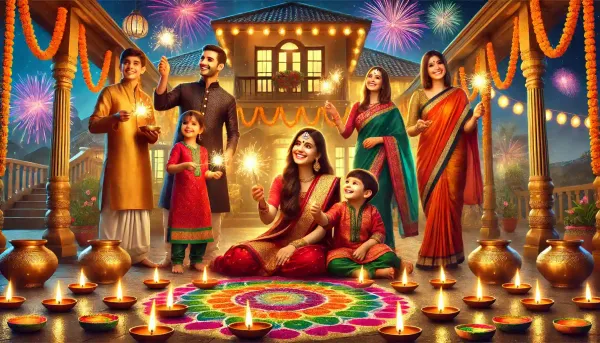
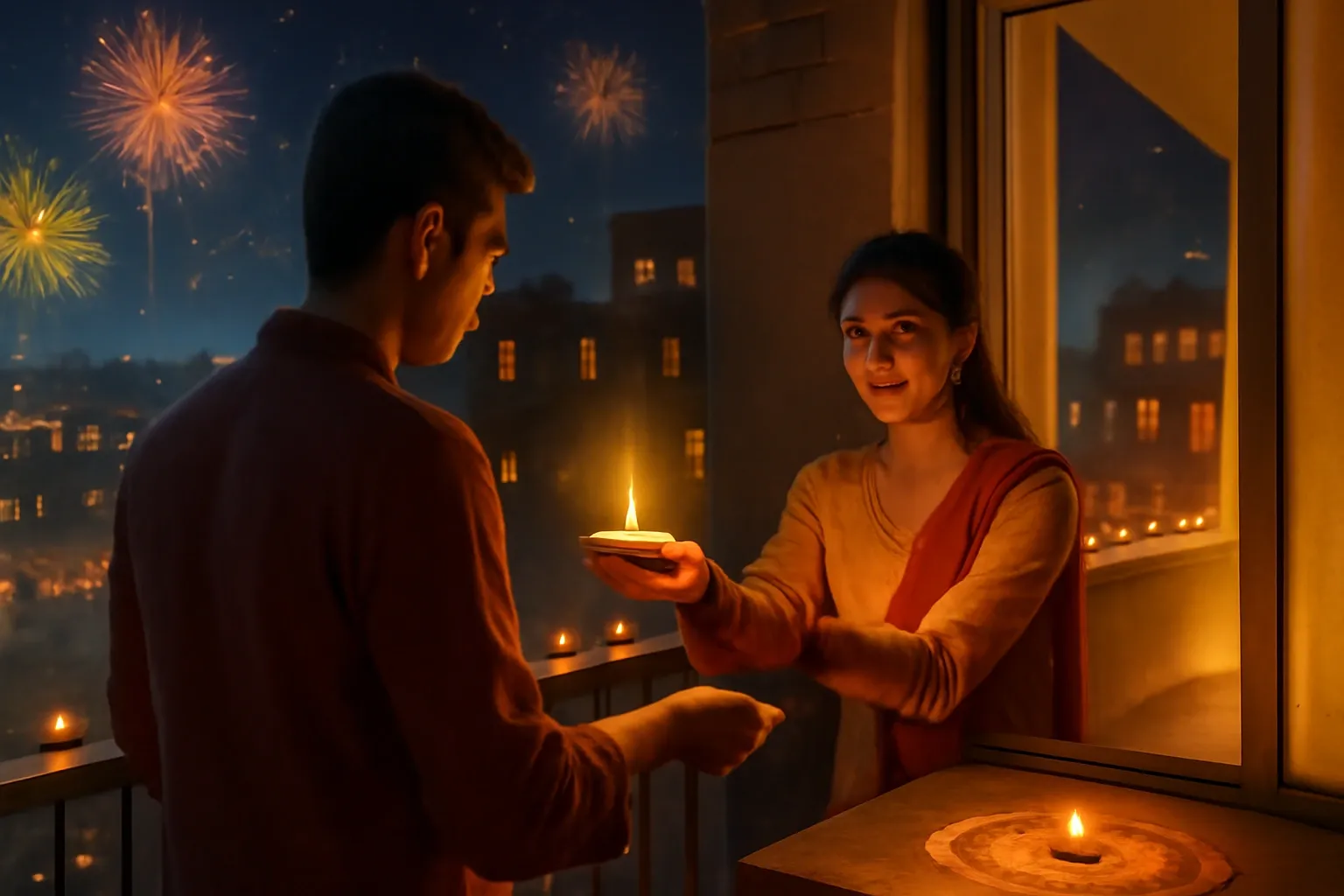
It was Diwali night. Amid the glittering skyline of lamps, Arjun stood by his balcony, watching children laugh as fireworks bloomed across the sky. Yet inside, he felt a quiet emptiness. Across the street, his friend Meera waved, her hands bright with henna, holding out a small clay lamp. “Don’t just light your house tonight,” she called, smiling. “Light your heart too.” Her words lingered. Later, when Arjun finally placed the lamp by his window, its golden glow softened the silence within. For the first time in years, he felt peace—warm, steady, and beautifully alive.
The True Light of Diwali
For most of us, Diwali is synonymous with grandeur—twinkling diyas, sweet delicacies, colorful rangolis, and laughter. Yet, beneath the surface of festivity lies a profound spiritual symbolism. Swami Mukundananda Ji, reminds us that Diwali is not merely an external celebration; it’s an inner journey from darkness to light, from ignorance to wisdom, and from material attachment to divine love.

1. The Lamp of the Soul
In Hindu tradition, lighting a lamp symbolizes dispelling darkness. But this ritual has a deeper spiritual meaning. The darkness represents ignorance—our forgetfulness of our divine nature. The flame symbolizes the light of divine knowledge (gyan) and devotion (bhakti), which together burns away ignorance and ego.
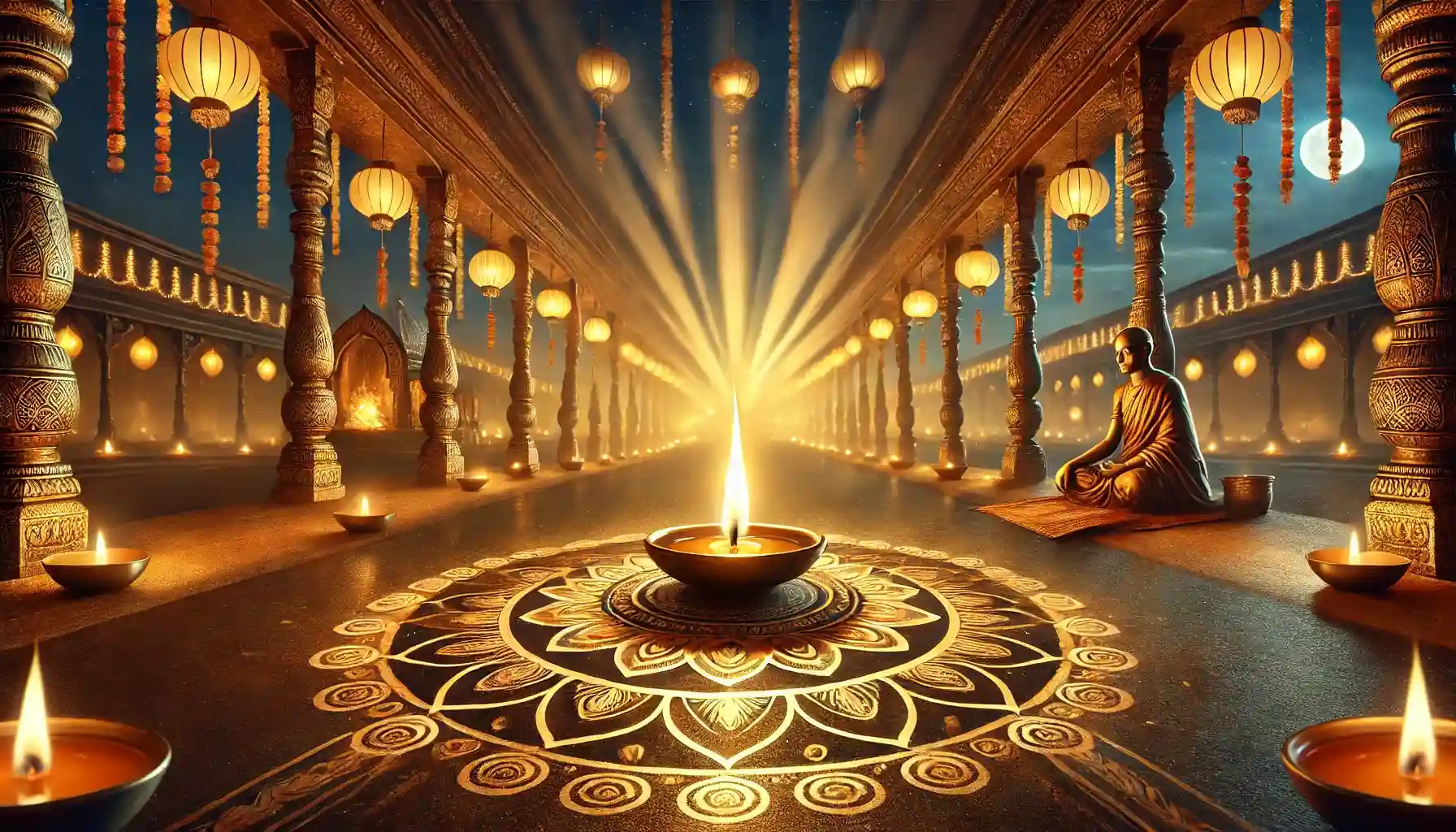
Just as a lamp requires oil to burn, the soul needs faith and devotion to stay illuminated. Swami Mukundananda Ji beautifully compares the wick of the lamp to our inner willpower and the oil to our continuous remembrance of God. Without steady fuel, the flame of devotion flickers and dies. Thus, the first spiritual step during Diwali is to ensure that our lamp—the heart—is filled with the oil of love and humility.
2. The Inner Meaning of Rama’s Return
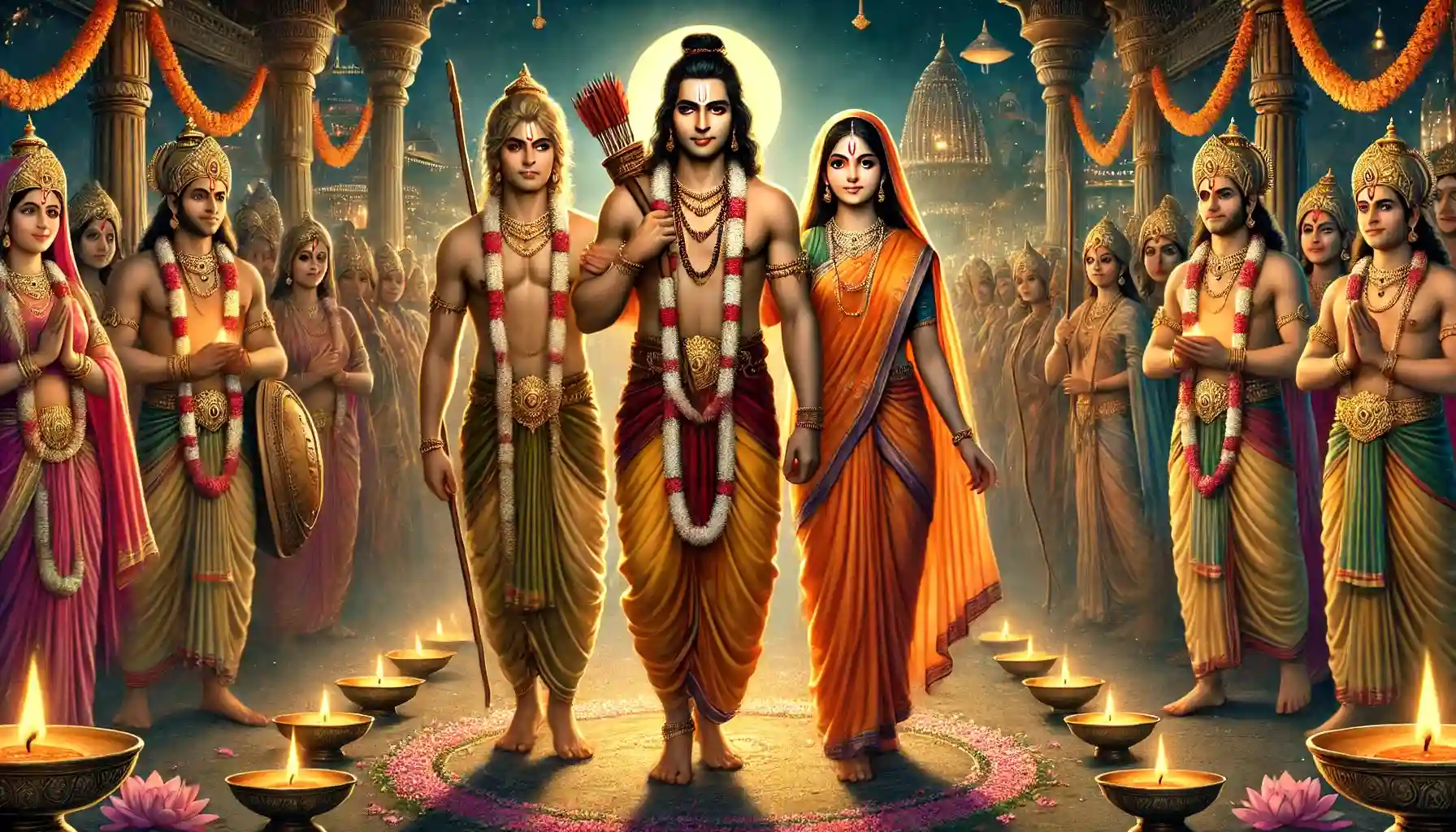
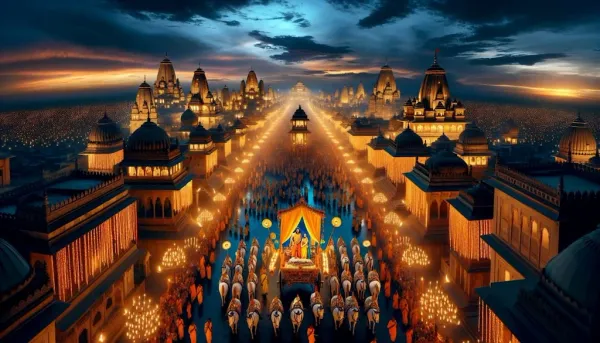
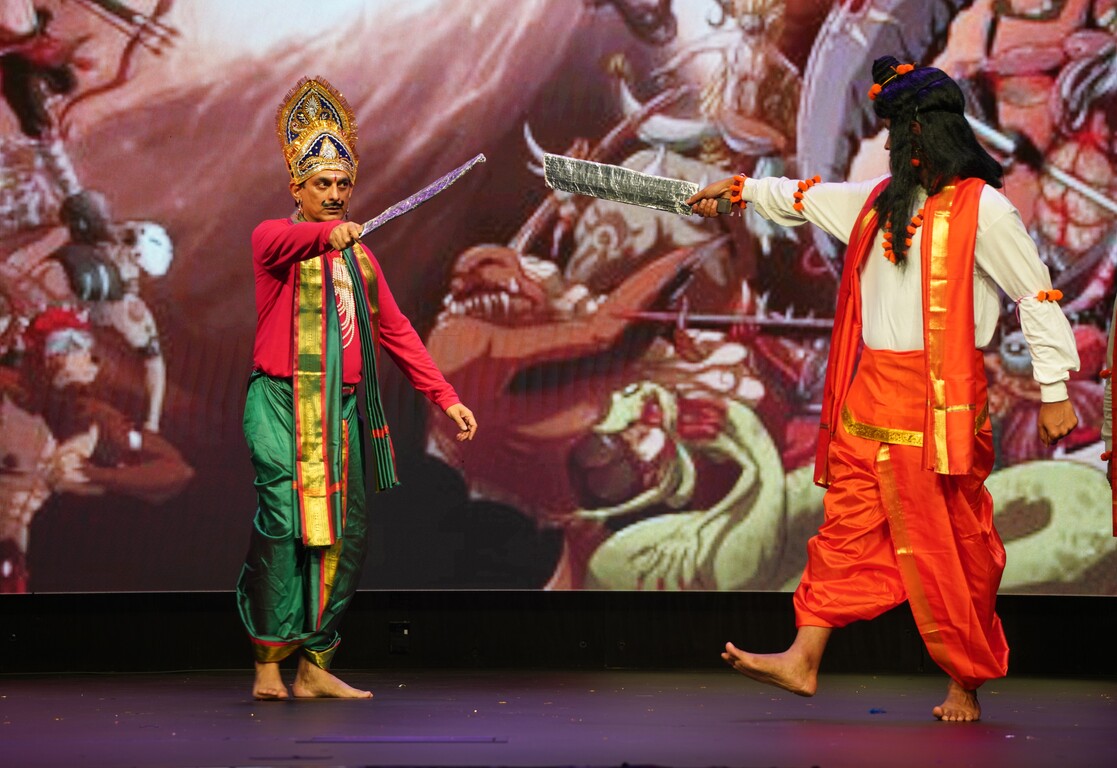
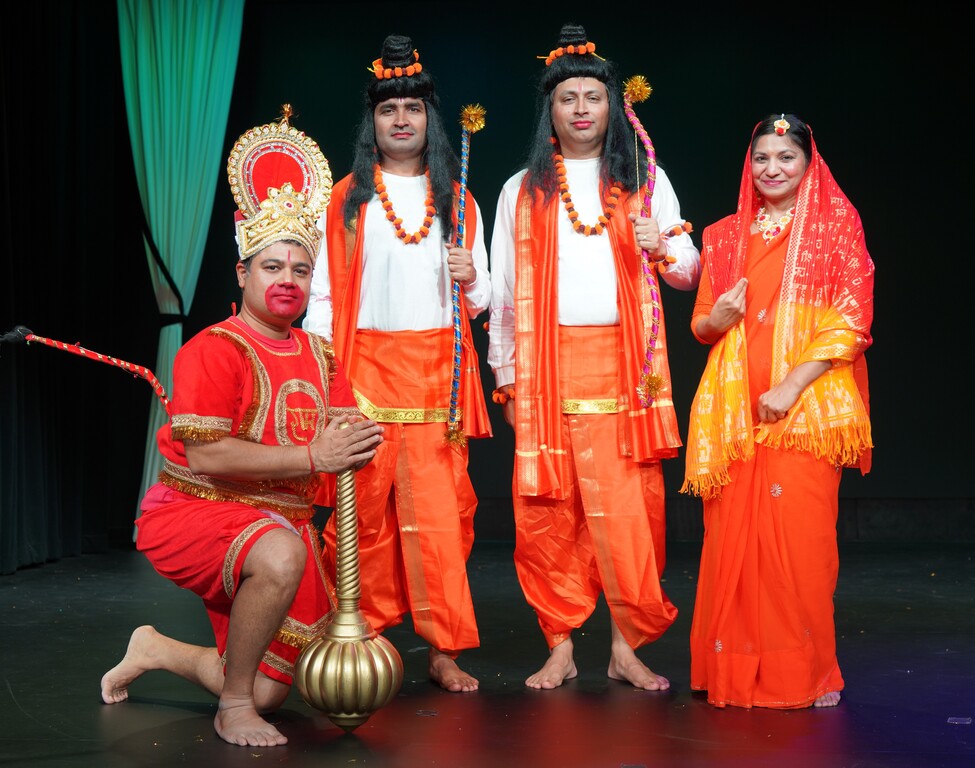
Historically, Diwali celebrates Lord Ram’s return to Ayodhya after defeating Ravan. Ram’s return represents the soul’s victory over the ten-headed demon of desires, ego, and anger that reside within us. Ravan’s ten heads are symbolic of the ten senses that constantly drag the mind outward toward material pleasure.
When Lord Ram, symbolizing divine virtue, triumphs over Ravan, it signifies the victory of righteousness over vice. “Ravan is not somewhere outside—it lives within us as lust, greed, anger and pride. The real celebration of Diwali begins when we conquer this inner Ravan.”
Thus, lighting lamps to welcome Ram is a metaphor for purifying the heart so that divine consciousness can reside within it.
3. Cleaning the Home, Cleansing the Heart
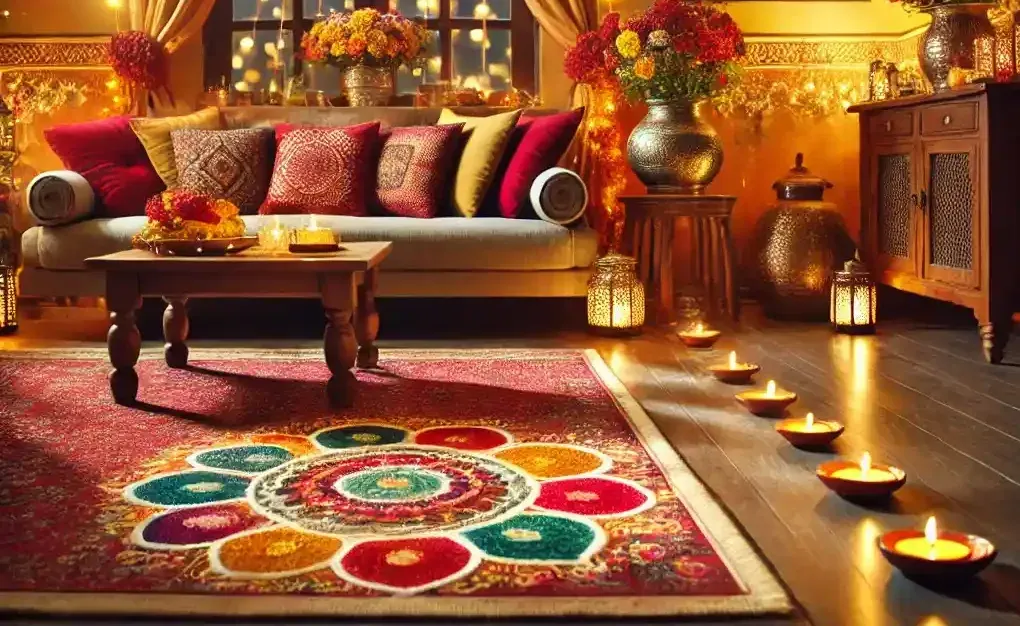
Weeks before Diwali, homes are scrubbed and decorated. But how often do we cleanse our inner home? The clutter of resentment, jealousy, and desires makes our heart heavy and dark.
The internal cleansing should accompany external rituals. This means letting go of grudges, forgiving those who have hurt us, and practicing gratitude. The act of physical cleaning, when done mindfully, can become a meditation. Each speck of dust removed from our home can remind us of impurities being wiped from our hearts.
4. The Fireworks Within
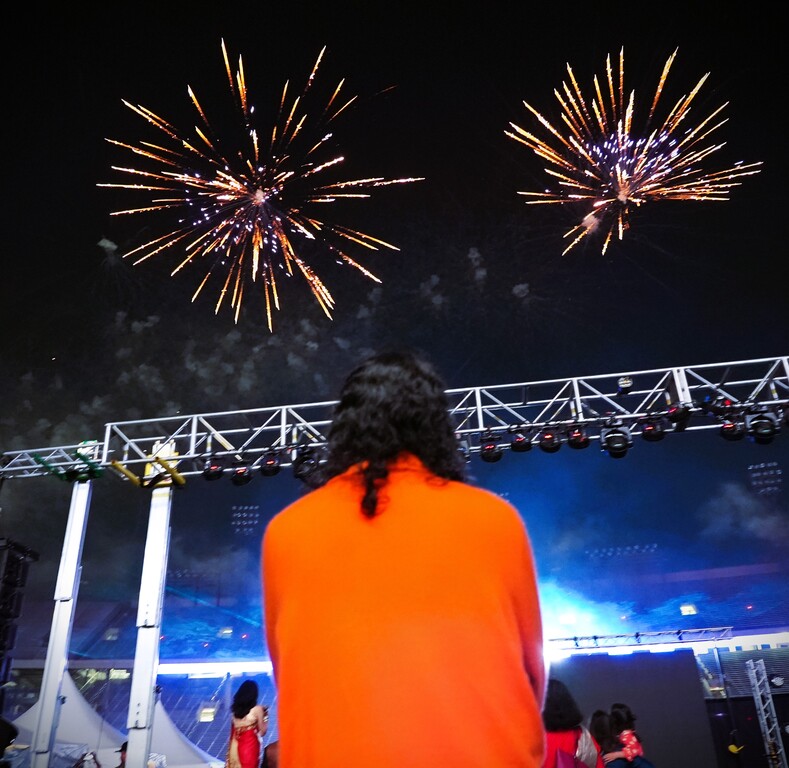
The fireworks of Diwali represent joy and victory, the one that happens when we ignite devotion. When we meditate, chant God’s name, or serve selflessly, a quiet firework of bliss bursts within us. Bhakti (devotion) transforms the mind’s energy. Normally, our desires scatter us in many directions. But when love for God becomes our central desire, our energy consolidates and rises, leading to peace and inner radiance. This is the true sparkle of Diwali—not the fleeting glitter of fireworks, but the everlasting light of divine joy.
5. Goddess Lakshmi and the Wealth of Virtues
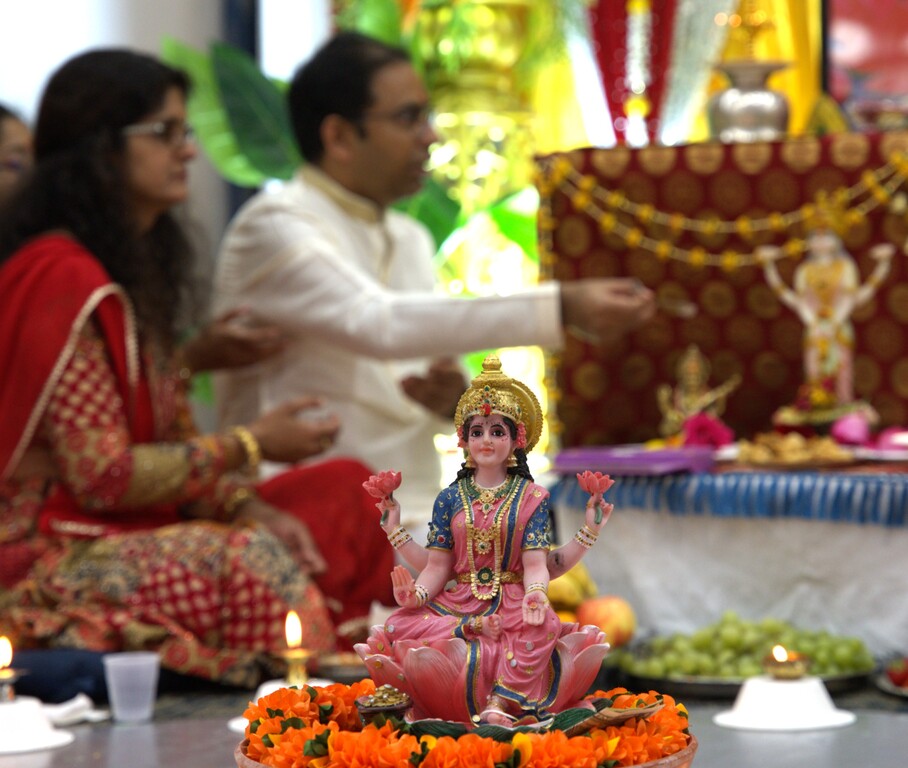
People worship Goddess Lakshmi on Diwali, hoping for material prosperity. Goddess also represents divine virtues—purity, contentment, humility, and faith. She blesses not just those who seek wealth, but those who cultivate noble qualities.
“True wealth is not in the gold we possess, but in the goodness we express.”
Thus, spiritual celebration means invoking Lakshmi through actions that please her—charity, compassion, and gratitude. When our heart becomes rich with these virtues, material abundance naturally follows.
To honor Lakshmi is to live in harmony with dharma (righteousness), to serve others selflessly, and to use our resources for the welfare of all beings.
6. Lighting Lamps of Love and Service
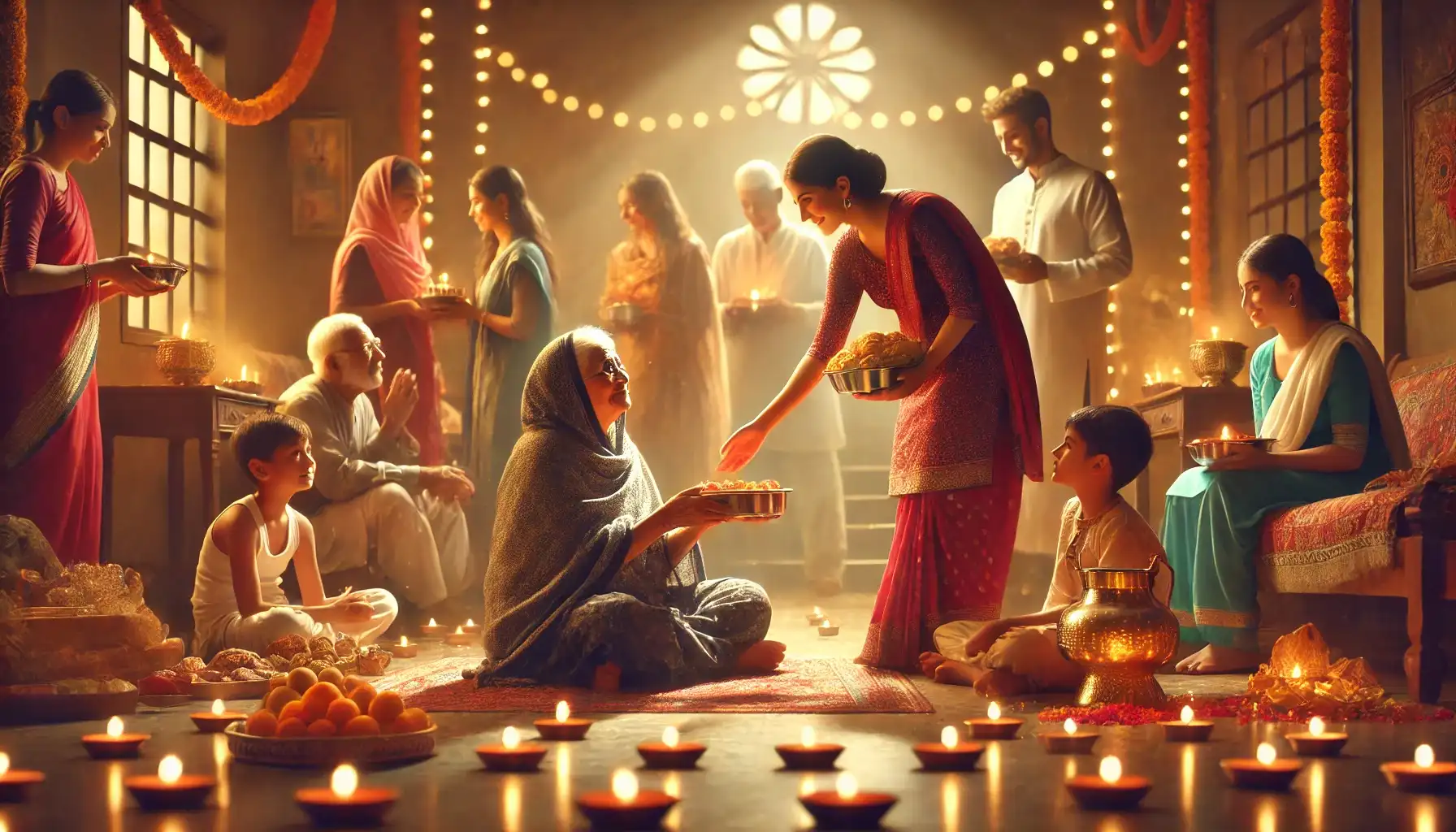
Devotion is not just about chanting and worship, but also about service. Every act of kindness becomes an offering to God. “Light a lamp not just on your altar, but in someone’s life.”
This could mean helping a neighbor, feeding the hungry, or even sharing a kind word.
On Diwali, as we distribute sweets and gifts, let’s also distribute love and compassion. The lamps we light externally should remind us of the lamps we can light in others’ hearts through selfless service (seva). When our actions reflect love, every moment becomes an act of worship.
7. The Role of Bhakti in Illumination
Bhakti is the path of attaching our mind to God. It is not a ritual, but a relationship. When the heart melts in devotion, God’s grace flows like light through a window. Bhakti is not about asking for things from God—it’s about offering yourself to Him completely .During Diwali, therefore, let every Diya remind us of the light of Bhakti—steady, unwavering, and full of divine warmth.
8. Conquering the Inner Darkness
The darkness of Diwali night is symbolic of the mind’s ignorance. Three main forms of darkness:
- Agyan (Ignorance): Forgetting our divine identity as souls, we become slaves to the body and senses.
- Ahankar (Ego): The illusion of doership and superiority separates us from God.
- Asakti (Attachment): Clinging to the material world blinds us to spiritual truth.
Lighting the lamp of Bhakti dispels these darknesses. Knowledge helps us understand our divine nature, devotion helps us connect to God, and service helps us transcend selfishness. Together, they transform the night of ignorance into the dawn of wisdom.
9. The Five Lamps of Bhakti
Five lamps that every spiritual aspirant must light within:
- Lamp of Faith (Shraddha): Trust in God’s wisdom even when life seems uncertain.
- Lamp of Discipline (Sadhana): Daily spiritual practice to keep the flame alive.
- Lamp of Surrender (Sharanagati): Letting go of control and offering outcomes to the Divine.
- Lamp of Knowledge (Gyan): Understanding the scriptures and aligning with truth.
- Lamp of Love (Prem): Seeing God in all beings and serving them with affection.
Lighting these lamps daily is the essence of celebrating Diwali spiritually.
10. Satsang: The Gathering of Light
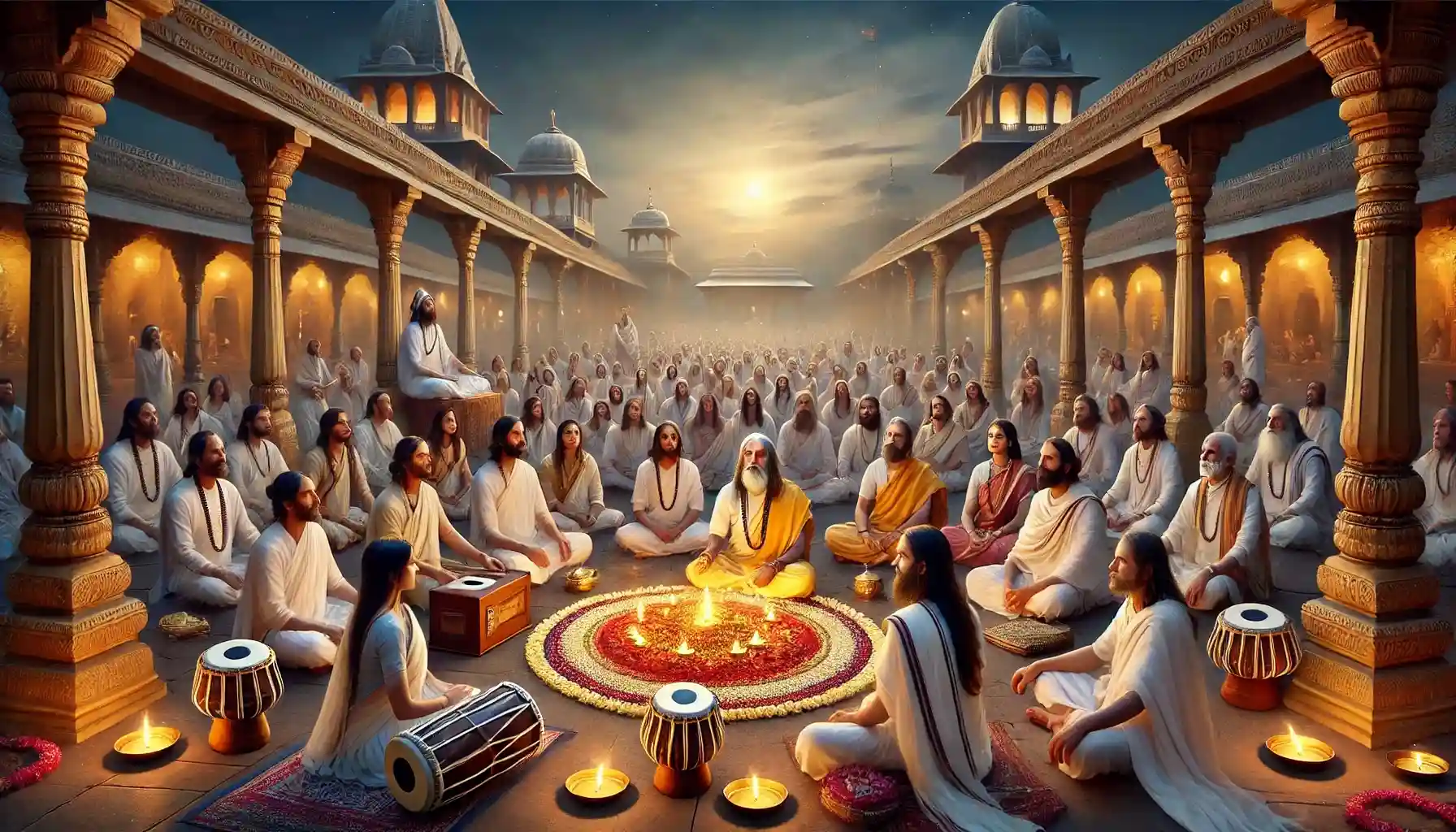
Satsang—spiritual association—is emphasized as essential for keeping our lamp burning. Just as one lamp can light another, the company of saints and devotees ignites our inner enthusiasm.
“If you sit near a burning lamp, your lamp too will catch fire.”
This means that being in the presence of positive, spiritually elevated people helps us absorb divine vibrations. On Diwali, spending time in prayer, kirtan, or reading holy texts can be more powerful than any external festivity.
12. The Yoga of Diwali
The comprehensive system of Yoga for the Body, Mind, and Soul, encourages devotees to use Diwali as an opportunity for inner alignment.
The five paths of yoga—Karma Yoga (selfless action), Jnana Yoga (knowledge), Raja Yoga (meditation), Hatha Yoga (discipline), and Bhakti Yoga (devotion)—can all converge during Diwali.
In this holistic way, Diwali becomes not a one-day event, but a personal transformation.
13. Overcoming Greed and Attachment
During Diwali, many are tempted by shopping sprees, decorations, and indulgent feasts. While celebration is natural. The material enjoyment gives temporary satisfaction, but devotion brings lasting peace. The more we seek outside ourselves, the more restless we become. The moment we turn inward, the light of contentment appears. “True happiness does not depend on what you have; it depends on how close you are to God.”
Thus, moderation and mindfulness should accompany all festivities.
14. Charity: Sharing the Light
One of the noblest ways to celebrate Diwali spiritually is through charity. the acts of compassion that uplift others—feeding the hungry, supporting education, or simply bringing a smile to someone’s face. “When we share what we have, we multiply our joy.” Every gift offered with pure intention becomes sacred. The joy of giving purifies the heart and aligns it with divine abundance.
This Diwali, let your home not just shine with lamps but with the light of generosity.
15. Gratitude: The Hidden Festival Within
Gratitude is the essence of spirituality. When we feel thankful, our heart opens naturally to grace.
Diwali, therefore, is a perfect time to express gratitude—to God, to our parents, teachers, and to life itself.
Instead of merely praying for more, pause to thank the Divine for what already is. Write down ten blessings you are grateful for. As you light each diya, dedicate it to one blessing. Watch how your heart becomes lighter and brighter with every flame.
“Gratitude,” Swamiji says, “is the wick that keeps the lamp of Bhakti burning steadily.”
16. The Inner Ayodhya
Ayodhya, the city of Rama, means a place where there is no conflict. Ayodhya is not just a physical place but a state of consciousness.
When our mind is free from conflict, doubt, and negativity, we become Ayodhya.
When the Lord resides within our heart in peace, Diwali becomes an everyday reality.
The spiritual seeker’s goal, therefore, is not to wait for Rama to return—but to create the conditions for His presence by cultivating purity, patience, and love.
17. The Flame of Faith During Hard Times
Life, like the lamp, faces wind and storms. Challenges test our patience and faith.
Every difficulty is a divine lesson to strengthen our devotion. “The Lord doesn’t test us to make us fail,” he says, “He tests us to make us shine brighter.”
When you face loss, pain, or confusion, remember the flame of your Diya. Even when the wind blows, it bends but doesn’t break. It survives because its base is steady. Likewise, if our faith is firm, no storm of life can extinguish it.
Let Diwali remind us that light shines brightest in darkness.
18. The Science of Divine Light
Spiritual concepts with modern science. Light, in physics, is both wave and particle—symbolizing the dual nature of the universe. Similarly, divine light manifests both as wisdom (the wave of understanding) and love (the particle of experience).
When we combine both—knowledge and devotion—we perceive God not as theory, but as living reality. The true purpose of Diwali, then, is to awaken this divine perception—to see the light of the Divine in all things.
19. A Mind Like a Lamp
A steady lamp illuminates evenly; a flickering one casts confusion. Similarly, a calm mind reflects divine truth.
Try this simple Diwali meditation:
- Sit before a diya.
- Gaze at the flame, then close your eyes.
- Visualize that flame glowing in your heart.
- Silently repeat a divine name.
In that stillness, feel yourself becoming the light.
20. Making Every Day Diwali
What if Diwali was not one day, but a way of living?
Swami Mukundananda encourages us to make every day a festival of inner light. This means:
- Waking with gratitude.
- Meditating with sincerity.
- Acting with compassion.
- Speaking with kindness.
- Serving with joy.
- Remembering God at every step.
When we live like this, our life becomes a continuous celebration—a living Diwali.
The lamps may fade, the sweets may be eaten, but the light of Bhakti, once kindled, shines forever.
21 Practical Ways to Celebrate Diwali Spiritually
Here are a few practical ways to integrate your Diwali celebration:
- Morning Reflection: Begin your day by reading or listening to Swamiji’s lectures on Bhakti and gratitude.
- Cleansing Ritual: While cleaning your home, silently repeat, “May I cleanse my heart of negativity.”
- Charity Drive: Donate clothes, food, or money to a charitable cause.
- Meditation Hour: Spend 20 minutes meditating on divine light.
- Family Satsang: Share stories from the Ramayan or Swamiji’s teachings with your family.
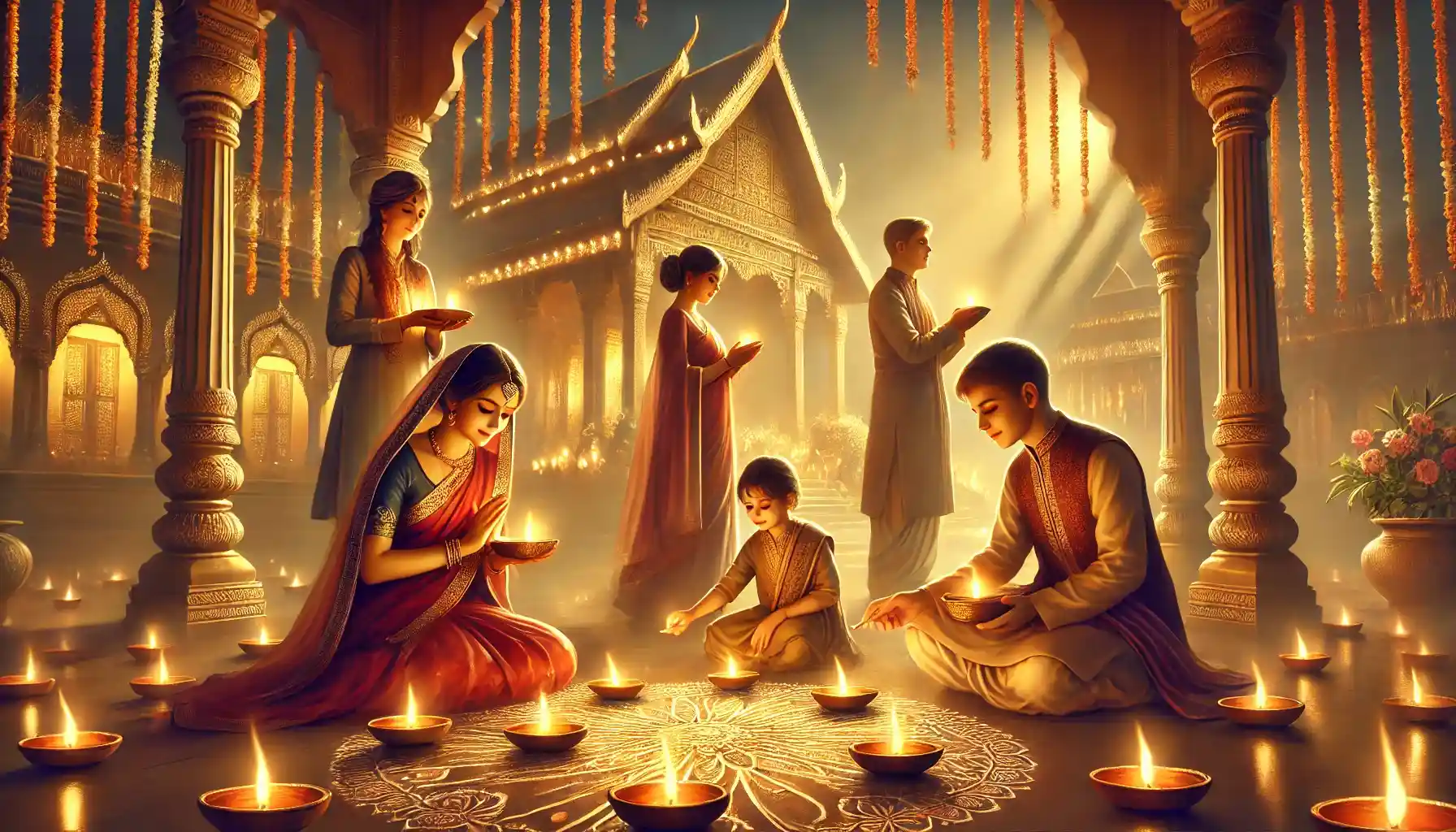
- Silent Diya Lighting: Light each lamp mindfully, dedicating it to virtues like love, patience, and forgiveness.
- No-Noise Pledge: Celebrate with serenity instead of firecrackers, to protect nature and honor silence.
- Service Activity: Volunteer at a temple or community event.
- Bhajan Evening: Sing devotional songs and fill your home with divine vibration.
- End with Gratitude: Before sleeping, thank the Divine for the light within and around you.
22. Conclusion: Light Your Inner World
The world outside will always have darkness—wars, sorrows, and conflicts. But the one thing we can always light is our inner lamp.
Let this Diwali be the turning point when you choose inner light over outer glitter, contentment over craving, and devotion over distraction.
When Arjun, lit his small lamp with a heart full of silence, he discovered what Diwali truly means—the awakening of divine consciousness.
In that moment, his life transformed from emptiness to eternal illumination.
May each of us light such a lamp within—steady, bright, and filled with the fragrance of Bhakti.
“Light the lamp of wisdom and devotion in your heart. That is the true Diwali.”
Call To Action
This Diwali, light the lamp of wisdom, devotion, and inner peace in your heart. To deepen your spiritual journey and receive insightful teachings from Swami Mukundananda, subscribe to his YouTube channel. Let his guidance illuminate your path to true happiness and fulfillment.
👉 Subscribe to Swami Mukundananda’s YouTube Channel and start your journey towards spiritual growth today!
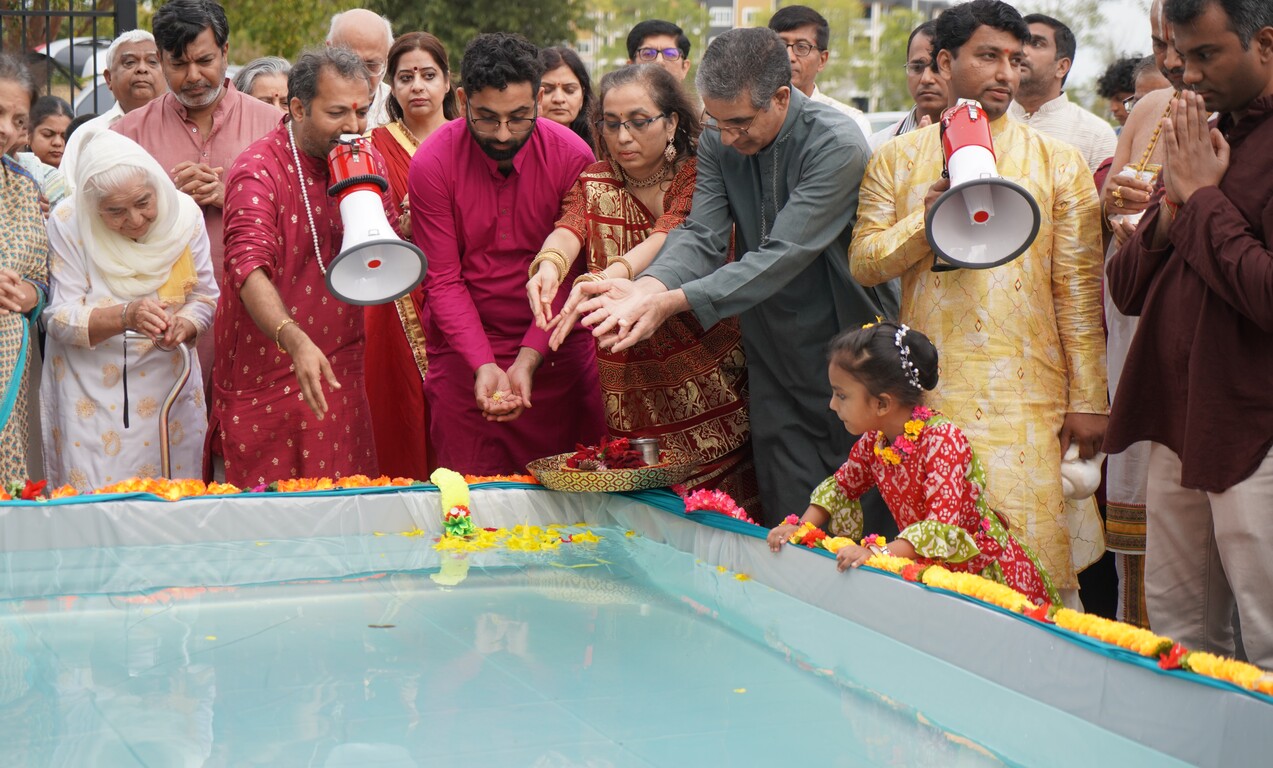
Diwali Mahotsav 2025 at Radha Krishna Temple of Dallas
A Celebration of Lights, Devotion & Festivities
October 17–21, 2025
Special Events: 24-Hour Akhand Ramayan Paath (Oct 11) | Govardhan Pooja (Oct 21)

💡 Click to light a diya
“Diwali is not just about external lights, but about lighting the lamp of knowledge within our hearts.”


🚫 No outside fireworks allowed. Only authorized fireworks are permitted.
FAQs
1. What does “Lighting the Lamp of Bhakti” mean?
It means awakening the light of divine love within. Swami Mukundananda explains that Bhakti removes inner darkness—ego, ignorance, and desire—and fills the heart with peace and devotion.
2. How can I celebrate Diwali spiritually?
Clean your heart as you clean your home. Practice gratitude, meditate, serve others, and light lamps with prayerful intention to invite divine light within.
3. What is the spiritual meaning of Lord Rama’s return?
Rama’s return to Ayodhya symbolizes the victory of virtue over vice. When we caconquer anger, greed, and ego, our heart becomes Ayodhya—where God resides.
4. How is Bhakti different from rituals?
Rituals are outer acts; Bhakti is inner love. Swami Mukundananda says true devotion is heartfelt connection with God, beyond mere ceremony.
5. How can I keep the light of Bhakti alive after Diwali?
Pray daily, meditate, read spiritual texts, serve selflessly, and stay grateful. These habits keep your inner lamp glowing all year.
Reference
- Swami Mukundananda. The Science of Mind Management. Westland Publications, 2020.
- Swami Mukundananda. 7 Mindsets for Success, Happiness and Fulfilment. Amazon Westland, 2019.