

Transforming Work into Worship
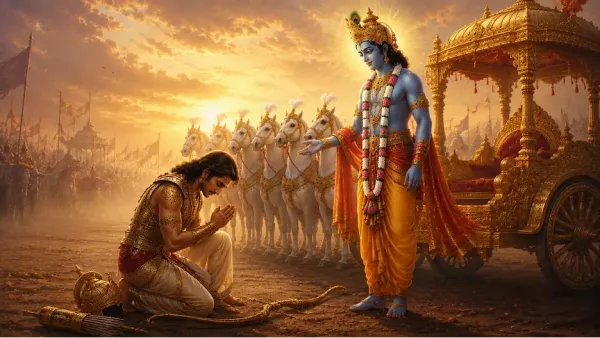
The Bhagavad Gita, often revered as the Song of God, is far more than a philosophical dialogue spoken on the battlefield of Kurukshetra. It is a timeless guide for every soul seeking lasting peace, purpose, and union with the Divine. Across its eighteen chapters, Shree Krishna unfolds profound truths about the nature of the soul, the law of karma, the practice of meditation, selfless action, and the path of spiritual wisdom. Yet, woven through every teaching is a single golden thread that gives life and meaning to them all: Bhakti, or loving devotion to God.
As we celebrate Janmashtami 2026, it is worth reflecting on a remarkable truth. At no point does Shree Krishna ask Arjun to become merely a scholar or a philosopher. Nor does He teach that liberation can be attained through mechanical performance of duties alone. Instead, He gently draws Arjun into a deeply personal relationship founded upon love, trust, and surrender. Every instruction in the Bhagavad Gita ultimately points towards this loving connection with the Supreme.
Swami Mukundananda beautifully explains that devotion is the heart that keeps every other spiritual practice alive. Knowledge without devotion easily becomes intellectual pride. Selfless action without devotion can become dry duty. Even meditation, when separated from love for God, may become little more than an exercise in concentration. Bhakti transforms these practices from external disciplines into joyful expressions of divine love. It changes obligation into opportunity and ordinary actions into sacred offerings.
The Core of Bhakti: True Devotion Begins in the Mind

Many people naturally associate devotion with outward acts of worship, such as lighting lamps before the deity, offering flowers, chanting sacred mantras, or visiting temples. While these practices are beautiful expressions of faith, Shree Krishna repeatedly reminds us throughout the Bhagavad Gita that genuine devotion begins not with the hands but with the heart, and not with external rituals but with the mind. The real altar upon which devotion is offered is our own consciousness.

In Bhagavad Gita 12.8, Shree Krishna reveals the essence of Bhakti Yoga:
मय्येव मन आधत्स्व मयि बुद्धिं निवेशय ।
निवसिष्यसि मय्येव अत ऊर्ध्वं न संशयः ॥
mayy eva mana ādhatsva mayi buddhiṁ niveśhaya
nivasiṣhyasi mayy eva ata ūrdhvaṁ na sanśhayaḥ
"Fix your mind on Me alone and surrender your intellect to Me. Thereupon you shall always live in Me. Of this there is no doubt." (BG 12.8)
Swami Mukundananda explains that the Lord is not merely asking for physical acts of worship but for mental absorption. A devotee may stand before the deity with folded hands, yet if the mind is occupied with business meetings, financial worries, or family concerns, the external ritual loses much of its spiritual potency. Conversely, someone sincerely remembering God while performing ordinary daily responsibilities is engaging in genuine devotion.
Swamiji illustrates this truth through a memorable mathematical analogy. Just as multiplying any number by zero always produces zero, external religious practices performed without heartfelt remembrance yield little spiritual progress. The value of any devotional act is multiplied by the degree of love and consciousness with which it is performed. It is this inner connection with God that transforms ordinary worship into a powerful means of spiritual purification.
Chhatrapati Shivaji and the Begging Bowl: The Secret of Inner Ownership

A beautiful illustration of this transformation in consciousness comes from the life of the great Maratha king, Chhatrapati Shivaji, and his revered guru, Samarth Ramdas.
One day, Shivaji happened to se his guru walking through the streets carrying a simple begging bowl. Deeply disturbed, he wondered how the spiritual guide of a mighty king could be reduced to begging from door to door. Filled with devotion, Shivaji hurried downstairs, wrote a note, and respectfully placed it into the guru's bowl. The message declared, "My entire kingdom and everything I possess I offer at your lotus feet."
Samarth Ramdas smiled with great affection. He explained that he begged not because he lacked anything, but because householders needed opportunities to cultivate humility, charity, and spiritual wisdom through service. Returning the kingdom to Shivaji, he gave him a single instruction that forever transformed the king's consciousness: "Rule this kingdom exactly as before, but never forget that it no longer belongs to you. It belongs to your Guru. Govern it only as His servant."
This simple exchange perfectly captures the essence of the Bhagavad Gita. Shree Krishna never asks Arjun to abandon his responsibilities or walk away from the battlefield. Instead, He teaches him to perform the very same duties with an entirely different consciousness. The external activity remains unchanged, but the sense of ownership disappears.
What was once "my work" becomes "God's work." What was once "my achievement" becomes "His grace." Through this subtle shift in attitude, ordinary life itself becomes an act of devotion.
Why Devotion Surpasses Every Other Path
Throughout the Bhagavad Gita, Shree Krishna compassionately explains many spiritual disciplines, including Karma Yoga, Jnana Yoga, Dhyana Yoga, and Bhakti Yoga. Rather than presenting these as competing philosophies, He reveals how each contributes to the soul's gradual evolution. Yet as the dialogue progresses, it becomes increasingly clear that devotion occupies a unique position because it gives purpose and direction to every other practice.
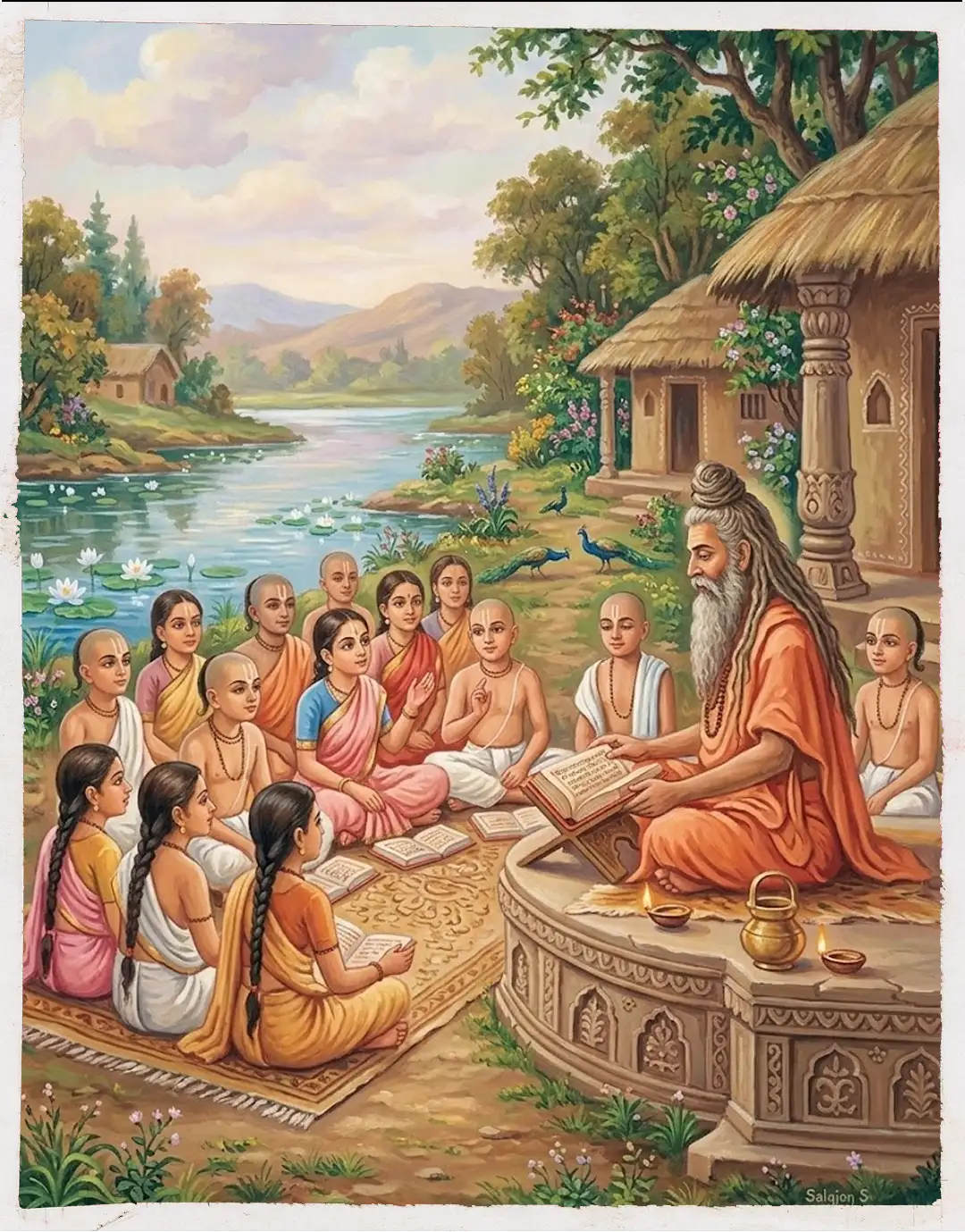
Bhakti is universal. Unlike the path of philosophical inquiry, which often requires years of intellectual study, or advanced meditation, which demands exceptional mental discipline, devotion is available to every person regardless of education, age, occupation, or social status. God is not impressed by academic achievement or material wealth; He responds only to the sincerity and purity of the devotee's heart.
This truth is beautifully expressed in Bhagavad Gita 9.26, where Shree Krishna declares:
पत्रं पुष्पं फलं तोयं यो मे भक्त्या प्रयच्छति ।
तदहं भक्त्युपहृतमश्नामि प्रयतात्मनः ॥
patraṁ puṣhpaṁ phalaṁ toyaṁ yo me bhaktyā prayachchhati
tadahaṁ bhaktyupahṛitam aśhnāmi prayatātmanaḥ
"If one offers to Me with devotion a leaf, a flower, a fruit, or even water, I delightfully accept that loving offering from My pure-hearted devotee." (BG 9.26)
The offering itself is insignificant; its value lies entirely in the love behind it. A single flower offered with sincere devotion becomes infinitely more precious than lavish gifts presented without love. Krishna looks not at the hand that offers but at the heart from which the offering arises.
Interestingly, even modern neuroscience echoes this ancient wisdom. Studies increasingly suggest that devotional practices involving gratitude, prayer, meditation, and loving contemplation activate regions of the brain associated with emotional resilience, empathy, and psychological well-being. While science explains the measurable benefits, the Bhagavad Gita goes further by revealing their spiritual purpose: devotion gradually purifies the heart, awakens divine love, and draws the soul closer to God.
The Three Workers: When Work Becomes Worship
Swami Mukundananda often illustrates the transformative power of intention through a simple yet profound story.
Three workers were engaged in constructing the same building. When asked what they were doing, each gave a very different answer. The first replied, "I am earning my wages." The second said, "I am helping construct this building." The third smiled and answered, "I am helping build a temple for God. Every brick I place is an offering to the Supreme."
Although all three performed identical physical labour, their inner consciousness differed completely. The first saw only income. The second found purpose in the project. The third experienced every action as an expression of devotion.
The Bhagavad Gita teaches that it is this final attitude that sanctifies work and transforms ordinary labour into spiritual practice. Krishna therefore advises Arjun in Bhagavad Gita 12.10:
अभ्यासेऽप्यसमर्थोऽसि मत्कर्मपरमो भव ।
मदर्थमपि कर्माणि कुर्वन्सिद्धिमवाप्स्यसि ॥
abhyāse 'py asamartho 'si mat-karma-paramo bhava
mad-artham api karmāṇi kurvan siddhim avāpsyasi
"If you cannot fix your mind upon Me through constant practice, then simply work for My pleasure. By performing actions for Me, you shall gradually attain perfection." (BG 12.10)
This verse offers immense hope. Even if our minds are not yet fully absorbed in God, Krishna does not reject us. Instead, He invites us to begin where we are by simply dedicating our daily work to Him. In time, action offered in devotion naturally blossoms into love.
Certainly. Here's the continuation in the same devotional, flowing style, maintaining consistency with the previous sections and your other Janmashtami blogs.
Integrating Devotion into Daily Duty
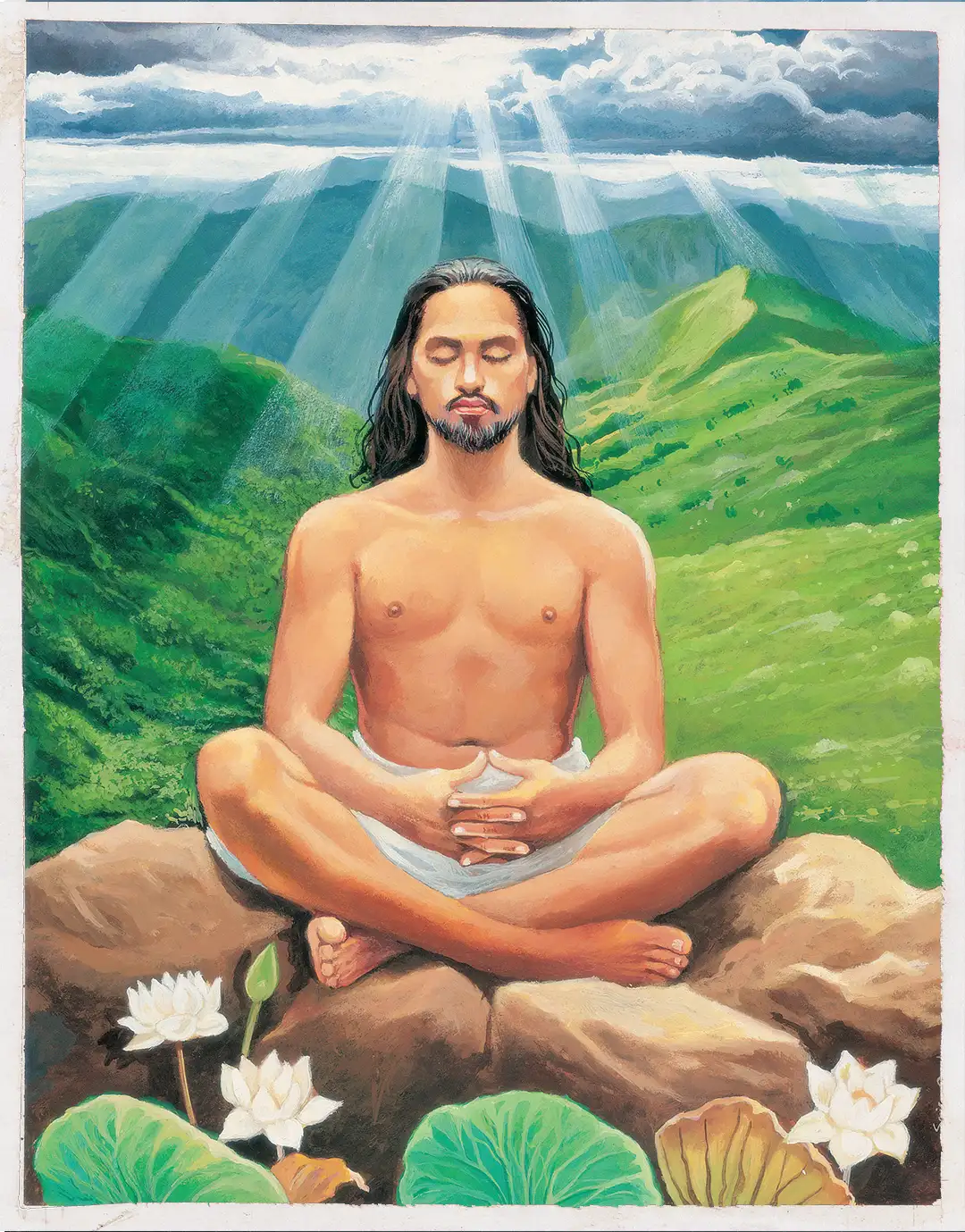
One of the most reassuring aspects of the Bhagavad Gita is that Shree Krishna never asks Arjun to abandon the world in order to become spiritual. Standing amidst the chaos of the Kurukshetra battlefield, Arjun expresses an honest concern that has echoed in the hearts of spiritual seekers for centuries. He admits that controlling the mind seems almost impossible. It wanders constantly, chasing desires, fears, memories, and distractions with remarkable persistence.
Rather than criticising Arjun for his weakness, Shree Krishna responds with compassion and understanding. He acknowledges the challenge while simultaneously offering hope and practical guidance.
श्रीभगवानुवाच ।
असंशयं महाबाहो मनो दुर्निग्रहं चलम् ।
अभ्यासेन तु कौन्तेय वैराग्येण च गृह्यते ॥
śhrī bhagavān uvācha
asanśhayaṁ mahā-bāho mano durnigrahaṁ chalam
abhyāsena tu kaunteya vairāgyeṇa cha gṛihyate
"O mighty-armed Arjun, what you say is certainly true. The mind is restless and difficult to control, but through constant practice and detachment it can indeed be brought under control." (Bhagavad Gita 6.35)
This verse offers tremendous encouragement. Krishna does not expect instant perfection. Instead, He reminds us that devotion grows gradually through steady practice. Every sincere attempt to remember God strengthens our spiritual habits, even if the mind repeatedly wanders away. Just as a loving parent patiently guides a child learning to walk, Krishna lovingly guides every devotee who continues to return to Him despite repeated distractions.
Swami Mukundananda often explains that the mind has spent countless lifetimes developing worldly habits. Naturally, it cannot become God-centred overnight. The same persistence, determination, and discipline that people invest in building careers, earning wealth, or mastering worldly skills must now be redirected towards cultivating devotion. Spiritual success is not reserved for those with extraordinary abilities; it belongs to those who patiently continue practising, trusting Krishna's assurance that transformation is possible.
Turning Ordinary Life into Divine Service

Many people mistakenly believe that devotion is confined to temples, prayer halls, or sacred festivals such as Janmashtami. Yet the Bhagavad Gita reveals something far more beautiful. Every aspect of life can become an act of worship when performed with the proper consciousness.
Swami Mukundananda frequently reminds us that spirituality is not determined by what we are doing, but by why and for whom we are doing it. The external activity may remain unchanged, but when our motivation shifts from self-centred enjoyment to pleasing God, ordinary work becomes extraordinary worship.
Consider a business owner. Ordinarily, business may revolve around profit, competition, and personal ambition. However, when approached with devotional consciousness, that same business becomes an opportunity to serve society honestly, support one's family responsibly, and use one's resources in the service of God. Wealth itself is no longer viewed as personal property but as a sacred trust entrusted by the Lord.
The same transformation can occur within the home. Preparing meals, caring for children, maintaining the household, or welcoming guests may appear to be ordinary domestic responsibilities. Yet when these actions are performed with the understanding that everything belongs to Shree Krishna, even the kitchen becomes a place of worship. Before eating, the food is lovingly offered to the Lord and then accepted as prasād, His blessed mercy. What was once routine cooking is elevated into a sacred offering of love.
Likewise, students can dedicate their studies to developing talents that will one day serve society and glorify God. Professionals can offer the fruits of their work to Krishna rather than becoming attached to prestige or recognition. Parents can view raising children not merely as a family responsibility but as an opportunity to nurture future devotees. Every role in life becomes meaningful when performed with the awareness that we are serving the Supreme.
This is precisely the transformation Krishna sought to bring about within Arjun. He did not ask him to abandon the battlefield or renounce his responsibilities. Instead, He transformed Arjun's consciousness so completely that the very same battle became an act of divine service.
The Gentle Return of the Mind
One of the greatest challenges in spiritual life is not beginning devotion but maintaining it. Even after developing a regular practice of prayer, meditation, or chanting, the mind inevitably drifts towards worries, ambitions, resentments, and countless other distractions. Many seekers become discouraged when this happens, believing they have somehow failed.
The Bhagavad Gita teaches exactly the opposite.
Each time the mind wanders and we gently bring it back to God, we are strengthening our devotion. Spiritual progress does not lie in never becoming distracted; it lies in repeatedly choosing to return to Krishna with patience and sincerity.
Swami Mukundananda compares this process to training a young child. A loving parent does not become angry every time the child stumbles while learning to walk. Instead, the parent patiently lifts the child up again and encourages another attempt. Similarly, Shree Krishna never rejects the devotee whose mind wanders. He lovingly welcomes every sincere effort to return.
This simple practice of gentle remembrance gradually transforms the heart. Whether through chanting the Lord's holy names, reflecting upon His divine qualities, studying the Bhagavad Gita, or remembering His beautiful pastimes, every moment spent turning the mind towards Krishna becomes another step closer to Him.
As the mind repeatedly returns to God, devotion gradually ceases to be something we practise only during prayer. It becomes the background awareness accompanying every activity throughout the day.
Why Janmashtami Is the Perfect Time to Deepen Our Devotion

Janmashtami celebrates far more than the historical appearance of Lord Krishna in Mathura. It is an annual invitation to renew our personal relationship with Him.
The celebrations, devotional singing, temple decorations, fasting, and joyous remembrance of Krishna's childhood pastimes are all beautiful expressions of love. Yet Krishna's own teachings remind us that the greatest gift we can offer Him is not merely an external celebration but an awakened heart.
This Janmashtami, each devotee can ask a simple yet transformative question:
How can I remember Krishna more often throughout my ordinary day?
Perhaps it begins by offering every meal before eating. Perhaps it means reading a few verses of the Bhagavad Gita each morning. Perhaps it is chanting His holy names during the daily commute or silently remembering Him while working. For others, it may involve dedicating acts of kindness and service to His pleasure.
The beauty of Bhakti Yoga is that devotion does not require us to withdraw from life. Instead, it teaches us to invite Krishna into every aspect of it. Gradually, the boundary between spiritual practice and daily living disappears, and life itself becomes an ongoing expression of worship.
Conclusion: The Heartbeat of the Bhagavad Gita
Every chapter of the Bhagavad Gita reveals another facet of spiritual wisdom. Karma Yoga teaches us how to work without selfish attachment. Jnana Yoga reveals our eternal identity as the soul. Dhyana Yoga trains the restless mind to become steady and focused. Yet all these paths ultimately converge in Bhakti, loving devotion to the Supreme Lord.
Without devotion, knowledge can become dry, action can become burdensome, and meditation can become self-centred. But when love for Krishna becomes the foundation, every spiritual practice blossoms into a joyful expression of divine service. This is why Shree Krishna repeatedly returns to the language of love, remembrance, surrender, and relationship throughout the Gita. He is not seeking merely obedient followers but loving devotees whose hearts are united with His.
Swami Mukundananda beautifully summarises this truth by explaining that the goal of life is not simply to perform religious rituals or accumulate spiritual knowledge. The real purpose is to awaken divine love for God. When love becomes the motivation behind our thoughts, words, and actions, even the most ordinary moments become spiritually extraordinary.
As we celebrate Janmashtami 2026, may we look beyond the outward festivities and embrace the deeper invitation that Krishna extends to every soul. Let our work become worship, our responsibilities become opportunities for service, and our hearts become temples where the Lord lovingly resides. For when devotion becomes the centre of our lives, every action becomes sacred, every challenge becomes meaningful, and every step draws us closer to the eternal embrace of Shree Krishna.
Call to Action
Transform Your Work into Worship with JKYog
This Janmashtami 2026, go beyond simply celebrating the birth of Shree Krishna; begin living His teachings. Discover how the timeless wisdom of the Bhagavad Gita can transform every aspect of your life through devotion, selfless action, and loving surrender.
Deepen your understanding by exploring Swami Mukundananda's commentary on the Bhagavad Gita, joining JKYog's online and in-person programs, and incorporating daily devotional practices into your routine. Whether you are new to spirituality or seeking to strengthen your relationship with God, the path of Bhakti Yoga is open to everyone.
Start your journey today:
- Study the Bhagavad Gita with Swami Mukundananda's authentic commentary.

- Join a local or online JKYog satsang.
- Download the JKYog Bhagavad Gita & Krishna Bhakti App for daily inspiration, guided meditations, bhajans, lectures, and spiritual resources.
 JKYog
JKYog

- Celebrate Janmashtami by offering your thoughts, actions, and heart to Shree Krishna.
As Shree Krishna assures us:

मन्मना भव मद्भक्तो मद्याजी मां नमस्कुरु ।
मामेवैष्यसि सत्यं ते प्रतिजाने प्रियोऽसि मे ॥ 65॥
man-manā bhava mad-bhakto mad-yājī māṁ namaskuru
mām evaiṣhyasi satyaṁ te pratijāne priyo ‘si me
BG 18.65: Always think of Me, be devoted to Me, worship Me, and offer obeisance to Me. Doing so, you will certainly come to Me. This is My pledge to you, for you are very dear to Me.
May this Janmashtami become the beginning of a life where every action becomes an offering of love.
Frequently Asked Questions
1. Why is devotion considered the heart of the Bhagavad Gita?
While the Bhagavad Gita teaches Karma Yoga, Jnana Yoga, and Dhyana Yoga, Shree Krishna repeatedly emphasizes Bhakti (devotion) as the foundation that gives meaning to every spiritual practice. Devotion transforms knowledge into wisdom, work into worship, and meditation into loving communion with God.
2. What is Bhakti Yoga according to the Bhagavad Gita?
Bhakti Yoga is the path of developing a loving relationship with God through constant remembrance, worship, surrender, and selfless service. Krishna explains that sincere devotion is the simplest and most direct path to attaining Him.
3. What does Bhagavad Gita 12.8 teach about devotion?
Bhagavad Gita 12.8 teaches that devotees should fix both their mind and intellect upon Shree Krishna. True devotion begins within the heart and mind, rather than through external rituals alone.
4. Can ordinary work become an act of worship?
Yes. One of the central teachings of the Bhagavad Gita is that any duty can become spiritual when performed with the intention of pleasing God. When work is offered to Krishna without selfish attachment, it becomes an act of devotion.
5. What is the significance of Bhagavad Gita 9.26?
In Bhagavad Gita 9.26, Krishna declares that He lovingly accepts even a simple offering of a leaf, flower, fruit, or water when it is presented with sincere devotion. The value of the offering lies in the devotee's love, not its material worth.
6. How does Swami Mukundananda explain true devotion?
Swami Mukundananda explains that devotion is measured by mental absorption in God rather than external rituals alone. He teaches that the mind's loving remembrance of Krishna is what gives spiritual power to worship, meditation, and daily activities.
7. How can I practice Bhakti Yoga in everyday life?
You can cultivate devotion by remembering Krishna throughout the day, offering your meals before eating, chanting His holy names, studying the Bhagavad Gita, serving others selflessly, and dedicating the results of your work to God.
8. Why didn't Krishna ask Arjuna to leave the battlefield?
Instead of asking Arjuna to renounce his duties, Krishna transformed his consciousness. The Bhagavad Gita teaches that spiritual life is not about escaping responsibilities but performing them with devotion and surrender.
9. Why is Janmashtami a good time to deepen devotion?
Janmashtami commemorates the appearance of Shree Krishna and offers an opportunity to renew our relationship with Him. It is an ideal time to study His teachings, strengthen devotional practices, and dedicate our lives more fully to God.
10. What is the main lesson of this Janmashtami 2026 reflection?
The greatest lesson is that every aspect of life can become worship when performed with devotion. By remembering Krishna in our thoughts, actions, and intentions, ordinary life becomes a joyful path toward spiritual fulfilment.