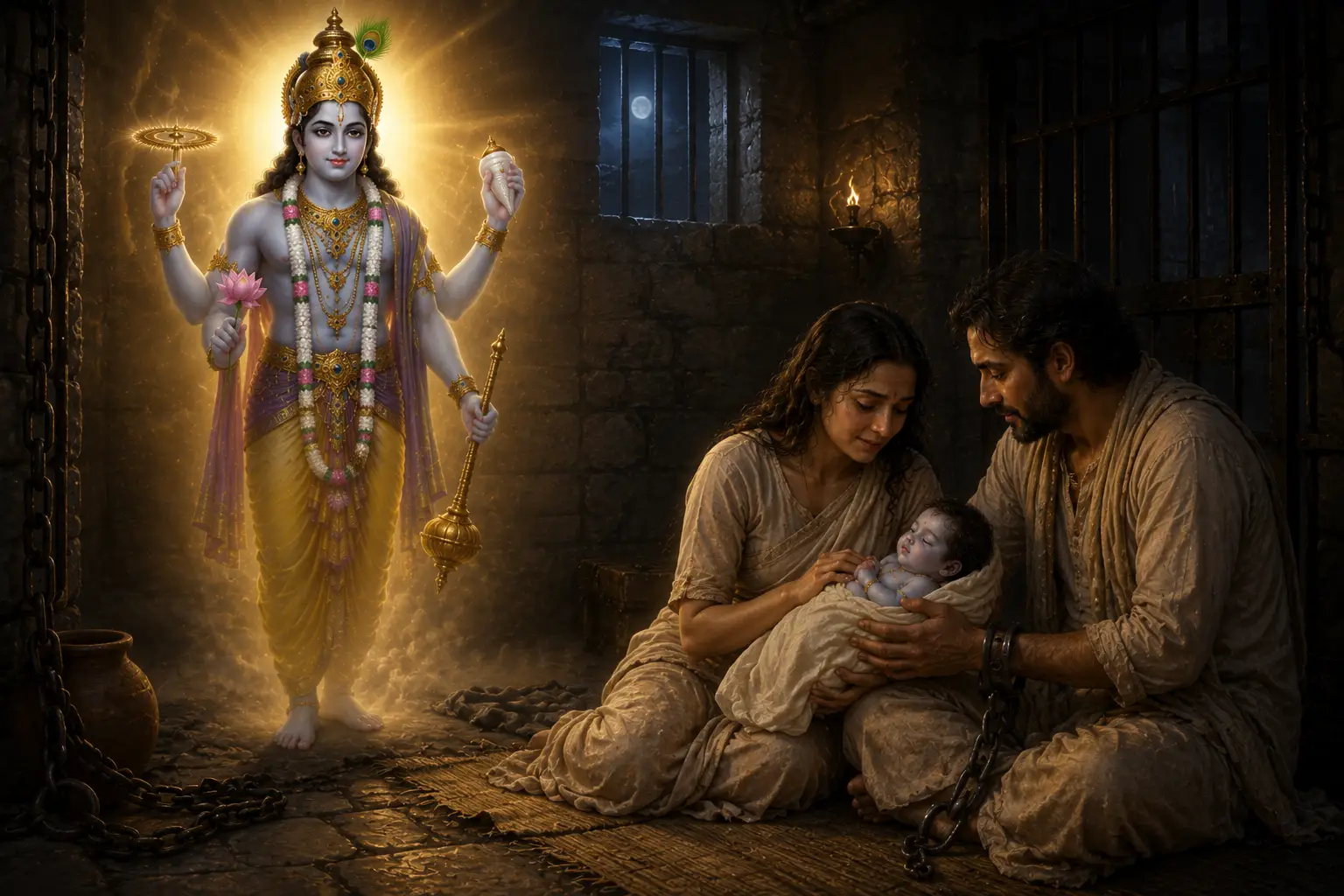
Every year, the sacred festival of Janmashtami fills homes and temples with devotion as millions of people celebrate the appearance of Lord Krishna on Earth. The air echoes with melodious kirtans, devotees lovingly decorate swings for baby Krishna, and stories from the Bhagavatam remind us of His enchanting childhood pastimes in Gokul and Vrindavan. Yet beneath these joyous celebrations lies one of the deepest spiritual questions in all of Hindu philosophy: Why does God descend to Earth?
If the Supreme Lord is all-powerful, all-knowing, and eternally beyond the limitations of the material world, why should He assume a human form? Why did the infinite choose to enter the finite? Why did the Lord of countless universes allow Himself to be born in a prison cell, grow up as a cowherd boy, and walk among ordinary people? These are not merely theological questions. They lie at the heart of Janmashtami itself, for unless we understand why Krishna appeared, we cannot fully appreciate what His appearance means for humanity.
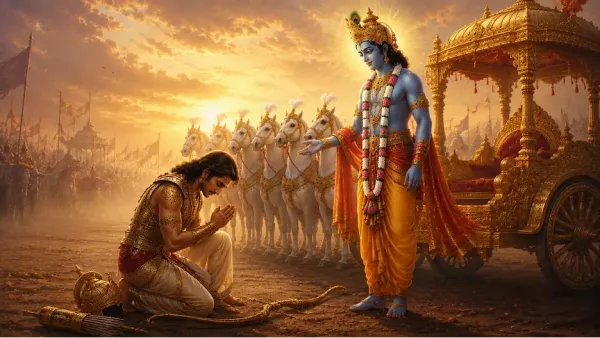
The Bhagavad Gita provides the answer with remarkable clarity. Standing on the battlefield of Kurukshetra, Lord Krishna reveals that His descents into the world are neither accidental nor symbolic. They are deliberate acts of divine compassion. Unlike human beings, who are compelled to take birth because of their past karma, God is never forced to enter the material world. He is eternally perfect, complete, and beyond all material limitations. Yet, out of boundless love for His children, He voluntarily descends whenever the world loses its moral and spiritual direction.
Swami Mukundananda beautifully explains that the appearance of an avatar is not born out of necessity but out of grace. God does not descend because He is affected by the world's suffering, nor because His divine powers require expression. He descends because His love cannot remain indifferent to the struggles of the souls who have forgotten Him. Just as a compassionate parent instinctively rushes to help a child in distress, the Supreme Lord lovingly enters creation whenever humanity most needs His guidance.
This divine promise forms the very foundation of the Bhagavad Gita's teaching on avatars.
God's Eternal Promise to Humanity
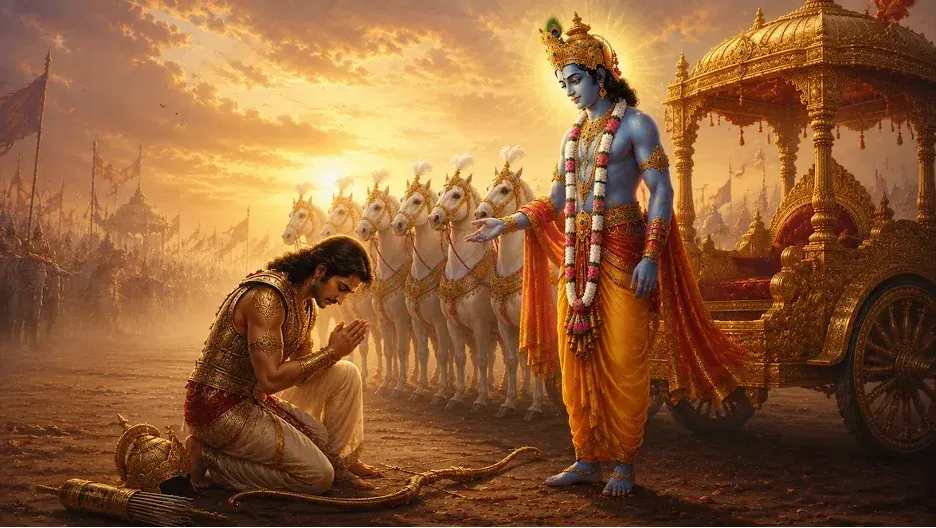
In one of the most celebrated passages of the Bhagavad Gita, Shree Krishna reveals the timeless principle behind every divine incarnation:
यदा यदा हि धर्मस्य ग्लानिर्भवति भारत ।
अभ्युत्थानमधर्मस्य तदात्मानं सृजाम्यहम् ॥ 7॥
yadā yadā hi dharmasya glānir bhavati bhārata
abhyutthānam adharmasya tadātmānaṁ sṛijāmyaham
BG 4.7: Whenever there is a decline in righteousness and an increase in unrighteousness, O Arjun, at that time I manifest Myself on earth.
He immediately continues by revealing the purpose behind every descent:
परित्राणाय साधूनां विनाशाय च दुष्कृताम् ।
धर्मसंस्थापनार्थाय सम्भवामि युगे युगे ॥ 8॥
paritrāṇāya sādhūnāṁ vināśhāya cha duṣhkṛitām
dharma-sansthāpanārthāya sambhavāmi yuge yuge
BG 4.8: To protect the righteous, to annihilate the wicked, and to reestablish the principles of dharma I appear on this earth, age after age.
These verses are among the most frequently quoted in Hindu scripture because they reveal something extraordinary about the nature of God. They assure humanity that the Divine is never a distant observer, detached from the joys and sorrows of creation. Rather, He is intimately involved in the welfare of every living being. Whenever selfishness eclipses compassion, whenever greed replaces righteousness, and whenever people lose sight of their eternal relationship with God, the Lord Himself intervenes.
It is important, however, to understand that Krishna's promise extends far beyond restoring political order or defeating powerful tyrants. History has witnessed many wars and kingdoms, but the Lord's concern reaches much deeper than the rise and fall of earthly empires. His primary purpose is to restore dharma, the eternal principles that enable the soul to progress towards God-realisation. The destruction of evil rulers is only one aspect of His mission. The greater purpose is the awakening of human consciousness.
This is why Janmashtami is much more than the celebration of Krishna's birth. It is the celebration of God's unwavering assurance that He will never abandon humanity. Every time the world loses its way, He finds a way to guide it back towards the light.
The Meaning of Avatar: A Divine Descent
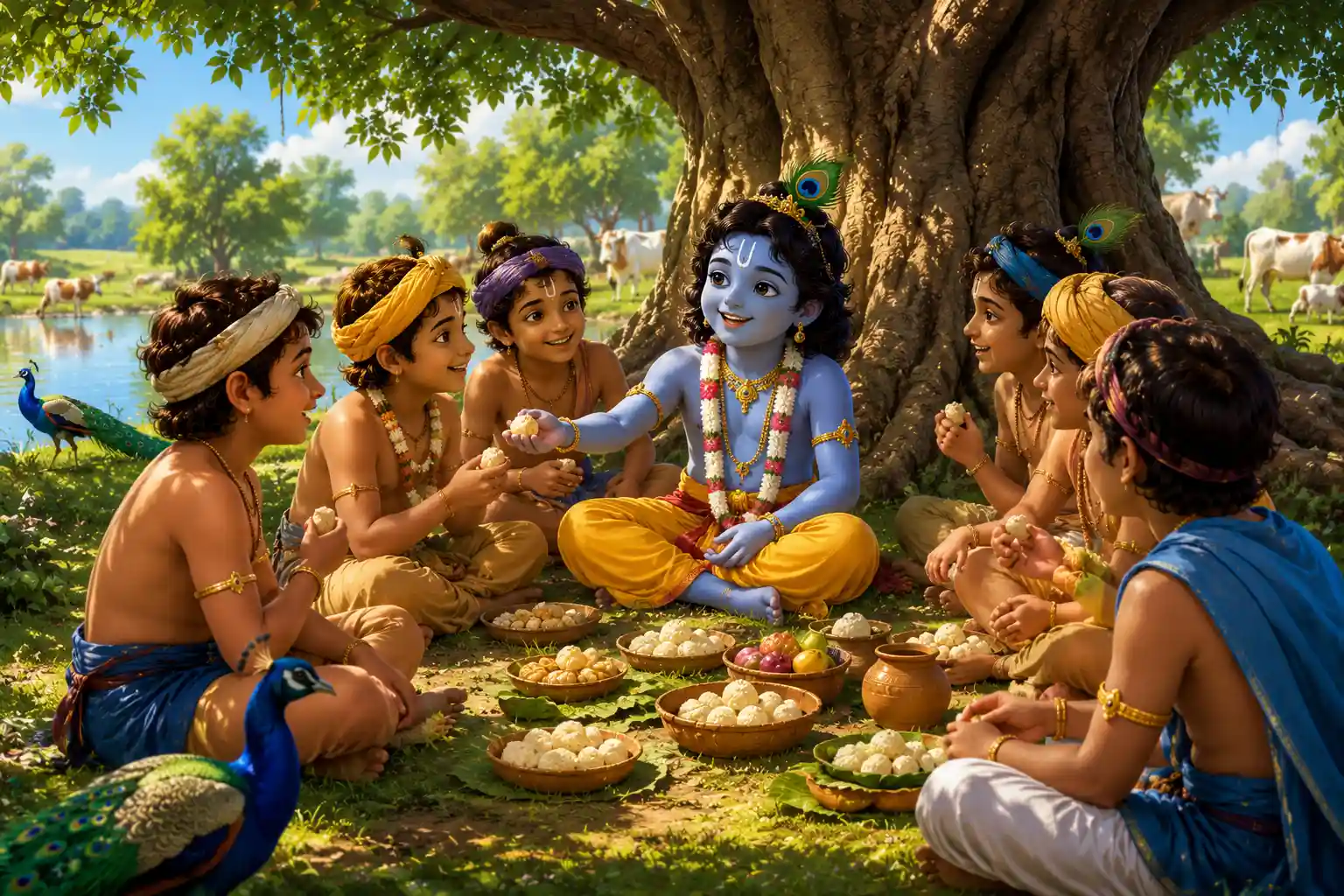
The Sanskrit word avatar comes from avatāraṇa, which literally means "to descend." Although the English word incarnation is commonly used as its equivalent, it does not fully capture the richness of the Sanskrit concept. An avatar is not simply someone born with extraordinary qualities, nor is it a saint who gradually attains divinity. An avatar is the Supreme Lord Himself voluntarily descending into the material realm while remaining eternally transcendental.
This distinction is essential because human beings and God take birth for entirely different reasons. Every soul enters this world under the influence of karma. Our present body, family, circumstances, and experiences are all shaped by the actions we performed in previous lives. We do not choose our birth; it is determined by the immutable law of cause and effect.
God, however, is never bound by karma. Being the creator of the law, He can never become subject to it. His appearance in the world is completely voluntary.
He descends solely by His own divine will, motivated by infinite compassion for the souls who have forgotten their eternal relationship with Him.
Swami Mukundananda explains that many people mistakenly imagine that when God assumes a human form, He somehow becomes limited by that body. In reality, the opposite is true. The Lord remains fully divine even while appearing human. His body is not material like ours; it is completely transcendental. He accepts a visible form only so that finite beings can establish a personal relationship with the Infinite.
This is one of the greatest expressions of divine grace. Left to ourselves, it would be almost impossible to comprehend an infinite, formless Supreme Being. By appearing as Shree Krishna, Lord Ram, or His other divine manifestations, God makes Himself accessible to our senses, our minds, and, above all, our hearts. Through His human-like pastimes, He allows devotees to love Him as a child, friend, master, or beloved, creating intimate relationships that would otherwise remain beyond our reach.
Why Does the Infinite Become Finite?
For centuries, philosophers have wrestled with an intriguing question: if God possesses unlimited power, why should He descend at all? Could He not restore order from His divine abode without entering the world Himself?
The answer lies not in God's power but in His love.
Imagine a father watching his young child struggle to take the first uncertain steps. He could remain seated and call out instructions from across the room, but love compels him to do something entirely different. He walks towards the child, kneels beside them, stretches out his hands, and patiently guides every step. His closeness is not a sign of weakness; it is the natural expression of affection.
Similarly, the Supreme Lord descends because divine love always seeks relationship. God does not wish merely to govern creation from afar. He desires that every soul rediscover its forgotten relationship with Him. By appearing among humanity, He speaks our language, shares our experiences, demonstrates ideal conduct, and reveals the path back to eternal happiness.
Swami Mukundananda often explains that Krishna's earthly pastimes were never ordinary historical events. Every action, from His playful childhood in Vrindavan to His profound teachings on the battlefield of Kurukshetra, was designed to awaken devotion in the hearts of souls. The Lord did not descend merely to perform miracles or display His divine power. He descended so that humanity could experience His limitless love firsthand.
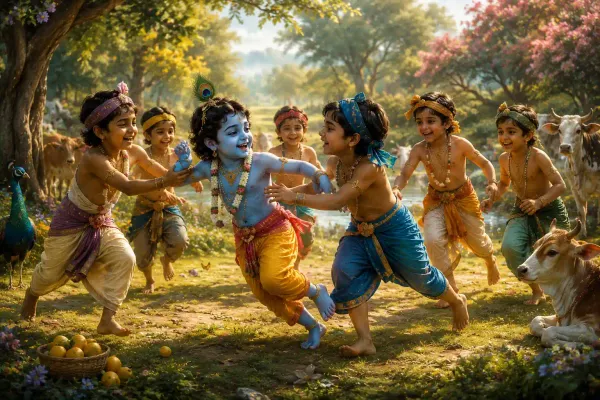
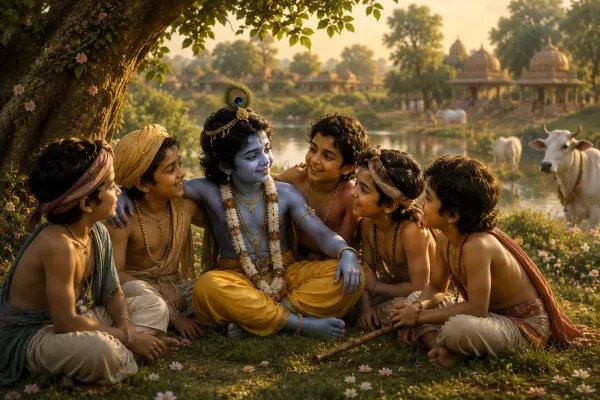
Notice how even Krishna's childhood reflects this truth. He allowed Mother Yashoda to bind Him with ropes, accepted the simple offerings of fruit sellers, played joyfully with His cowherd friends, and filled the hearts of the gopis with divine love. None of these pastimes were necessary for an all-powerful God. They were expressions of His desire to establish loving relationships with His devotees. The Infinite became approachable, not because He had to, but because love always seeks intimacy.
The Many Ways God Descends to Bless the World
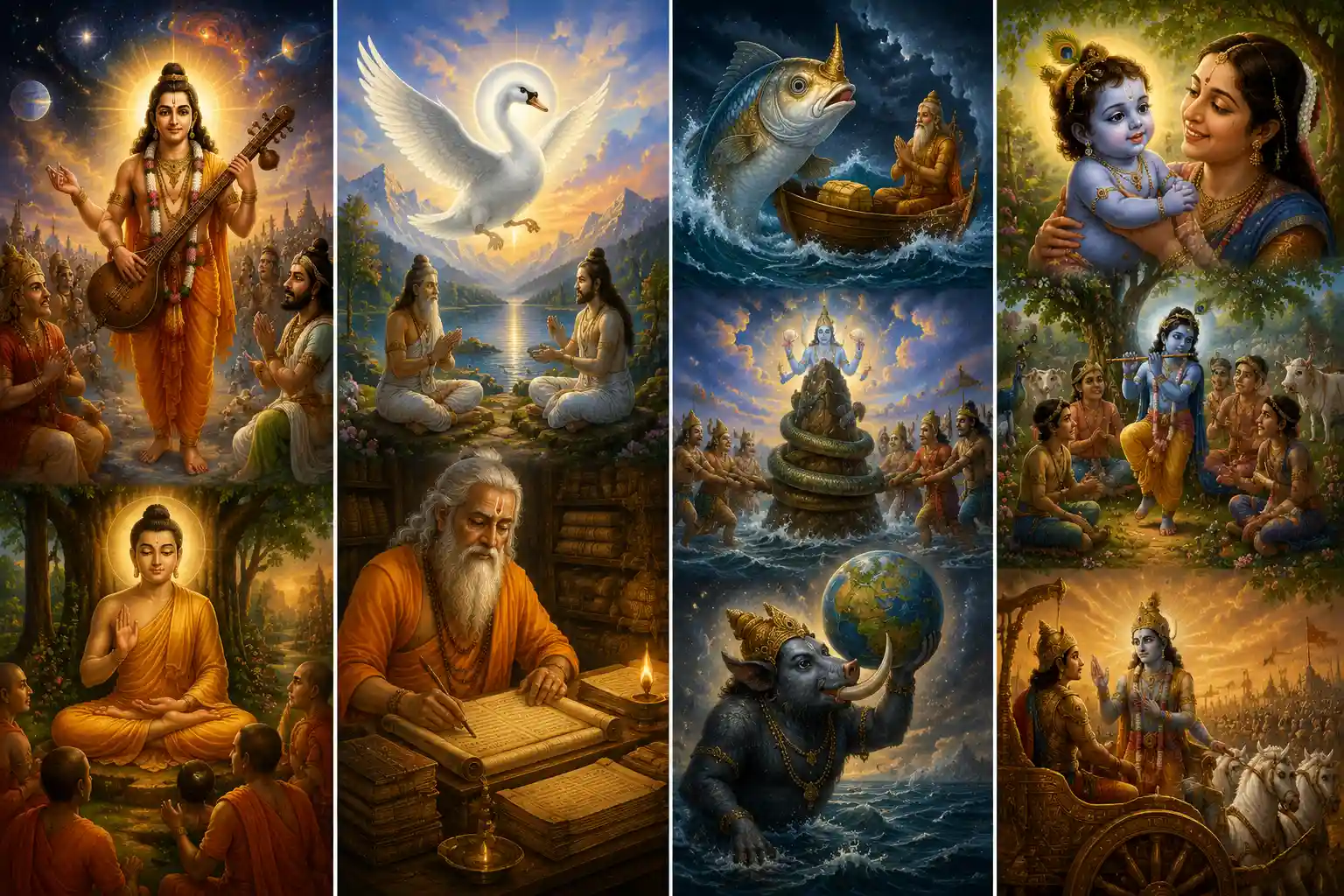
The Vedic scriptures reveal that the Supreme Lord is not limited to a single appearance in history. Out of His infinite compassion, He descends again and again, assuming different forms according to the needs of the age, the condition of humanity, and the spiritual purpose He wishes to fulfil. Although devotees are most familiar with the Dashavatara (the ten principal incarnations of Vishnu) the scriptures describe countless divine descents, each reflecting a unique expression of God's grace.
Swami Mukundananda explains that these manifestations should not be viewed as separate gods competing with one another, but as different ways in which the one Supreme Lord chooses to reveal Himself. Just as the same sun shines through many windows without becoming divided, God manifests Himself in innumerable ways while remaining one indivisible Supreme Reality. Every avatar carries the same divine essence, yet each reveals a different aspect of God's infinite personality.
The scriptures generally describe four broad categories of avatars, each helping us appreciate the limitless ways in which the Lord works for the welfare of creation.
The first category is known as Āveśhāvatār, or an empowered manifestation. In these cases, God does not personally descend in His complete form but invests an exalted soul with extraordinary divine powers to accomplish a particular mission. Such personalities become instruments through whom God's will is carried out in the world.
Narad Muni beautifully exemplifies this category. Travelling effortlessly across the heavenly planets, earthly realms, and even the spiritual world, Narad tirelessly spreads devotion wherever he goes. He appears throughout the Puranas as a spiritual catalyst, inspiring kings, sages, devotees, and even demons to turn towards God. Likewise, Lord Buddha appeared during a period when elaborate rituals had begun to overshadow genuine compassion. His teachings redirected countless people towards kindness, renunciation, and introspection, demonstrating that divine wisdom often works through empowered teachers who awaken the conscience of society.
A second category is known as Prabhāvāvatār, in which God appears for a specific purpose, revealing only those divine powers necessary to accomplish a particular task. These manifestations are often brief, yet their impact extends across generations. Hansavatar, who assumed the graceful form of a celestial swan, answered profound spiritual questions posed by the sages Nara and Narayana, reminding humanity that true wisdom ultimately flows from the Divine. Similarly, Vedavyasa performed one of the greatest services in spiritual history by compiling the Vedas, composing the Mahabharata, and authoring many of the Puranas. Through his monumental literary work, the timeless wisdom of Sanatan Dharma was preserved for future generations, ensuring that seekers would continue to receive divine guidance long after his earthly mission concluded.
The scriptures next describe Vaibhāvāvatārs, majestic manifestations that reveal greater expressions of God's divine opulence. These are the forms most commonly associated with the great cosmic events described in the Puranas. Matsya protected both King Manu and the sacred Vedas during the great deluge, ensuring that spiritual knowledge survived the destruction of one age and could guide the next. Kurma, the divine tortoise, silently supported Mount Mandara during the churning of the cosmic ocean, teaching that every great endeavour ultimately rests upon God's unseen support. Varaha descended in the magnificent form of a colossal boar to rescue Mother Earth from the depths of the cosmic ocean after defeating the demon Hiranyaksha. These extraordinary pastimes remind us that no crisis is beyond God's power to resolve and no soul is beyond His ability to uplift.
Among all divine descents, however, the scriptures reserve a unique place for the Parāvasthāvatār, the complete manifestation of the Supreme Personality of Godhead. Here, God does not merely display selected divine powers but reveals His full personality, complete with all six divine opulences described in the scriptures—perfect beauty, unlimited strength, infinite knowledge, eternal fame, boundless wealth, and complete detachment.
Shree Krishna is celebrated by the Vaishnava scriptures as Purna Purushottam Bhagavan, the complete Supreme Personality of Godhead. While every avatar is fully divine, Krishna uniquely reveals the sweetness of God's intimate loving relationships. He is simultaneously the playful child of Mother Yashoda, the beloved friend of the cowherd boys, the enchanting flute player of Vrindavan, the compassionate teacher of the Bhagavad Gita, and the Supreme Lord worshipped by countless devotees. In Him, divine majesty and divine sweetness exist in perfect harmony.
Lord Ram likewise revealed the perfection of righteousness through His ideal conduct as a son, brother, husband, and king. Nrisimhadev demonstrated that God's protection of His devotees knows no limits, appearing in a form that transcended every condition imposed by the tyrant Hiranyakashipu. Each avatar fulfilled a unique divine purpose, yet all pointed humanity towards the same eternal truth—that God lovingly intervenes whenever His children lose their way.
Restoring Dharma: The True Purpose of Every Avatar
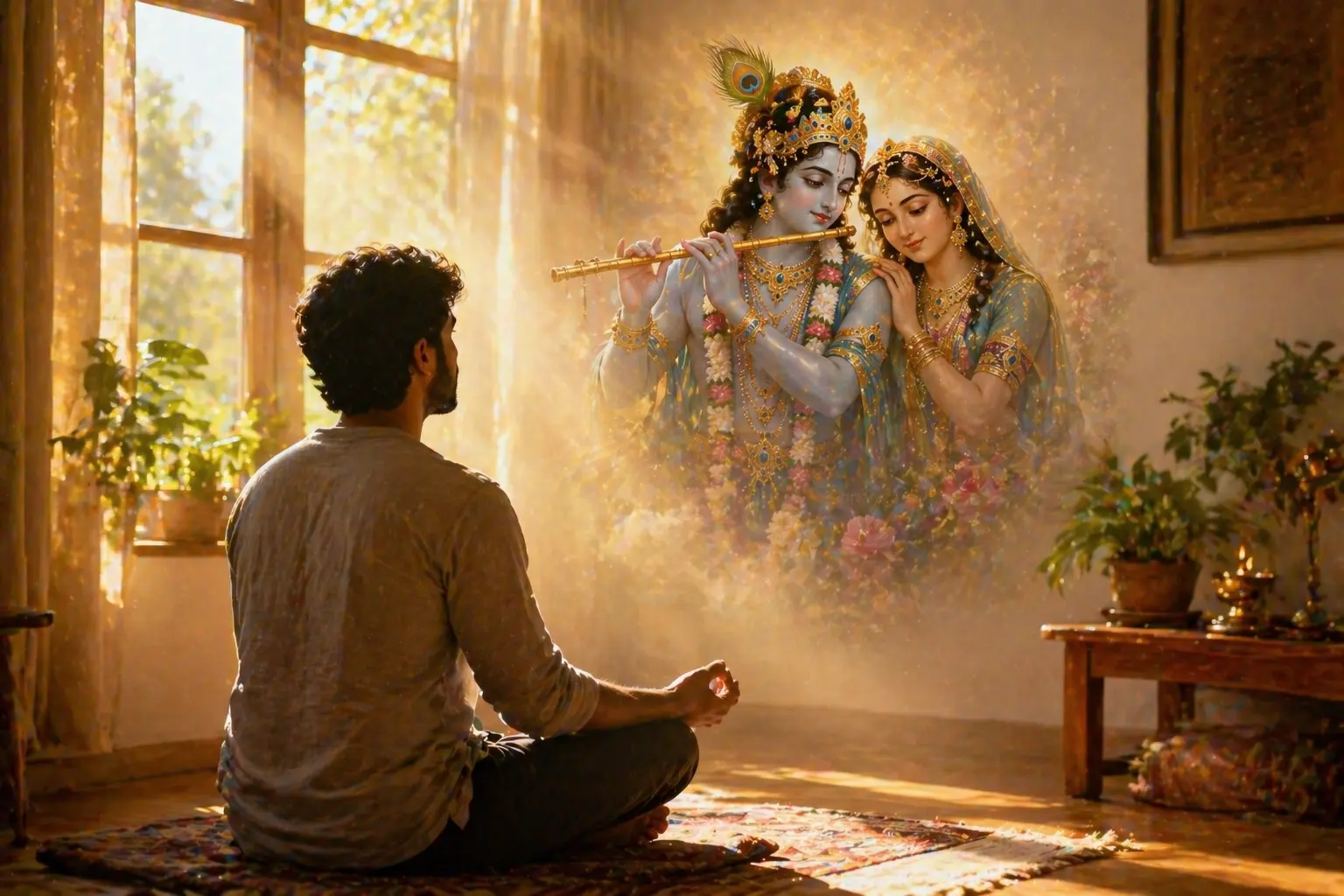
Although Bhagavad Gita 4.8 mentions protecting the virtuous and destroying the wicked, Swami Mukundananda reminds us that these external events should never distract us from the deeper purpose behind every divine descent. If eliminating evil were God's only objective, He could accomplish it in a single moment through His infinite power. The Lord does not require a physical body to destroy a tyrant.
The true mission of every avatar is the restoration of dharma.
Unfortunately, the word dharma is often translated simply as "religion," but its meaning is far more profound. Dharma refers to those eternal principles that sustain the universe and elevate the human soul towards God. It encompasses righteous conduct, compassion, self-control, truthfulness, humility, devotion, and the countless virtues that gradually purify the heart.
Swami Mukundananda explains that dharma is the process through which the soul evolves beyond the lower tendencies of material consciousness. Left unchecked, the mind naturally gravitates towards tamas, characterised by ignorance, laziness, confusion, and delusion. As spiritual awareness develops, one rises into rajas, becoming energetic and purposeful but still motivated by selfish desires and attachment. With continued purification, the soul gradually reaches sattva, the mode of goodness, where peace, wisdom, compassion, and selflessness begin to flourish. Yet even sattva is not the final destination. Krishna ultimately invites the soul to transcend all three material modes through loving devotion, entering the realm of pure spiritual consciousness.
This inner transformation is the true restoration of dharma.
Every avatar descends not merely to change society but to change hearts. Kingdoms rise and fall, political systems evolve, and civilisations come and go, yet the greatest revolution always occurs within the human heart. When ignorance gives way to wisdom, selfishness yields to selfless love, and the soul rediscovers its eternal relationship with God, the purpose of the avatar has been fulfilled.
The Story of Akbar and Birbal: Why Love Always Descends
Swami Mukundananda beautifully illustrates this profound truth through a well-known story involving Emperor Akbar and his wise minister, Birbal.
On one occasion, Akbar questioned the Hindu belief that the Supreme Lord would personally descend into a world filled with suffering and conflict. Why, he wondered, would an all-powerful God leave His heavenly abode when He could simply command events from afar?
Birbal did not attempt to answer with philosophy alone.
Instead, he created an unforgettable lesson.
Some days later, while accompanying the emperor on a boat ride, Birbal carried what appeared to be Akbar's infant son wrapped carefully in cloth. As the boat reached the middle of the river, Birbal suddenly tossed the child overboard.
Without pausing to think, Akbar leapt into the water fully clothed, determined to rescue his beloved son. Only after pulling the child from the river did he discover that it was merely a lifelike doll.
Bewildered and slightly embarrassed, the emperor turned to Birbal for an explanation.
Birbal gently smiled and said, "Your Majesty, you are the emperor of one kingdom. You could have ordered any of your soldiers to rescue the child. Yet because you believed it was your own son, you did not send someone else. You jumped into the river yourself. If a human father acts with such love, should it surprise us that the Supreme Father personally comes to rescue His children?"
The story beautifully captures the heart of the avatar philosophy.
Recognising God in Human Form: The Greatest Challenge
While the concept of divine descents fills the hearts of devotees with hope, it also presents one of the greatest spiritual challenges. If God truly walks among humanity, why do so few recognise Him? Why did so many people living in Krishna's own time fail to realise that the charming cowherd of Vrindavan and the prince of the Yadava dynasty was the Supreme Personality of Godhead?
The answer lies not in God's willingness to reveal Himself but in the limitations of human perception.
The material mind naturally judges by appearances. We are accustomed to measuring greatness by external accomplishments, wealth, influence, or social standing. Consequently, when the Infinite appears clothed in ordinary human form, many struggle to look beyond the external personality and perceive the divine reality within.
During the Mahabharata, countless kings witnessed Krishna's extraordinary wisdom, courage, and compassion. They saw Him perform miracles, protect His devotees, and repeatedly accomplish what no ordinary human could achieve. Yet many continued to regard Him merely as an exceptionally gifted prince. Their vision was clouded by ego, attachment, and material thinking.
Even Arjun, Krishna's beloved friend, required repeated reminders of His true identity. Although he loved Krishna deeply, he often related to Him as a cousin and companion. It was only when Krishna revealed His universal form in the eleventh chapter of the Bhagavad Gita that Arjun fully realised the immeasurable majesty of the One standing before him.
Krishna Himself explains this misunderstanding elsewhere in the Gita:
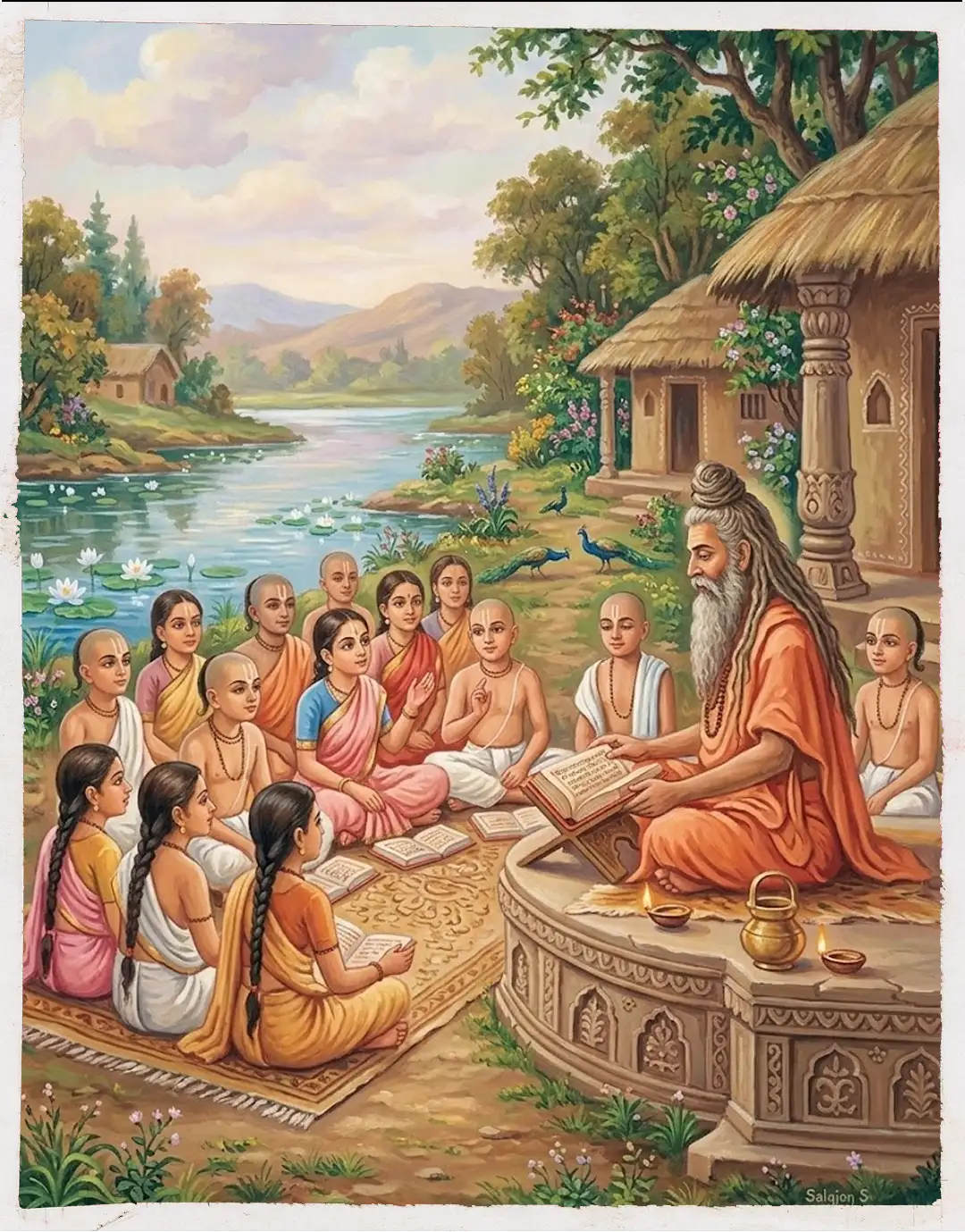
अवजानन्ति मां मूढा मानुषीं तनुमाश्रितम् ।
परं भावमजानन्तो मम भूतमहेश्वरम् ॥ 11॥
avajānanti māṁ mūḍhā mānuṣhīṁ tanum āśhritam
paraṁ bhāvam ajānanto mama bhūta-maheśhvaram
BG 9.11: When I descend in My personal form deluded persons are unable to recognize Me. They do not know the divinity of My personality, as the Supreme Lord of all beings.
Swami Mukundananda explains that the Lord intentionally veils His divinity through His Yogmaya potency. If Krishna were to continuously display His universal form, no one could establish the intimate relationships of friendship, parental affection, or divine love that He came to cultivate. Mother Yashoda would never scold Him for stealing butter. The gopas would never climb on His shoulders during their games. The gopis would never experience the sweetness of pure devotional love. By appearing as a human, Krishna invites souls to approach Him through love rather than fear.
The challenge, therefore, does not lie in God's concealment but in the purification of our own vision. As devotion deepens, the heart begins to perceive what the intellect alone cannot comprehend.
Krishna's Avatar: The Complete Revelation of Divine Love

Among all the avatars described in the scriptures, Shree Krishna occupies a unique and unparalleled position. While every incarnation reveals God's compassion, Krishna reveals His heart.
Other avatars came primarily to accomplish specific missions. Lord Matsya preserved the Vedas, Lord Kurma supported the churning of the cosmic ocean, Lord Varaha rescued Mother Earth, Lord Nrisimha protected Prahlad, and Lord Ram established the ideal of perfect righteousness. Each fulfilled a magnificent purpose, yet Krishna's appearance encompasses all these objectives while revealing something even greater—the sweetness of a personal relationship with God.
Swami Mukundananda explains that Krishna is worshipped as Purna Purushottam Bhagavan, the complete manifestation of the Supreme Lord. In Him, every divine quality reaches its fullest expression. He is simultaneously the omnipotent creator of countless universes and the mischievous child who steals butter from the homes of the gopis. He is the majestic Lord worshipped by Brahma and Shiva, yet He allows Himself to be lovingly bound by Mother Yashoda's ropes. He is the supreme teacher of the Bhagavad Gita, yet He humbly accepts the role of Arjun's charioteer.
This extraordinary combination of supreme majesty and intimate sweetness makes Krishna's avatar unlike any other.
Janmashtami therefore celebrates far more than the birth of a divine child. It celebrates the astonishing truth that the Supreme Being, who is beyond time and space, willingly entered human history to demonstrate that the highest relationship with God is not built upon fear, obligation, or ritual alone, but upon pure, selfless love.
Every pastime of Krishna points towards this ultimate message. His flute calls the soul back to its forgotten home. His smile dissolves fear. His teachings remove ignorance. His compassion embraces even those who oppose Him. His life reveals that divine love is not an abstract philosophy but a living relationship available to every sincere seeker.
The Avatar Principle in Our Own Lives
When we read about Krishna's appearance over five thousand years ago, it is tempting to confine the doctrine of avatars to ancient history. Yet the Bhagavad Gita invites us to see something far more personal.
The Lord's compassion did not end when His earthly pastimes concluded.
The same God who guided Arjun continues to guide humanity today.
Many people ask, "If God loves us, why does He not appear now?" Often, we imagine that divine intervention must resemble the spectacular miracles described in the scriptures. We wait for extraordinary signs while overlooking the quieter ways in which God's grace continually enters our lives.
Swami Mukundananda frequently reminds seekers that the Lord's compassion reaches us through countless channels. Sometimes He guides us through the words of a realised Guru. Sometimes He awakens us through the wisdom of the scriptures. Sometimes He redirects our lives through unexpected challenges that ultimately strengthen our faith. At other times, He quietly inspires an act of kindness, a moment of clarity, or an inner longing for spiritual growth.
The principle behind the avatar remains unchanged: God never abandons His children.
Although Krishna's historical appearance occurred in Dwapar Yuga, His presence continues through His divine name, His teachings, His devotees, and His grace. Every sincere prayer is heard. Every step taken towards Him is lovingly reciprocated.
This understanding transforms our perspective on life's difficulties. Instead of asking, "Why is God absent?" we begin asking, "How is God guiding me through this experience?"
The answer often reveals itself only when we look back and recognise that His invisible hand had been leading us all along.
Janmashtami: Celebrating More Than a Birthday
The deeper we understand the philosophy of avatars, the more meaningful Janmashtami becomes.
It is not simply a festival commemorating an event that occurred long ago in Mathura. It is a celebration of God's eternal promise never to forsake humanity. Every beautifully decorated temple, every devotional song, every offering of flowers and sweets, and every midnight arati reminds us that the Supreme Lord willingly crossed the infinite distance between the spiritual and material worlds out of unconditional love for His children.
Janmashtami invites us to respond to that love.
Krishna did not descend merely so that humanity could admire His miracles or celebrate His birthday once a year. He came to awaken devotion within our hearts, to teach us the path of selfless love, and to remind us of our eternal identity as souls belonging to Him.
The true celebration of Janmashtami therefore begins not with external festivities but with inner transformation.
- When we forgive instead of harbouring resentment, we honour Krishna's teachings.
- When we perform our daily duties as an offering to God, we follow His instructions from the Bhagavad Gita.
- When we chant His names, meditate upon His form, study His words, and dedicate our actions to His pleasure, we allow His avatar to fulfil its purpose within our own lives.
In this way, Janmashtami becomes not merely an annual celebration but a lifelong spiritual journey.
Final Reflections: Answering Krishna's Loving Call
The doctrine of avatars is one of Hinduism's greatest gifts to humanity because it reveals a God who is infinitely powerful yet infinitely approachable; a God who governs the universe while simultaneously caring for the smallest details of every devotee's life.
Whenever righteousness declines, He descends.
Whenever humanity forgets Him, He gently calls it back.
Whenever His children lose hope, He offers guidance, protection, and unconditional love.
The appearance of Shree Krishna in this world is therefore much more than a historical event. It is the supreme expression of divine compassion. Every flute note played in Vrindavan, every word spoken on the battlefield of Kurukshetra, and every loving pastime described in the Bhagavatam continues to echo across the centuries, inviting each of us into a personal relationship with the Lord.
Swami Mukundananda beautifully teaches that the purpose of human life is not merely to know about God but to know God. The avatar makes this possible by bringing the Infinite within reach of the finite heart. Through Krishna's teachings, His devotees, His divine names, and the guidance of an authentic Guru, the same grace that uplifted Arjun remains available to every seeker today.
As we celebrate Janmashtami 2026, let us look beyond the decorations, the festivities, and the rituals to embrace the deeper message of the festival. Krishna did not descend simply to restore dharma in one age. He descended to awaken divine love in every age and in every heart.
The Lord's invitation remains unchanged.
He has already taken the first step towards us.
The only question that remains is whether we are ready to take the next step towards Him.
Call to Action: Deepen Your Connection with Shree Krishna This Janmashtami
Janmashtami is an invitation to rediscover our eternal relationship with God. The Bhagavad Gita reminds us that whenever humanity loses its way, God lovingly descends to guide us back to the path of truth, devotion, and divine love. His appearance is not simply a historical event but an eternal promise that His grace is always available to every sincere seeker.
This Janmashtami, take the next step in your spiritual journey. Set aside a few moments each day to read the Bhagavad Gita, chant Krishna's holy names, meditate on His beautiful form, and reflect on His teachings. As Swami Mukundananda explains, the greatest purpose of the avatar is not merely to inspire admiration but to awaken loving devotion in our hearts.
If you would like to deepen your understanding of Krishna's teachings, explore Swami Mukundananda's Bhagavad Gita: The Song of God commentary, participate in JKYog's online and in-person spiritual programs, and download the JKYog Bhagavad Gita & Krishna Bhakti App, which offers guided meditations, daily inspiration, devotional music, and a wealth of spiritual resources to help you cultivate a closer relationship with the Lord.
May this Janmashtami become more than a festival for you. May it become the beginning of a lifelong journey towards Krishna's divine love.
Frequently Asked Questions
1. What is an avatar in Hinduism?
An avatar is the voluntary descent of the Supreme Lord into the material world. Unlike ordinary human birth, which is governed by karma, an avatar appears through God's own divine will to guide humanity, protect the righteous, and restore dharma.
2. Why does God descend to Earth according to the Bhagavad Gita?
In Bhagavad Gita 4.7–4.8, Lord Krishna explains that He appears whenever righteousness declines and unrighteousness prevails. His purpose is to protect devotees, remove evil influences, and re-establish the eternal principles of dharma.
3. Why is Lord Krishna considered the complete avatar?
The Vedic scriptures describe Shree Krishna as Purna Purushottam Bhagavan, the complete manifestation of the Supreme Personality of Godhead. He fully reveals God's beauty, love, wisdom, strength, compassion, wealth, fame, and detachment while establishing intimate loving relationships with His devotees.
4. How is an avatar different from a saint or Guru?
A saint or Guru is an enlightened soul who has realised God and guides others towards Him. An avatar, however, is God Himself descending into the world. Some exalted souls may be divinely empowered for a special mission, but they remain individual souls rather than the Supreme Lord.
5. What is the deeper meaning of dharma?
Dharma is much more than religion or ritual. It refers to the eternal principles that sustain both the universe and the individual soul. Living according to dharma means cultivating truthfulness, compassion, self-control, humility, devotion, and God-centred living.
6. How many avatars are there in Hinduism?
The scriptures describe innumerable avatars of God. While the Dashavatara are the most well known, texts such as the Srimad Bhagavatam explain that the Lord manifests in countless forms according to the needs of creation.
7. Why do people fail to recognise God's avatar?
According to the Bhagavad Gita, many people judge only by external appearances. God's divine Yogmaya conceals His majesty so that devotees can develop intimate loving relationships with Him. Only a purified heart can recognise His true nature.
8. Does God still guide humanity today?
Yes. Although Krishna's earthly pastimes took place thousands of years ago, His guidance continues through the Bhagavad Gita, the Srimad Bhagavatam, realised Gurus, saints, devotees, and His divine grace working within our lives.
9. Why is Janmashtami important for spiritual seekers?
Janmashtami celebrates God's unconditional love for humanity. It reminds us that Krishna descended not only to defeat evil but to awaken devotion, teach the Bhagavad Gita, and invite every soul back into an eternal relationship with Him.
10. How can I honour Lord Krishna on Janmashtami?
You can honour Krishna by studying the Bhagavad Gita, chanting His holy names, performing devotional service, offering food with love, participating in satsang, meditating on His pastimes, and dedicating your daily actions to His pleasure.
Further Resources