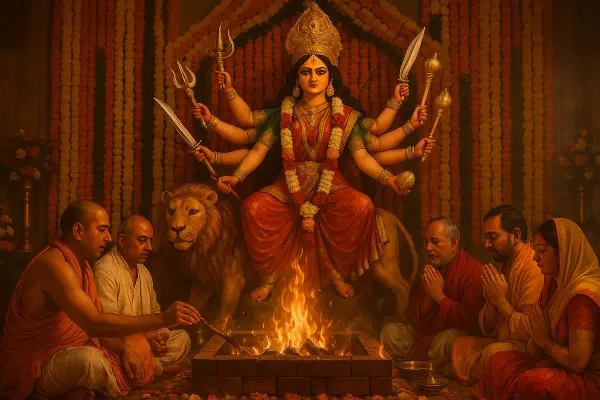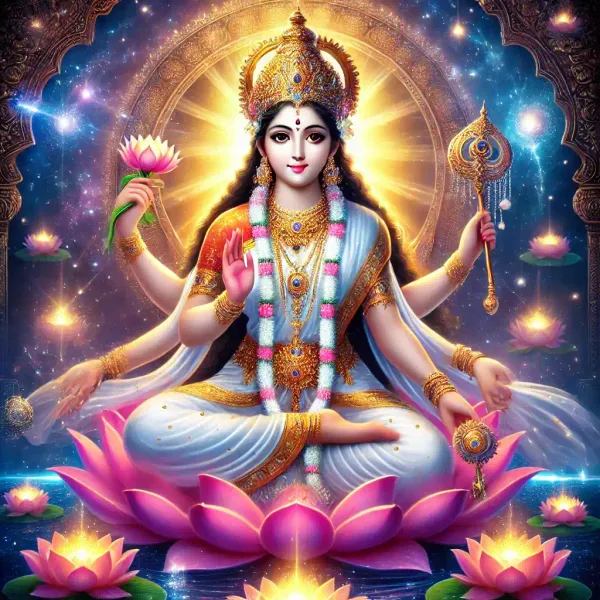

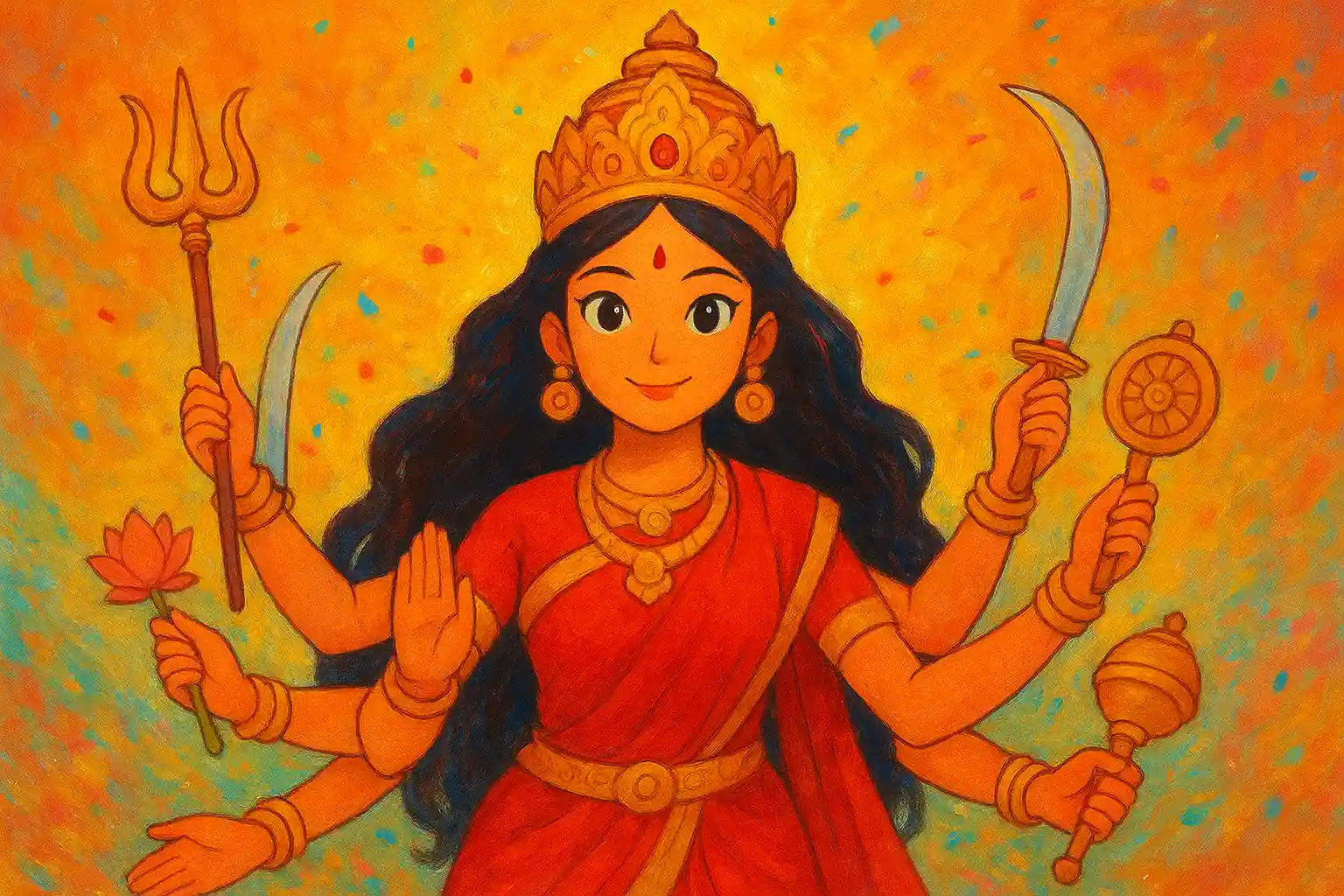
Navratri, the nine-day Hindu festival, is one of the most celebrated events in India and around the world. It is a time to honor the divine feminine energy through worship, fasting, music, and dance. Every year, this sacred festival is observed in the autumn season, marking a significant shift in the cosmic rhythm. As we approach Navratri 2025, it offers not just an opportunity to worship the divine, but also a profound opportunity for inner transformation.
In this blog, we will explore the nine days of Navratri and the powerful life lessons each goddess imparts. These lessons, deeply rooted in spirituality, are not just relevant during the festival but can be applied year-round to guide our personal growth. Let’s dive into the spiritual significance of these nine goddesses and uncover the transformation they offer.
Navratri is incomplete without Garba and Dandiya, where the joyous dance celebrates Maa Durga’s victory and fills the nights with divine energy. Clad in colorful attire, devotees gather to dance, rejoice, and honor the Divine Mother in an atmosphere of joy and reverence.
At Radha Krishna Temple of Dallas, the Navratri Mahotsav 2025 offers unforgettable evenings filled with Garba, Dandiya, Durga Pooja, children’s activities, delicious food, and vibrant cultural programs. As lamps glow and music fills the air, the community comes together in a beautiful celebration of tradition, devotion, and festivity—an experience of Navratri magic like never before.
Join us at the celebration; get your tickets today!
Radha Krishna Temple of Dallas | Navratri Mahostav 2025 | Garba & Dandiya Tickets

🌸 Meet the Nine Forms of Goddess Durga
- Shailaputri – Symbol of strength and stability.
- Brahmacharini – Embodiment of penance, devotion, and discipline.
- Chandraghanta – Goddess of courage and fearlessness.
- Kushmanda – The cosmic creator, radiating energy and joy.
- Skandamata – Nurturer and protector, blessing families and children.
- Katyayani – Fierce warrior form who destroys negativity.
- Kalaratri – The fiercest form, remover of darkness and fear.
- Mahagauri – Symbol of purity, calmness, and serenity.
- Siddhidatri – Giver of wisdom, perfection, and siddhis (spiritual powers).
Day 1: Goddess Shailaputri – The Power of Beginnings
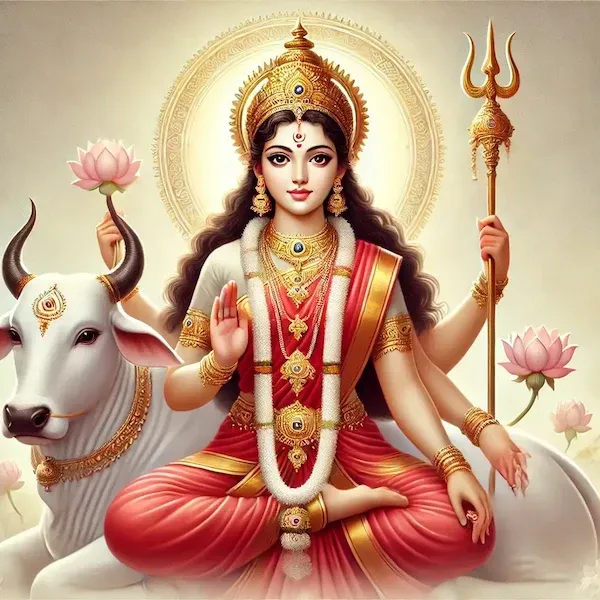
On the first day of Navratri, we worship Goddess Shailaputri, the daughter of the mountains (Himalayas). She is depicted as a beautiful woman riding a bull, holding a trident and a lotus. Shailaputri represents the beginning of creation and the divine power of nature.
Life Lesson: This day emphasizes the importance of new beginnings. Just as the seed of a tree begins its journey towards growth, so too must we be willing to start afresh, shedding old habits and making space for positive changes. It is a reminder that every step of transformation begins with the willingness to start.
Personal Growth: On Day 1, we are encouraged to set clear intentions for the transformation we desire in our lives. Whether it’s a new career, spiritual practice, or personal habit, this day teaches us that the first step is always the hardest but also the most crucial.
Day 2: Goddess Brahmacharini – The Power of Discipline
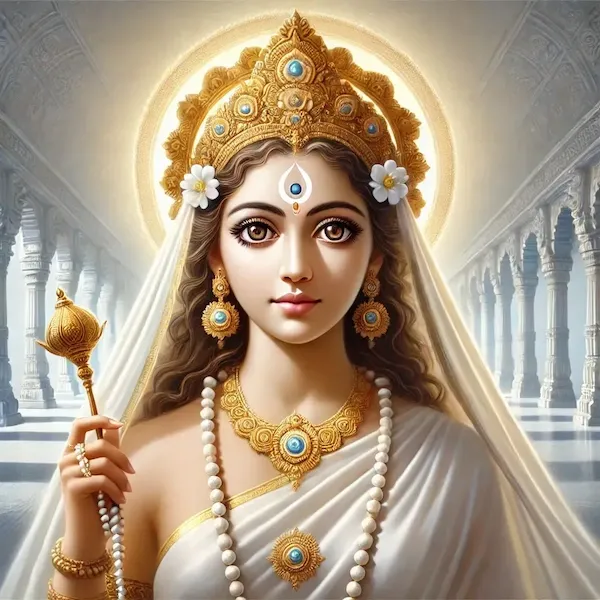
On Day 2, we honor Goddess Brahmacharini, the embodiment of penance, austerity, and discipline. She is depicted as a woman holding a rosary in one hand and a water pitcher in the other, signifying her commitment to a life of self-control and focus.
Life Lesson: Goddess Brahmacharini teaches us the power of discipline and dedication. Transformation cannot happen without consistent effort. Whether it is in our spiritual practice, health routines, or work life, this day encourages us to strengthen our inner resolve.
Personal Growth: Use Day 2 to reflect on areas of your life where discipline may be lacking. Focus on setting achievable goals and sticking to them with determination. This will lay the foundation for lasting transformation.

Day 3: Goddess Chandraghanta – The Power of Courage
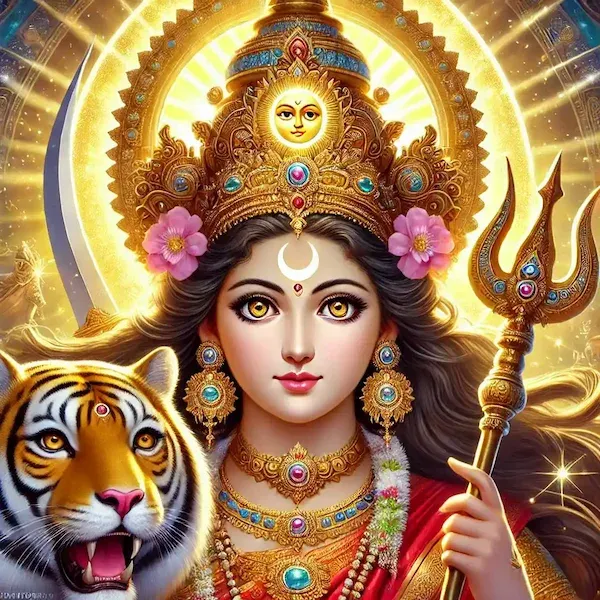
On the third day, we worship Goddess Chandraghanta, the embodiment of courage and valor. She is depicted with a crescent moon (chandra) on her forehead, riding a lion, and holding various weapons. Goddess Chandraghanta represents the fearless energy that drives us to face our challenges head-on.
Life Lesson: The message of Day 3 is one of courage and strength. No matter how daunting life’s challenges may seem, it is important to face them with a brave heart. Transformation requires the courage to take risks and step outside our comfort zones.
Personal Growth: Reflect on fears that may be holding you back in your life. Whether in your personal or professional life, find the courage to overcome those fears and embrace the opportunities that come with change.
Day 4: Goddess Kushmanda – The Power of Creativity
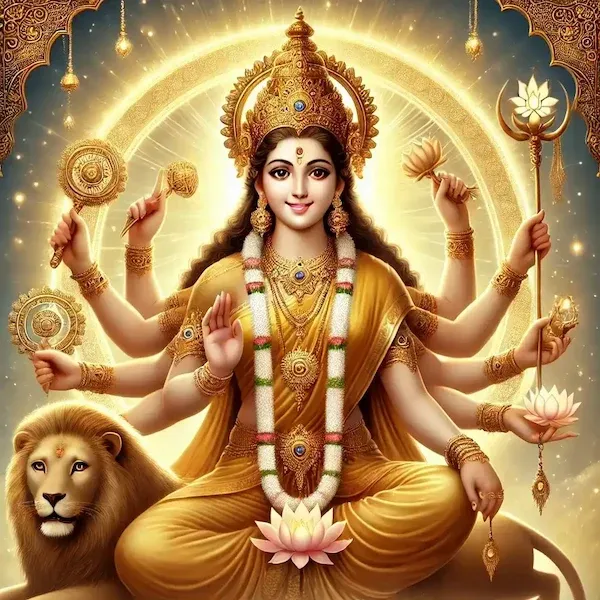
On the fourth day, we honor Goddess Kushmanda, the creative force behind the universe. She is depicted with eight arms, each holding various objects, and riding a lion. Goddess Kushmanda represents the power of creation and is believed to have created the universe by smiling.
Life Lesson: Goddess Kushmanda teaches us the importance of creativity and innovation in our lives. Creativity is not just limited to artistic endeavors, but it also plays a vital role in problem-solving and thinking outside the box.
Personal Growth: Reflect on how you can infuse more creativity into your everyday life. Approach challenges with a fresh perspective, and allow your imagination to guide you in creating new solutions.
Day 5: Goddess Skandamata – The Power of Nurturing
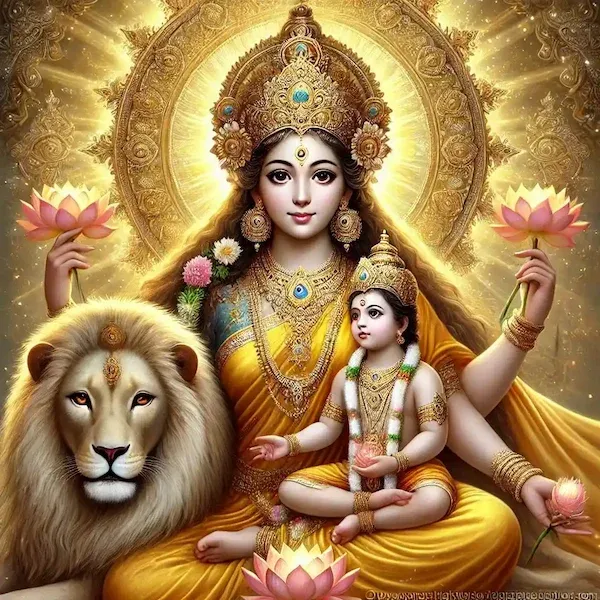
On the fifth day, we honor Goddess Skandamata, the mother of Lord Kartikeya. She is often depicted riding a lion, holding her son, and radiating divine maternal energy. She embodies the nurturing aspect of the feminine.
Life Lesson: Day 5 emphasizes the importance of nurturing both others and ourselves. Just as a mother cares for her child, we must learn to nourish our minds, bodies, and souls with compassion and care.
Personal Growth: Reflect on how you can offer nurturing energy to others. This day invites us to foster a compassionate approach to ourselves and the people around us. It also reminds us that true transformation begins with love and care.

Day 6: Goddess Katyayani – The Power of Determination
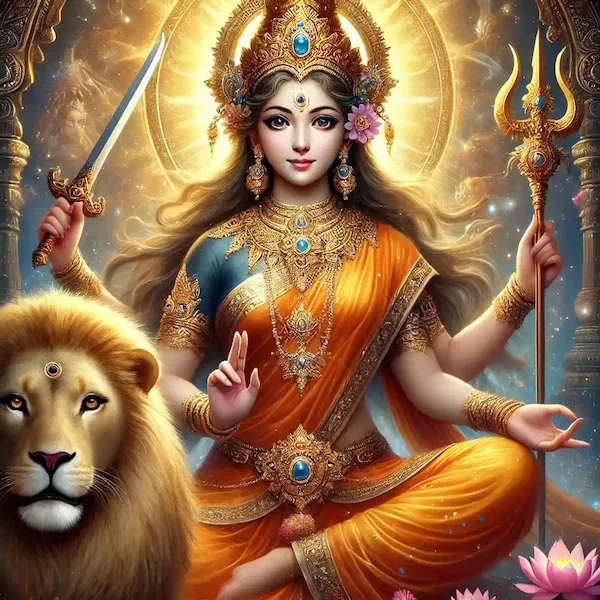
On the sixth day, we worship Goddess Katyayani, known for her unwavering determination and strength. She is depicted riding a lion, with a sword in one hand and a shield in the other. She represents the fierce power that arises when one is fully committed to achieving their goals.
Life Lesson: Goddess Katyayani teaches us the importance of determination and commitment. No matter the obstacles that may arise, we must remain steadfast in our pursuit of our goals.
Personal Growth: Reflect on areas in your life where you may have given up too soon. Use Day 6 to rekindle your determination to achieve your dreams, no matter the challenges that arise.
Day 7: Goddess Kalaratri – The Power of Destruction for Renewal
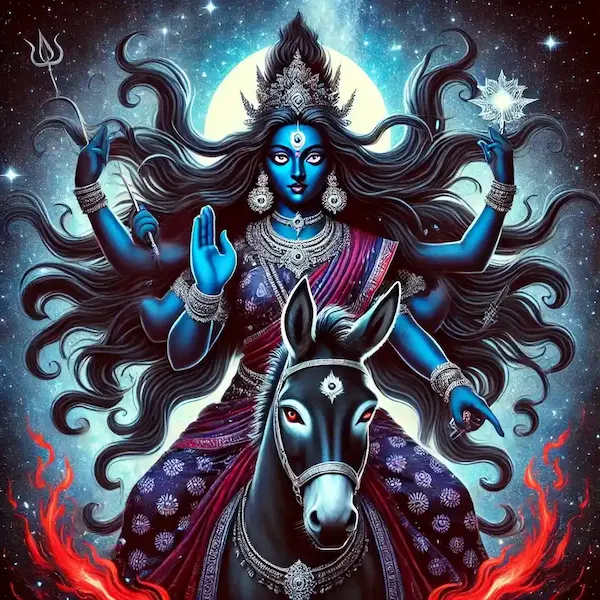
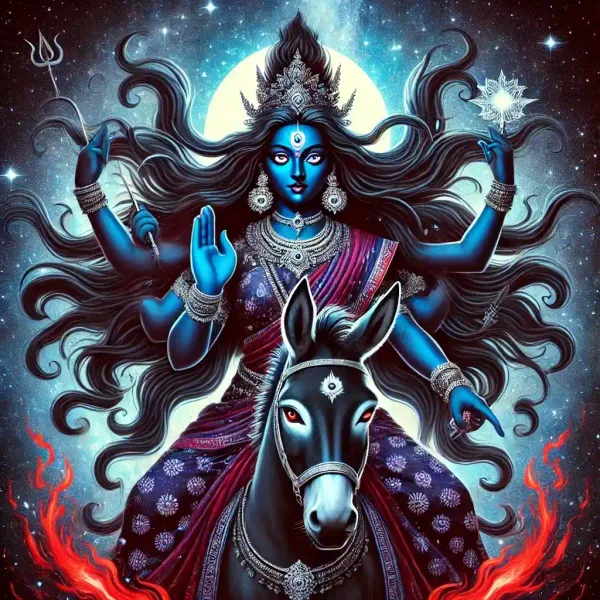
On Day 7, we honor Goddess Kalaratri, the fierce and destructive form of the goddess. Her dark complexion and disheveled hair symbolize the destruction of negative energy, allowing for renewal and rebirth.
Life Lesson: Day 7 teaches us the importance of destroying old habits and clearing away negative energy from our lives. Just as the earth needs a period of rest and decay to rejuvenate, we too must let go of the past to create space for new growth.
Personal Growth: Reflect on the negative patterns, fears, or relationships that are holding you back. Use this day to actively let go of those energies, creating space for new beginnings.
Day 8: Goddess Mahagauri – The Power of Purity
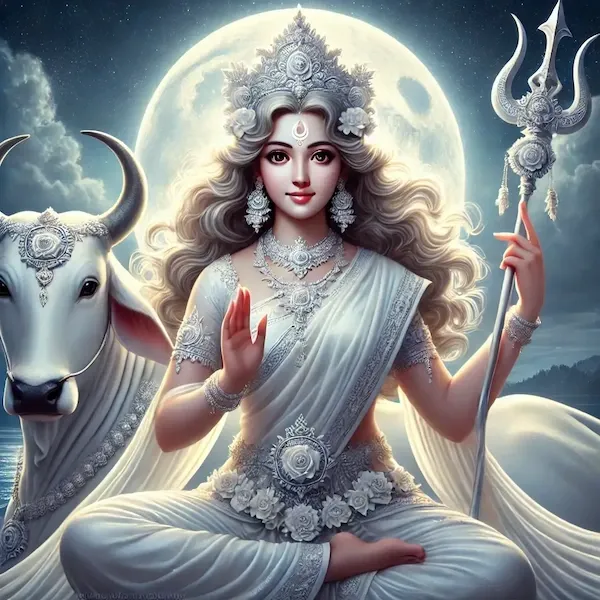
On Day 8, we honor Goddess Mahagauri, a symbol of purity, serenity, and spiritual awakening. She is depicted riding a white bull, representing the purity of her heart and mind. Goddess Mahagauri is a reminder of the transformative power of inner purity.
Life Lesson: Goddess Mahagauri teaches us to cultivate inner purity by aligning our thoughts, actions, and intentions with the divine. True transformation is only possible when we purify ourselves, both spiritually and mentally.
Personal Growth: Reflect on areas where you may be harboring negative thoughts or impurities. Use Day 8 as a reminder to cleanse your mind and spirit, making room for higher consciousness and clarity.
Day 9: Goddess Siddhidatri – The Power of Completion
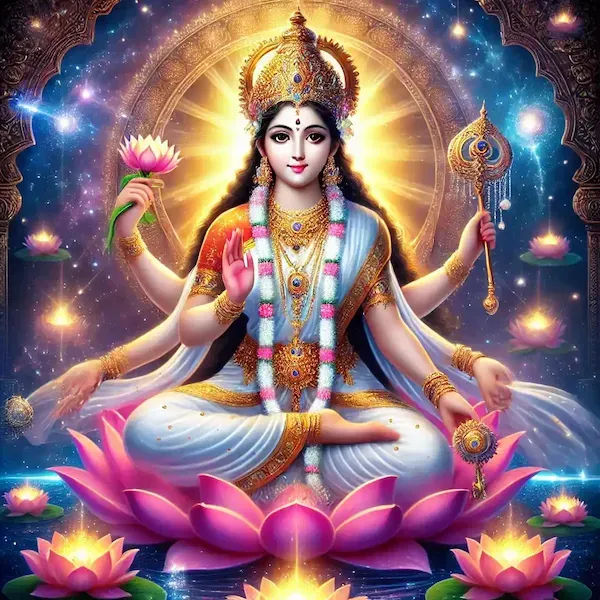
On the final day, we worship Goddess Siddhidatri, who embodies the perfection and completion of spiritual practice. She is depicted sitting on a lotus, holding various symbols of spiritual success, and is considered the bestower of siddhis (spiritual powers).
Life Lesson: Day 9 symbolizes the culmination of the spiritual journey and the achievement of inner peace and balance. It is a reminder that true transformation leads to a state of completion, where we align with our highest potential.
Personal Growth: Reflect on your journey of transformation over the past nine days. What have you learned? What practices or insights have you discovered that will continue to guide you beyond the festival?
You may also like: Navratri 2025 Dates, Calendar, Colors & Ritual Guide | Celebrate 9 Divine Nights to explore Navratri rituals.
Connecting Navratri 2025 with Swami Mukundananda's Teachings
Swami Mukundananda, a revered spiritual teacher, often emphasizes the importance of inner transformation through devotion, self-discipline, and self-awareness. The nine days of Navratri, with their focus on the divine feminine energy and the nine goddesses, perfectly align with Swami Mukundananda's teachings on personal growth and spiritual evolution.
In his teachings, Swami Mukundananda highlights how spiritual practices, such as meditation, devotion, and self-reflection, can lead to profound inner change. Just as the nine goddesses represent different facets of life, Swamiji's insights guide us to embrace these qualities within ourselves. Whether it’s the discipline of Brahmacharini, the courage of Chandraghanta, or the determination of Katyayani, Swamiji’s wisdom helps us harness these powerful energies for our own growth and transformation.
If you are seeking a deeper understanding of Navratri and its significance, Swami Mukundananda’s teachings offer a perfect framework for spiritual development during this auspicious time.
Frequently Asked Questions (FAQ)
- What is the significance of Navratri 2025?
Navratri 2025 offers an opportunity to engage in spiritual practices, honor the divine feminine, and seek inner transformation. Each day focuses on a different goddess, offering wisdom and lessons that can enhance personal growth. - How can I observe Navratri for inner transformation?
Focus on self-reflection, devotion, and discipline during the festival. Set clear intentions for personal growth, engage in spiritual practices like meditation or prayer, and seek to embody the qualities of the nine goddesses. - What is the connection between Navratri and Swami Mukundananda’s teachings?
Swami Mukundananda’s teachings encourage spiritual growth, self-discipline, and devotion. These principles align closely with the teachings of the nine goddesses, offering a path to inner transformation during Navratri. - What can I learn from each goddess during Navratri?
Each goddess represents a unique life lesson, such as new beginnings, courage, discipline, creativity, and nurturing. Reflecting on these teachings can inspire personal and spiritual growth.
Call to Action:
To deepen your understanding of the spiritual significance of Navratri, explore our detailed blog on Shree Durga Saptashati Part 1 – Lyrics, Meaning & Spiritual Insights. This blog offers a deeper dive into the sacred texts and divine wisdom that can elevate your spiritual journey during this auspicious time.
Additionally, subscribe to Swami Mukundananda's YouTube channel for regular insights, teachings, and devotion that will guide you in your quest for inner transformation and spiritual awakening.