
A Janmashtami Message Beyond Celebration
As Janmashtami 2026 approaches, millions of devotees across the world prepare to celebrate the divine appearance of Shree Krishna with immense joy and devotion. Temples are beautifully adorned with flowers and lights, homes resonate with the chanting of His holy names, devotees observe sacred fasts, and the enchanting stories of His childhood leelas are lovingly remembered. The atmosphere becomes charged with devotion as hearts turn toward the Supreme Lord who descended more than five thousand years ago to bless humanity.
Yet beneath these cherished traditions lies a much deeper invitation. Janmashtami is not merely a celebration of a divine birth that took place long ago. It is an opportunity for every soul to awaken spiritually, to reflect upon life's true purpose, and to draw closer to God.
Shree Krishna, the Jagadguru (the eternal teacher of all beings) did not descend only to perform captivating leelas or inspire devotion through His extraordinary pastimes. Every action, every word, and every smile carried profound spiritual wisdom meant to guide humanity beyond illusion, fear, and suffering. His teachings continue to illuminate the path for anyone seeking lasting peace amid an ever-changing world.
Among His countless teachings, one shines with timeless relevance:
The secret of remaining steady amidst success and failure.
In today's world, where our happiness often depends upon achievements, recognition, wealth, or approval from others, Krishna gently reminds us that true success is measured not by what we possess, but by the peace we cultivate within.
On this Janmashtami, let us do more than celebrate His birth. Let us allow His wisdom to transform our hearts.
Swami Mukundananda, one of today's foremost teachers of Vedic wisdom, beautifully explains Krishna's teachings in a practical and deeply inspiring way. His explanations reveal that lasting happiness is not found in controlling external circumstances but in mastering our inner world. As we journey through these teachings, we discover that Krishna's definition of success is very different from the world's; and infinitely more fulfilling.
The Dualities of Life: Success and Failure Walk Together
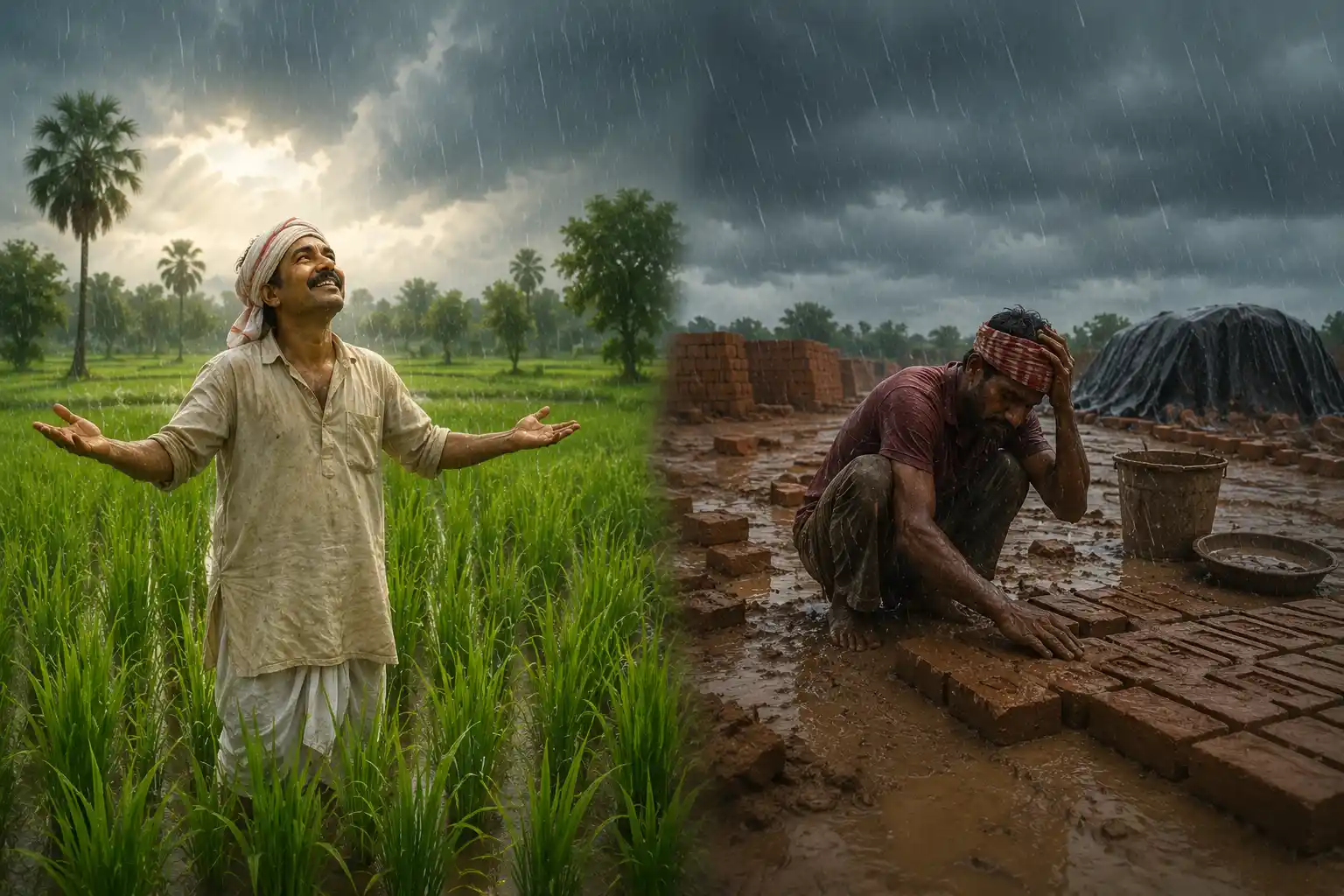
"Be indifferent to the dualities of success and failure. Understand that this is a part of life. It will keep coming."
— Swami Mukundananda
Every human life unfolds through changing seasons. There are moments of celebration and moments of disappointment, victories that lift our spirits and setbacks that humble us. No one has ever experienced uninterrupted success, nor has anyone been condemned to permanent failure. Both are inseparable companions on the journey of life.
The Vedic scriptures repeatedly remind us that this material world is governed by dualities. Pleasure is followed by pain. Gain is followed by loss. Praise is often accompanied by criticism. These changing experiences are not signs that God has abandoned us; they are simply the nature of the world we inhabit.
Swami Mukundananda offers a beautiful example. Rain is a blessing for a farmer whose crops depend upon it, yet the very same rain becomes a hardship for a brick-maker whose livelihood requires dry weather. The event itself remains unchanged, but its meaning differs according to one's perspective.
Krishna therefore teaches us not to become attached to temporary outcomes. When our happiness depends entirely upon success, disappointment becomes inevitable. But when our hearts remain anchored in God, both success and failure become opportunities for spiritual growth.
Even Krishna's own appearance teaches this profound truth. He was born not in a royal palace but inside the prison of King Kamsa. Outwardly, the circumstances appeared bleak and tragic. Yet inwardly, it was one of the most glorious moments in all creation.
Janmashtami reminds us that divine grace often reveals itself in the most unexpected places. True success is not the absence of hardship; it is discovering God's presence within every circumstance.
Certainly. Here's a more polished, flowing, devotional version in the same style as the previous rewrites.
From Palace to Forest: Lord Ram's Lesson on Detachment
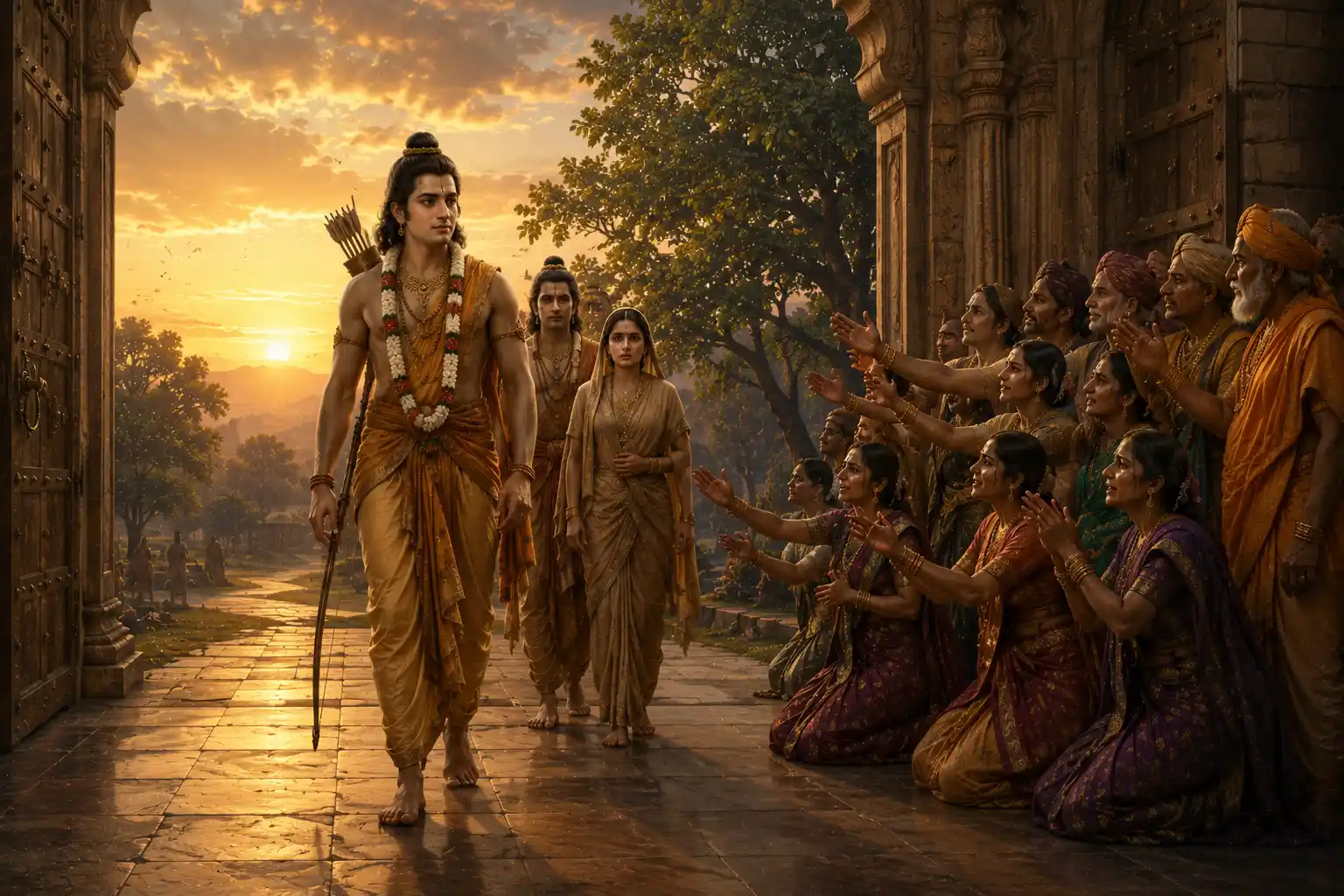
Swami Mukundananda frequently illustrates Shree Krishna's teachings by drawing upon the life of another perfect divine incarnation, Lord Ram, whose unwavering composure in the face of adversity remains one of the greatest examples of spiritual detachment. On the eve of His coronation, the entire city of Ayodhya was immersed in celebration. Streets were beautifully decorated, homes overflowed with joy, and citizens eagerly awaited the moment when their beloved prince would ascend the throne. After years of anticipation, everything appeared perfectly aligned for Lord Ram to begin His reign as king.
Yet in the space of a single day, those expectations were completely overturned. Bound by King Dasharatha's promise to Queen Kaikeyi, Lord Ram was instructed to relinquish the throne and spend fourteen years in exile in the forest. From the perspective of the world, this was an unimaginable injustice. The prince who deserved the crown was suddenly stripped of His royal future and sent away to live a life of hardship. However, what makes this episode so extraordinary is not the exile itself, but Lord Ram's response to it. There was no trace of anger towards Kaikeyi, no resentment toward destiny, and no complaint about the sudden reversal of His circumstances. With complete serenity and unwavering obedience to dharma, He exchanged His royal garments for simple bark clothing and walked away from the palace with the same calm dignity and peaceful smile that had adorned His face only moments before.
Swami Mukundananda explains that this is the hallmark of genuine spiritual greatness. External circumstances may change dramatically, but the realised soul does not allow those changes to disturb the inner equilibrium of the heart. Lord Ram's apparent worldly defeat became one of His greatest spiritual victories because His peace depended not upon a kingdom, power, or recognition, but upon His complete surrender to the will of God and His unwavering commitment to righteousness. His example reminds us that true success is measured not by the positions we attain but by the grace and composure with which we accept life's changing circumstances.
When we reflect upon our own lives, the contrast is often striking. A disappointing examination result, a setback in our career, financial difficulties, criticism from others, or an unexpected change in our carefully made plans can easily rob us of our peace and occupy our minds for days or even months. Lord Ram's life gently challenges us to respond differently. Instead of allowing circumstances to dictate our happiness, He teaches us to anchor our hearts in faith, trusting that every event unfolds according to a higher divine purpose, even when we cannot immediately understand it.
As we celebrate Janmashtami 2026, Lord Ram's example invites each of us to pause and ask a deeply personal question: when life suddenly changes direction and our expectations are shattered, do we allow fear and disappointment to overcome us, or do we deepen our faith in the Lord, trusting that His plan is wiser and more compassionate than our own? The answer to that question may well determine whether we experience life's challenges as defeats or as opportunities for profound spiritual growth.
Krishna's Teaching to Arjun: Freedom from Results
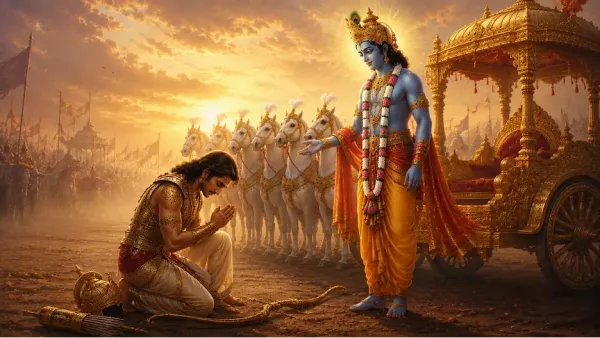
On the battlefield of Kurukshetra, Arjun found himself facing one of the greatest emotional and spiritual crises in history. Standing between two vast armies, he was overcome with grief, fear, and confusion as he contemplated fighting against his own teachers, relatives, and lifelong friends. His bow slipped from his hands, his resolve disappeared, and he questioned whether victory was worth such unbearable loss. At that pivotal moment, Shree Krishna did not simply motivate Arjun to fight or promise him success. Instead, He transformed Arjun's entire understanding of action, duty, and the true meaning of success.
Swami Mukundananda beautifully explains that Krishna's teaching is revolutionary because it shifts our attention away from external achievements and towards inner freedom. Success, according to Krishna, is not measured by whether we attain our desired outcome, but by whether we remain peaceful, balanced, and devoted while performing our duty. If success fills us with pride and arrogance, then our victory has already become a defeat. Likewise, if failure leaves us discouraged, resentful, or hopeless, we have also lost sight of our higher purpose. The true spiritual victor is the one who performs every action with sincerity, offers the results to God, and remains grateful regardless of the outcome. This inner steadiness is the real triumph Krishna wishes every seeker to attain, for it frees the heart from anxiety and allows devotion to flourish under every circumstance.
The Sculptor and the Wood: How Krishna Shapes the Soul
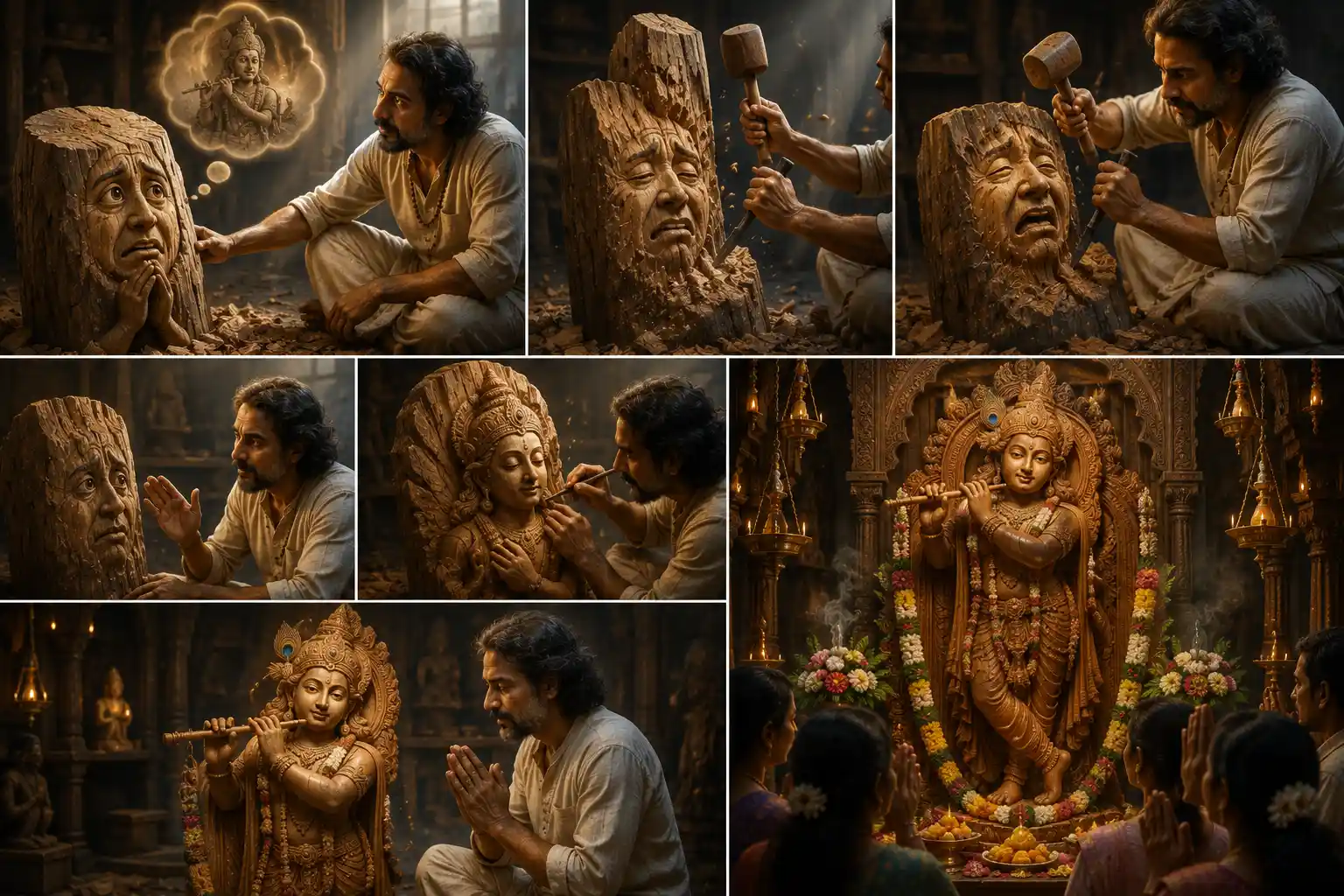
Swami Mukundananda shares a touching allegory that beautifully illustrates how God transforms the lives of His devotees. A rough block of wood approached a master sculptor with a humble request: "Please transform me into a beautiful deity so that people may worship me." The sculptor gladly accepted and began his work, carefully chiseling away portions of the wood with each deliberate strike. As the carving continued, the wood cried out in pain, pleading for the sculptor to stop because every blow seemed unbearable. With compassion, the sculptor replied that such discomfort was unavoidable, for only through patient carving could the ordinary block of wood become something sacred and beautiful.
Day after day, the sculptor continued his work until the once rough piece of timber had been transformed into a magnificent murti, lovingly installed in a temple where countless devotees came to offer prayers and reverence. Swami Mukundananda reminds us that our own lives unfold in much the same way. Every disappointment, setback, unanswered prayer, and unexpected hardship is another careful stroke from the Divine Sculptor.
Krishna is not punishing His devotees when life becomes difficult; He is lovingly removing the pride, attachments, fears, and illusions that prevent our true spiritual nature from shining. Janmashtami reminds us that God is constantly shaping our character with infinite wisdom and compassion. Although His process may sometimes feel painful, it is always guided by His desire to prepare us for something far greater than we can presently imagine.
Barbarik: From Extraordinary Power to Complete Surrender
Among the many inspiring stories that Swami Mukundananda recounts is the remarkable account of Barbarik, the grandson of Bhim. Blessed with three extraordinary arrows possessing unimaginable power, Barbarik had the ability to determine the outcome of the Mahabharata war within moments. His strength was unmatched, yet Shree Krishna understood that if such power were used according to Barbarik's own judgement, it would interfere with the divine plan that was unfolding on the battlefield. Krishna therefore approached him with a request that no ordinary person could have anticipated. Instead of asking for his weapons or allegiance, He asked Barbarik to offer his own head.
Without hesitation or argument, Barbarik surrendered completely to the Lord's will. This act of total trust revealed that his greatest strength was not his miraculous weapons but his unwavering faith in Krishna. In return, Krishna granted him divine vision so that he could witness the entire Kurukshetra war from above. When the battle concluded and Barbarik was asked who had truly won the war, his answer reflected the profound transformation of his understanding. He explained that throughout the conflict he saw only Krishna's Sudarshan Chakra directing every decisive moment, while the warriors themselves were merely instruments carrying out the Lord's divine purpose. Through this realization, Barbarik understood that genuine success is never the result of personal ability alone but is always sustained by God's grace. His story teaches that the highest victory belongs not to the strongest warrior but to the soul that willingly surrenders its ego at the feet of the Supreme Lord.
True Success Is Inner Wealth
Modern society often encourages us to measure success by visible accomplishments such as wealth, influence, status, recognition, or professional achievement. While these goals may provide temporary satisfaction, they remain fragile and impermanent, disappearing as circumstances change and ultimately remaining behind when we leave this world. Swami Mukundananda reminds us that our greatest treasure is not found in what we accumulate externally but in the qualities we cultivate within our hearts. Inner peace, humility, devotion, compassion, self-control, and unwavering faith are the riches that accompany the soul beyond this lifetime.
True success therefore means learning to remain peaceful even in adversity, mastering anger instead of allowing it to control us, overcoming selfish desires through devotion, responding to praise and criticism with equal humility, and maintaining faith through both joyful and difficult seasons of life.
As Swamiji beautifully says, "The only thing that accompanies us when we leave this world is our inner wealth."
Janmashtami becomes far more than an annual festival when viewed through this perspective. It becomes an invitation to shift our focus away from temporary accomplishments and towards the eternal wealth of spiritual character, which alone can bring lasting fulfilment and draw us closer to Shree Krishna.
The Spirit of Seva: Offering Everything to Shree Krishna
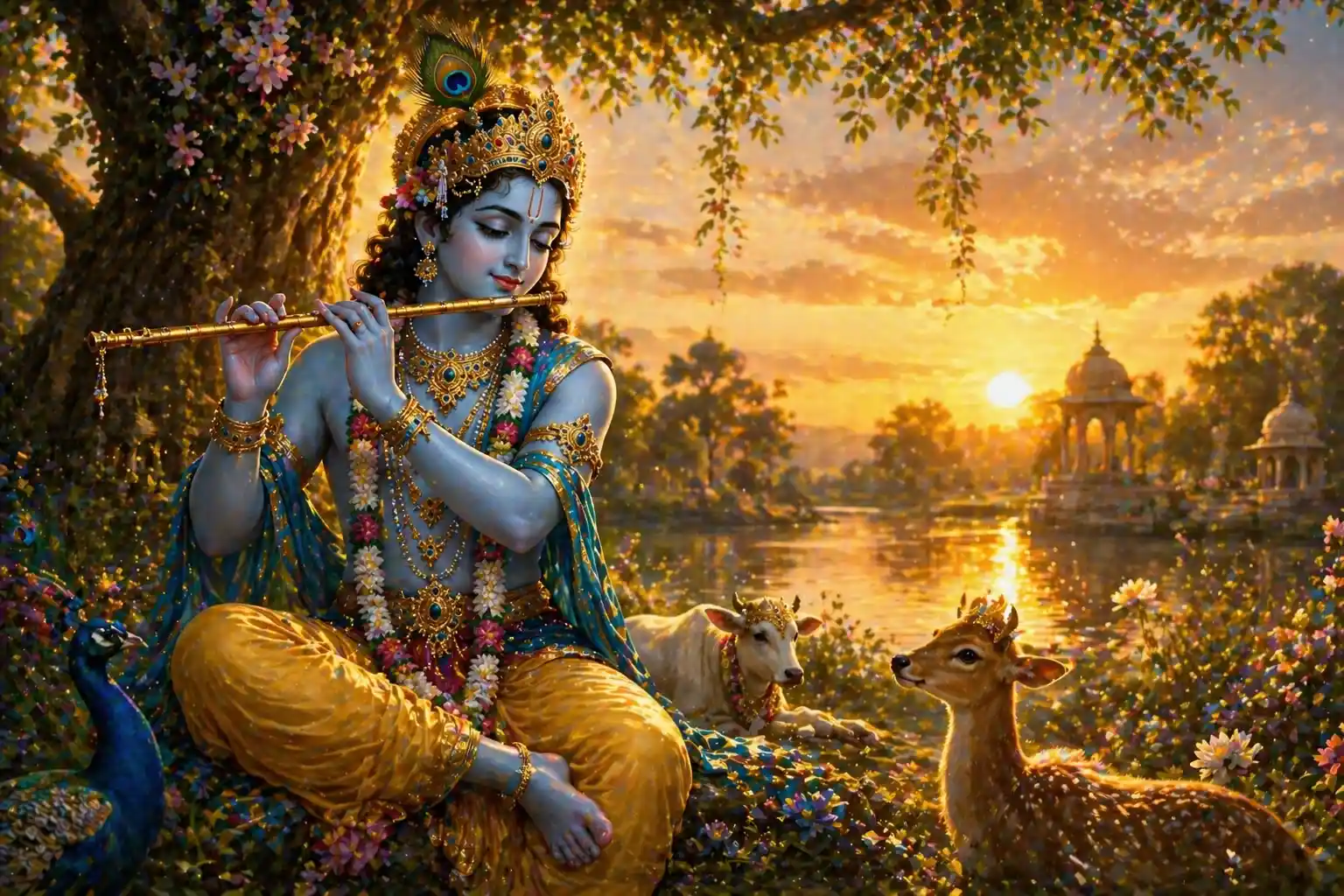
One of the highest expressions of devotion is seva, selfless service performed solely for the pleasure of God. Swami Mukundananda explains that genuine surrender is not limited to offering flowers or prayers during worship.
It means placing every aspect of our lives at Shree Krishna's lotus feet, including our talents, abilities, time, possessions, relationships, and even the fruits of our daily efforts. When every action is performed as an offering to God rather than for personal recognition, ordinary work becomes an act of worship and every moment of life becomes spiritually meaningful.
Swamiji illustrates this truth through the touching story of a little girl who lovingly offered her imitation pearl necklace to her father because she trusted his love completely. Although giving it up was difficult, her father later surprised her with a necklace of genuine pearls, rewarding her willingness to surrender something she treasured. In the same way, Krishna never asks us to let go of our attachments in order to deprive us. He invites us to surrender only because He desires to bless us with something infinitely greater than anything we cling to ourselves. This Janmashtami, let every prayer, every act of kindness, every moment of service, and every sincere effort become an offering to Shree Krishna. Most importantly, learn to offer not only your actions but also their results to Him, trusting that whatever He returns will always be for your highest good.
The Fire That Purifies
Just as gold must pass through intense fire before its brilliance is fully revealed, the soul often develops its greatest beauty through the challenges and trials of life. Difficulties may appear to be obstacles that delay our happiness, yet from the divine perspective they become instruments of purification. Every disappointment weakens our attachment to temporary things, every setback teaches humility, and every hardship encourages us to rely more deeply upon God's grace than upon our own limited strength.
Swami Mukundananda reminds us that Shree Krishna's tests are never expressions of anger or punishment. Rather, they are acts of divine compassion designed to refine our character and strengthen our devotion.
The struggles we face today may be preparing us for spiritual growth that would otherwise never occur. Instead of praying for a life free from difficulty, perhaps we should pray for the wisdom to recognise Krishna's loving hand within every challenge and for the strength to emerge from each trial with deeper faith. Janmashtami reminds us that the Lord often performs His greatest work in our lives through experiences that initially appear painful but ultimately draw us closer to Him.
Focus on Excellence, Not Outcomes
Swami Mukundananda recalls a simple yet profound lesson from his childhood that perfectly captures Krishna's philosophy of action. Whenever he returned home after participating in a sporting event, his father never asked whether he had won the competition. Instead, he would ask only one question: "Did you play well?" This gentle question shifted the focus away from external results and placed it upon sincere effort, discipline, and personal growth.
Krishna teaches Arjun exactly the same principle in the Bhagavad Gita. Our responsibility is to perform every duty with complete dedication, honesty, and enthusiasm while leaving the results in God's hands. The outcome of any endeavour depends upon countless factors beyond our control, but the quality of our effort always remains our own responsibility. When we measure ourselves solely by success or failure, we become trapped in anxiety and disappointment. However, when we focus instead on giving our very best as an offering to God, every sincere effort acquires spiritual value regardless of the external result. This freedom from attachment allows us to work with greater joy, greater confidence, and far greater peace.
Final Reflection: What Krishna Truly Wants This Janmashtami
Shree Krishna did not descend upon this earth merely to be remembered through beautiful festivals or worshipped from a distance. He came to awaken humanity from the illusion that lasting happiness can be found in worldly achievements alone. Through His teachings, His divine leelas, and His guidance to Arjun, He revealed that the greatest victory is not the conquest of kingdoms or the accumulation of success, but the conquest of one's own mind through devotion, surrender, humility, and unwavering faith.
As we celebrate Janmashtami 2026, may we rejoice in His divine appearance while also embracing the deeper transformation He lovingly invites us to undertake. Let our chanting become more heartfelt, our remembrance of His leelas more sincere, our service more selfless, and our surrender more complete. Let us learn to place both our successes and our failures at His lotus feet, trusting that His wisdom is infinitely greater than our own plans. Worldly achievements will inevitably come and go, but the grace of Shree Krishna remains eternal. The heart that belongs to Him can never truly be defeated, for every experience, whether joyful or difficult, becomes another step on the soul's journey towards everlasting peace, divine love, and eternal success.
Call to Action: Watch the Full Leela & Transform Your Perspective
Frequently Asked Questions (FAQs)
1. What is the spiritual meaning of Janmashtami 2026?
Janmashtami 2026 commemorates the divine appearance of Shree Krishna, the Supreme Lord, who descended to restore dharma and guide humanity toward devotion, wisdom, and self-realization. Beyond celebration, it is an opportunity to reflect on His timeless teachings and deepen one's relationship with God.
2. What does Lord Krishna teach about success and failure?
In the Bhagavad Gita, Shree Krishna teaches that true success lies not in achieving worldly goals but in performing one's duty sincerely while remaining detached from the results. By surrendering outcomes to God, we develop inner peace and freedom from anxiety.
3. How can Krishna's teachings help us overcome failure?
Krishna encourages us to see setbacks as opportunities for growth rather than signs of defeat. Through faith, perseverance, and surrender, failures become valuable lessons that strengthen character and deepen our trust in God's divine plan.
4. Why is detachment from results important in the Bhagavad Gita?
Detachment allows us to focus on performing our responsibilities with excellence instead of becoming consumed by success or failure. Krishna explains that while we control our actions, the results ultimately rest with God.
5. What role does surrender play in achieving inner success?
Surrender means offering our actions, achievements, and challenges to Shree Krishna with complete faith. Rather than creating weakness, surrender frees us from ego and anxiety, allowing us to experience lasting peace and spiritual fulfilment.
6. What is seva, and why is it important on Janmashtami?
Seva is selfless service performed for the pleasure of God without expecting personal reward. Serving others with love and offering the fruits of our actions to Krishna is one of the highest expressions of devotion and an ideal way to celebrate Janmashtami.
7. How do the stories of Lord Ram and Barbarik relate to Krishna's teachings?
Lord Ram demonstrates perfect detachment by accepting exile with serenity, while Barbarik exemplifies complete surrender by placing his trust in Krishna's divine will. Both stories illustrate that true spiritual success comes through humility, faith, and obedience to God rather than worldly achievement.
8. How can I apply Krishna's teachings in daily life?
You can begin by performing your daily duties with sincerity, accepting both success and failure with equanimity, practicing selfless service, studying the Bhagavad Gita, chanting Krishna's holy names, and cultivating gratitude in every circumstance.
9. Why does Krishna allow difficulties in our lives?
According to the Bhagavad Gita and the teachings of Swami Mukundananda, life's challenges are not punishments but opportunities for purification. Just as gold is refined by fire, difficulties help remove ego, strengthen faith, and prepare the soul for spiritual growth.
10. What is the greatest lesson to take from Janmashtami 2026?
The greatest lesson of Janmashtami is that lasting happiness comes not from external achievements but from surrendering to Shree Krishna with faith, devotion, and humility. When we place our trust in Him and perform our duties without attachment, we discover the inner success that no worldly circumstance can ever take away.
Resources