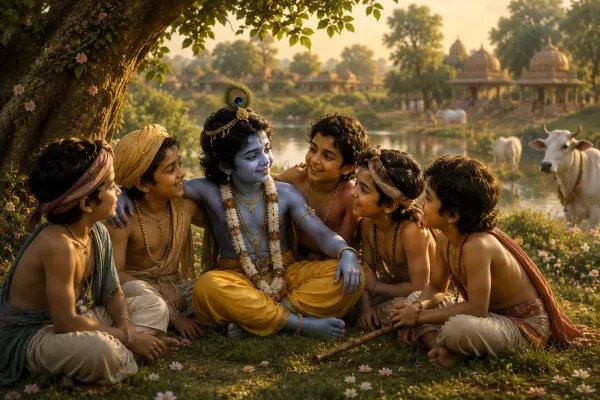
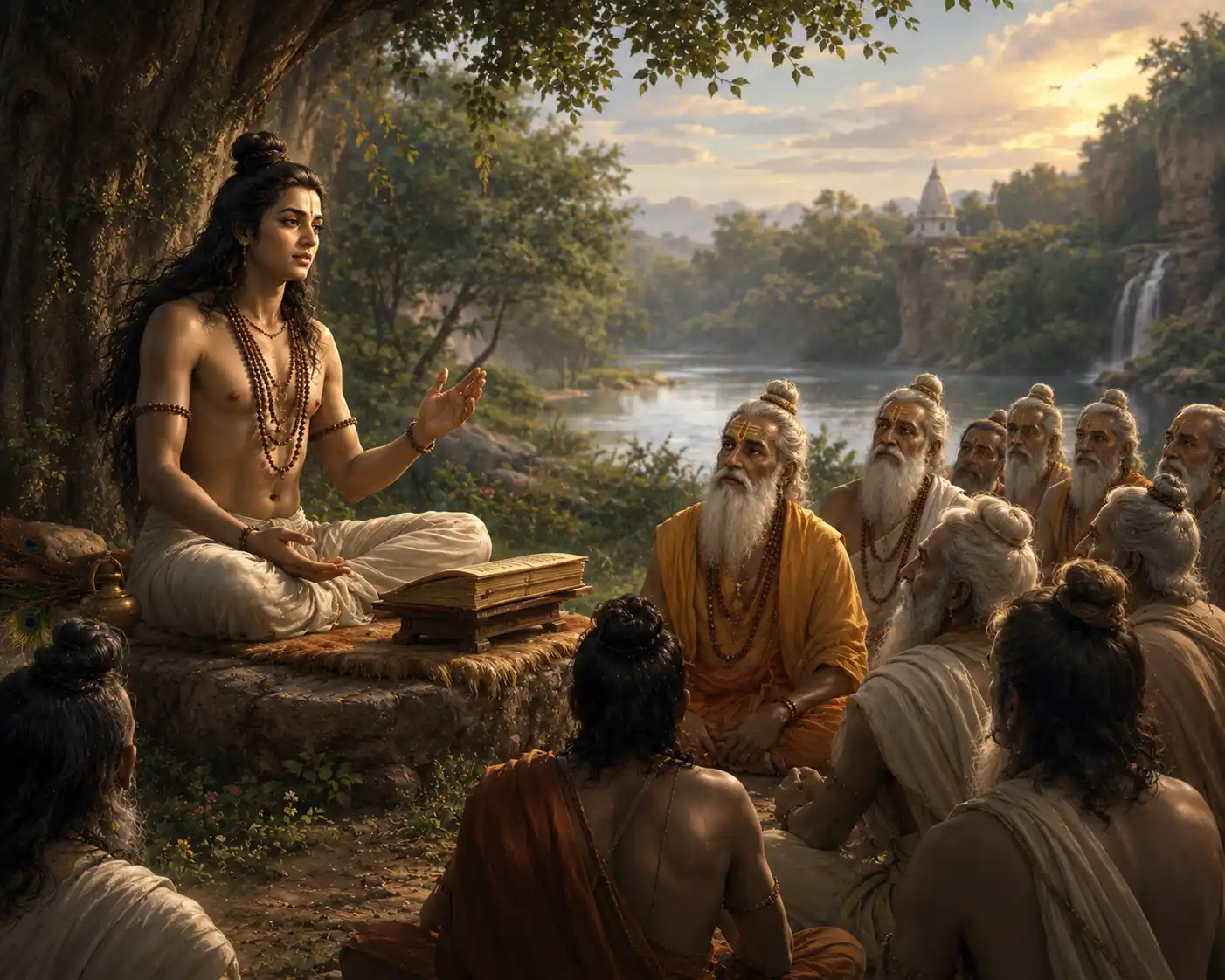
Introduction: Janmashtami and the Eternal Message of Dharma
Janmashtami, the divine appearance day of Lord Krishna, is one of the most beloved festivals in the Vaishnava tradition. While many celebrate with fasting, singing, and midnight arati, its true significance goes far beyond ritual. The Srimad Bhagavatam, the crown jewel of Vedic scriptures, offers deep insights into why Shree Krishna descended on earth and how His life exemplifies and protects dharma: the eternal principles of righteousness.
The Bhagavatam narrates that whenever adharma (unrighteousness) overwhelms society, the Lord manifests to restore balance. Janmashtami is thus not merely a celebration of a historical birth, it is the remembrance of the timeless truth that God is intimately involved in the moral order of the universe. The Bhagavad Gita further confirms this purpose:
यदा यदा हि धर्मस्य ग्लानिर्भवति भारत ।
अभ्युत्थानमधर्मस्य तदात्मानं सृजाम्यहम् ॥ 7॥
yadā yadā hi dharmasya glānir bhavati bhārata
abhyutthānam adharmasya tadātmānaṁ sṛijāmyaham
BG 4.7: Whenever there is a decline in righteousness and an increase in unrighteousness, O Arjun, at that time I manifest Myself on earth.
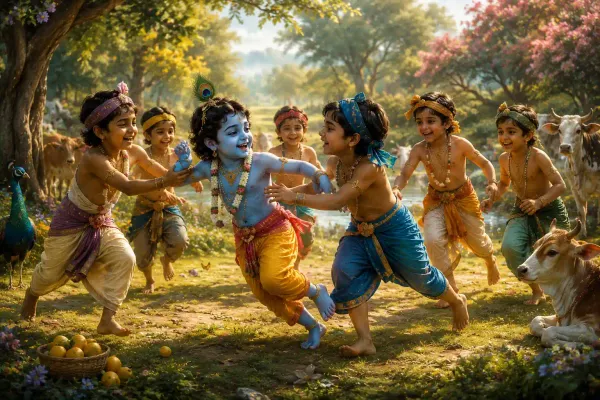
Throughout Shree Krishna’s leelas, from Gokul’s playgrounds to the battlefield of Kurukshetra, the Srimad Bhagavatam reveals the nature of dharma, not as rigid law, but as living truth harmonizing cosmic order and human conduct.
The Setting of Shree Krishna’s Descent: Adharma at Its Peak
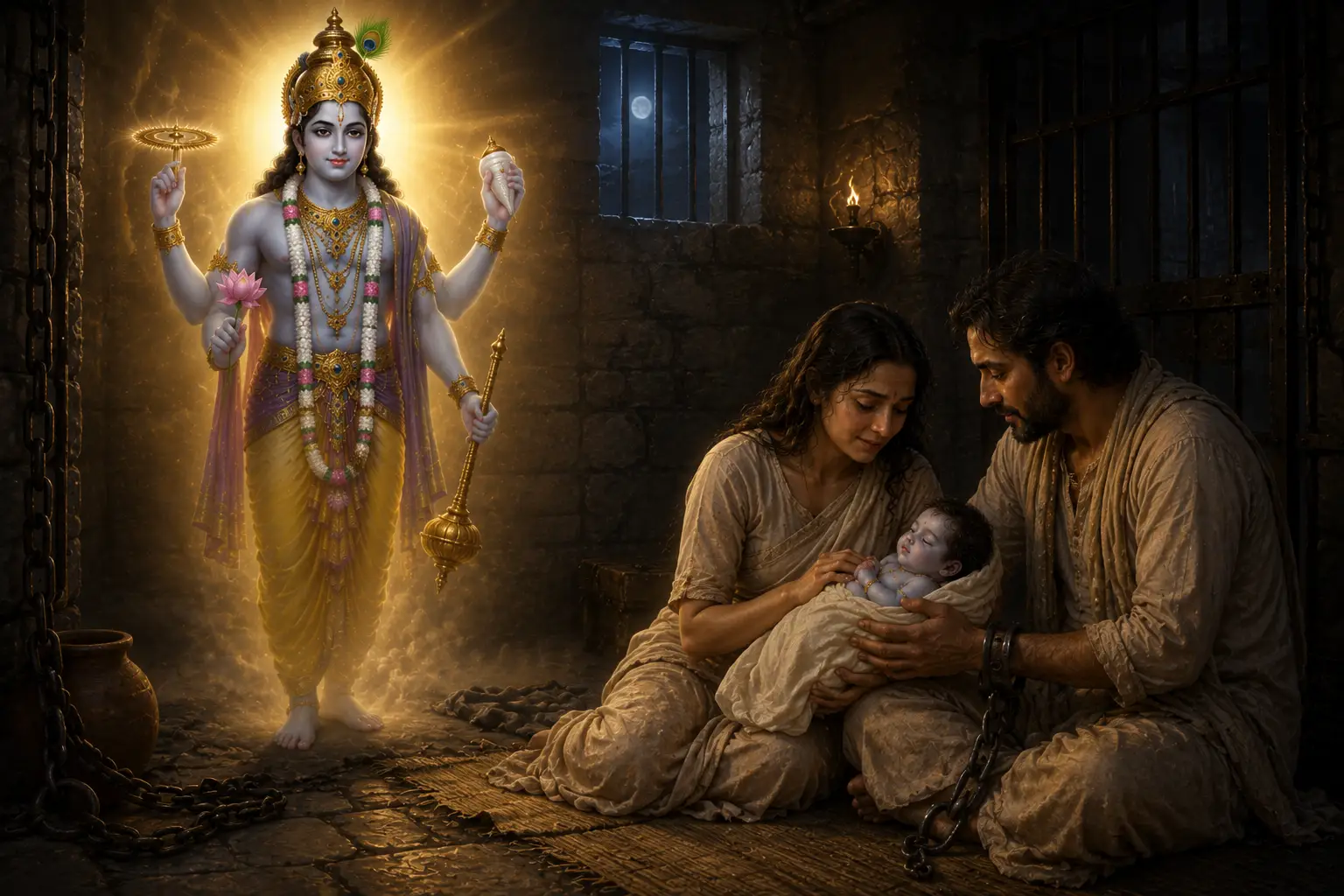
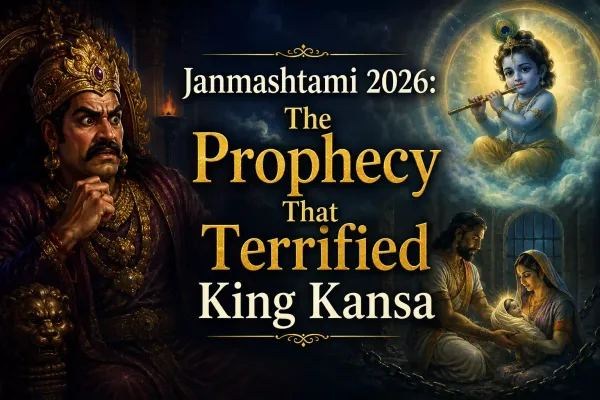
The Bhagavatam (beginning of Canto 10) sets the stage: the tyrant King Kamsa ruled Mathura with cruelty, imprisoning his own sister Devaki and her husband Vasudeva. An omen had warned him that Devaki’s eighth son would end his reign. To avert fate, Kamsa killed each child as it was born.
This was no isolated injustice; the Bhagavatam describes the earth (Bhumi Devi) taking the form of a cow and appealing to the demigods for relief from the weight of demonic rulers. The moral compass of society had broken down: truth was trampled, and the weak oppressed.
Swami Mukundananda explains that dharma in its highest sense means alignment with God’s will. When this alignment is lost, human greed, fear, and lust create systems that perpetuate suffering. Shree Krishna’s descent was thus both cosmic intervention and compassionate response to the cries of devotees.
The Divine Birth: Beyond Human Limitations
The Bhagavatam describes Shree Krishna’s birth as both miraculous and purposeful. At midnight, in the prison cell of Kamsa, the Supreme Lord appeared before Vasudeva and Devaki in His four-armed Vishnu form, adorned with the Kaustubha gem, holding conch, disc, mace, and lotus. He reassured His parents and revealed His mission to annihilate adharma.
Following this, He transformed into a charming infant. Through divine arrangement, the prison guards fell asleep, the chains fell loose, and the locked doors opened. Vasudeva carried the child across the Yamuna to Gokul, where the baby was exchanged with Yashoda’s newborn daughter, Yogamaya.
Theologically, this Leela shows that God’s actions are leela (divine play), free from material constraints. His birth is not a beginning but a divine descent (avatarana). As Swami Mukundananda notes, Shree Krishna’s appearance is a reminder that divinity is not bound by space, time, or causality.
Dharma in the Early Leelas of Shree Krishna
From His earliest days in Gokul, Shree Krishna’s Leelas carried moral and spiritual lessons that reflect deeper principles of dharma.
1. Protection of the Innocent
When the demoness Putana came disguised as a beautiful woman to nurse baby Shree Krishna with poisoned milk, He accepted her deceitful offering. Later, when she revealed her true, colossal demonic form, He granted her liberation. This Leela reflects the Lord’s compassion, for even enemies who serve Him indirectly receive benefit.
2. Humility and Service
In the Damodar Leela, Yashoda bound little Shree Krishna to a mortar after He stole butter. The Bhagavatam describes how Shree Krishna allowed Himself to be tied, showing that the infinite submits to the love of a devotee. This embodies bhakti-dharma: love surpassing all.
3. Protecting Dharma Against Pride
In the Govardhan Leela, Shree Krishna persuaded the villagers to worship Govardhan Hill instead of Indra. When Indra unleashed torrential rains in anger, Shree Krishna lifted the hill for seven days to shelter all. This teaches that dharma involves gratitude to nature and humility before God, not fear-based rituals.
Dharma in the Face of Evil: Mathura and Beyond
The Bhagavatam recounts how Shree Krishna eventually left Vrindavan to fulfill His destiny in Mathura. He slew Kamsa, restored Ugrasena to the throne, and freed His parents. Yet His mission was not revenge; it was restoration of rightful order.
Swami Mukundananda often emphasizes that true dharma is not passivity in the face of injustice. Shree Krishna’s life shows that protecting the innocent and removing destructive forces is as much dharma as personal piety.
The Mahabharata Connection: Dharma in Complexity
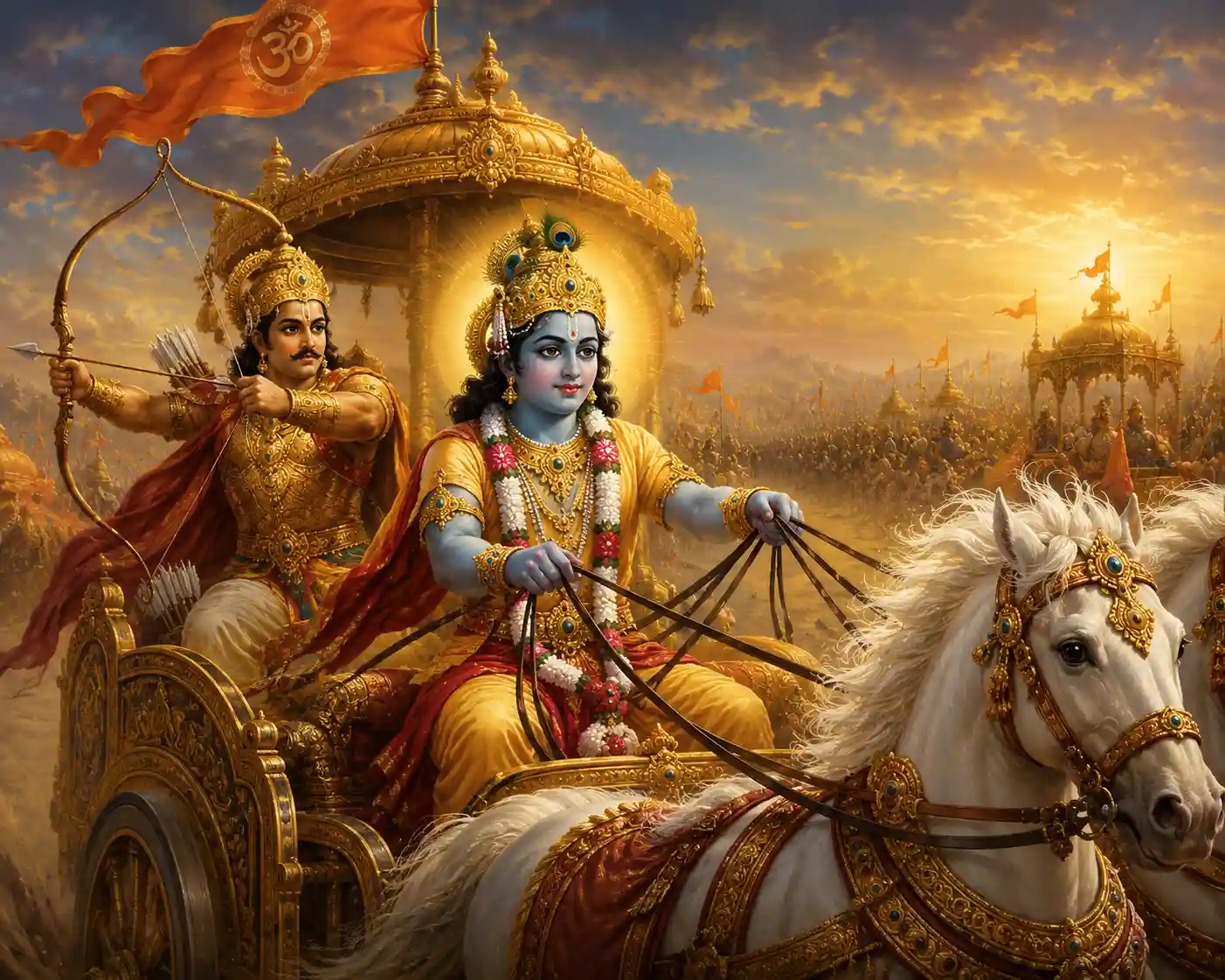
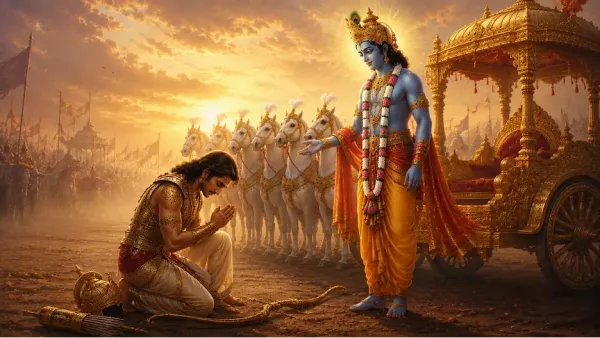
While the Srimad Bhagavatam focuses on Shree Krishna’s divine nature, the Bhagavad Gita, spoken by Shree Krishna in the Mahabharata, addresses the deepest dilemmas of dharma. On the battlefield of Kurukshetra, Arjuna faced moral paralysis, unwilling to fight his own kin.
Shree Krishna’s teaching was clear: one must perform one’s prescribed duty (svadharma) without attachment to personal gain or loss. As He says:
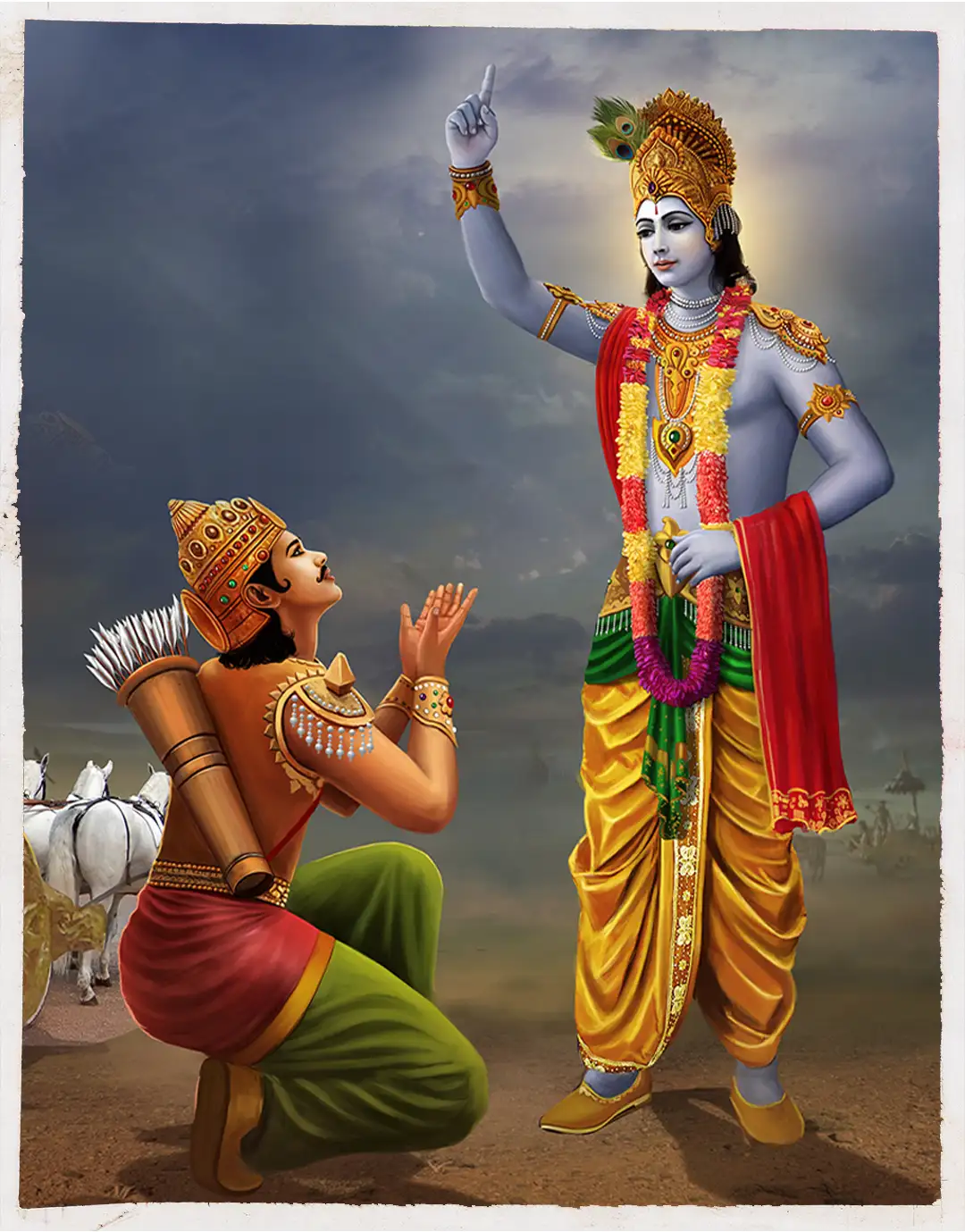
सर्वधर्मान्परित्यज्य मामेकं शरणं व्रज ।
अहं त्वां सर्वपापेभ्यो मोक्षयिष्यामि मा शुच: ॥ 66॥
sarva-dharmān parityajya mām ekaṁ śharaṇaṁ vraja
ahaṁ tvāṁ sarva-pāpebhyo mokṣhayiṣhyāmi mā śhuchaḥ
BG 18.66: Abandon all varieties of dharmas and simply surrender unto Me alone. I shall liberate you from all sinful reactions; do not fear.
This verse does not reject dharma; it reveals its culmination: total surrender to the Supreme Divine Personality, Shree Krishna, which transcends situational morality.
Bhagavatam’s Portrait of Dharma: Four Pillars
In Canto 1, the Bhagavatam presents the four pillars of dharma: truth (satya), compassion (daya), austerity (tapas), and purity (shaucha). In Kali Yuga, these are weakened, but remembrance of Shree Krishna strengthens them. Janmashtami becomes a time to realign ourselves with these principles.
Swami Mukundananda’s Insights: Dharma as Loving Alignment
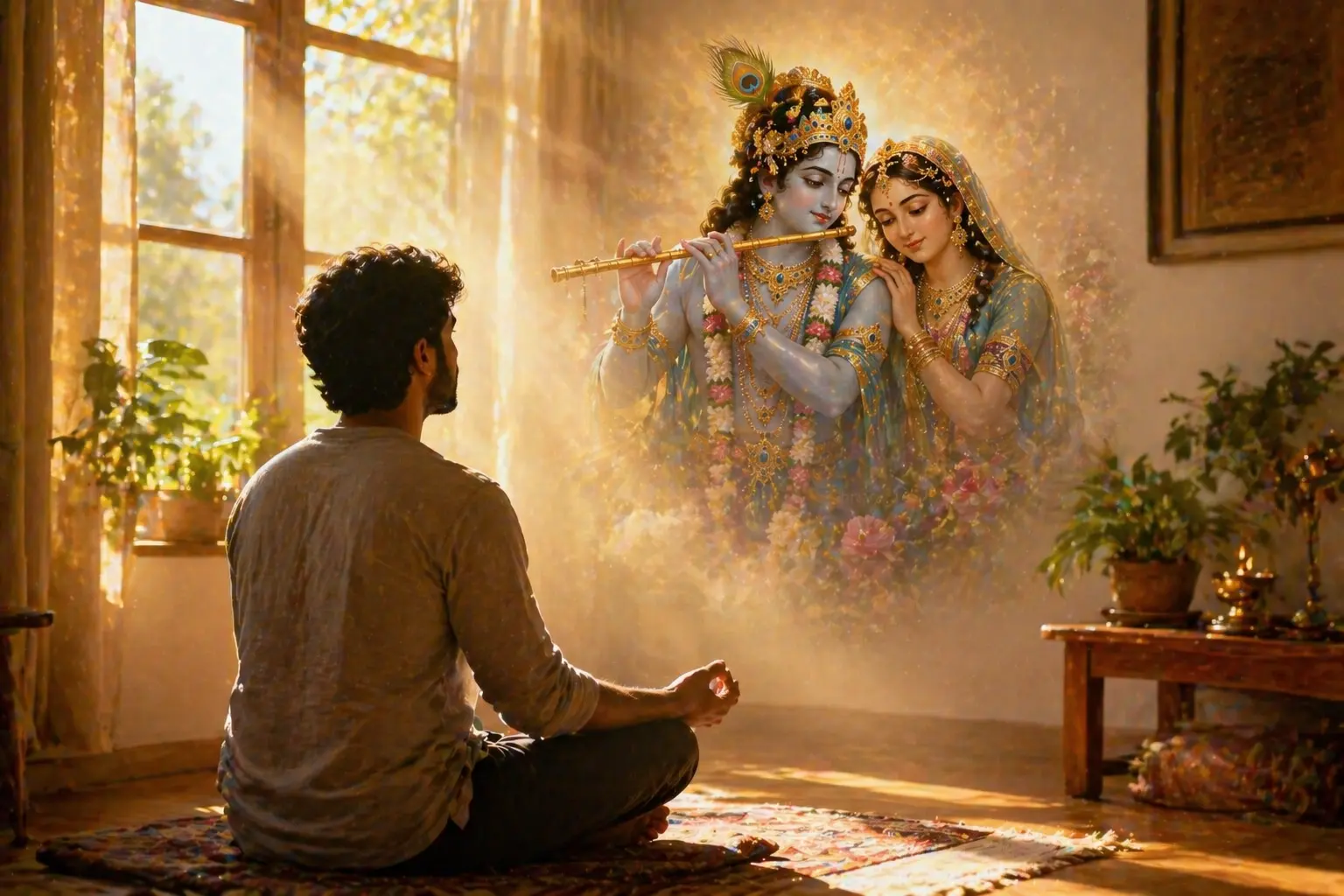
Swami Mukundananda explains that dharma is not merely rule-following, but is living in harmony with our eternal nature as souls connected to God. Rituals, festivals, and morality are means to this higher goal: loving service (prem-bhakti).
He notes that celebrating Janmashtami externally, through fasting, singing, and decoration, should inspire the internal celebration of surrendering ego and selfish desires to Shree Krishna.
Practical Lessons for Today’s World
1. Dharma Requires Courage
Shree Krishna’s life shows that standing up for truth may require confronting powerful wrongdoers, whether they are political tyrants like Kamsa or inner enemies like greed and anger.
2. Dharma is Dynamic
The same Shree Krishna who joyfully danced with the gopis also strategized in war. Dharma adapts to context but is always guided by higher love and justice.
3. Bhakti is the Essence of Dharma
Without devotion, moral principles become dry. The Bhagavatam asserts that dharma without bhakti is like offering an empty husk to God.
The Midnight of Janmashtami: Symbolism and Spiritual Practice
The Lord’s birth at midnight symbolizes the dispelling of the darkest ignorance. The prison cell represents the conditioned soul trapped in ego and karma. The opening of the doors and falling of the chains signify liberation when the soul welcomes Shree Krishna into its heart.
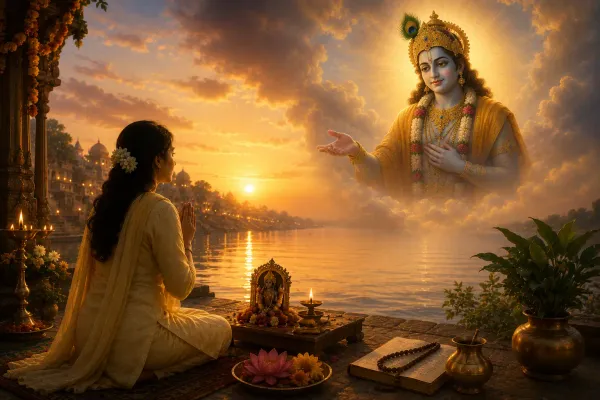
On Janmashtami, devotees fast until midnight, chant Shree Krishna’s names, and read from the Bhagavatam. This is not mere tradition. It is an immersion in divine remembrance.
Dharma’s Ultimate Protector: Shree Krishna’s Ongoing Presence
Even though Shree Krishna’s physical pastimes ended over five millennia ago, the Bhagavatam teaches that His name, form, and teachings remain fully potent. Singing devotional kirtans, meditating on His pastimes, and living according to His guidance are ways He continues to uphold dharma in our lives.
Conclusion: Living Janmashtami Every Day
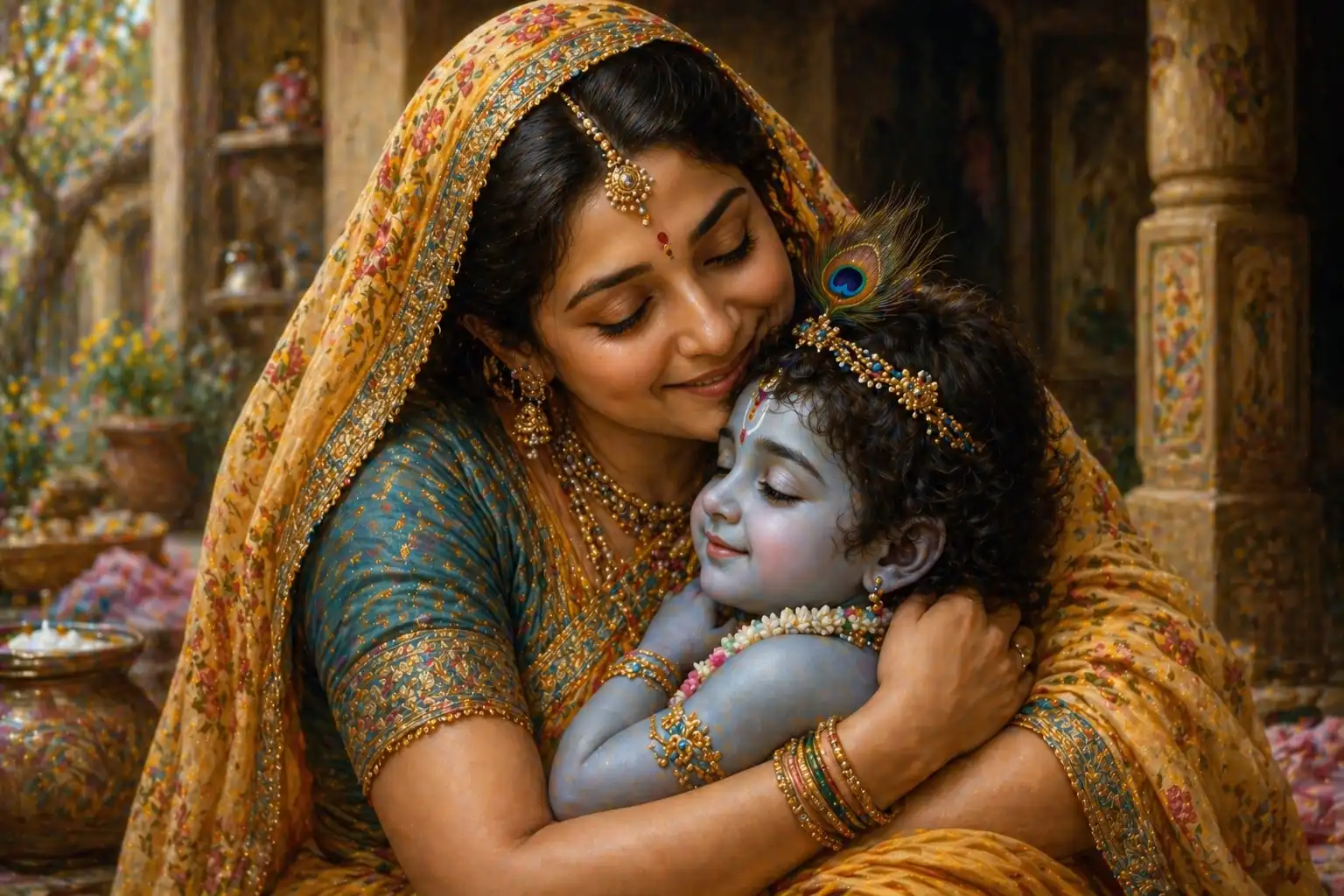
Janmashtami is not a once-a-year observance but a call to live in constant remembrance of Shree Krishna and align with dharma in thought, word, and deed. The Srimad Bhagavatam and Bhagavad Gita reveal that the Lord’s descent was for everyone: for kings and cowherds, warriors and gopis, scholars and simple-hearted souls.
By studying Shree Krishna’s life and imbibing His teachings, we find that dharma is not a burden but the soul’s natural expression of love for God. Janmashtami then becomes more than a festival, it becomes a lifestyle of joyous surrender.
Call to Action
As Janmashtami approaches, let us not only celebrate with songs, fasting, and decorations but also embrace the deeper message of the Srimad Bhagavatam and Bhagavad Gita. Reflect on Shree Krishna’s Leelas, His courage in upholding righteousness, and His boundless compassion for all beings. Make this Janmashtami a turning point and renew your commitment to live in harmony with dharma, cultivate devotion, and serve others selflessly. Whether through daily chanting, studying scriptures, or practicing kindness, let your life be a living offering to Shree Krishna.
Frequently Asked Questions (FAQs)
Q1: When is Janmashtami celebrated in 2025?
In 2026, Shree Krishna Janmashtami falls on Friday, September 4th. Please check local calendars or consult your temple for corresponding dates and times in your location.
Q2: What does the Srimad Bhagavatam say about Janmashtami?
The Bhagavatam narrates the divine appearance of Shree Krishna in the prison of Kamsa, His transfer to Gokul, and the early Leelas that established and protected dharma. It portrays Janmashtami as a cosmic event where God descends to restore righteousness and protect His devotees.
Q3: How is Janmashtami connected to dharma?
Janmashtami reminds us that whenever adharma prevails, the Lord intervenes to restore balance. Shree Krishna’s leelas such as slaying tyrants like Kamsa, protecting the innocent and guiding Arjuna, teaches that dharma is active, courageous, and rooted in devotion to God.
Q4: Why did Shree Krishna appear at midnight?
The midnight birth symbolizes the dispelling of darkness, both literal and spiritual. It reflects how divine grace enters the heart when ignorance is at its deepest, breaking the chains of bondage and opening the doors to liberation.
Q5: How can we observe Janmashtami beyond rituals?
Beyond fasting, singing, and temple visits, one can study Shree Krishna’s teachings in the Bhagavad Gita and Bhagavatam, chant His holy names, serve others selflessly, and reflect on ways to align personal life with dharma and devotion.
Q6: What role do Shree Krishna’s Leelas play in understanding dharma?
Shree Krishna’s Leelas, from lifting Govardhan Hill to dancing with the gopis—are not just stories; they are symbolic and instructive acts showing that dharma blends duty, love, humility, and protection of all living beings.
Q7: What is the ultimate dharma according to the Bhagavad Gita?
The Gita culminates in the teaching (BG 18.66): “Abandon all varieties of dharma and surrender unto Me.” This means that ultimate dharma is loving surrender to the Divine, which naturally harmonizes all other duties.