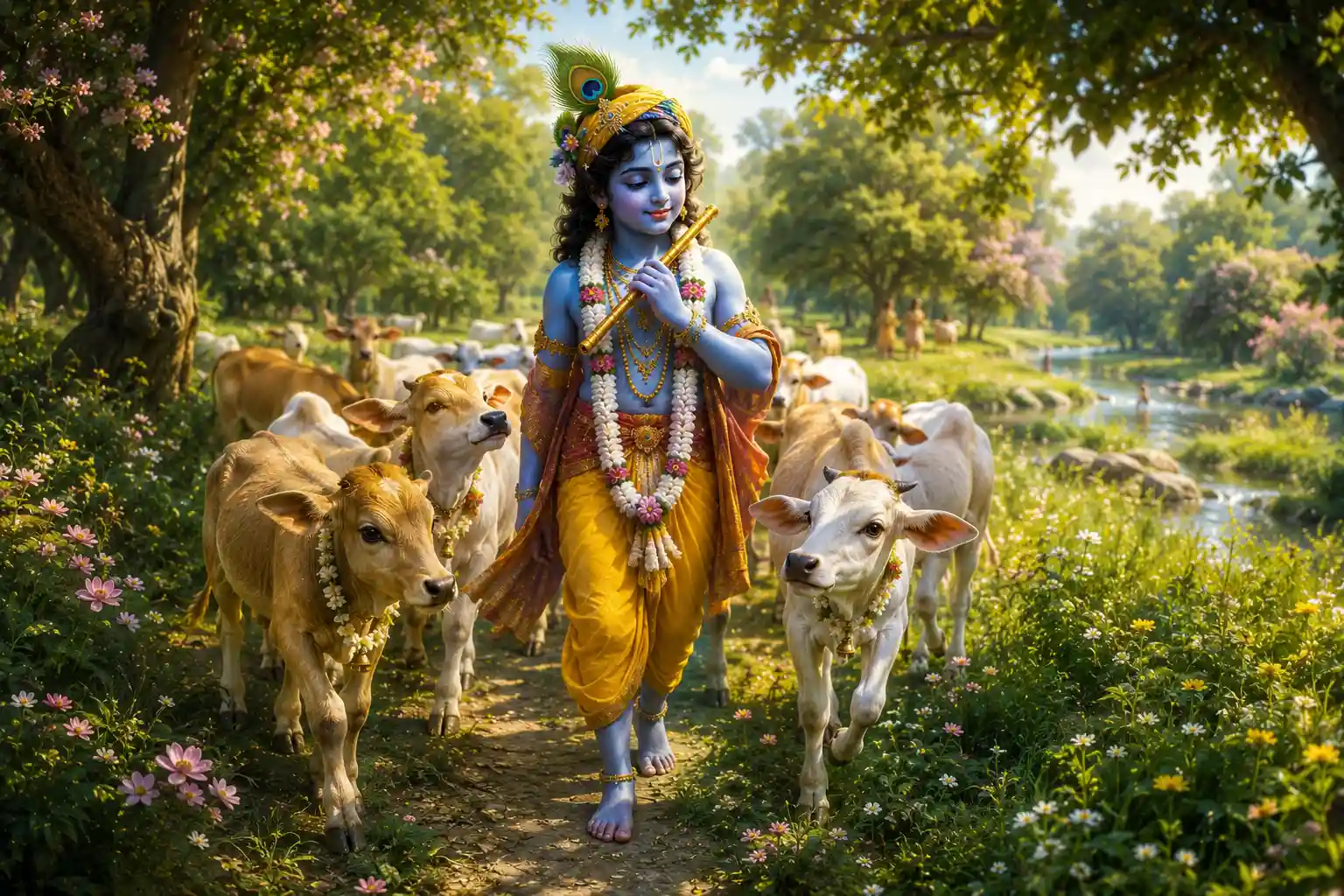
"Whenever the Supreme Lord descends to this world, He does not merely change the course of history: He transforms the destiny of countless souls. His birth is divine, His form is divine, His actions are divine, and His very presence becomes an expression of boundless compassion."
Introduction: The Eternal Mystery of Krishna's Descent
Every year, as devotees joyfully celebrate Janmashtami, they remember the midnight appearance of Shree Krishna in the prison cell of Mathura. Temples resonate with melodious kirtans, sacred scriptures recount His enchanting childhood pastimes, and millions gather to celebrate the birth of the Lord who transformed the spiritual history of humanity. Yet Janmashtami is much more than the commemoration of a historical event. It is an invitation to contemplate one of the deepest mysteries of Sanatan Dharma: Why does the Infinite choose to become finite? Why does the unborn, eternal, all-powerful Supreme Lord descend into this temporary world?
Unlike ordinary births, the appearance of Bhagavan is never governed by the laws of material nature. We are born because of the force of our accumulated karmas, entering the world helplessly and unknowingly. The Supreme Lord, however, is beyond karma, beyond material nature, and beyond every limitation that binds the individual soul. When He descends, He does so voluntarily, fully aware of His divine purpose and entirely independent of material laws.

This profound truth is beautifully explained in the Bhagavad Gita, where Shree Krishna declares:
अजोऽपि सन्नव्ययात्मा भूतानामीश्वरोऽपि सन् ।
प्रकृतिं स्वामधिष्ठाय सम्भवाम्यात्ममायया ॥ 6॥
ajo ’pi sannavyayātmā bhūtānām īśhvaro ’pi san
prakṛitiṁ svām adhiṣhṭhāya sambhavāmyātma-māyayā
BG 4.6: Although I am unborn, the Lord of all living entities, and have an imperishable nature, yet I appear in this world by virtue of Yogmaya, My divine power.
These words immediately distinguish Krishna's appearance from every other birth in creation. The Lord does not become subject to material existence. Rather, material nature itself becomes an instrument through which He reveals Himself for the welfare of the world.
Swami Mukundananda explains that Krishna's avatar cannot be understood through ordinary logic because every aspect of His descent is transcendental. His birth is unlike ours, His body is unlike ours, His actions are unlike ours, and even the reasons for His appearance transcend human expectations. If we attempt to evaluate Him merely through the lens of history or philosophy, we will appreciate only a fraction of His glory.
It is only when we approach His avatar with devotion, humility, and scriptural understanding that its true significance begins to unfold.
The Srimad Bhagavatam therefore does not merely narrate Krishna's life as a sequence of historical events. Instead, it gradually reveals layer upon layer of divine mystery, inviting seekers to move beyond external appearances and discover the boundless compassion hidden behind every one of His pastimes.
As we celebrate Janmashtami 2026, let us journey into these timeless mysteries. By understanding the uniqueness of Krishna's birth, the transcendental nature of His divine form, and the true purpose behind His descent, we discover not only who Krishna is but also why His appearance continues to transform hearts thousands of years after He walked upon the sacred land of Braj.
The Wonder of Krishna's Divine Birth
One of the greatest mysteries surrounding the Krishna avatar is the extraordinary manner of His appearance. Every living being enters this world through the biological processes established by material nature. Birth is accompanied by helplessness, dependence, and forgetfulness of previous existences. Even the greatest emperors, saints, and scholars begin life as vulnerable infants, entirely subject to the laws governing the material universe.
The appearance of Bhagavan bears no resemblance to this process.
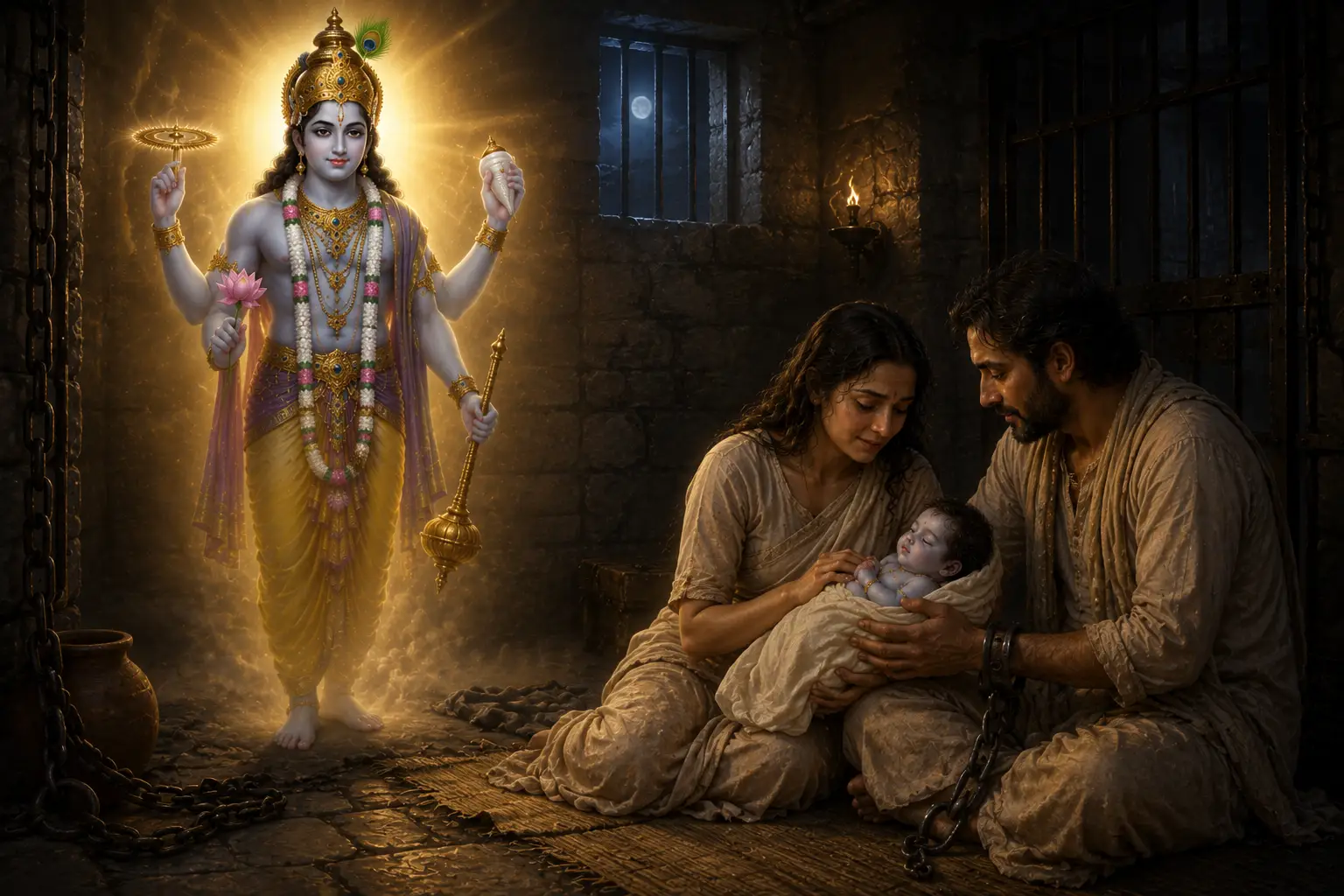
The Srimad Bhagavatam describes that on the sacred night of Krishna's appearance, the prison cell of Mathura, where Devaki and Vasudeva were confined by the tyrannical King Kansa, became illuminated by an effulgence unlike anything the world had ever witnessed. The atmosphere grew serene, celestial beings showered flowers from the heavens, and divine signs appeared throughout creation, announcing the arrival of the Supreme Lord.
Instead of appearing as a helpless newborn, Krishna manifested before His parents in His majestic four-armed form, adorned with the divine symbols that eternally identify Him as the Supreme Personality of Godhead.
For Devaki and Vasudeva, there was no uncertainty about the identity of the child standing before them. They immediately recognised Him as the very Lord they had worshipped over countless lifetimes. Overwhelmed with devotion, they offered heartfelt prayers glorifying His supreme nature, recalling His previous appearances, and acknowledging that the Absolute Truth Himself had graciously appeared before them.
This raises an extraordinary question.
If Krishna appeared in His fully manifested divine form, how can we speak of Him being born from Devaki's womb?
Swami Mukundananda explains that this is one of the many mysteries of Yogmaya, the Lord's internal divine energy. The Supreme Lord was never confined within a material womb in the way ordinary souls are. Yet through His inconceivable Yogmaya Shakti, Devaki experienced every emotion of motherhood. She felt Krishna growing within her, her maternal affection blossomed naturally, and her heart became completely absorbed in loving anticipation of His arrival.
When the destined moment came, Krishna simply manifested before His parents while simultaneously allowing them to experience the fulfilment of maternal love.
Thus, the Lord neither entered nor exited the womb in the ordinary sense. His appearance was a divine revelation rather than a biological birth.
This distinction is fundamental to understanding the Krishna avatar. Human beings are compelled to accept birth because of karma. Krishna appears solely through His own independent will. We are bound by nature, whereas nature itself obeys Him. Our bodies are products of material elements, but His transcendental body is eternal, full of knowledge, and full of bliss.
The Bhagavad Gita affirms this profound truth:
जन्म कर्म च मे दिव्यमेवं यो वेत्ति तत्त्वत: ।
त्यक्त्वा देहं पुनर्जन्म नैति मामेति सोऽर्जुन ॥ 9॥
janma karma cha me divyam evaṁ yo vetti tattvataḥ
tyaktvā dehaṁ punar janma naiti mām eti so ’rjuna
BG 4.9: Those who understand the divine nature of My birth and activities, O Arjun, upon leaving the body, do not have to take birth again, but come to My eternal abode.
Notice that Krishna does not merely ask us to believe in His appearance. He invites us to understand its transcendental nature. Such understanding does not arise through intellectual curiosity alone but through sincere study, reflection, and devotion guided by realised saints.
The Enigma of the Divine Form
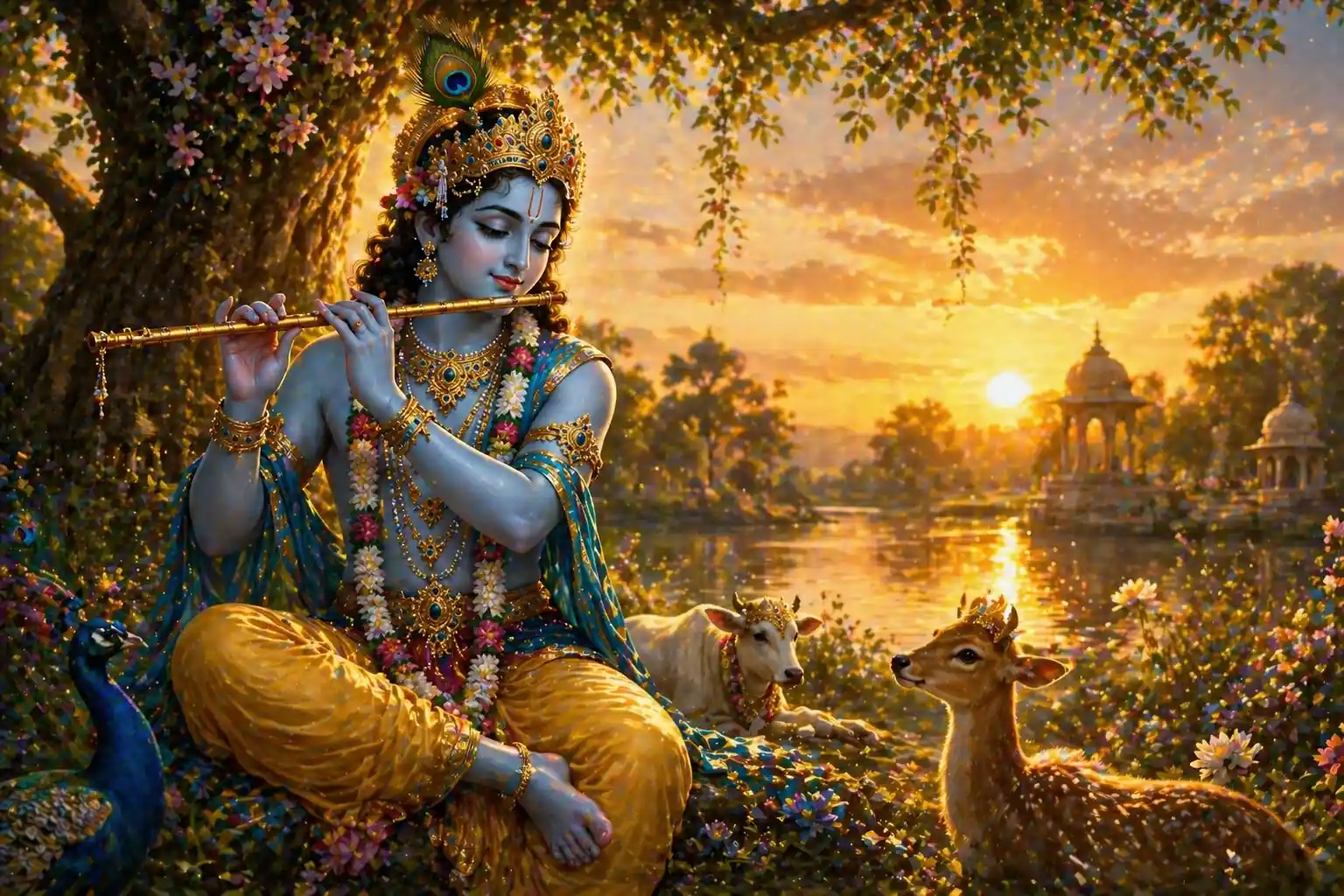
Closely connected with the mystery of Krishna's birth is another profound truth that often puzzles spiritual seekers: What is the nature of God's body?
Human beings naturally assume that God's body must resemble ours, only greater in beauty or power. Yet the scriptures repeatedly declare that such thinking arises from evaluating the Infinite through the limitations of finite experience.
In Sanskrit, the physical body is known as the deha, while the conscious self residing within it is called the dehī. Every living being experiences this distinction. We possess a body, yet we are not the body. The soul remains eternal while the body continuously changes from childhood to youth, adulthood, old age, and finally death.
Bhagavan, however, exists in an entirely different category.
Swami Mukundananda explains that in Krishna there is no distinction between body and soul. His form is not a material covering occupied by the Divine. Rather, every aspect of His transcendental body is fully divine. His eyes hear, His ears see, His hands bless, and every limb possesses unlimited spiritual potency because His entire form is composed of sat-chit-ananda: eternity, knowledge, and bliss.
For this reason, Krishna's beauty cannot be compared with any material standard. The scriptures describe that millions of Cupids derive their charm from a mere reflection of His incomparable attractiveness. His enchanting smile captivates saints absorbed in meditation, His flute melts even the hearts of liberated souls, and His lotus eyes overflow with compassion that draws every sincere seeker towards Him.
Yet one of the greatest mysteries of God's form is not how He appears, it is how He is perceived.
The same Krishna stood before countless people in Mathura, yet each person saw someone entirely different. The difference did not lie in Krishna. It lay within the consciousness of those beholding Him.
The vision of every observer changes according to the purity of the observer's own heart.
- The mighty wrestlers saw Him as a formidable opponent.
- The women of Mathura saw Him as the embodiment of incomparable beauty.
- The cowherd boys saw Him as their dearest friend.
- His parents saw Him as their beloved son.
- Kansa saw death itself approaching.
- The yogis recognised the Supreme Absolute Truth.
- The Yadu dynasty saw their worshipful Lord.
The same Krishna stood before all of them, yet each experienced a different reality because each heart reflected a different level of spiritual consciousness.
The profound truth revealed in this verse extends far beyond the streets of ancient Mathura. It reminds us that the Supreme Lord is never hidden by His own divinity; rather, He is hidden by the limitations of our perception. Krishna's transcendental form remains eternally perfect, yet the ability to recognise Him depends upon the purity of our consciousness. This truth becomes even clearer when we examine how different individuals responded to the Lord during His earthly pastimes.
Recognising God When He Walks Among Us
Throughout history, humanity has often imagined that if God were to appear before us, everyone would immediately recognise Him. The scriptures, however, reveal quite the opposite. When Shree Krishna walked upon the earth, millions saw Him, yet only a fortunate few understood who He truly was. The Lord's divinity was never concealed; instead, it was the hearts of the observers that varied in their capacity to perceive Him.
This reality is beautifully summarised in the Bhagavad Gita, where Krishna declares:
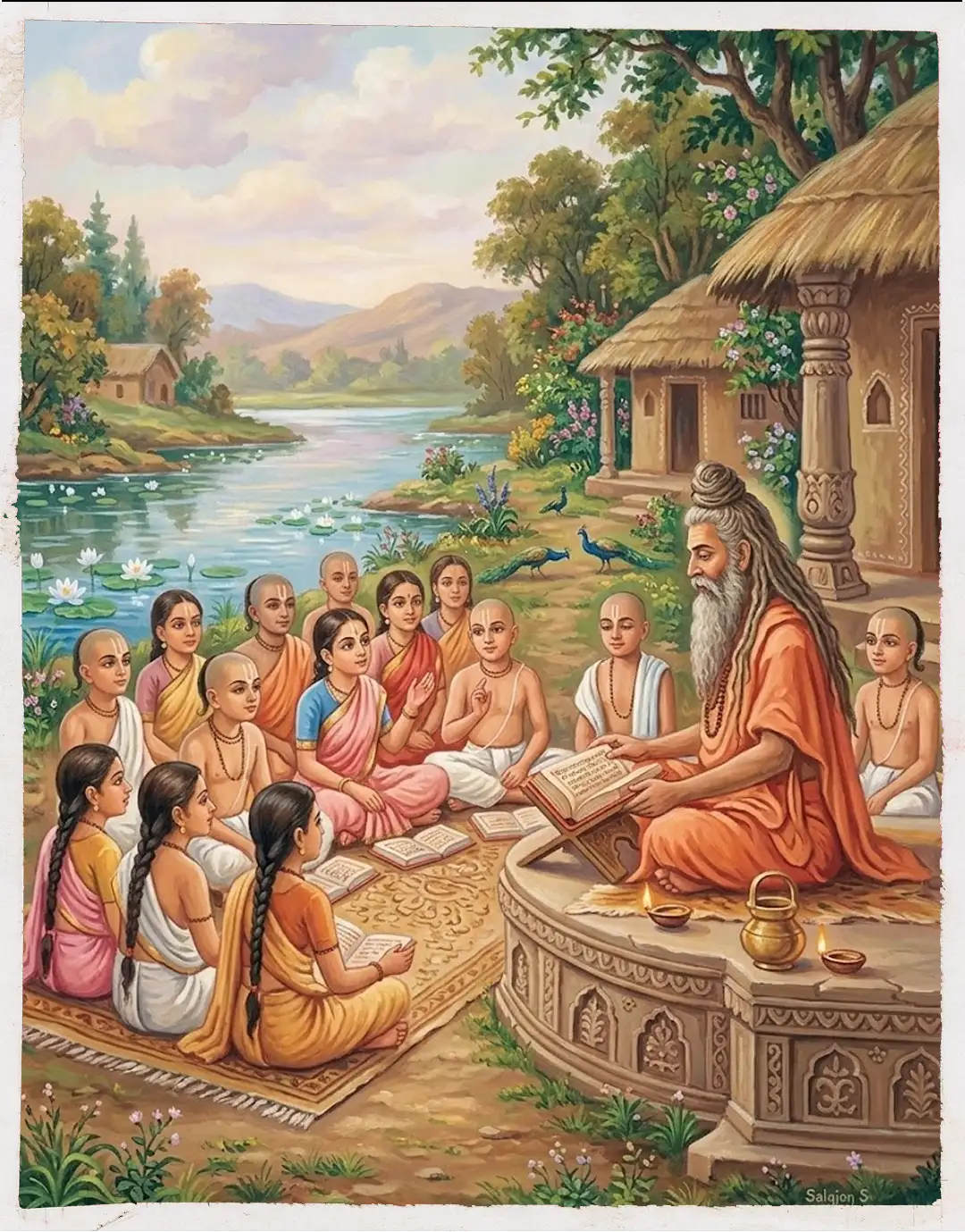
अवजानन्ति मां मूढा मानुषीं तनुमाश्रितम् ।
परं भावमजानन्तो मम भूतमहेश्वरम् ॥ 11॥
avajānanti māṁ mūḍhā mānuṣhīṁ tanum āśhritam
paraṁ bhāvam ajānanto mama bhūta-maheśhvaram
BG 9.11: When I descend in My personal form deluded persons are unable to recognize Me. They do not know the divinity of My personality, as the Supreme Lord of all beings.
These words reveal that God's human-like appearance becomes both His greatest revelation and His greatest concealment. Out of compassion, He assumes a form that human beings can approach with love and intimacy. Yet that very accessibility causes many to mistake Him for an ordinary person.
Swami Mukundananda often explains that the Lord's divinity is not diminished by His simplicity. Rather, His simplicity is itself an expression of His supreme greatness. Only the Infinite can voluntarily conceal His majesty while remaining fully omnipotent. Krishna played as a child, laughed with His friends, grazed cows in the forests of Braj, and lovingly accepted food from the hands of His devotees. None of these actions reduced His divinity. Instead, they revealed the sweetness of a God who prefers loving relationships over displays of overwhelming power.
The contrast between different individuals who encountered Krishna illustrates this principle perfectly.
Kansa, the tyrant king of Mathura, lived in constant fear after hearing the prophecy that Devaki's eighth son would become the cause of his death. His obsession with Krishna became so intense that he saw Him everywhere. According to traditional accounts, he imagined Krishna hiding in his food, in his clothing, and even in the objects around him. Yet despite thinking of Krishna constantly, his heart was consumed not by devotion but by fear. When Krishna finally stood before him in the wrestling arena, Kansa saw not the compassionate Lord of the universe but death personified.
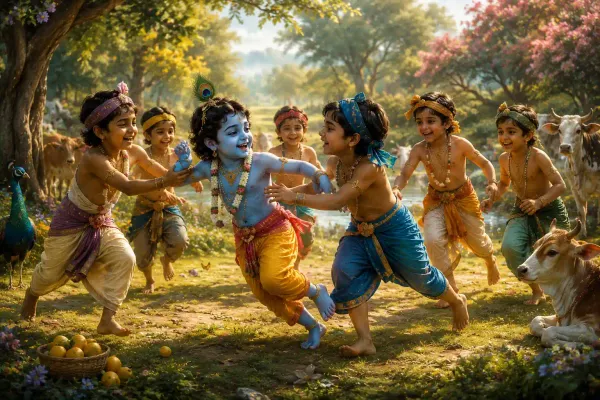
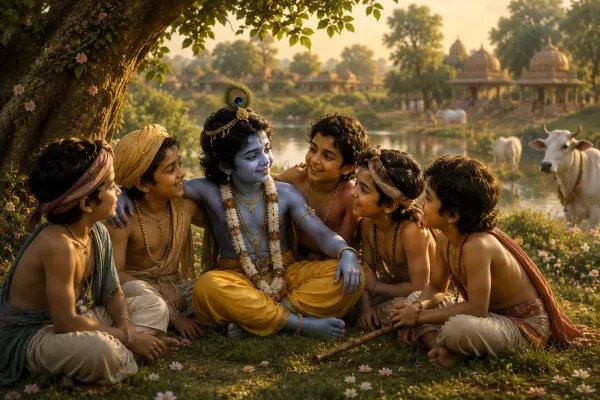
The simple cowherds of Braj, on the other hand, experienced an entirely different reality. They never analysed Krishna's divine status or debated His theological identity. They loved Him spontaneously as their dearest friend, sharing meals with Him, playing games in the forests, and laughing together as children. Ironically, while Kansa spent his life trying to understand and defeat Krishna, the cowherd boys attained a closeness that even the greatest sages aspire to experience.
The famous line from the Ramcharitmanas beautifully expresses this universal truth:
"Jāki rahi bhāvanā jaisī, Prabhu mūrati dekhi tin taisī."
"As is one's inner feeling, so does one perceive the Lord."
God does not change according to the observer. Rather, the observer's inner consciousness determines how much of God's true nature becomes visible.
Seeing God Is Not the Same as Realising God
This distinction becomes even more striking when we compare the responses of Duryodhana and Arjuna during the events leading to the Mahabharata war.
As tensions between the Kauravas and Pandavas escalated, Shree Krishna personally travelled to Hastinapura in a final effort to establish peace. He appealed to Duryodhana's sense of justice, requesting that the Pandavas be given merely five villages so that a devastating war could be avoided. The proposal was extraordinarily generous, yet Duryodhana's pride had become so deeply rooted that he rejected even this modest request, declaring that he would not surrender land equal to the point of a needle.
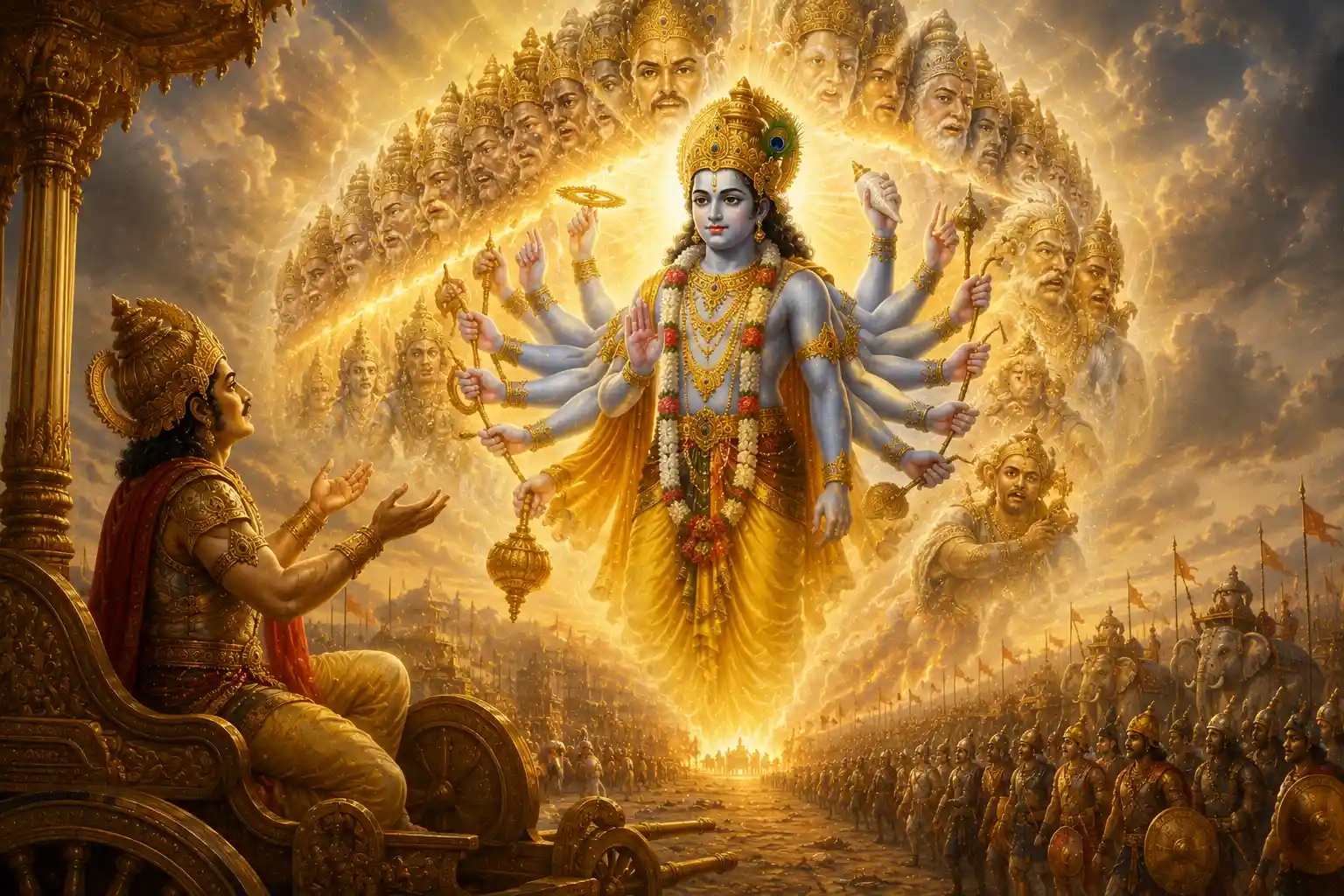
Seeing that reason alone would not soften Duryodhana's heart, Krishna revealed His magnificent Virat Roop, the Cosmic Form. Before the assembled kings and elders, He manifested His infinite splendour, demonstrating beyond all doubt that He was the Supreme Lord Himself.
One might imagine that such an overwhelming revelation would instantly transform every witness.
Yet it did not.
Rather than surrendering in humility, Duryodhana dismissed the divine vision as an elaborate display of magic. So blinded was he by arrogance that he ordered his soldiers to capture Krishna and imprison Him. His eyes had witnessed the Cosmic Form, but his heart remained untouched because pride had closed the door to spiritual understanding.
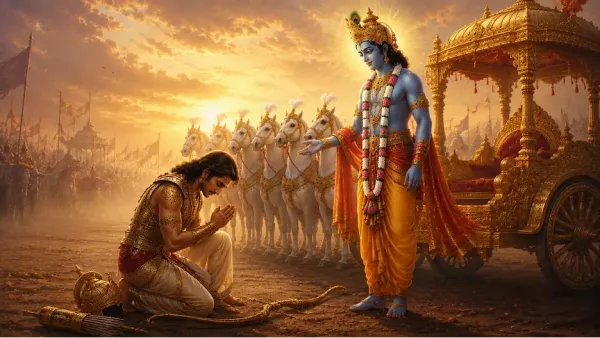
Arjuna's experience on the battlefield of Kurukshetra presents a remarkable contrast.
When Krishna later revealed the same Cosmic Form during the dialogue of the Bhagavad Gita, Arjuna did not respond with scepticism or hostility. Overwhelmed by awe and devotion, he recognised the Lord's true identity and declared:

अर्जुन उवाच ।
परं ब्रह्म परं धाम पवित्रं परमं भवान् ।
पुरुषं शाश्वतं दिव्यमादिदेवमजं विभुम् ॥ 12॥
आहुस्त्वामृषय: सर्वे देवर्षिर्नारदस्तथा ।
असितो देवलो व्यास: स्वयं चैव ब्रवीषि मे ॥ 13॥
arjuna uvācha
paraṁ brahma paraṁ dhāma pavitraṁ paramaṁ bhavān
puruṣhaṁ śhāśhvataṁ divyam ādi-devam ajaṁ vibhum
āhus tvām ṛiṣhayaḥ sarve devarṣhir nāradas tathā
asito devalo vyāsaḥ svayaṁ chaiva bravīṣhi me
BG 10.12-13: Arjun said: You are the Supreme Divine Personality, the Supreme Abode, the Supreme Purifier, the Eternal God, the Primal Being, the Unborn, and the Greatest. The great sages, like Narad, Asit, Deval, and Vyas, proclaimed this, and now You are declaring it to me Yourself.
The difference between Arjuna and Duryodhana did not lie in what they saw. Both witnessed extraordinary manifestations of Krishna's divinity. The difference lay entirely in the condition of their hearts. Arjuna approached Krishna with humility, faith, and the willingness to learn, whereas Duryodhana approached Him with ego, suspicion, and hostility.
Swami Mukundananda frequently reminds seekers that spiritual realisation is never merely an intellectual achievement. It is the fruit of a heart purified by devotion. Knowledge may illuminate the path, but love alone enables us to recognise God when He stands before us.
This truth has profound implications for every spiritual aspirant. According to the Vedic scriptures, the soul has wandered through countless births over millions of lifetimes. It is entirely possible that many of us also lived during Krishna's earthly pastimes. Some may even have seen Him with their own eyes. Yet if our consciousness remained clouded by ignorance, attachment, or ego, we would have perceived only an extraordinary human being rather than the Supreme Personality of Godhead.
The goal of spiritual life, therefore, is not simply to obtain the physical darshan of God. Rather, it is to cultivate the inner vision through which His divinity becomes self-evident.
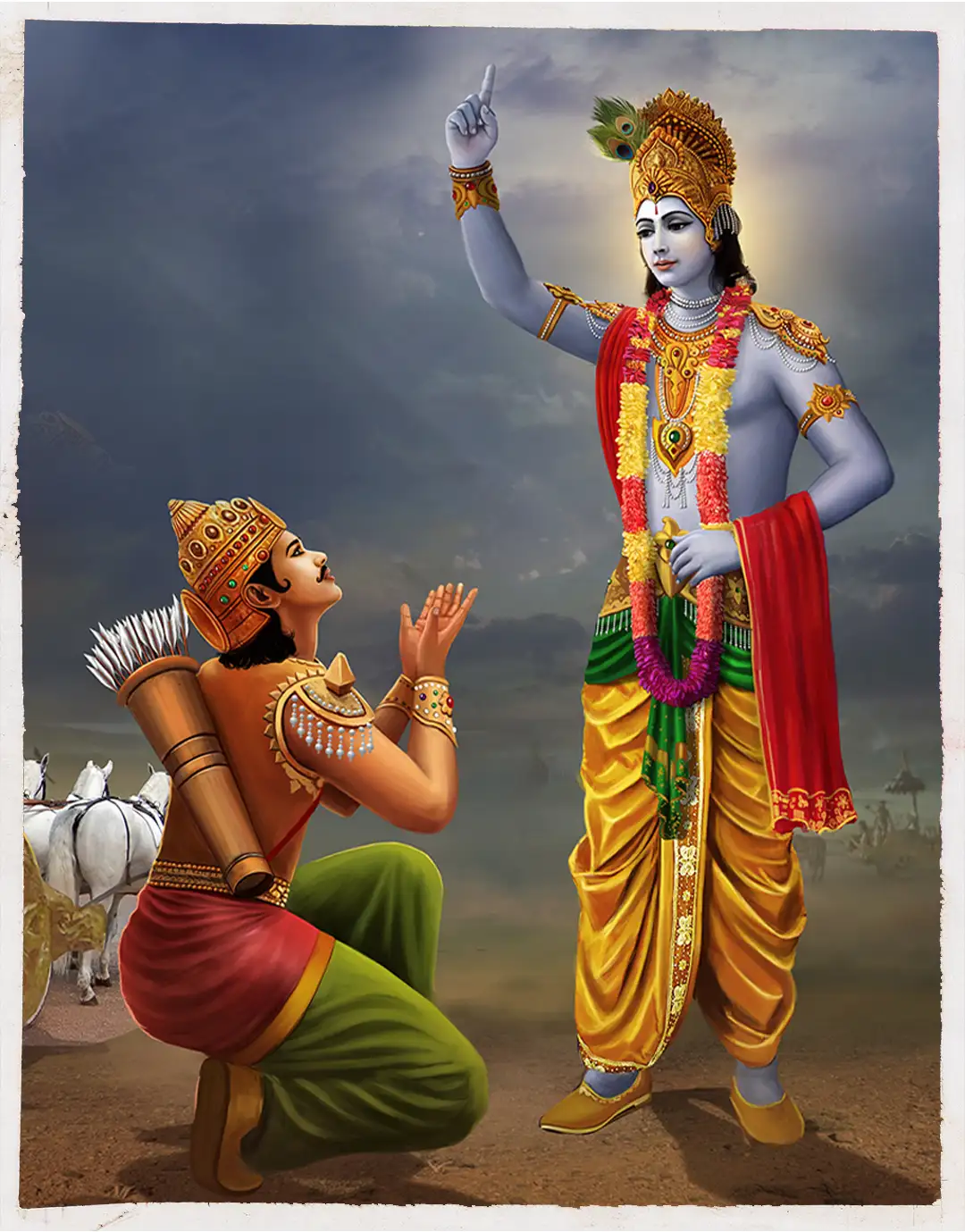
The Bhagavad Gita beautifully points us towards this transformation:
तमेव शरणं गच्छ सर्वभावेन भारत ।
तत्प्रसादात्परां शान्तिं स्थानं प्राप्स्यसि शाश्वतम् ॥ 62॥
tam eva śharaṇaṁ gachchha sarva-bhāvena bhārata
tat-prasādāt parāṁ śhāntiṁ sthānaṁ prāpsyasi śhāśhvatam
BG 18.62: Surrender exclusively unto Him with your whole being, O Bharat. By His grace, you will attain perfect peace and the eternal abode.
The Lord's grace descends naturally upon hearts that have been softened by humility, purified by selfless devotion, and illumined through sincere surrender. As this inner purification deepens, spiritual vision awakens, and the seeker gradually begins to perceive the Lord not merely as a historical personality but as the ever-present Divine Reality dwelling within and beyond all creation.
The Deeper Mystery of Krishna's Descent
The three reasons described in the Bhagavad Gita Chapter 4: protecting the righteous, destroying evil, and re-establishing dharma: are undoubtedly true. Every avatar of the Lord fulfils these divine purposes, and Krishna's life provides countless examples of each. He protected Prahlad's descendants and the residents of Braj, liberated countless devotees from danger, destroyed tyrants such as Kansa and many powerful demons, and restored righteousness during one of the most turbulent periods in human history.
Yet the saints invite us to reflect even more deeply.
If the Supreme Lord is Satya Sankalp, whose will is unfailingly fulfilled the moment He desires something, does He truly need to descend to accomplish these tasks? Could He not restore dharma by inspiring enlightened saints? Could He not destroy every demon by a mere thought? Could He not protect every devotee while remaining in His eternal abode?
The answer to each of these questions is yes.
Precisely because He is omnipotent, none of these tasks requires His personal appearance. This understanding does not diminish the importance of the purposes described in the Bhagavad Gita; rather, it reveals that they accompany His descent instead of fully explaining it. They are glorious fruits of the avatar, but they do not uncover the deepest longing of the Lord's own heart.
Establishing Dharma
Consider first the restoration of dharma.
Sanatan Dharma is eternal. It can become obscured by ignorance, neglected by society, or distorted through misunderstanding, but it can never truly be destroyed. Throughout history, whenever confusion has spread, the Lord has empowered realised saints and acharyas to revive spiritual wisdom. Great teachers such as Adi Shankaracharya, Ramanujacharya, Madhvacharya, Nimbarkacharya, Vallabhacharya, Chaitanya Mahaprabhu, and, in modern times, saints like Jagadguru Shri Kripaluji Maharaj and Swami Mukundananda have rekindled the light of divine knowledge without themselves being avatars in the fullest sense.
If restoring religious understanding alone were the Lord's primary objective, He could simply continue inspiring such realised souls. The preservation of dharma therefore cannot fully explain why the Supreme Lord personally appears upon the earth.
Destroying the Wicked
The same reasoning applies to the destruction of evil.
The Ramayana, the Mahabharata, and the Srimad Bhagavatam recount dramatic battles between the Lord and powerful demons. At first glance, these conflicts appear to be the central purpose of His descent. Yet when we contemplate the Lord's unlimited power, another question naturally arises.
Why would the omnipotent Supreme need to fight at all?
The Lord who creates, sustains, and dissolves innumerable universes through His mere will could effortlessly remove any obstacle without leaving His divine abode. Ravana, Kumbhakarna, Hiranyakashipu, Shishupala, Dantavakra, Kansa, and every other tyrant could have been destroyed in a single instant had that alone been His intention.
Instead, the Lord chooses to enact magnificent pastimes. He accepts challenges, engages in conversations, displays extraordinary courage, and allows events to unfold gradually before the eyes of humanity. These are not acts of necessity but of divine play: Leela. Through these pastimes, countless souls receive opportunities to hear, remember, and glorify the Lord for generations to come.
The destruction of demons is therefore inseparable from another, much deeper purpose: awakening devotion in the hearts of those who witness or hear about these divine acts.
Protecting the Devotees
The protection of devotees is equally profound.
Krishna Himself assures Arjuna in the Bhagavad Gita:
अनन्याश्चिन्तयन्तो मां ये जना: पर्युपासते ।
तेषां नित्याभियुक्तानां योगक्षेमं वहाम्यहम् ॥ 22॥
ananyāśh chintayanto māṁ ye janāḥ paryupāsate
teṣhāṁ nityābhiyuktānāṁ yoga-kṣhemaṁ vahāmyaham
BG 9.22: There are those who always think of Me and engage in exclusive devotion to Me. To them, whose minds are always absorbed in Me, I provide what they lack and preserve what they already possess.
This promise is eternal. It does not apply only during the periods when the Lord visibly walks upon the earth. Even today, Krishna silently guides, protects, and nourishes those who surrender to Him. His unseen grace accompanies sincere devotees in every age, regardless of whether He has manifested in a visible avatar.
If He already protects His devotees from within, then His earthly appearance must serve an even greater purpose than protection alone.
The saints therefore explain that the three reasons revealed in the Bhagavad Gita describe what Krishna accomplishes through His descent, but they do not reveal the deepest motivation behind His appearance.
The Supreme Reason – His Causeless Grace
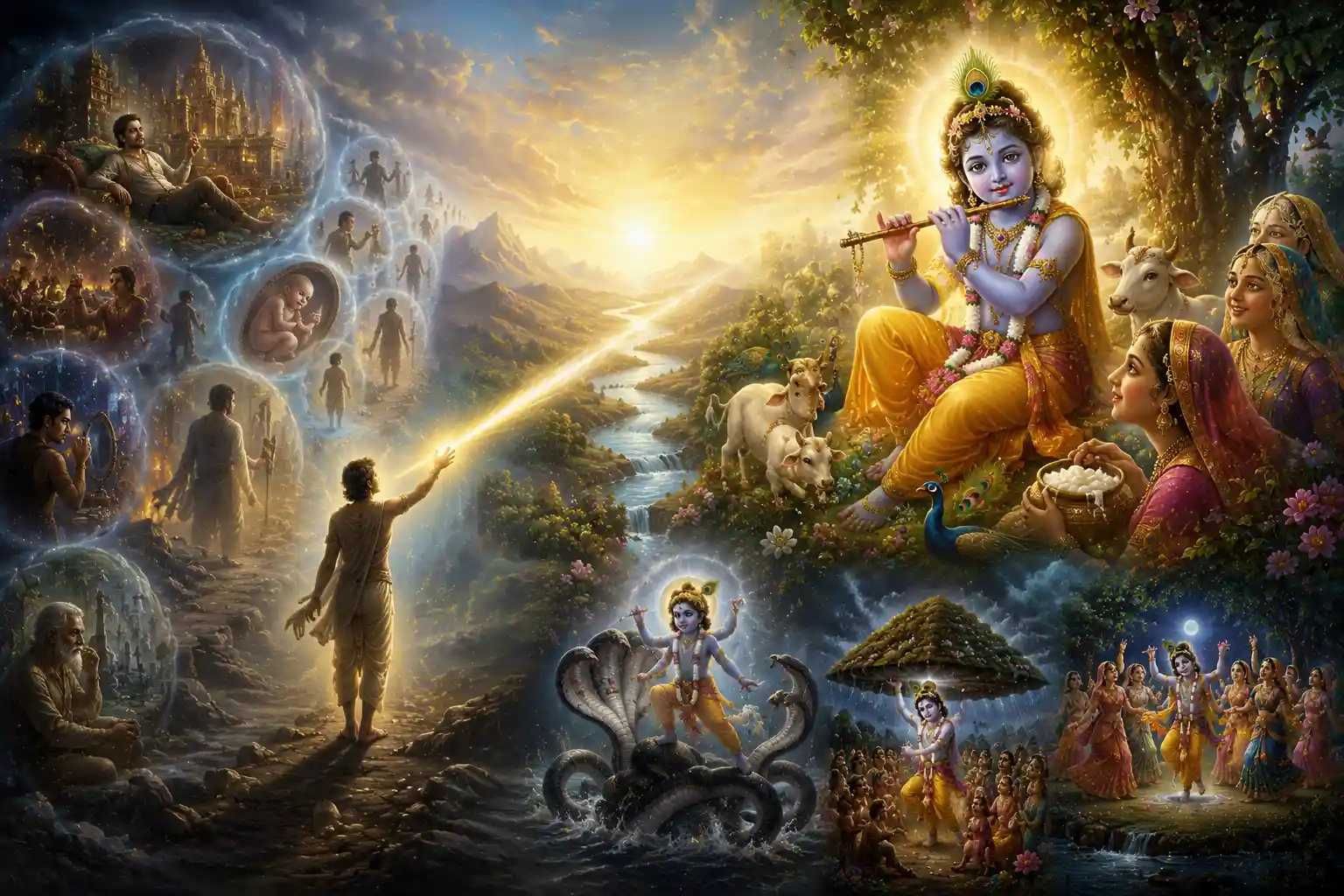
Swami Mukundananda beautifully explains that God is Purna: completely perfect and eternally fulfilled. Nothing can increase His happiness, nor can anything diminish His perfection. Unlike the individual soul, He has no unfulfilled desires, no incompleteness, and no personal need that requires Him to enter the material world.
The soul is an infinitesimal fragment of the infinite ocean of divine bliss. Having turned away from God since time without beginning, we wander through countless births searching for lasting happiness in temporary objects. Every worldly achievement promises fulfilment yet ultimately leaves the heart longing for something more permanent.
Out of limitless compassion, the Lord descends to redirect that longing towards its true destination.He does not merely teach philosophy.He becomes the object of our love.
The human mind struggles to meditate upon an abstract, formless Absolute. Yet when the same Supreme Reality appears as the enchanting cowherd of Braj, playing His flute beneath the Kadamba trees, stealing butter from the homes of the Gopis, dancing upon Kaliya's hoods, lifting Govardhan Hill, and filling the forests with divine music, the heart naturally becomes attracted to Him.
This attraction is not accidental.
It is His grace.
Jagadguru Shri Kripaluji Maharaj echoes this same truth in the Bhakti Shatak:
Karan Hari Avatar Ko, Kripa Akaran Jana
Apar Jite Karan Kahe, Tinahin Gaun Kari Mana.
"Know that the true reason for the Lord's descent is His causeless mercy. All other reasons, though genuine, should be understood as secondary."
Seen in this light, every aspect of the Krishna avatar becomes an expression of divine love reaching out to souls who have forgotten their eternal relationship with Him.
Why Krishna's Leelas Continue to Transform Hearts
The power of Krishna's avatar did not end five thousand years ago.
If His purpose had been limited to defeating Kansa or establishing righteousness during the Dvapara Yuga, His mission would have concluded long ago. Yet today, millions of people across the world continue to chant His names, meditate upon His form, celebrate Janmashtami, and find hope, peace, and inspiration through His divine pastimes.
This enduring influence is itself evidence of His true purpose.
The Lord's Leelas were never meant only for those who physically witnessed them, they were performed for every generation.
Each time we hear about Krishna stealing butter, allowing Mother Yashoda to bind Him, dancing upon Kaliya, lifting Govardhan Hill, or speaking the immortal wisdom of the Bhagavad Gita, our hearts are gently drawn towards Him once again.
Swami Mukundananda often reminds devotees that spiritual transformation begins not merely by acquiring information but by cultivating loving remembrance. The more frequently we hear Krishna's names, meditate upon His form, and contemplate His pastimes, the more naturally devotion awakens within us. Gradually, worldly attractions lose their grip, and the soul rediscovers the happiness it has been seeking since time without beginning.
Even today, every sincere seeker who remembers His divine birth, meditates upon His transcendental form, studies His teachings, and lovingly reflects upon His Leelas receives the same grace that flowed through the forests of Braj more than five thousand years ago.
Celebrating Janmashtami 2026 with a Deeper Understanding
Janmashtami is one of the most beloved festivals in the Hindu calendar. Devotees observe fasts, sing bhajans, decorate temples, perform midnight arati, and joyfully celebrate the divine appearance of Shree Krishna. These sacred traditions have been lovingly preserved for thousands of years and continue to inspire millions across the world.
Yet the scriptures invite us to go one step further.
Janmashtami is not merely the celebration of a divine birth that took place more than five thousand years ago. It is an opportunity to reflect upon the extraordinary compassion that inspired the Supreme Lord to descend into this world for the upliftment of every soul. Every aspect of the festival becomes more meaningful when we remember that Krishna did not appear because He was compelled by circumstances or limited by necessity. He appeared because His heart overflowed with causeless mercy.
This understanding transforms the way we celebrate Janmashtami.
When we hear about His birth in the prison of Mathura, we remember that the unborn Lord voluntarily chose to appear among humanity. When we sing about His childhood in Braj, we recognise that every playful pastime was carefully designed to awaken devotion within the hearts of future generations. When we read the Bhagavad Gita, we realise that its timeless wisdom was spoken not merely to Arjuna but to every sincere seeker struggling with the challenges of life.
The external celebrations therefore become expressions of an inner journey. As lamps illuminate our homes, we pray that divine wisdom may illuminate our hearts. As we decorate Krishna's altar, we strive to decorate our minds with humility, purity, and devotion. As we offer sweets, flowers, and fruits, we also offer our attachments, fears, ambitions, and ego at His lotus feet.
Swami Mukundananda frequently reminds seekers that the greatest offering we can make to God is not something external but the loving surrender of the heart.
When devotion becomes sincere, every activity of life gradually becomes an offering to the Divine, and Janmashtami evolves from an annual festival into a daily celebration of Krishna's presence.
Conclusion: The Eternal Invitation of Krishna's Avatar
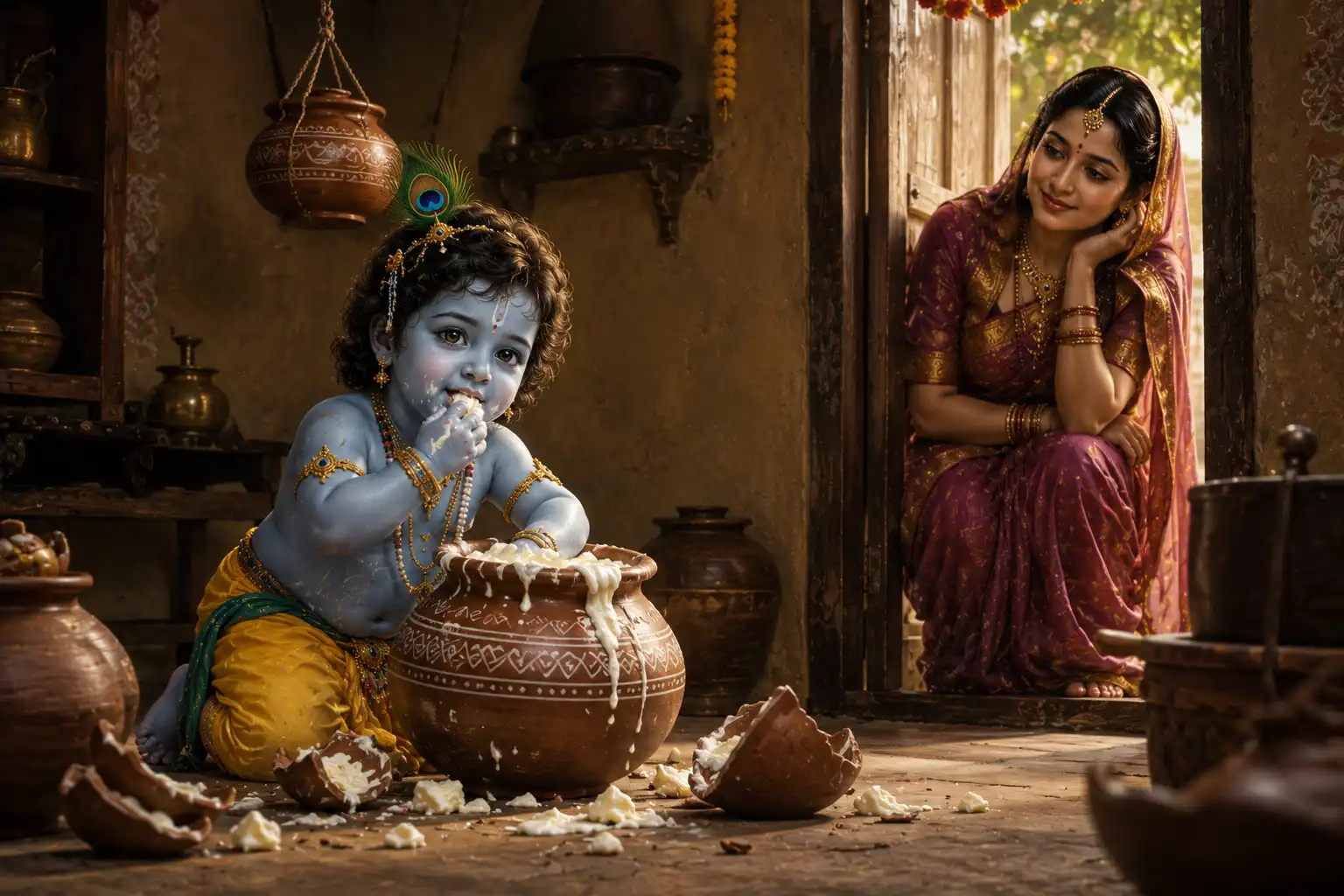
The more deeply we contemplate the Krishna avatar, the more clearly one truth shines above all others. His birth was divine. His form was divine. His actions were divine. His teachings were divine. Above all, His purpose was divine.
The Lord did not descend because the universe required His assistance. The Creator of countless universes has never been constrained by circumstance. He descended because His boundless compassion sought to awaken souls who had forgotten their eternal relationship with Him.
Every miracle He performed, every word He spoke, every smile He shared with the residents of Braj, and every pastime preserved within the Srimad Bhagavatam continues to echo through the ages with the same loving invitation: "Return to Me."
May this Janmashtami inspire us to look beyond the outward celebrations and discover the infinite compassion hidden within every aspect of Krishna's descent. May His causeless mercy awaken unwavering faith, selfless devotion, and an ever-deepening longing for His divine association. And may the Lord who appeared in the humble prison of Mathura also manifest within our hearts, filling them with the eternal light of divine love.
Boliye Shree Krishna Kanhaiya Lal Ki Jai!
Call To Action: Continue Your Spiritual Journey with JKYog
If this exploration of Shree Krishna's divine avatar has inspired you to deepen your relationship with God, continue your journey through the authentic teachings of Swami Mukundananda and JKYog.
Study the Bhagavad Gita verse by verse through Swamiji's practical commentaries:

Immerse yourself in his illuminating discourses on the Srimad Bhagavatam, and experience guided Roop Dhyan meditations, bhajans, daily inspiration, and spiritual challenges through the Bhagavad Gita & Krishna Bhakti App:

 JKYog
JKYog
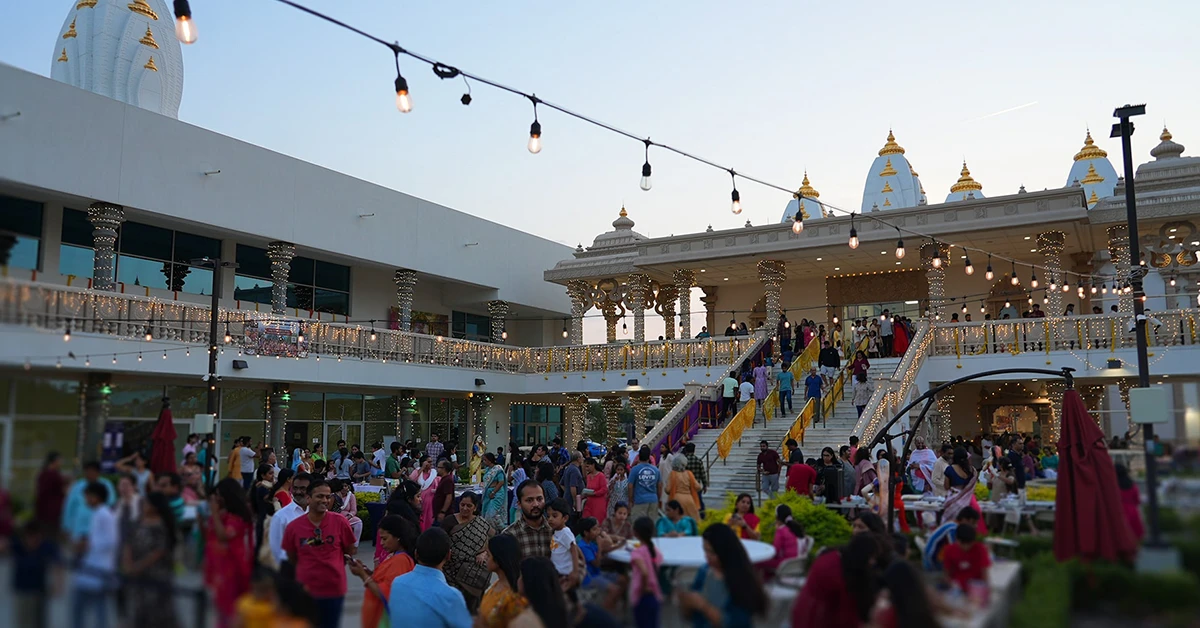
If possible, celebrate Janmashtami at your nearest JKYog centre or Radha Krishna Temple. Participating in kirtans, scriptural discourses, abhishekam, and midnight celebrations alongside fellow devotees creates an uplifting spiritual atmosphere that strengthens faith and deepens one's connection with Shree Krishna. The greatest way to honour His appearance is to allow His teachings and His love to become an integral part of our daily lives.

FAQs
1. Why is Krishna's birth considered divine?
Unlike ordinary beings who take birth because of karma, Shree Krishna manifests through His divine Yogmaya. His appearance is a conscious, transcendental manifestation rather than a material birth.
2. Why did Krishna appear with four arms before Devaki and Vasudeva?
Krishna initially revealed His divine identity to His parents by manifesting His eternal four-armed form holding the conch, discus, mace, and lotus before assuming the form of an ordinary infant.
3. Why couldn't everyone recognise Krishna as God?
People perceived Krishna according to the purity of their hearts. Devotees recognised His divinity, while those blinded by ego, fear, or pride saw Him merely as an ordinary human being.
4. What are the three reasons Krishna gives for His descent in the Bhagavad Gita?
Krishna explains that He descends to protect the righteous, destroy evil, and re-establish dharma whenever righteousness declines.
5. What is the highest reason for Krishna's avatar?
According to the Srimad Bhagavatam and saints like Swami Mukundananda, the deepest reason is God's causeless mercy (Akaran Kripa). He descends to awaken devotion and bring souls back to Him.
6. What is Yogmaya?
Yogmaya is the Lord's divine internal energy through which He manifests His transcendental pastimes without becoming subject to material nature.
7. Why are Krishna's Leelas important today?
Krishna's Leelas continue to purify the heart, awaken devotion, and inspire spiritual transformation for anyone who hears and reflects upon them with faith.
8. How can I celebrate Janmashtami in a meaningful way?
Celebrate by studying the Bhagavad Gita, reading the Srimad Bhagavatam, chanting Krishna's holy names, meditating on His divine form, serving others, and participating in temple celebrations.
9. How do Swami Mukundananda's teachings help us understand Krishna's avatar?
Swami Mukundananda explains the philosophical depth behind Krishna's birth, form, Leelas, and teachings, making timeless scriptural wisdom practical for modern spiritual seekers.
10. How can I deepen my devotion to Shree Krishna throughout the year?
Maintain a daily practice of scriptural study, meditation, chanting, satsang, and selfless service. Resources such as Swami Mukundananda's discourses and the Bhagavad Gita & Krishna Bhakti App provide practical guidance for lifelong spiritual growth.
Resources