
q“Where God teaches not by commandments, but through divine play, there, in Braj, the soul meets bliss.”
Introduction: Entering the World of Divine Play
Every year, Janmashtami fills millions of hearts with anticipation as devotees across the world prepare to celebrate the divine appearance of Shree Krishna. Temples are beautifully decorated, devotional songs fill the air, and midnight aratis commemorate the moment when the Supreme Lord descended into this world. Yet the true joy of Janmashtami extends far beyond celebrating Krishna's birth. It lies in remembering the extraordinary divine pastimes He lovingly performed after His appearance, pastimes that continue to inspire, transform, and awaken devotion in the hearts of seekers thousands of years later.
Among all the places sanctified by the Lord's presence, none occupies a more special place than Braj. Stretching across the sacred forests, villages, hills, and banks of the Yamuna, Braj is not merely a geographical region. According to the saints, it is the eternal playground of Divine Love. Here, Krishna did not reveal Himself primarily as the majestic ruler of the universe or the teacher of profound philosophy. Instead, He became the beloved child of Mother Yashoda, the mischievous friend of the cowherd boys, the protector of the cows, and the very life of the Gopis.
Swami Mukundananda beautifully explains that there is a profound difference between Krishna's later pastimes in Mathura and Dwarka and His childhood Leelas in Braj. In Mathura, Krishna begins revealing His royal majesty. In Dwarka, He governs kingdoms, guides princes, and fulfils His responsibilities as a statesman.
In Braj, all traces of formality disappear. The Supreme Lord willingly hides His omnipotence beneath the sweetness of intimate love.
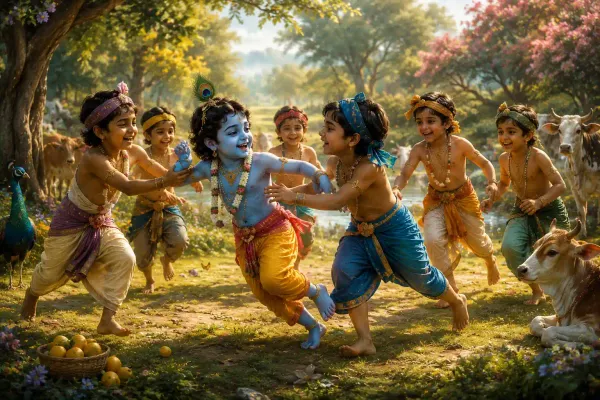
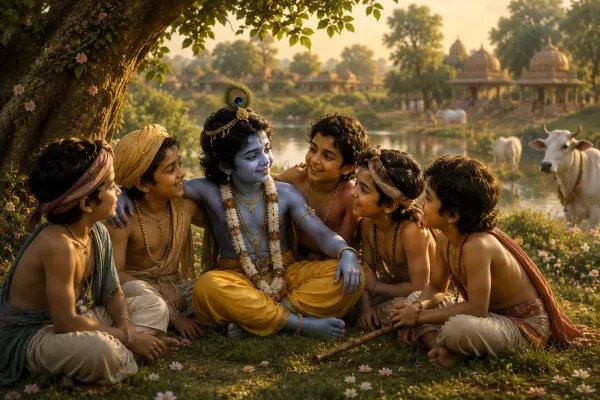
This sweetness is known in the scriptures as Madhurya. Although Krishna remains the Supreme Personality of Godhead, His devotees in Braj do not constantly think of Him as God. Mother Yashoda worries whether her little boy has eaten enough. His friends challenge Him to wrestling matches and climb upon His shoulders. The Gopis lovingly complain about His butter thefts. Their affection is so pure that even awareness of His supreme divinity fades into the background. God Himself delights in this intimacy because love flourishes most beautifully where awe gives way to affection.
This is why the Braj Leelas occupy such a central place in the Srimad Bhagavatam. They are not simply miraculous stories recorded for entertainment or historical curiosity. Every Leela reveals another aspect of God's infinite love. Every pastime becomes a spiritual lesson. Every smile, every playful prank, every miracle, and every interaction with His devotees teaches us how to deepen our own relationship with the Divine.
Swami Mukundananda often reminds seekers that Krishna's Leelas should never be approached merely through logic. The Bhagavatam is not simply a book to be analysed; it is a scripture to be relished. Just as one cannot understand the sweetness of honey merely by studying its chemical composition, one cannot experience the beauty of Krishna's pastimes through intellectual analysis alone. They are meant to awaken bhav, deep spiritual emotion, and gradually melt the heart in devotion.
As we celebrate Janmashtami 2026, let us journey through ten of Krishna's most beloved Braj Leelas. Each one reveals a different facet of His divine personality: His compassion, His playfulness, His protection, His humility, and above all, His immeasurable love for every soul.


Makhan Chori Leela – The Divine Thief Who Steals Hearts
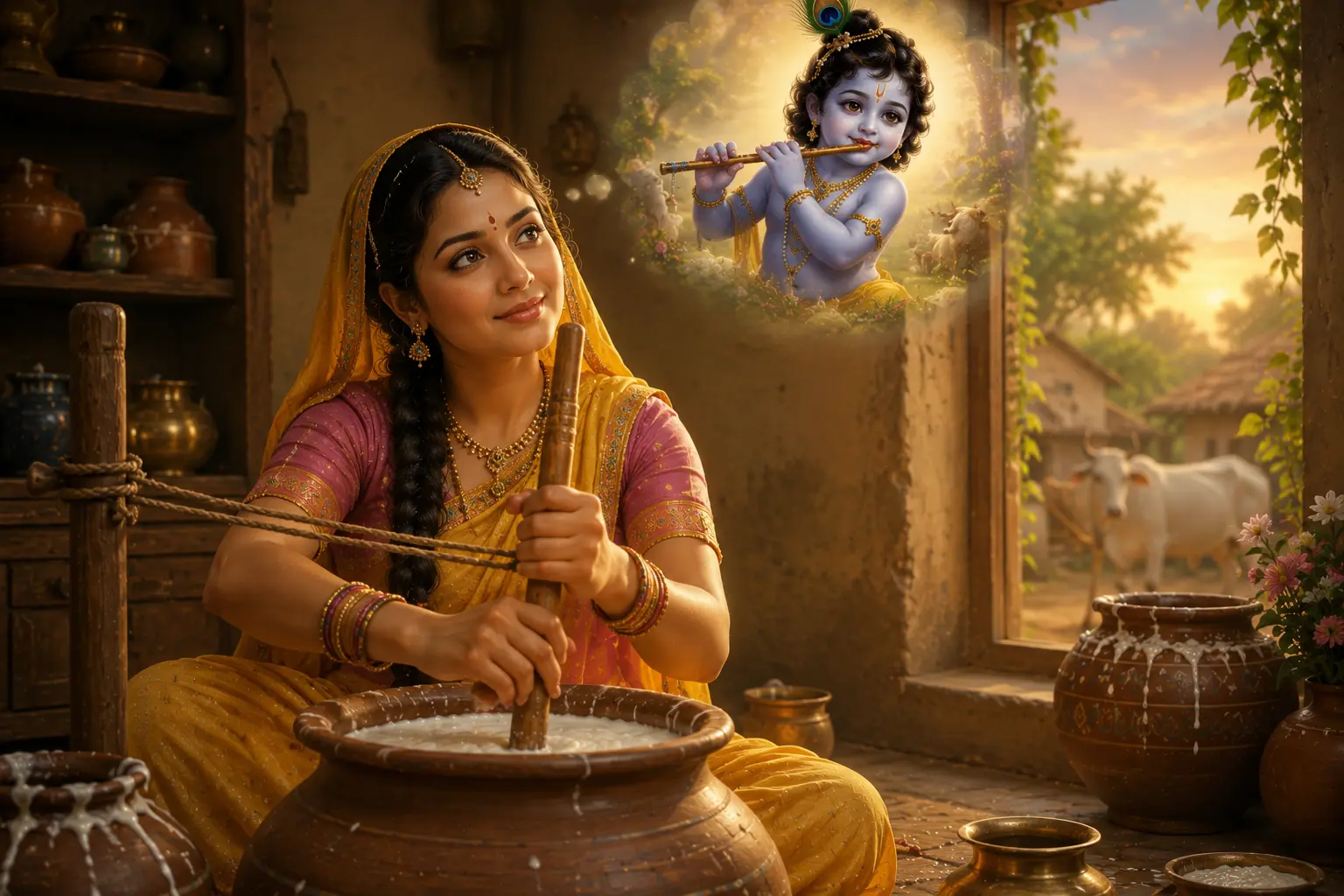
One of the earliest and most delightful memories of Krishna's childhood in Braj is His irresistible fascination with butter. Every morning, the Gopis carefully churned fresh yoghurt into fragrant white butter, storing it high above the reach of playful children. Yet no hiding place proved secure once little Krishna set His heart upon a butter pot.
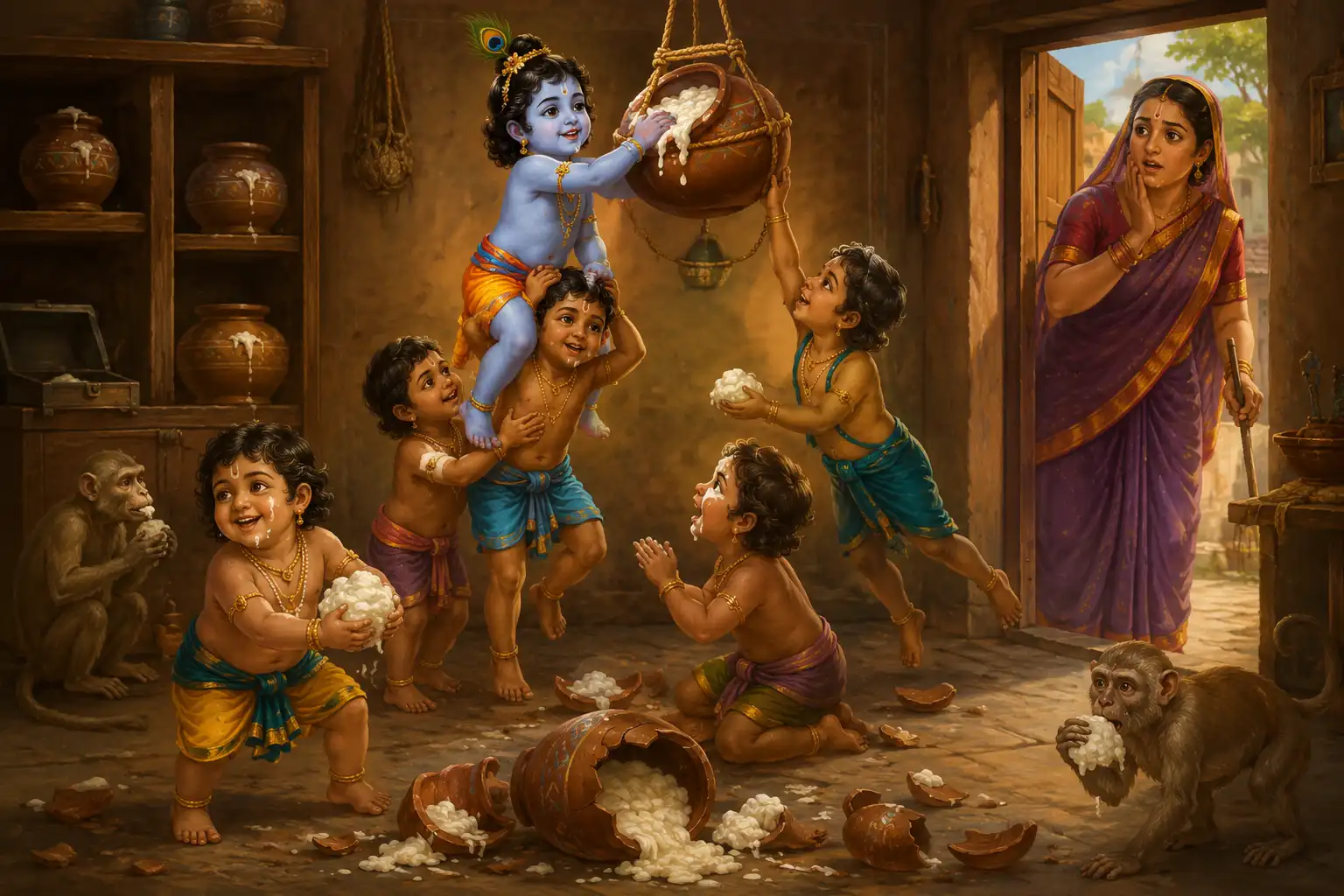
At first, His adventures remained within the home of Mother Yashoda. Quietly waiting until no one was watching, He would tiptoe into the storeroom, carefully climb onto overturned pots or wooden stools, and reach for the hanging butter pots with remarkable determination. Before long, however, His adventures became far more ambitious.
Krishna gathered around Him a cheerful band of cowherd friends. Sometimes they formed human pyramids. Sometimes Krishna distracted the household while His friends emptied the pots. At other times, when discovered, He would widen His innocent eyes and deny every accusation with such irresistible charm that even those determined to scold Him found themselves smiling instead.
The Gopis devised countless strategies to catch the mischievous child. They hid behind doors, tied bells to butter pots, and carefully watched every entrance. Yet somehow Krishna always remained one step ahead. Even when He appeared cornered, He would distract His pursuers, confuse them with clever tricks, or lovingly charm them into forgetting why they had been angry in the first place.
Eventually the Gopis gathered together and marched to Mother Yashoda's house with what seemed like a long list of complaints. One after another they described Krishna's latest exploits: how He had stolen butter, broken their pots, fed monkeys, and left tiny footprints throughout their homes.
Yet beneath every complaint flowed a river of affection.
Swami Mukundananda beautifully points out that the Gopis were never truly upset about losing butter. Their greatest joy lay in the fact that Krishna had entered their homes. The butter became merely an excuse for constant remembrance of the Lord. Even after He departed, they spoke only of Him, laughed about Him, and eagerly waited for His next visit.
This Leela contains a profound spiritual symbolism. Butter is not obtained directly from milk. First the milk must be cultured into yoghurt and then patiently churned until its purest essence rises to the surface. Similarly, the human heart must be refined through satsang, selfless service, spiritual practice, and constant remembrance of God before the pure butter of devotion emerges.
Krishna does not steal ordinary butter. He steals hearts that have been lovingly churned through Bhakti.
The Lord has no need for dairy from the homes of Braj. What He truly seeks is the pure love hidden within the hearts of His devotees. When that love becomes sincere, selfless, and free from worldly selfishness, Krishna joyfully claims it as His own.
Perhaps that is why devotees throughout the centuries have lovingly called Him not merely the butter thief, but the Thief of Hearts.
Putana Moksha Leela – When Mercy Conquers Malice
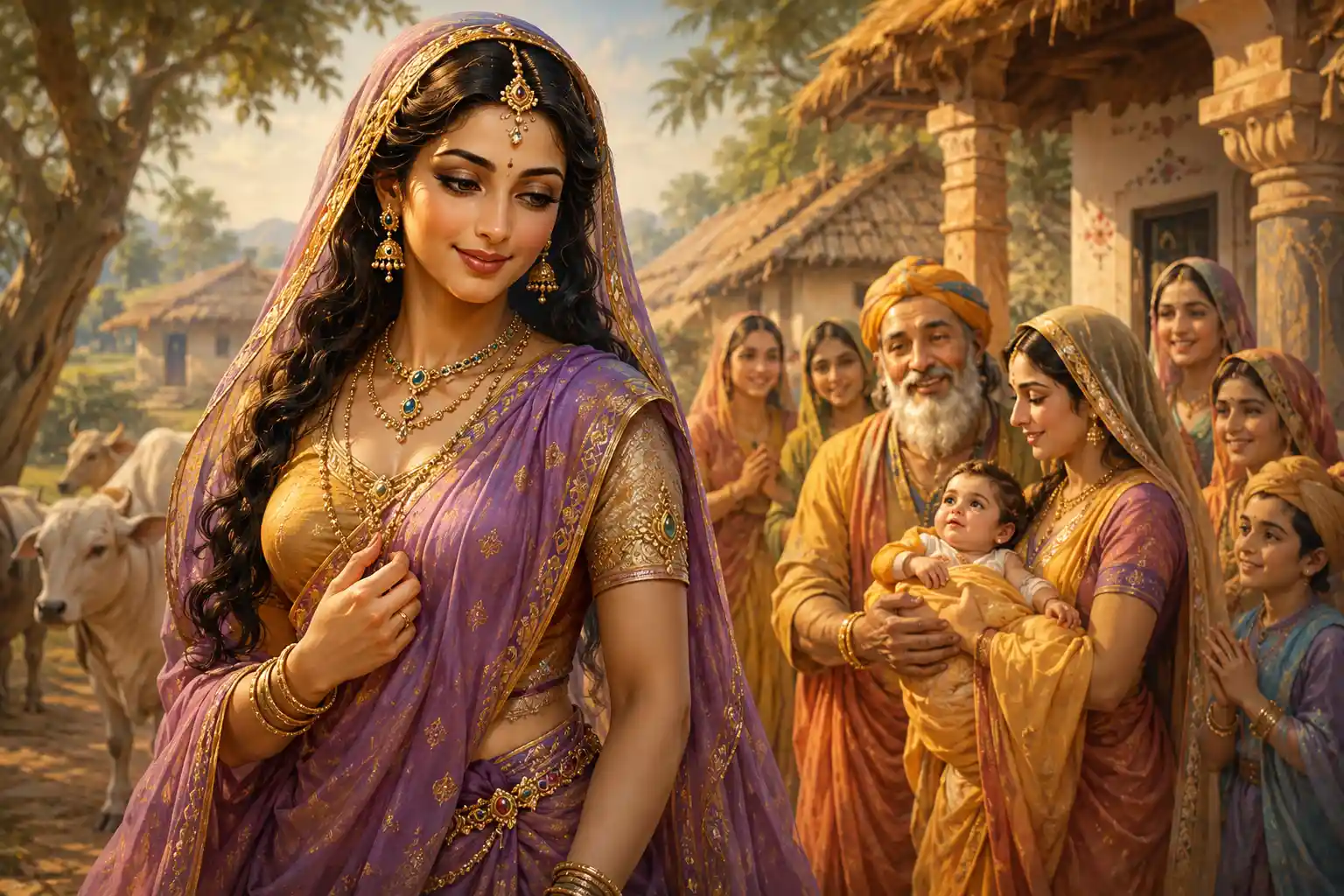
Among the earliest of these encounters was the extraordinary episode of Putana, one of the most powerful and feared demonesses in Kansa's service.
Learning from the celestial prophecy that Devaki's eighth son would become the cause of his death, Kansa became consumed by fear. Unable to identify the child, he ordered his servants to destroy every newborn they could find. Putana willingly accepted this terrible mission. Gifted with mystical powers, she assumed the appearance of a breathtakingly beautiful woman whose grace concealed her murderous intent.
The Srimad Bhagavatam describes how effortlessly she entered Gokul. Her radiant beauty and queenly bearing were so captivating that no one questioned her presence. Even the residents of Nanda Maharaj's home assumed that some celestial lady had come to bless the newborn child.
Without hesitation, Putana lifted baby Krishna into her arms. Hidden beneath her motherly appearance was deadly poison smeared upon her breast. Her plan was simple: to feed the infant poisoned milk and quietly accomplish Kansa's command.
As Putana placed Krishna upon her lap, the impossible occurred.
Rather than merely drinking her poisoned milk, Krishna began drawing out her very life force. Her disguise vanished instantly. The beautiful woman transformed into a gigantic, terrifying demoness whose cries shook the forests of Braj. She staggered through the countryside before collapsing with a thunderous crash, her enormous body stretching for miles across the landscape.
The frightened villagers rushed to the scene, only to discover little Krishna happily playing upon her lifeless body.
Yet the greatest miracle had not been her destruction.
It was her liberation.
Swami Mukundananda often draws attention to the astonishing compassion revealed in this Leela. Putana approached Krishna with murderous intent. She possessed neither devotion, nor humility, nor faith. Every action she performed was driven by hatred. Yet because she had offered Him her breast, even deceitfully, the Lord chose to accept that gesture as an expression of motherhood rather than hostility.
Instead of punishment, He granted her liberation.
The Bhagavatam explains that Putana attained a destination reserved for those who render motherly service to the Lord.
What greater testimony could there be to Krishna's boundless mercy?
If a demoness motivated by hatred could receive such extraordinary grace merely by imitating maternal affection, what blessings await those who lovingly serve Him with sincerity and faith?
This Leela assures every spiritual seeker that God's compassion is infinitely greater than our shortcomings. He does not merely judge the external action. He lovingly searches for even the smallest opportunity to uplift the soul.
Trinavarta – When the Storm Meets Its Master
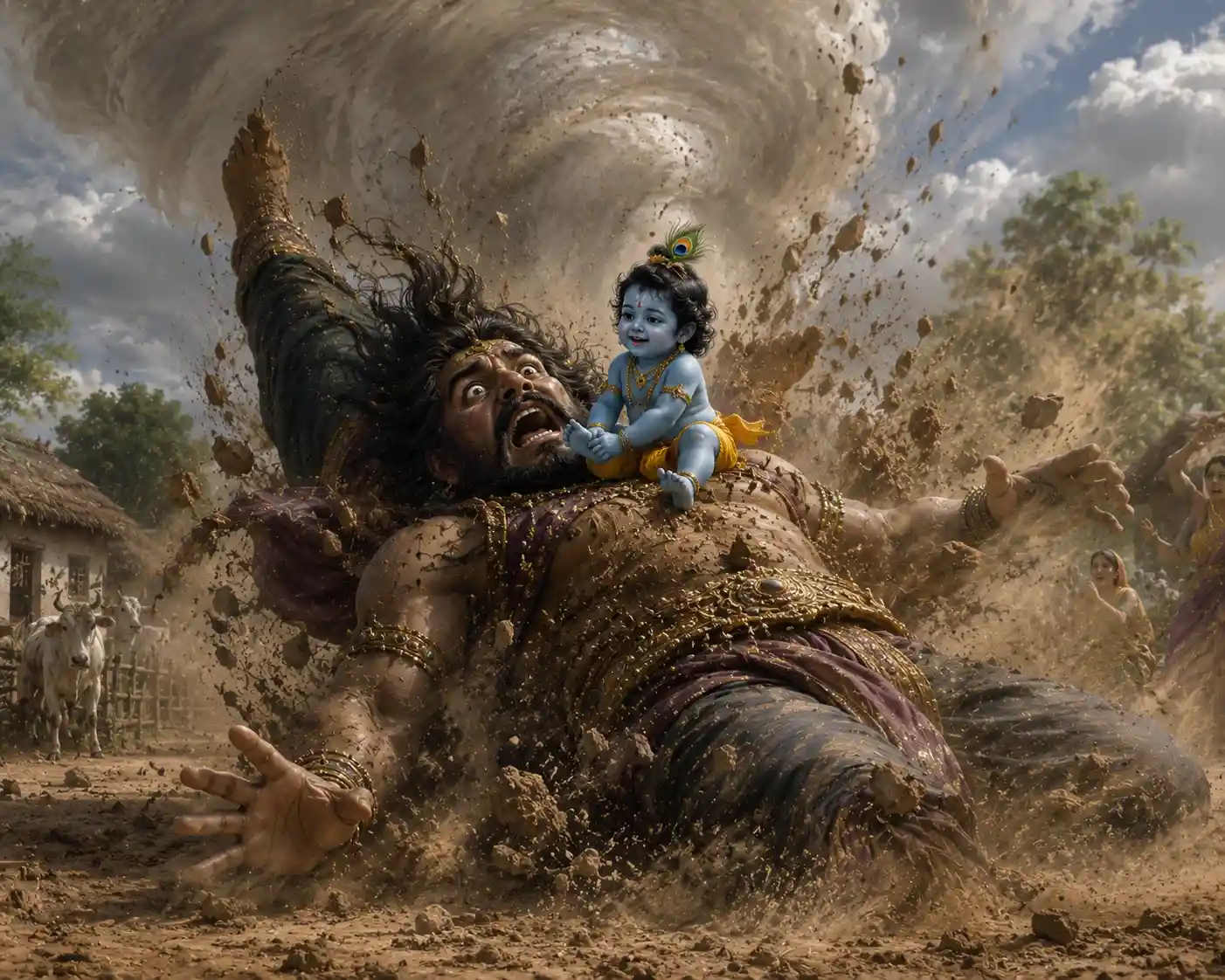
Soon afterwards, another servant of Kansa arrived in Braj: this time in the form of a terrifying whirlwind known as Trinavarta.
On the morning of the attack, Mother Yashoda was lovingly holding Krishna in her arms when something unusual occurred. Without warning, the child suddenly became astonishingly heavy. Unable to continue carrying Him, she gently placed Him upon the ground.
Moments later, a violent whirlwind swept through Gokul.
Dust filled the air so completely that no one could see even a few feet ahead. Trees bent violently beneath the force of the wind as terrified villagers struggled to protect themselves. Hidden within the storm, Trinavarta seized Krishna and rose high into the sky, convinced that his mission would soon be accomplished.
As the whirlwind climbed higher and higher, Krishna gradually began increasing His weight. What had moments earlier been a tiny infant now felt heavier than a mountain.
Trinavarta struggled desperately to remain airborne. His strength rapidly disappeared. Unable to breathe beneath the unbearable weight pressing upon him, he lost control completely. The mighty whirlwind came crashing back to earth.
When the dust finally settled, the frightened residents of Braj discovered Krishna sitting calmly upon the demon's lifeless body, smiling as though nothing unusual had happened.
Once again, Mother Yashoda embraced her beloved child, never imagining that the One she held so tightly had just defeated another powerful servant of Kansa.
The residents of Braj witnessed these miracles one after another. Yet such was the sweetness of their love that they never dwelt for long upon Krishna's extraordinary powers. Before long, they were once again laughing at His playful mischief, feeding Him with affection, or listening to fresh complaints from the Gopis about another butter theft.
Kaliya Mardan – Purifying the Poison Within
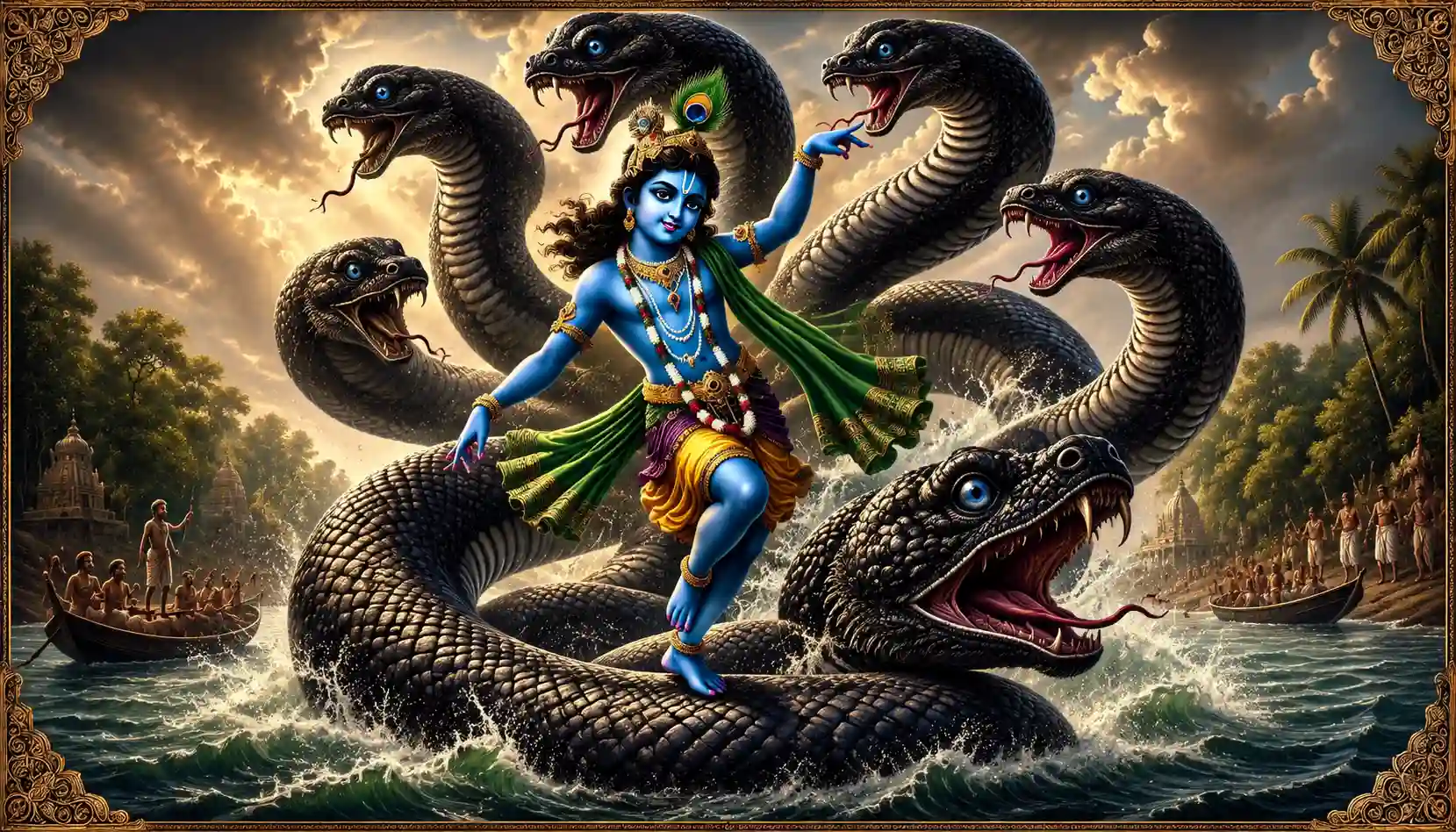
Flowing gracefully through Braj, the sacred Yamuna River was the lifeblood of the villagers. Its cool waters nourished the forests, sustained the cows, and provided joy to everyone who lived along its banks. Yet one stretch of the river had become a place of fear and desolation. The mighty serpent Kaliya had made his home there, and the deadly poison emanating from his countless hoods had contaminated the waters so completely that birds flying overhead fell lifeless into the river, fish perished beneath the surface, and even the surrounding trees began to wither. What had once been a source of life had become a symbol of death.
One day, while playing with His friends near the Yamuna, Krishna saw the suffering caused by Kaliya's arrogance. Without hesitation, He climbed a nearby Kadamba tree and, to the astonishment of the cowherd boys, plunged fearlessly into the poisoned waters. The impact of His dive sent waves surging across the river, immediately provoking the furious serpent.
Kaliya emerged with terrifying force, his enormous coils wrapping tightly around Krishna's delicate body. Watching from the riverbank, the cowherd boys cried out in despair, while word quickly spread throughout Braj. Nanda Baba, Mother Yashoda, and the other villagers rushed to the scene, their hearts overwhelmed with fear. To them, Krishna was not the Supreme Lord but their beloved child, and seeing Him entangled in the serpent's coils filled them with unbearable anguish.
Then, in an instant, everything changed.
Krishna effortlessly freed Himself from Kaliya's grip, leapt upon the serpent's many hoods, and began dancing with extraordinary grace. Every step of His lotus feet subdued another wave of pride within the serpent. The celestial beings watched in amazement as the Lord transformed what appeared to be a fierce battle into a beautiful dance. The music of the heavens accompanied His movements, and the poisonous waters that had long inspired fear became the stage for one of the most enchanting Leelas in the Bhagavatam.
Unable to withstand the touch of Krishna's lotus feet, Kaliya gradually surrendered. At that moment, his wives, known as the Nagapatnis, approached the Lord with folded hands and heartfelt prayers. They acknowledged their husband's pride, glorified Krishna's boundless compassion, and begged Him to spare Kaliya's life. Their sincere prayers touched the Lord's heart. Rather than destroying the serpent, Krishna forgave him, instructed him to leave the Yamuna forever, and assured him that Garuda would no longer trouble him because the marks of Krishna's lotus feet upon his hoods would serve as divine protection.
The Leela reminds us that Krishna's justice is always tempered by mercy. Although Kaliya deserved punishment for the suffering he had caused, sincere surrender opened the door to forgiveness. This is the hallmark of Krishna's compassion. He delights not in condemning souls but in reforming them, offering every living being the opportunity to begin anew through humility and surrender.
As the waters of the Yamuna became pure once again, the residents of Braj rejoiced. They celebrated not only because a dangerous serpent had departed, but because the Lord had restored life, beauty, and harmony to the land they loved. Even today, devotees meditate upon Kaliya Mardan as a reminder that no heart is too polluted for Krishna's grace and that sincere surrender allows Him to dance upon the very tendencies that bind us.
Govardhan Leela – The Mountain That Taught Complete Surrender
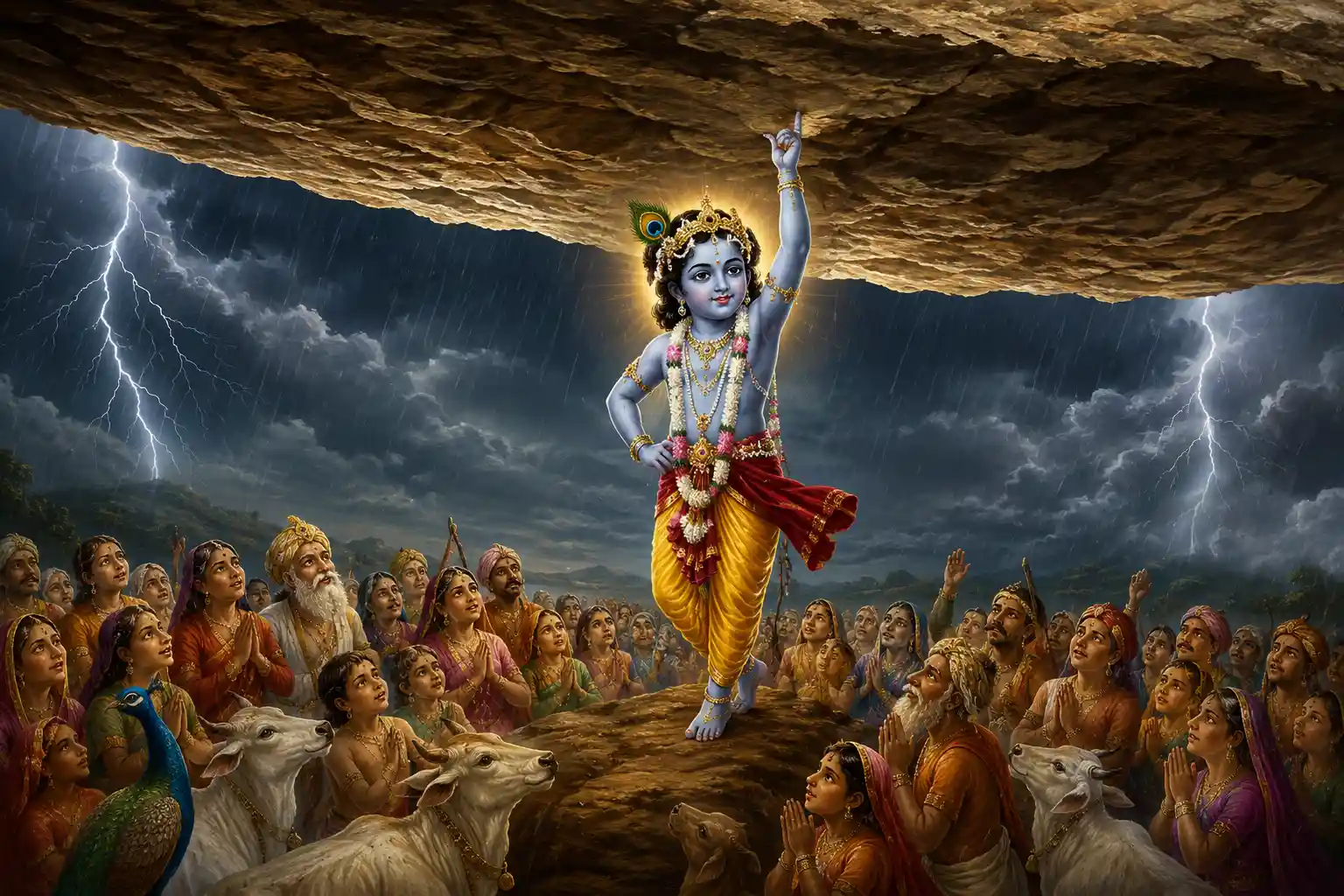
Among all the childhood pastimes of Shree Krishna in Braj, few reveal His loving protection more beautifully than the Govardhan Leela. While many of His earlier pastimes astonished the residents of Braj, this extraordinary event transformed their understanding of devotion itself, teaching that wholehearted surrender to God is far greater than worship motivated by fear.
Each year, the cowherd community prepared elaborate offerings for Indra, the celestial deity who governs rainfall. Their intention was sincere, for they believed that honouring Indra would ensure abundant rains, healthy cattle, and prosperous harvests. Observing these preparations, young Krishna gently questioned the villagers. Rather than criticising their devotion, He invited them to reflect more deeply upon the true source of their livelihood. Their cows grazed upon the grasses of Govardhan Hill, the forests provided shelter, and the fertile land sustained every aspect of their lives. Krishna therefore encouraged them to express gratitude by worshipping Govardhan, which the scriptures recognise as a direct manifestation of the Lord's own divine energy.
The residents of Braj gladly accepted Krishna's advice and joyfully celebrated Govardhan Puja with great enthusiasm. Their offerings of food, sweets, fruits, and prayers reflected their simple faith and complete trust in the words of their beloved Krishna. Watching from the heavens, however, Indra mistook their change of worship as an act of disrespect. Blinded by pride, he unleashed devastating storms upon Braj, determined to demonstrate his power.
The skies darkened, thunder echoed across the forests, and torrential rain flooded the land. Fierce winds terrified the cattle, while frightened families searched desperately for safety. At that moment of crisis, Krishna calmly reassured everyone that they had nothing to fear. Walking to Govardhan Hill, He effortlessly lifted the entire mountain upon the little finger of His left hand, creating a vast shelter beneath which every resident of Braj, along with their cows and belongings, found complete protection.
For seven days and seven nights, Krishna held Govardhan aloft without the slightest strain. The cowherd boys, overflowing with affection, playfully held up their sticks beside the mountain, believing they were helping Krishna support its weight. Rather than correcting them, Krishna smiled lovingly, delighting in their innocent friendship. This charming detail beautifully illustrates the mood of Braj, where even the greatest miracle became another opportunity to deepen loving relationships with the Lord.
Eventually, Indra realised the futility of opposing the Supreme Lord. Humbled by his own pride, he descended from heaven, offered heartfelt prayers, and sought Krishna's forgiveness. The Lord accepted his repentance with characteristic compassion, demonstrating that genuine humility is always welcomed by Him.
Swami Mukundananda often explains that Govardhan Leela marks a profound spiritual turning point. Krishna was not rejecting worship or tradition; rather, He was teaching that devotion should arise from love and understanding instead of fear and obligation. Rituals have value only when they deepen our relationship with God. When they become mechanical or are performed merely to secure worldly benefits, they lose their spiritual essence.
Govardhan also symbolises the shelter that Krishna offers every sincere devotee. Life inevitably brings storms in the form of loss, disappointment, uncertainty, illness, and hardship. While we cannot always prevent these challenges, we can choose where we seek refuge. The residents of Braj discovered that the safest shelter was not beneath strong buildings or worldly security but beneath the loving protection of the Lord Himself. Their unwavering faith transformed a terrifying calamity into one of the sweetest memories of Krishna's childhood.
The Govardhan Leela therefore stands as an eternal invitation to surrender. When we place our trust completely in Krishna, He does not promise that storms will never arise. Instead, He assures us that His protection is greater than any storm we may ever face.
Why Krishna Performed These Childhood Leelas
At first glance, Krishna's childhood pastimes appear wonderfully varied. One moment He is stealing butter, the next He is subduing mighty serpents, lifting mountains or liberating demons. Yet beneath their diversity lies one unifying purpose.
Krishna did not descend merely to destroy evil. Had that been His only objective, He could have accomplished it instantly through His divine will. Instead, He chose to spend His early years delighting the residents of Braj because His deepest desire was to exchange pure love with His devotees.
Swami Mukundananda explains that every relationship available within human experience finds its highest perfection in Braj. Mother Yashoda loved Krishna with boundless maternal affection. The cowherd boys treated Him as their dearest friend. Nanda Baba protected Him as a father. The Gopis loved Him with complete self-forgetfulness. Even the cows, calves, birds, trees, and rivers found fulfilment through loving service to Him.
These Leelas therefore reveal that God is not distant or inaccessible. He lovingly invites every soul into a personal relationship based on affection rather than fear, intimacy rather than formality, and surrender rather than mere obligation.
Celebrating Janmashtami Through Krishna's Leelas
Janmashtami becomes truly transformative when we move beyond external celebration and allow Krishna's pastimes to reshape our own hearts.
Spend time each day leading up to Janmashtami reading one Leela from the Srimad Bhagavatam and reflecting on its deeper spiritual message. Listen to Swami Mukundananda's discourses with the intention of cultivating devotion rather than simply acquiring information. Chant Krishna's holy names with attention and love, visualising His enchanting form as He played in the forests of Braj. During your worship, meditate not only upon His birth in Mathura but also upon His joyful childhood among the devotees who loved Him without reservation.
Gradually, these Leelas cease to be distant stories and become living meditations that accompany every stage of spiritual life.
Every Leela Is Calling Us Home
The childhood pastimes of Shree Krishna are much more than beautiful stories preserved within sacred scripture. They are invitations extended to every soul.
Through Makhan Chori, Krishna reminds us that He seeks the pure butter of a heart churned by devotion. Through Damodar Leela, He demonstrates that loving effort joined with divine grace can bind even the Infinite. Through Putana's liberation, He reveals that His mercy is greater than our faults. Through Shakatasura and Trinavarta, He assures us that no burden and no storm are beyond His protection. Through Kaliya Mardan, He transforms poison into purity. Through Govardhan Leela, He teaches complete surrender.
The Supreme Lord does not ask us to become extraordinary before approaching Him. He asks only that we approach Him with sincerity, humility, and love. The residents of Braj possessed no worldly greatness, yet their affection drew the Infinite into their homes, their fields, and their hearts.
As you celebrate Janmashtami this year, may you do more than remember Krishna's appearance in the world. May you invite Him to appear within your own heart through daily remembrance, loving devotion, and sincere surrender. When the heart itself becomes Braj, every moment becomes an opportunity to experience His presence, and every act of devotion becomes another step towards the eternal joy of divine love.
Call To Action: Continue Your Journey with JKYog
If these beautiful Leelas have inspired you to know Shree Krishna more deeply, continue your spiritual journey through the authentic teachings of Swami Mukundananda and JKYog.
Explore Swamiji's discourses on the Srimad Bhagavatam, study the Bhagavad Gita with practical explanations for modern life, and deepen your daily practice through the Bhagavad Gita & Krishna Bhakti App, which offers guided Roop Dhyan meditations, inspiring articles, bhajans, spiritual challenges, and daily wisdom to strengthen your connection with God.
If possible, celebrate Janmashtami at your nearest JKYog centre or Radha Krishna Temple, where devotional kirtans, scriptural discourses, abhishekam, and midnight celebrations create a spiritually uplifting atmosphere for the whole family. There is no greater way to honour Krishna's appearance than by filling the heart with remembrance, gratitude, and loving devotion.
FAQs
1. Why are Krishna's Braj Leelas especially significant?
The Braj Leelas reveal Krishna's sweetest aspect, where He hides His divine majesty to exchange intimate love with His devotees as a son, friend, and beloved.
2. What is the spiritual meaning of Makhan Chori?
Butter symbolises a heart purified through devotion. Krishna's butter theft represents His eagerness to claim hearts filled with selfless love.
3. What does Govardhan Leela teach us today?
It teaches complete dependence on God rather than fear-driven ritual, reminding devotees that Krishna is the ultimate protector during life's challenges.
4. Why did Krishna forgive Kaliya?
Krishna's compassion seeks transformation rather than destruction. Kaliya's surrender and the prayers of the Nagapatnis opened the way for divine forgiveness.
5. How can I meditate on Krishna's Leelas?
Read one Leela daily from the Srimad Bhagavatam, visualise the pastime during meditation, chant Krishna's names, and reflect on its spiritual message in your own life.
6. Why should we celebrate Janmashtami by remembering Krishna's Leelas?
Remembering His Leelas deepens devotion, strengthens faith, and transforms Janmashtami from a festival into a personal spiritual experience.
7. How can JKYog help deepen devotion to Krishna?
JKYog offers authentic scriptural discourses, guided meditations, bhajans, spiritual retreats, and the Bhagavad Gita & Krishna Bhakti App to help seekers cultivate a deeper, lifelong relationship with Shree Krishna.
Further Resources