
Introduction
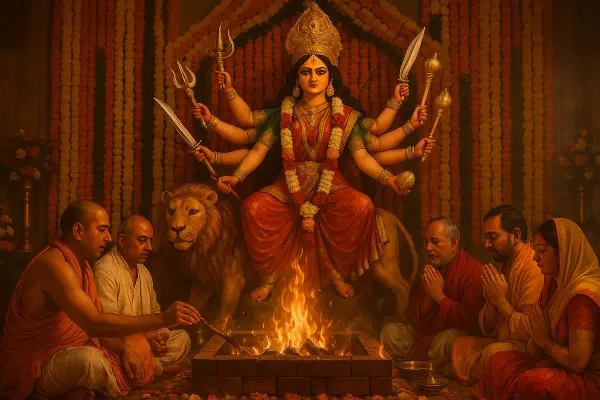
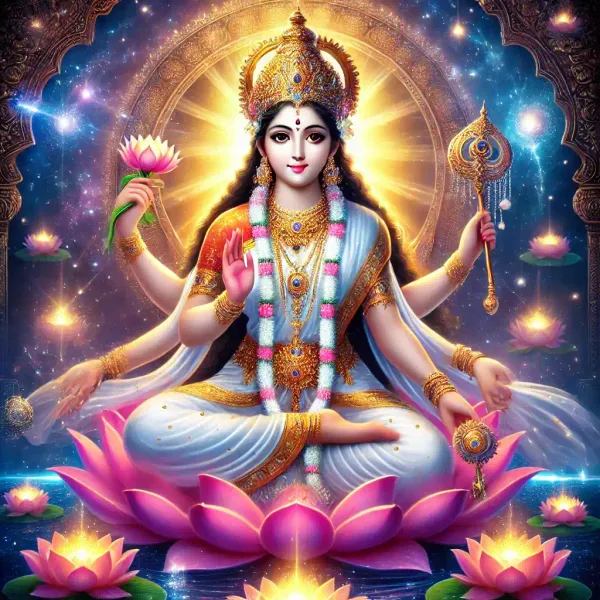
Navratri, the nine-night festival dedicated to the Divine Mother, is not merely a sequence of ritualistic observances but a profound spiritual journey. Each day of Navratri honors one of the nine manifestations of Maa Durga, each form carrying a unique symbolism, energy, and lesson for the devotee.
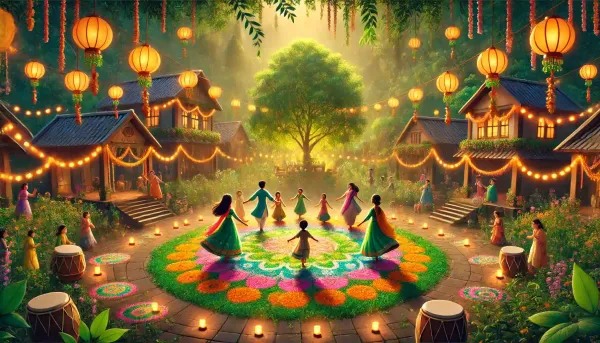
Navratri is incomplete without Garba and Dandiya, where the joyous dance celebrates Maa Durga’s victory and fills the nights with divine energy. Clad in colorful attire, devotees gather to dance, rejoice, and honor the Divine Mother in an atmosphere of joy and reverence.
At Radha Krishna Temple of Dallas, the Navratri Mahotsav 2025 offers unforgettable evenings filled with Garba, Dandiya, Durga Pooja, children’s activities, delicious food, and vibrant cultural programs. As lamps glow and music fills the air, the community comes together in a beautiful celebration of tradition, devotion, and festivity—an experience of Navratri magic like never before.
Join us at the celebration; get your tickets today!
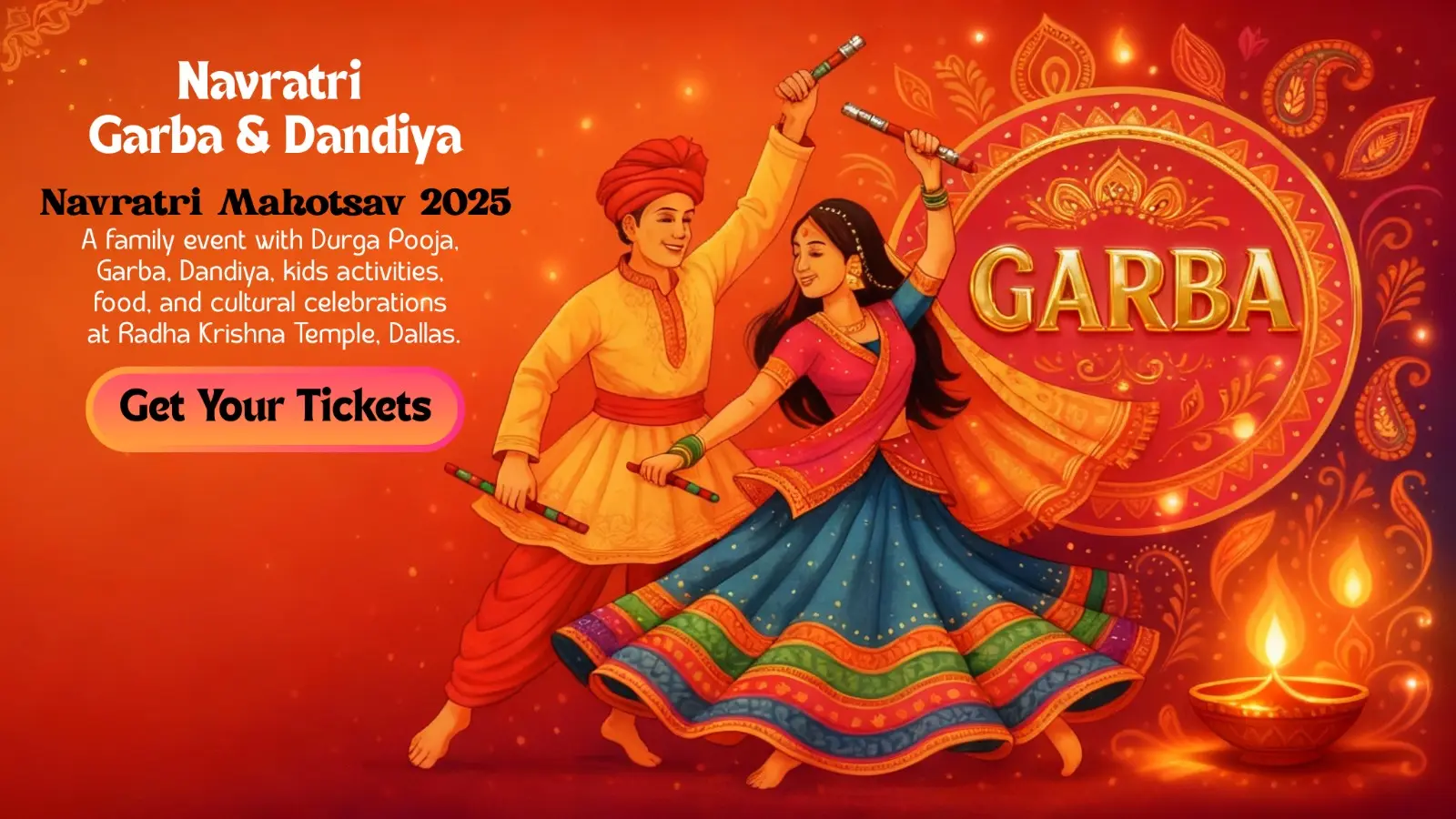
Radha Krishna Temple of Dallas | Navratri Mahostav 2025 | Garba & Dandiya Tickets
On the third day of Navratri, we worship Maa Chandraghanta, the embodiment of courage, grace, and divine readiness to protect her devotees.
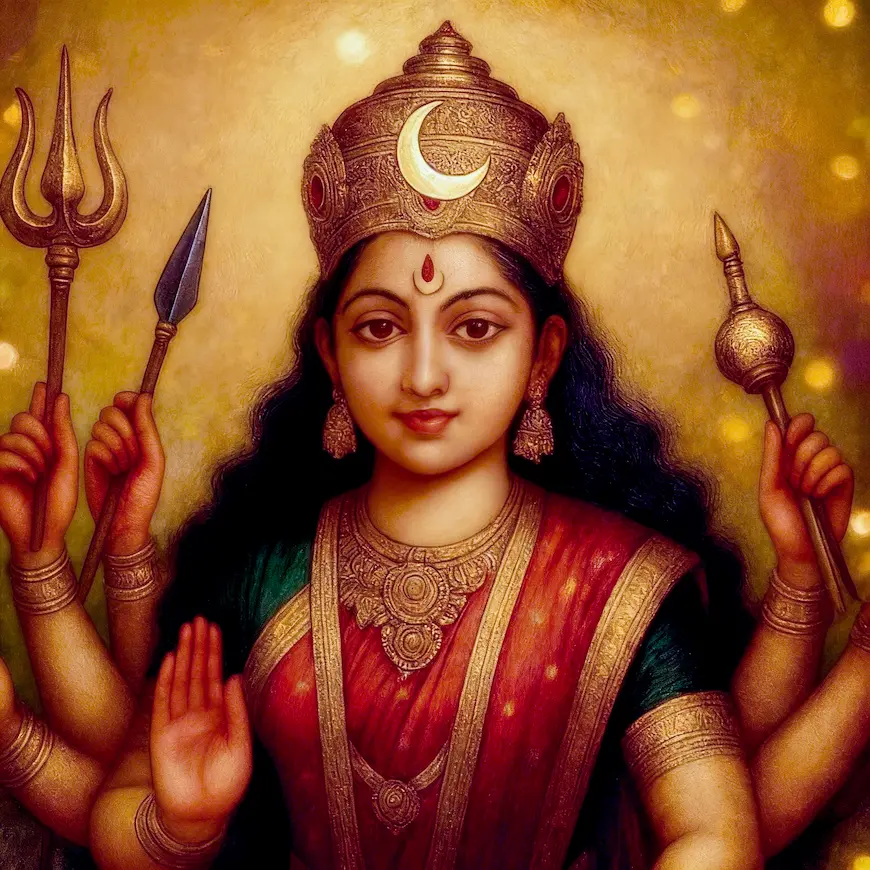
Her very name, “Chandraghanta,” means “one who adorns her forehead with the crescent moon shaped like a bell.” She is a fierce yet benevolent form of Goddess Parvati, manifesting after her marriage to Lord Shiva. While she grants peace, prosperity, and serenity to her devotees, she also symbolizes a mother who takes up arms to defend her children from all forms of negativity and evil.
This day holds immense significance, as it teaches us the delicate balance between inner tranquility and outer strength. Just as a bell resonates with clarity and power, Maa Chandraghanta inspires her devotees to awaken their inner potential and live with courage and divine focus.
The Iconography of Maa Chandraghanta
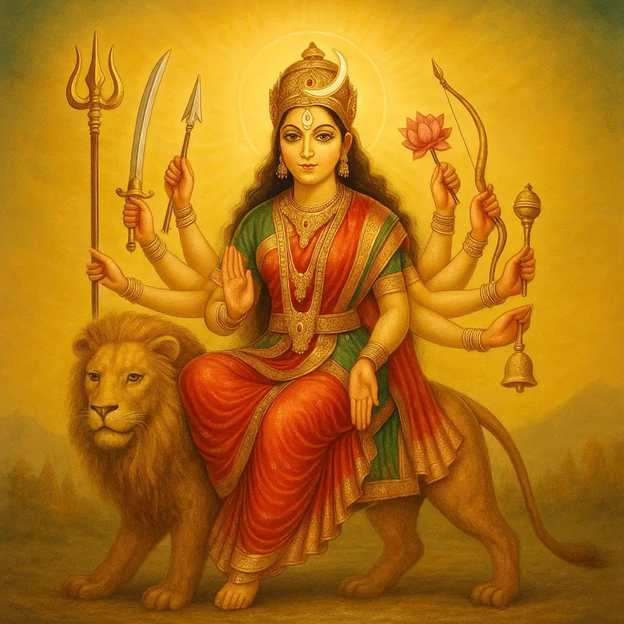
Maa Chandraghanta is depicted as a radiant and majestic goddess, mounted on a lion, symbolizing valor and courage. She has ten arms, each holding weapons and items with deep symbolic meaning:
- Trishul (Trident): The destruction of ignorance and ego.
- Gada (Mace): Strength and determination.
- Bow and Arrow: Concentration, discipline, and alignment of thought and action.
- Sword: Wisdom cutting through illusion.
- Kamandal (Water Pot): Purity and spiritual asceticism.
- Lotus: Detachment and blossoming of inner beauty.
- Ghanta (Bell): Dispelling of negative energies and awakening consciousness.
- Other hands: Display gestures of blessing and fearlessness (abhaya and varada mudras).
Her forehead is adorned with a half-moon in the shape of a bell, giving her the name Chandraghanta. This bell is said to destroy all demonic energies with its sound, symbolizing the vibration of higher consciousness. Her lion mount represents untamed strength under divine control, and her golden complexion reflects divinity, warmth, and radiance.
The Legend of Maa Chandraghanta
The story of Maa Chandraghanta is rooted in her marriage to Lord Shiva. When Parvati, in her previous form as Sati, immolated herself due to her father Daksha’s insults toward Shiva, the universe was thrown into grief. To restore balance, she reincarnated as Parvati, the daughter of Himavan, the king of the Himalayas.
After rigorous penance, Parvati won Shiva’s heart, and their marriage was arranged. On the day of the wedding, Shiva arrived with his procession—consisting of ghosts, ascetics, goblins, and wild beings. His terrifying form struck fear in the hearts of Parvati’s relatives.
To avoid disgrace and bring dignity to the occasion, Parvati assumed the divine form of Chandraghanta, radiating beauty and strength. In this form, she convinced Shiva to adopt a gracious form suitable for the ceremony. The marriage was solemnized with honor, symbolizing the union of Shiva and Shakti—the cosmic consciousness and the dynamic energy of the universe.
Later, when demons threatened peace on earth, Parvati manifested again as Chandraghanta, armed with weapons, mounted on a lion, and destroyed the forces of evil with her divine bell and power.
The Significance of Worship on Day 3 of Navratri
On the third day of Navratri, devotees invoke Maa Chandraghanta for strength, courage, and peace. She blesses her devotees with the ability to overcome obstacles, fight negativity, and attain mental clarity.
- For Spiritual Seekers: She grants discipline and removes doubts that arise in meditation.
- For Families: She blesses homes with harmony, peace, and prosperity.
- For Warriors of Life: She instills courage to face struggles with determination.
This day is also associated with the Manipura Chakra, the solar plexus energy center in yogic philosophy. Located near the navel, this chakra governs willpower, confidence, and self-discipline. Worshiping Maa Chandraghanta helps purify and strengthen this chakra, allowing the devotee to transform insecurity into confidence and fear into courage.
Rituals and Worship of Maa Chandraghanta

The third day of Navratri is observed with devotion, meditation, and specific rituals:
- Kalash Sthapana Continuation: Devotees maintain the sacred Kalash established on Day 1. It remains as the vessel of divine energy throughout Navratri.
- Offerings (Bhog): Maa Chandraghanta is pleased with offerings of milk, kheer, or white sweets. Devotees often prepare simple sattvic food as prasadam.
- Mantras: Reciting the mantras dedicated to her, such as “Om Devi Chandraghantayai Namah,” creates vibrations that connect the devotee with her energy.
- Meditation on the Manipura Chakra: Focusing on this energy center while chanting her name brings inner strength and mental balance.
- Aarti and Bell Ringing: Bells are significant in her worship. Their sound purifies the atmosphere and invites her divine presence.
Lessons from Maa Chandraghanta’s Form
1. Balancing Gentleness with Strength
Maa Chandraghanta embodies both serenity and ferocity. She teaches us that spiritual seekers must develop compassion and kindness, yet remain strong and unwavering in principles when tested by life.
2. The Power of Readiness
Her ten arms holding weapons symbolize preparedness. In life, situations are unpredictable, and one must be mentally equipped to respond with courage and wisdom.
3. Victory Over Fear
Riding a lion, Maa Chandraghanta demonstrates that fears can be tamed by devotion and surrender. She shows us that courage is not the absence of fear, but the ability to rise above it.
4. Inner Awakening
Her bell signifies the sound of higher consciousness. Just as a temple bell calls us to prayer, her presence calls us to awaken from worldly distractions and focus on the eternal.
The Relevance of Maa Chandraghanta in Modern Life
Though ancient in origin, the worship of Maa Chandraghanta is deeply relevant today. Modern life is filled with stress, insecurities, and constant challenges. Her worship gives us tools to navigate this chaos:
- Mental Clarity: She helps us rise above confusion and make decisions with courage.
- Emotional Stability: By blessing the Manipura Chakra, she ensures balance in our emotions.
- Spiritual Protection: Her presence protects seekers from negative influences, distractions, and inner weaknesses.
- Empowerment of Women: Maa Chandraghanta’s form is an inspiration for women to embrace strength and fearlessness while retaining grace and compassion.
Connecting Maa Chandraghanta with Yogic Philosophy
From the yogic lens, Maa Chandraghanta resonates with the journey of the soul toward self-realization. The Manipura Chakra, linked with fire energy, represents transformation. When it is blocked, one experiences fear, doubt, and insecurity. When it is awakened through devotion to Maa Chandraghanta, it grants power, confidence, and spiritual maturity.
She also represents the awakening of tapas (inner discipline). Just as fire purifies gold, the discipline associated with her form burns away impurities of the mind, preparing the devotee for deeper meditation and union with the Divine.
The Sound of the Bell: A Spiritual Metaphor
The bell that Chandraghanta carries is not only a physical weapon but also a profound symbol. Its sound resonates with the universal vibration, Om.
- Dispelling Negativity: The ringing of the bell removes fear, anger, and ignorance.
- Awakening Consciousness: It reminds us to focus our wandering minds on God.
- Unity of Devotion: Just as the bell calls all to prayer, her blessings unify devotees in collective spiritual energy.
Final Thoughts: Maa Chandraghanta and Raganuga Bhakti
The worship of Maa Chandraghanta on the third day of Navratri is not just about rituals or stories of valor—it is about an inner transformation. She embodies the balance of strength and serenity, the readiness to fight negativity while maintaining inner peace.
Swami Mukundananda often explains the essence of Raganuga Bhakti—a higher form of devotion characterized not by rules or rituals alone, but by spontaneous love for God. In this path, the devotee does not merely perform worship mechanically but allows the heart to overflow with genuine affection, much like a child’s natural love for its mother.
Maa Chandraghanta inspires this very quality. Her devotees, when they call upon her, do so with deep love, surrender, and trust that she will protect and guide them. The ringing of her bell is like the call of God’s grace that awakens devotion in the heart.
Through Raganuga Bhakti, we learn to see beyond external rituals and connect with the essence of devotion—love, surrender, and intimacy with the Divine. Worshiping Maa Chandraghanta teaches us to cultivate courage not only to face the world but also to overcome the inner enemies of ego, fear, and attachment. When this courage is blended with heartfelt, spontaneous love for God, as Swami Mukundananda teaches, the devotee progresses toward true union with the Divine.
Thus, the third day of Navratri is a reminder: to live with courage, to awaken inner discipline, and most importantly, to nurture a heart that beats with unconditional love for the Divine Mother. In doing so, we not only honor Maa Chandraghanta but also align ourselves with the blissful path of Raganuga Bhakti—where devotion flows naturally, and the soul rejoices in eternal connection with God.
🌸 Call to Action
As we celebrate the third day of Navratri, let us welcome Maa Chandraghanta into our hearts with devotion and courage. May her radiant presence dispel fear, grant discipline, and fill our lives with peace. Take a moment today to light a diya, ring a bell, and remember her boundless grace.
📖 Continue Your Navratri Journey
Day 1: Worshiping Maa Shailaputri »
Day 2: Worshiping Maa Brahmacharini »
Day 4: Worshiping Maa Kushmanda »
Day 5: Worshiping Maa Skandamata »
Day 6: Worshiping Maa Katyayani »
Day 7: Worshiping Maa Kalaratri »
Day 8: Worshiping Maa Mahagauri »
Day 9: Worshiping Maa Siddhidatri – Coming Soon
📚 Learn about all 9 forms of Goddess Durga and explore Navratri rituals in our Complete Navratri 2025 Guide »
✨ Explore the All Navratri Days Blog
🛕 Join us at the Radha Krishna Temple of Dallas as we celebrate Navratri 2025 with grandeur and devotion from 22nd September to 1st October.
Durga Pujas
Participate in 9 Sacred Durga Pujas
Durgashtami Havan
Reserve your Spot
Food Festival
Celebrate with Every Bite
Ravan Dahan
Celebrate Dussehra with Devotion
⏳ Countdown to Navratri
Navratri begins on Sunday, Sept 21, 2025. Evening Garba starts at 7:00 PM.
Sacred Offerings for Durga Maa
Offer your devotion through seva.
Garba Workshops
Get ready for Navratri! 💃🕺 Join our Garba Workshop at Radha Krishna Temple, Dallas and learn traditional steps, Dandiya moves, and rhythm with ease.
Dates
Sept 13, 6pm - 7pm
Sept 20, 6pm - 7pm
Price
Garba Workshop: $7
Dandiya Sticks : $5
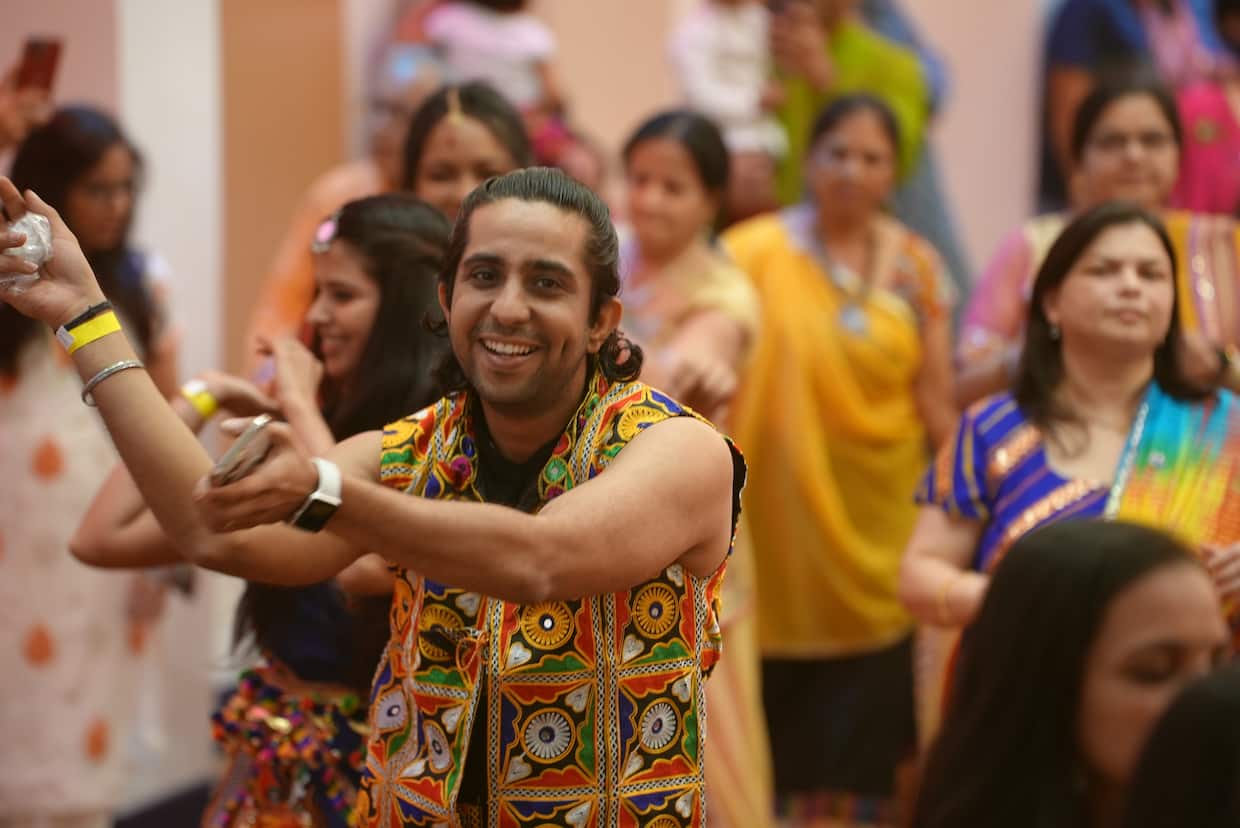
Cherished Moments of Past Navratri Celebrations
Relive the inspiring moments from past Navratri celebrations! Experience the joy, devotion, and vibrant festivities that make this event so special.


Serve, Grow, Inspire! — Volunteer for Navratri Mahotsav
Join us as a volunteer for the Navratri & Dussehra Celebrations! Experience the joy of devotion, build lifelong friendships, and serve the community while being part of these grand festivities. Sign up today to make this celebration truly special
📖 References
- Durga Saptashati (Devi Mahatmya) – Markandeya Purana.
- Swami Mukundananda. Spiritual Dialectics: Discourses on Yoga and Devotion.
❓ FAQs
Q1. Who is Maa Chandraghanta?
Maa Chandraghanta is the third form of Goddess Durga, worshiped on the third day of Navratri. She is known for courage, protection, and divine grace.
Q2. Why is she called Chandraghanta?
She is called Chandraghanta because of the crescent moon on her forehead shaped like a bell.
Q3. What does Maa Chandraghanta symbolize?
She symbolizes serenity and strength, inspiring devotees to balance peace with readiness to face challenges.
Q4. What is her mount and its significance?
Her mount is a lion, symbolizing valor, fearlessness, and control over desires.
Q5. Which chakra is associated with her worship?
The Manipura Chakra (solar plexus) is linked to her, governing willpower, discipline, and transformation.
Q6. What offerings are made to Maa Chandraghanta?
Devotees offer milk, kheer, or white sweets to seek her blessings of peace and prosperity.
Q7. What is the mantra for Maa Chandraghanta?
Her main mantra is “Om Devi Chandraghantayai Namah.”
Q8. What is the significance of the bell she carries?
The bell dispels negativity, awakens higher consciousness, and symbolizes divine vibrations.
Q9. How is Maa Chandraghanta connected to Lord Shiva?
She manifested in this form at the time of her marriage to Lord Shiva to bring dignity and grace to the occasion.
Q10. What blessings does Maa Chandraghanta grant?
She grants fearlessness, mental clarity, spiritual protection, discipline, and inner peace to her devotees.