
Introduction
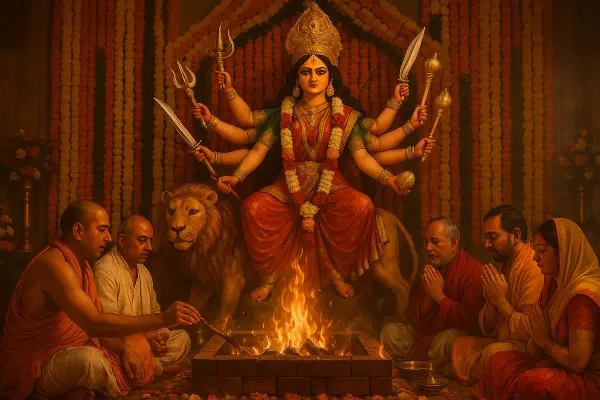
Across India and in Hindu homes around the world, the festival of Navaratri marks nine nights of luminous celebration. Lamps flicker before shrines, the scent of incense mingles with marigolds, and voices rise in bhajans as communities come together to honor the Divine Feminine. Each day of Navaratri is not just another ritual date on the calendar but a step in a spiritual pilgrimage—a gradual ascent through the qualities and energies of the Goddess Durga in her nine forms, known as the Navadurga.
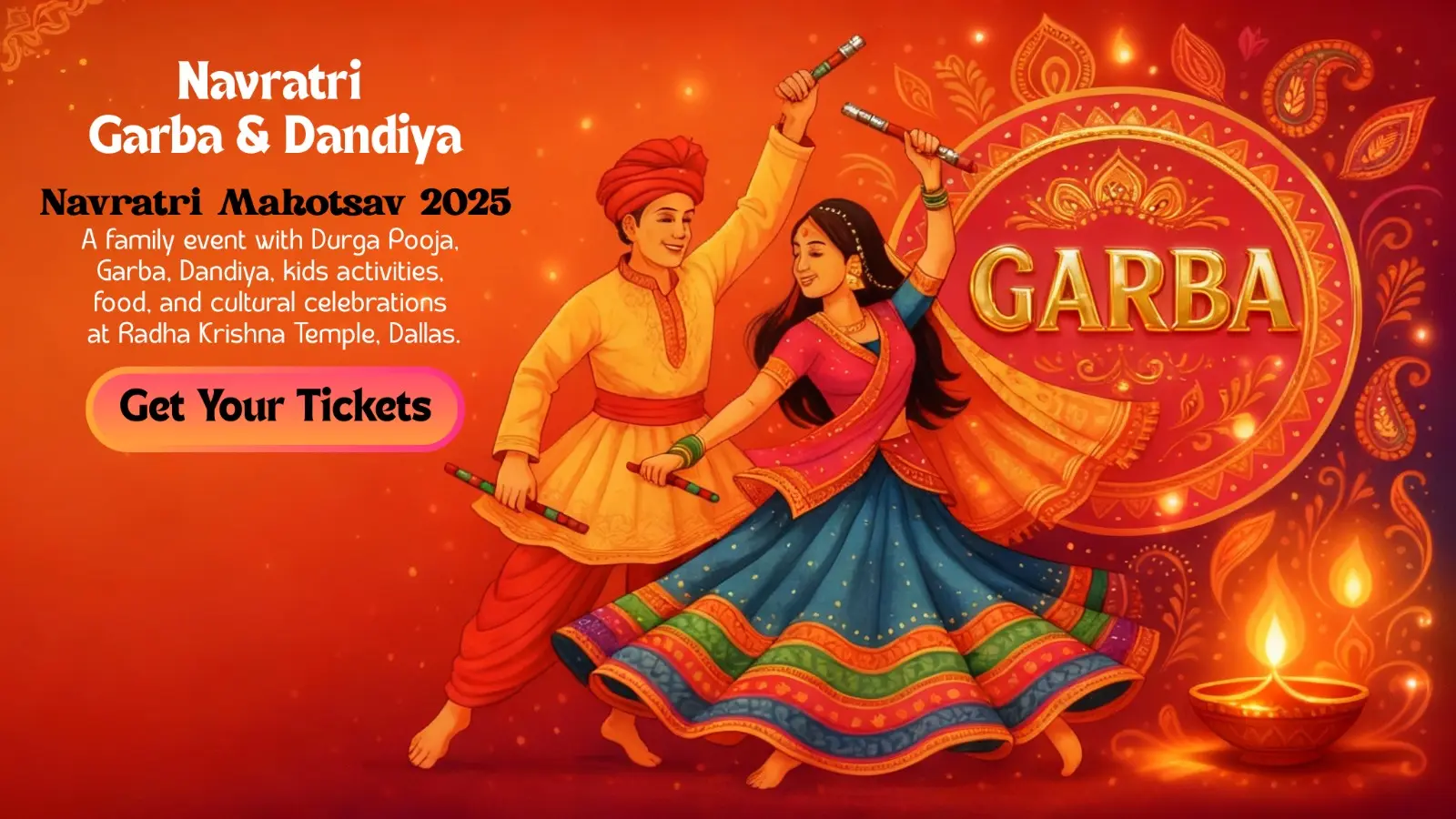
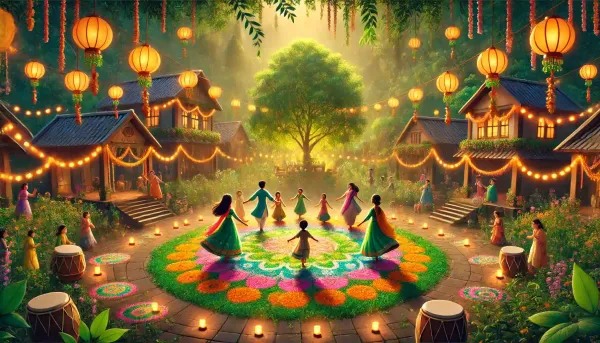
Navratri is incomplete without Garba and Dandiya, where the joyous dance celebrates Maa Durga’s victory and fills the nights with divine energy. Clad in colorful attire, devotees gather to dance, rejoice, and honor the Divine Mother in an atmosphere of joy and reverence.
At Radha Krishna Temple of Dallas, the Navratri Mahotsav 2025 offers unforgettable evenings filled with Garba, Dandiya, Durga Pooja, children’s activities, delicious food, and vibrant cultural programs. As lamps glow and music fills the air, the community comes together in a beautiful celebration of tradition, devotion, and festivity—an experience of Navratri magic like never before.
Join us at the celebration; get your tickets today!
Radha Krishna Temple of Dallas | Navratri Mahostav 2025 | Garba & Dandiya Tickets
The first three days build a foundation of strength, discipline, and grace. On the fourth day, a shift takes place: from purifying and preparing to awakening inner radiance and creativity. This is the day of Maa Kushmanda, whose very smile is said to have seeded the universe. Her name—Ku (little), Ushma (warmth), and Anda (cosmic egg)—describes the subtle, nurturing spark of life itself.
In mythic imagination she sits at the heart of the Sun, her energy giving it its brilliance, while in the hearts of devotees she represents joyful creation, warmth, and the power of sustaining life. She is the gentle but fearless mother riding a lion, smiling as she holds the implements of cosmic order in her many hands. By turning to her on Day 4 of Navaratri, seekers are invited to let their own inner sun rise: to infuse their practices with joy, to ground themselves before opening the heart, and to begin creating a life rooted in compassion and devotion.
The Story of Maa Kushmanda: The Mother Who Smiled the Cosmos into Being
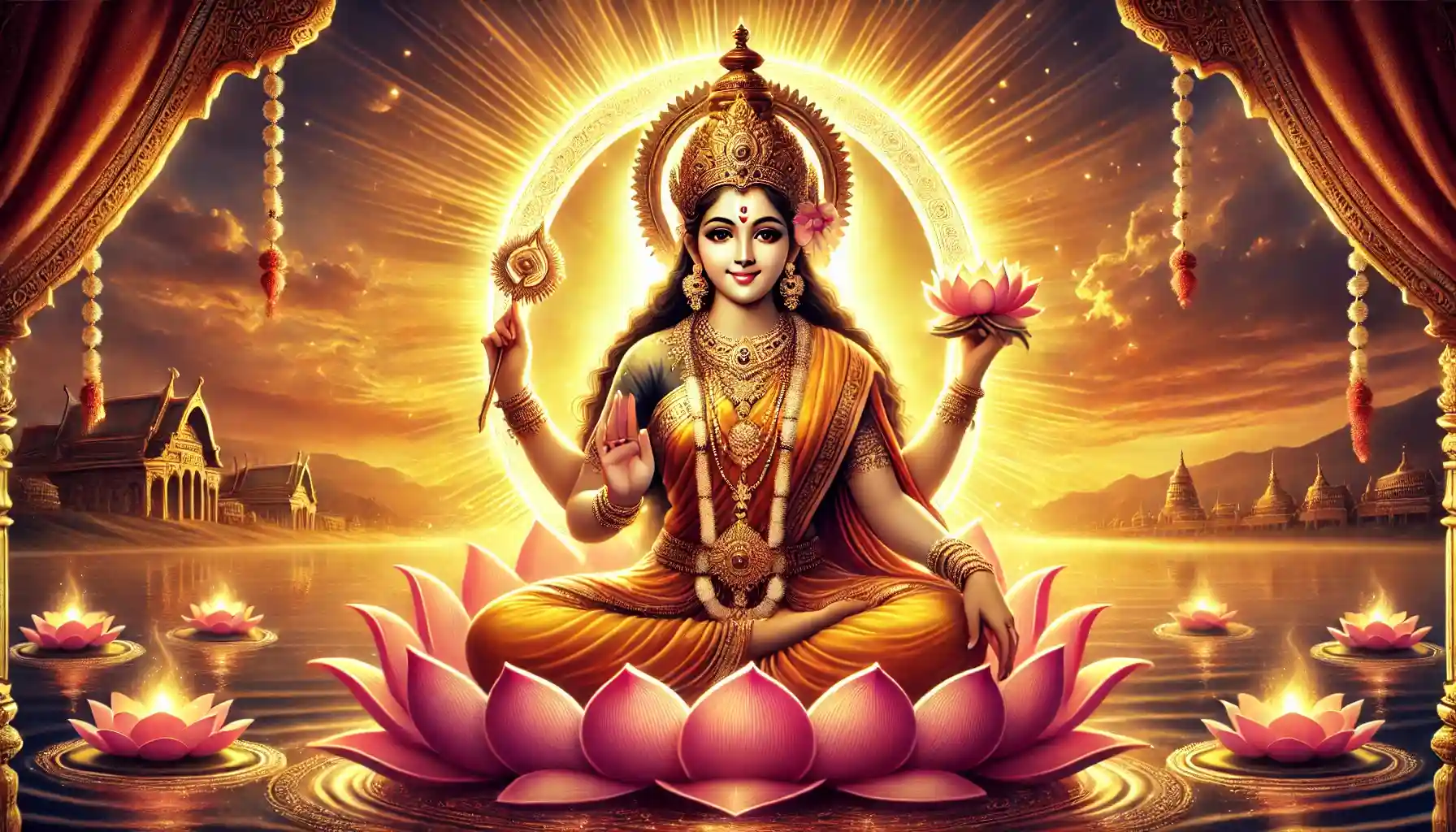
The name “Kushmanda” is derived from three Sanskrit words:
- “Ku” (little),
- “Ushma” (warmth or energy), and
- “Anda” (cosmic egg).
Together, they form the meaning “the little warmth of the cosmic egg” or “the Mother who created the universe with her smile.”
According to the Purāṇas, before the universe came into being, there was only infinite darkness. The cosmos lay as an inert void—silent, still, unmanifest. It is said that Ma Kushmanda, seated in her radiant glory, smiled, and from her smile emerged the energy that formed the first cosmic egg. From that egg, the universe unfolded.
Thus, Ma Kushmanda is not merely another form of Durga; she is the creative power—the Shakti who brings order from chaos, light from darkness, and existence from non-existence. She is the Prakriti, or nature, from which all living beings arise.
In some traditions, Ma Kushmanda also lives in the core of the Sun, granting it its energy and warmth. As the source of solar vitality, she sustains life on earth and within every being.
This story reveals her as not only a cosmic creatrix but also a nurturing force—a smiling Mother who gives without measure.
The Birth of Maa Kushmanda: A Cosmic Smile
Long ago, before the stars sparkled in the sky and before rivers and mountains existed, there was only darkness—silent, infinite, and still. No light, no sound, no life—just the vast emptiness of nothingness.
In this boundless void, a miraculous event took place. From the silent emptiness, a radiant energy began to glow—a gentle, yet powerful warmth, like the first hint of dawn. And from this divine energy, Maa Kushmanda emerged, smiling softly, her light breaking through the darkness.
With her smile, she infused the universe with life. She created the cosmic egg, a mystical womb containing all that would ever exist: the stars, the planets, the sun, and every living being. Her energy sparked creation, bringing movement, light, and vitality into the silent void. The Devas and all beings who would come to populate the universe were nourished by her warmth and abundance.
It is said that even the tiniest creature, the smallest star, and the most distant galaxy carries a part of her creative energy. Maa Kushmanda’s smile became the first light of the universe, reminding all beings that life begins with warmth, joy, and hope. She is the Mother who plants the seed of life and nurtures it with her cosmic love.
Even today, devotees invoke Maa Kushmanda on the fourth day of Navaratri, seeking her blessings for health, vitality, and the courage to create and sustain their dreams. Her story is a gentle reminder: no matter how dark life may seem, a spark of divine light can awaken the universe within us.
Iconography of Ma Kushmanda
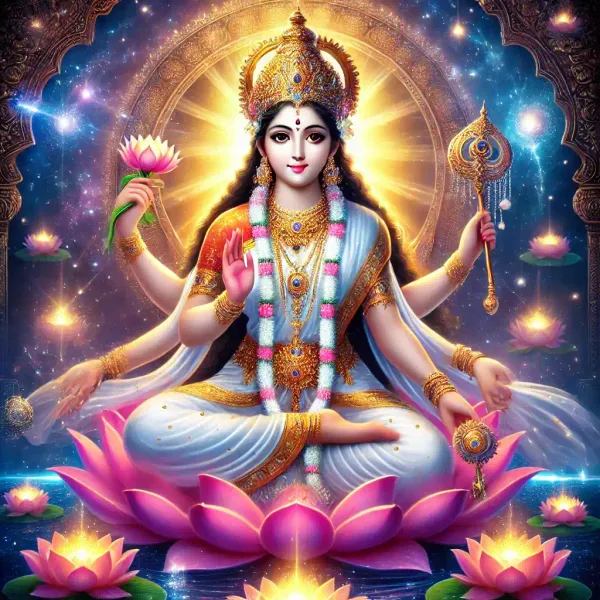
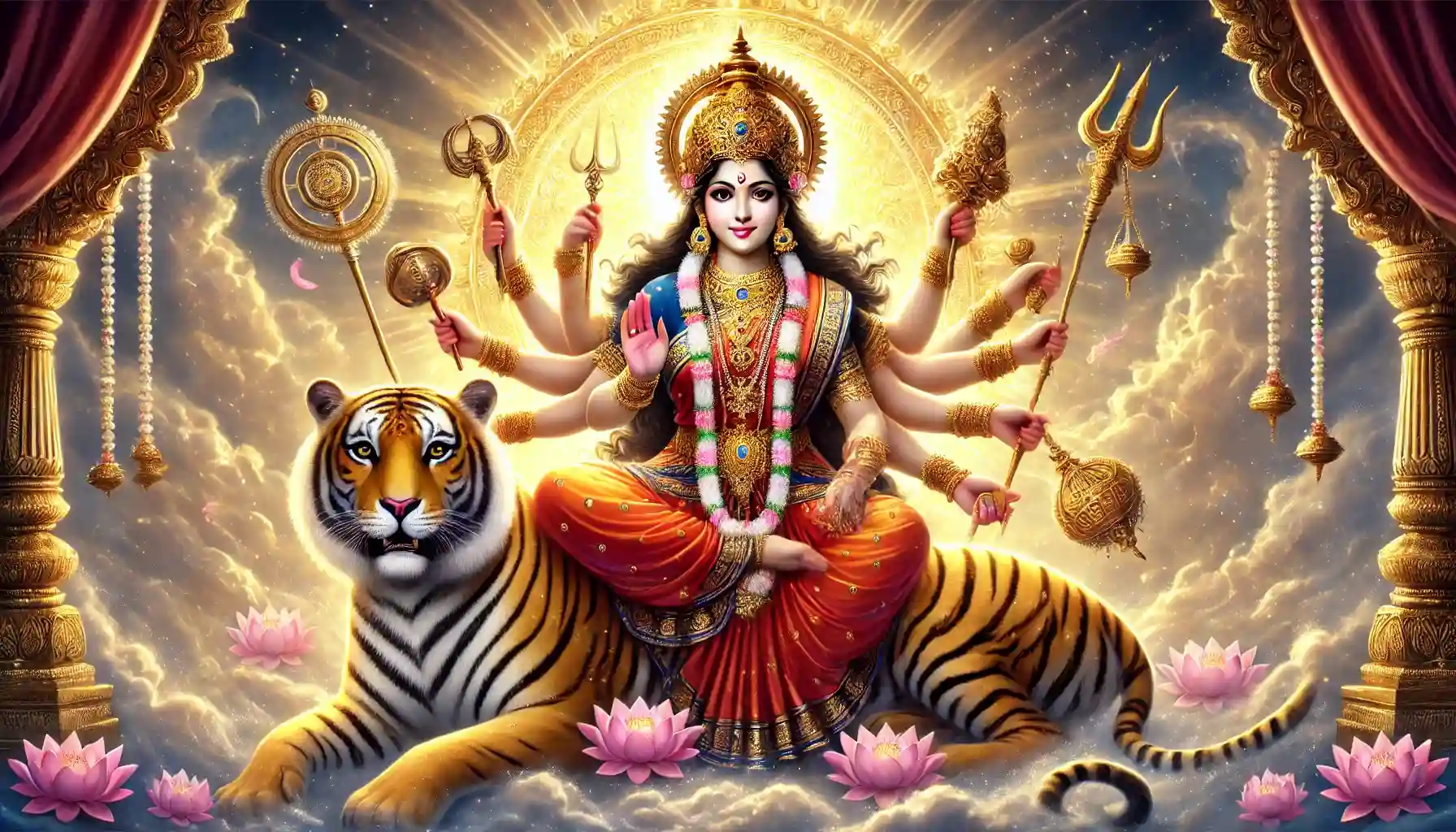
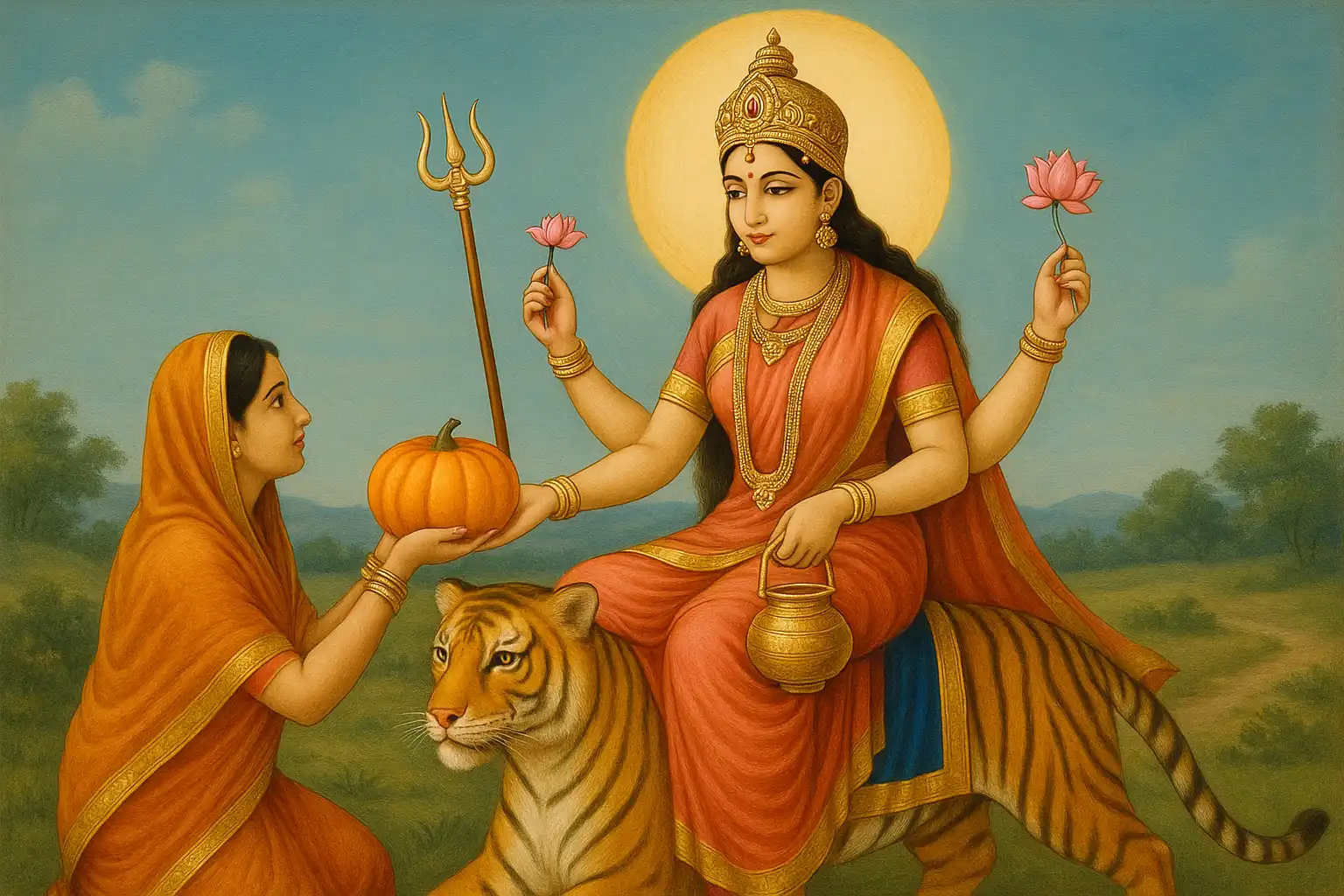
Ma Kushmanda’s visual form is filled with rich symbolism that speaks to her cosmic role. She is often depicted with a radiant aura, golden or orange in color, symbolizing the Sun’s energy.
She is shown riding a lion or tiger, representing courage and the fearlessness of divine power. In her many hands—usually eight, sometimes ten—she carries symbolic objects:
- A kamandalu (water pot) – symbolizing the origin of life.
- A bow and arrow – representing focus and dharma.
- A lotus – the unfolding of cosmic creation.
- A mace – strength and destruction of negativity.
- Her eight hands connect her to the eight directions, showing that her energy pervades everywhere. Her face, however, is serene and smiling—an image of compassionate strength.
Her vahana, the lion, signifies her mastery over animal instincts and her fearless leadership in guiding devotees through the jungle of samsara (worldly life).
- A chakra (discus) – the cycle of time and cosmic order.
- A rosary – the subtle power of mantra and spiritual practice.
- A pot of nectar or Amrita – the sustenance of immortality.
- In some depictions, she carries a pitcher of blood or other items, signifying her power over life and death.
Day 4 of Navaratri: Spiritual Significance
Navaratri unfolds as a progressive journey of the soul. Each day represents a step toward deeper purification and connection with the Divine.
On the fourth day, Ma Kushmanda is worshipped. After the first three days—which focus on invoking strength (Shailaputri), cleansing negativity (Brahmacharini), and nurturing divine grace (Chandraghanta)—the fourth day marks a shift into creativity and inner radiance.
This is the day to cultivate warmth, generosity, and joy—the qualities of Ma Kushmanda. Devotees believe that worshipping her on this day brings health, prosperity, and vitality. Her blessings can dispel darkness from the heart and illuminate one’s life with renewed energy.
In spiritual terms, Day 4 is associated with the Anahata Chakra (Heart Center). This chakra is the seat of compassion, empathy, and unconditional love—the very qualities Ma Kushmanda embodies. When this chakra is awakened, a person feels connected to all beings and radiates kindness effortlessly.
Establishing Groundedness: Rooting the Heart Before It Opens
Before the heart can bloom in the radiance of Ma Kushmanda, it needs groundedness—a sense of inner stability and balance. In yogic practice, groundedness is like the soil that nourishes the seed. Without it, spiritual practices may remain theoretical or unsteady.
On the fourth day of Navaratri, devotees are encouraged to
- Begin the day with deep breathing or pranayama. Feeling the contact of the body with the floor, or of the feet with the earth, stabilizes the nervous system and draws awareness into the present moment.
- Sit for a few moments in silence before lighting the lamp. This quiet anchoring allows the mind to settle, making prayer more heartfelt.
- Acknowledge the body as sacred. Even simple gestures—washing hands mindfully, placing the right palm on the heart—help integrate the physical and spiritual.
Groundedness does not dampen devotion; it deepens it. When one feels rooted, prayers rise from a place of steadiness, and the heart can open fully to the Goddess’s grace.
Purity of Heart: The Prerequisite for Her Grace
Scriptures emphasize that Ma Kushmanda is especially drawn to a pure heart. While external rituals have their place, her real temple is within the heart of a sincere devotee
Purity here does not mean perfection; it means sincerity, openness, and compassion. When a person sheds negativity, resentment, and selfishness, they become a vessel for her grace. Her energy then flows like sunlight, bringing clarity, vitality, and creativity to one’s endeavors.
Rituals and Practices on Day 4

Devotees observing Navaratri on Day 4 typically:
- Offer orange flowers, fruits, or garments to Ma Kushmanda, as orange is her sacred color.
- Light lamps (diyas) and chant her mantras, such as the Kushmanda Devi Mantra:
“ॐ देवी कूष्माण्डायै नमः” (Om Devi Kushmandayai Namah). - Prepare a bhog (food offering)—often pumpkin dishes, as the pumpkin is symbolic of nourishment and abundance.
- Meditate on her form, focusing on the heart center, visualizing her golden energy filling the chest with warmth.
Some devotees also recite the Durga Saptashati (Chandi Path), which narrates the glories of the Goddess in her various forms.
The key is not just ritual but invocation—calling her presence into one’s heart with love and devotion.
Invocation of Maa Kushmanda
Invocation can be done through prayer, mantra, or visualization. A simple practice:
- Sit quietly with eyes closed.
- Visualize a radiant sun at the heart center.
- See Maa Kushmanda seated there, smiling and showering golden light.
- Silently chant “Om Devi Kushmandayai Namah.”
As her light expands within, devotees often feel warmth, joy, and renewed energy—like sunlight breaking through clouds.
Symbolic Lessons from Maa Kushmanda
Maa Kushmanda offers timeless lessons for seekers:
- Creation through Joy
She creates with a smile, teaching us that creativity flows best from a state of joy, not struggle. - The Power of Warmth
Her name itself signifies warmth. In a cold world, warmth of heart can be transformative. - Light from Darkness
She emerged when there was only darkness. Similarly, we can bring light to our own inner shadows. - Fearlessness and Compassion
Her lion and her smile show that true strength is gentle, not harsh. - Sustenance and Generosity
She nurtures all beings, reminding us to live in a way that nourishes others, not depletes them
Stories of Devotion to Maa Kushmanda
Across India, countless folk stories and local traditions honor Ma Kushmanda. In rural villages, grandmothers tell children how she protects crops and ensures fertility of the land. In temples, devotees share miracles attributed to her blessings—healing from illness, relief from mental distress, or a sudden surge of creativity in work and art.
One popular story tells of a poor woman who had nothing to offer but a simple pumpkin during Navaratri. She presented it with tears and love. Ma Kushmanda, pleased with the sincerity, blessed her home with food and prosperity for years.
Such stories highlight that Ma Kushmanda is not moved by grandeur but by genuine devotion.
Kushmanda and the Inner Journey
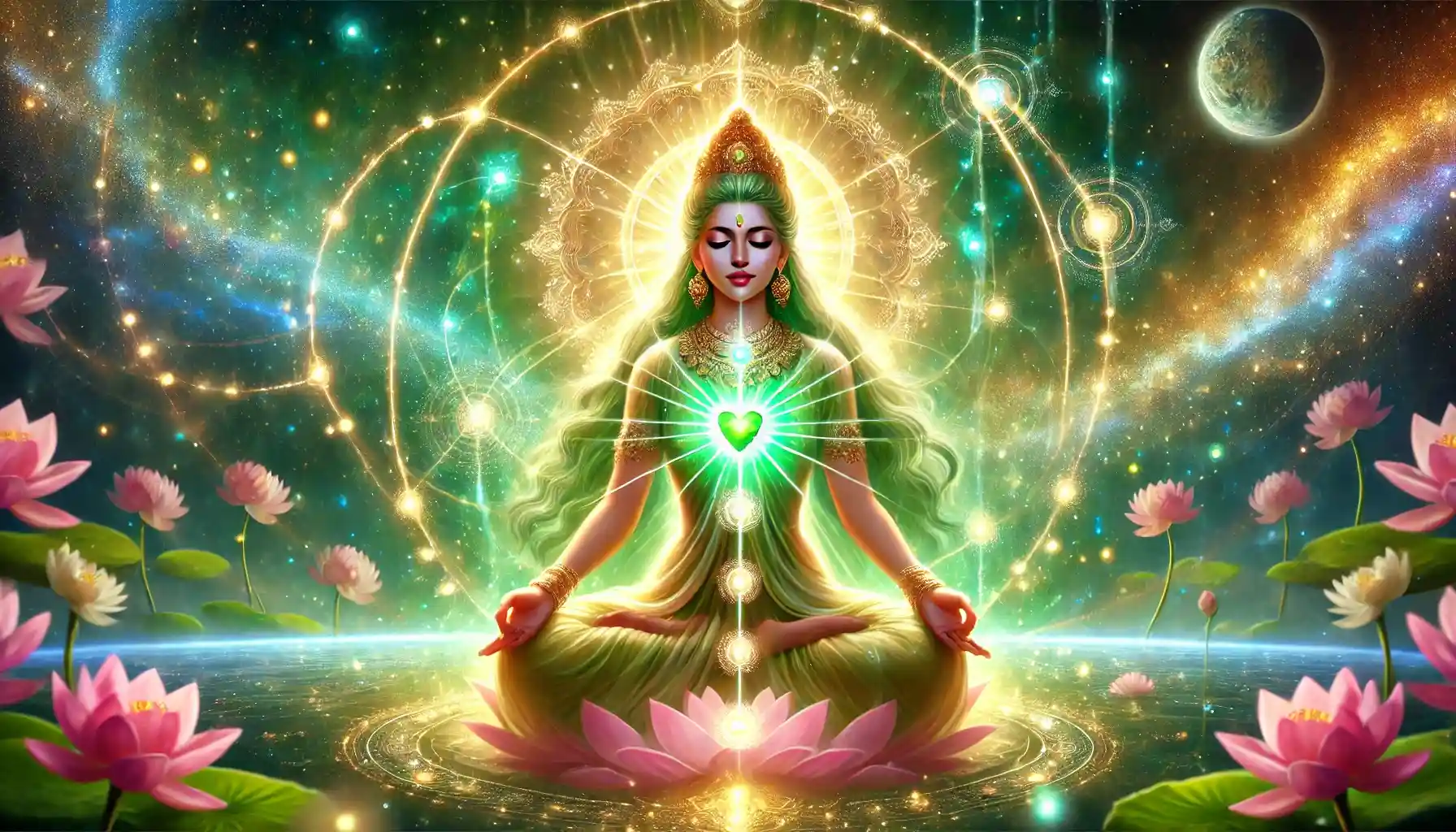
In yogic symbolism, Maa Kushmanda is associated with the Anahata Chakra, as mentioned earlier. This is significant: the heart center is where dualities dissolve—where one transcends ego and begins to live from love.
Meditating on Maa Kushmanda during Navaratri can help a seeker:
- Release old resentments.
- Heal emotional wounds.
- Awaken compassion.
- Feel a connection to the cosmic whole.
Thus, her worship is not just about outer rituals but about inner alchemy—transforming the darkness of the subconscious into the light of awareness.
Kushmanda in Modern Life

Though the myths of Maa Kushmanda come from ancient texts, her relevance is timeless. In today’s world of stress, fragmentation, and disconnection, her qualities are especially needed:
- Creativity and Innovation: Like Ma Kushmanda, modern people can “create” their lives through a positive mindset rather than fear.
- Warmth in Relationships: Her energy can inspire us to bring warmth into our families, workplaces, and communities.
- Sustainable Living: She represents fertility and abundance without excess. This can inspire eco-friendly choices and gratitude for nature.
- Spiritual Self-Care: Setting aside time for meditation, mantra, or simple mindful breathing on her day can recharge the soul.
By embracing Maa Kushmanda’s example, modern devotees can integrate spirituality with daily life, making every action an offering and every smile a seed of creation.
Maa Kushmanda and Rāgānugā Bhakti
In the bhakti tradition, there is a form of devotion called Rāgānugā Bhakti—spontaneous, heartfelt love for the Divine, beyond formal rules. It is love that arises naturally, like a child’s love for its mother.
Maa Kushmanda is uniquely suited to inspire this kind of devotion. She is not a distant goddess to be appeased but a smiling Mother who welcomes sincere hearts. By meditating on her warmth and generosity, devotees find themselves moving from mechanical ritual to living devotion—singing, offering, and remembering her with joy rather than obligation.
Rāgānugā Bhakti also emphasizes personal connection with the Divine. Just as Maa Kushmanda created the universe with a smile, she creates a personal relationship with each devotee, responding to their needs, guiding their journey, and nurturing their growth.
Final Thoughts: The Smile That Creates Worlds
Ma Kushmanda represents a profound spiritual truth: creation begins within. When the heart smiles—when warmth, love, and faith awaken—life blossoms outwardly.
Her worship on the fourth day of Navaratri is not just about asking for blessings but about aligning with her qualities—joyful creation, warmth, fearlessness, and compassion. Through such alignment, devotees can transform their own lives into luminous expressions of the Divine Mother.
In the words of a traditional hymn:
“Salutations to Ma Kushmanda, who removes darkness with her smile,
Who grants health, vitality, and unshakable devotion.”
May the fourth day of Navaratri remind every seeker to smile at the universe, and in doing so, help create a world of light, love, and abundance.
Call To Action
📖 Continue Your Navratri Journey
Day 1: Worshiping Maa Shailaputri »
Day 2: Worshiping Maa Brahmacharini »
Day 3: Worshiping Maa Chandraghanta »
Day 5: Worshiping Maa Skandamata »
Day 6: Worshiping Maa Katyayani »
Day 7: Worshiping Maa Kalaratri »
Day 8: Worshiping Maa Mahagauri »
Day 9: Worshiping Maa Siddhidatri – Coming Soon
📚 Learn about all 9 forms of Goddess Durga and explore Navratri rituals in our Complete Navratri 2025 Guide »
✨ Explore the All Navratri Days Blog
🛕 Join us at the Radha Krishna Temple of Dallas as we celebrate Navratri 2025 with grandeur and devotion from 22nd September to 1st October.
Durga Pujas
Participate in 9 Sacred Durga Pujas
Durgashtami Havan
Reserve your Spot
Food Festival
Celebrate with Every Bite
Ravan Dahan
Celebrate Dussehra with Devotion
⏳ Countdown to Navratri
Navratri begins on Sunday, Sept 21, 2025. Evening Garba starts at 7:00 PM.
Sacred Offerings for Durga Maa
Offer your devotion through seva.
Garba Workshops
Get ready for Navratri! 💃🕺 Join our Garba Workshop at Radha Krishna Temple, Dallas and learn traditional steps, Dandiya moves, and rhythm with ease.
Dates
Sept 13, 6pm - 7pm
Sept 20, 6pm - 7pm
Price
Garba Workshop: $7
Dandiya Sticks : $5
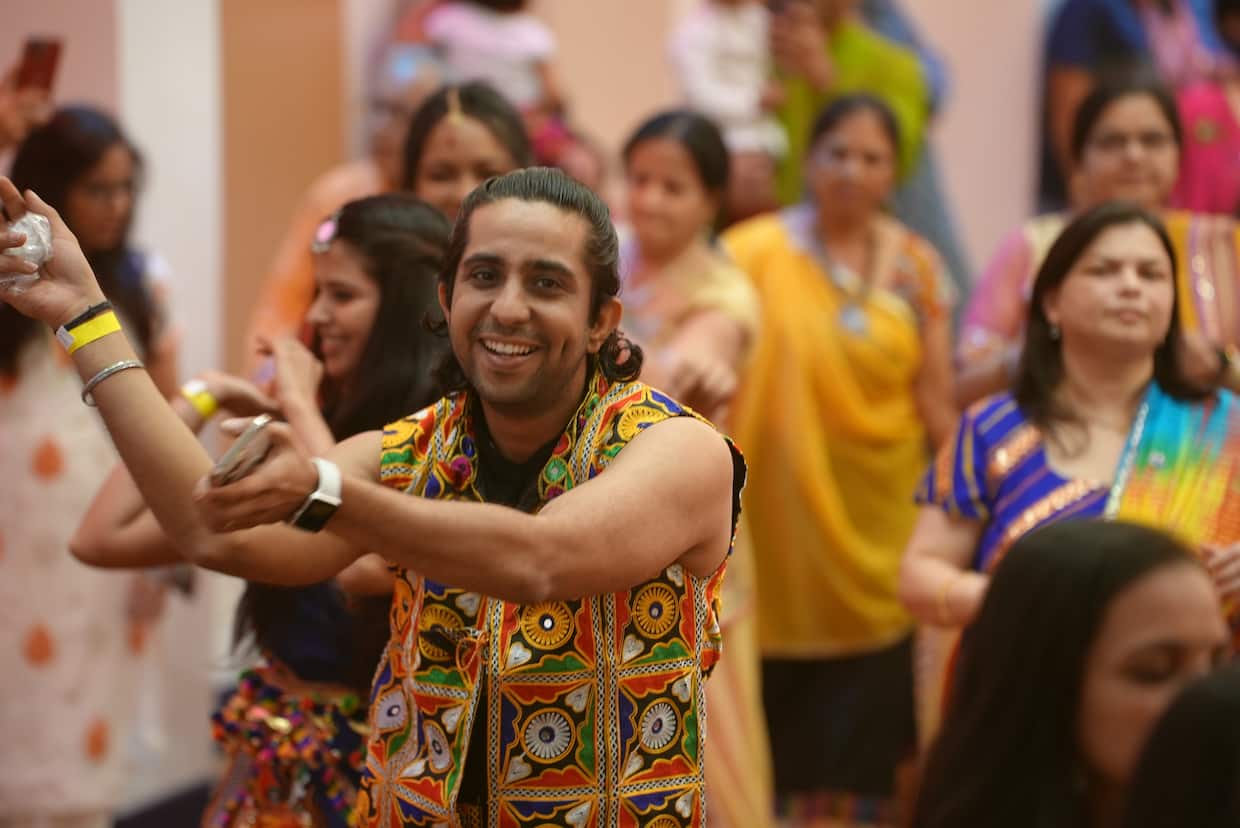
Cherished Moments of Past Navratri Celebrations
Relive the inspiring moments from past Navratri celebrations! Experience the joy, devotion, and vibrant festivities that make this event so special.


Serve, Grow, Inspire! — Volunteer for Navratri Mahotsav
Join us as a volunteer for the Navratri & Dussehra Celebrations! Experience the joy of devotion, build lifelong friendships, and serve the community while being part of these grand festivities. Sign up today to make this celebration truly special
FAQs
1. Who is Ma Kushmanda?
Ma Kushmanda is the fourth manifestation of Goddess Durga, worshipped on the fourth day of Navaratri. She is believed to have created the universe with her radiant smile, sustaining it with her energy like the Sun. She symbolizes joyful creation, warmth, and boundless compassion.
2. Why is Ma Kushmanda associated with pumpkins?
The Sanskrit word “Kushmanda” also refers to a type of gourd or pumpkin. As a symbol of fertility, nourishment, and the earth’s abundance, pumpkins are traditionally offered to Ma Kushmanda during her worship on Day 4 of Navaratri.
3. What is the spiritual significance of Day 4 of Navaratri?
Day 4 marks a shift from cleansing and courage to creativity and inner radiance. Worshipping Ma Kushmanda on this day is said to activate the heart chakra (Anahata), fostering compassion, vitality, and a sense of interconnectedness with all beings.
4. How can devotees establish groundedness before worshipping Ma Kushmanda?
Groundedness can be cultivated through simple practices: a few minutes of mindful breathing, feeling the feet on the earth, sitting in silence before lighting the lamp, and offering flowers or water slowly and reverently. This steadies the mind and roots devotion in the present moment.
5. How is Ma Kushmanda relevant in modern life?
Ma Kushmanda’s example encourages people to create from joy rather than stress, to bring warmth into relationships, to live sustainably, and to combine spiritual practices with daily duties. Her worship invites spontaneous, heartfelt devotion (Rāgānugā Bhakti) that can transform everyday life into an offering.
References
- Durga Saptashati / Devi Mahatmya – Markandeya Purana (Chapters describing the Navadurga forms, including Ma Kushmanda).
- Kalika Purana – Textual references to the worship of various forms of Goddess Durga.
- Navadurga Stotra – Traditional hymn explaining each form of Durga, including Kushmanda.
- Books by Swami Mukundananda – “The Science of Mind Management,” “7 Divine Laws to Awaken Your Best Self,” and his talks on Navadurga and Navratri.